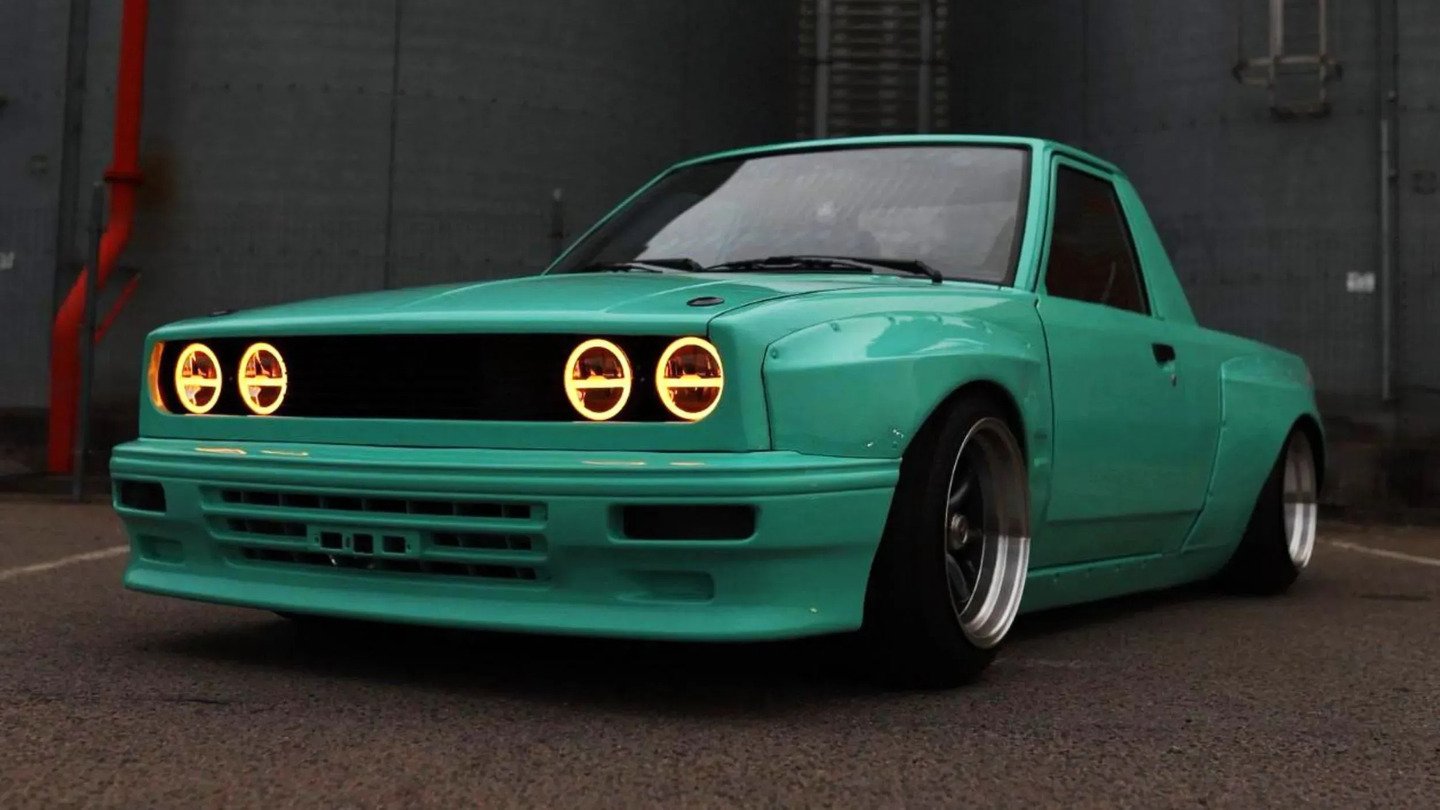
TOYOTA COROLLA РЕШИЛА СТАТЬ ПИКАПОМ И НЕМНОГО BMW
If a standard Toyota Corolla seems too mundane to you, Polish tuners have a universal recipe: take a car from 1980, chop off half the roof, convert it into a pickup truck, install air suspension, flare the fenders, and for some reason, add a touch of BMW. A project just like this was recently sold in Poland for about 9,500 euros—roughly the price of a new Lada Granta in Russia.
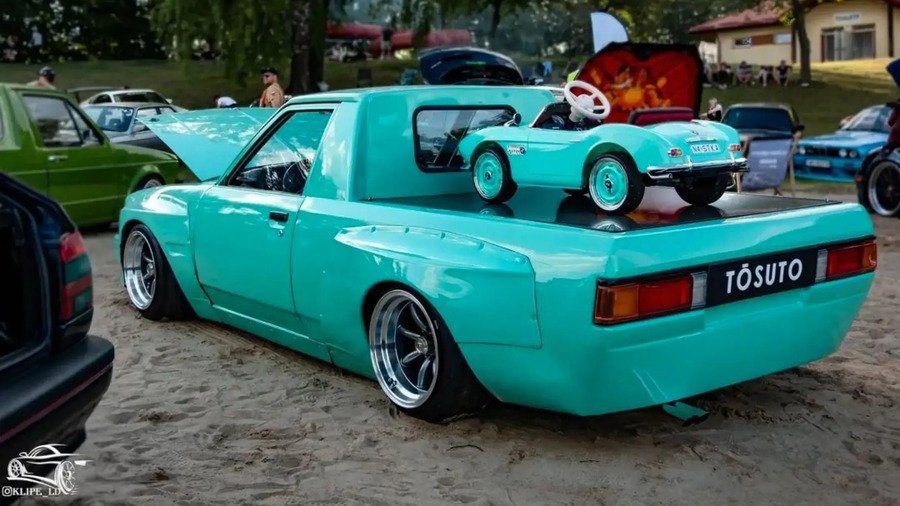
At the heart of this madness is a two-door Toyota Corolla, KE70 generation, manufactured in March 1980. Furthermore, the creators didn’t just find an old car in a yard and hack away at it with a reciprocating saw. First, the Corolla was completely disassembled and restored; only then did the surgery begin: the rear section of the roof was removed, a cargo bed was installed in its place, and the modest Japanese sedan suddenly started resembling a compact American pickup truck. True, no one intends to haul sacks of cement in it—the cargo platform is more for aesthetics.
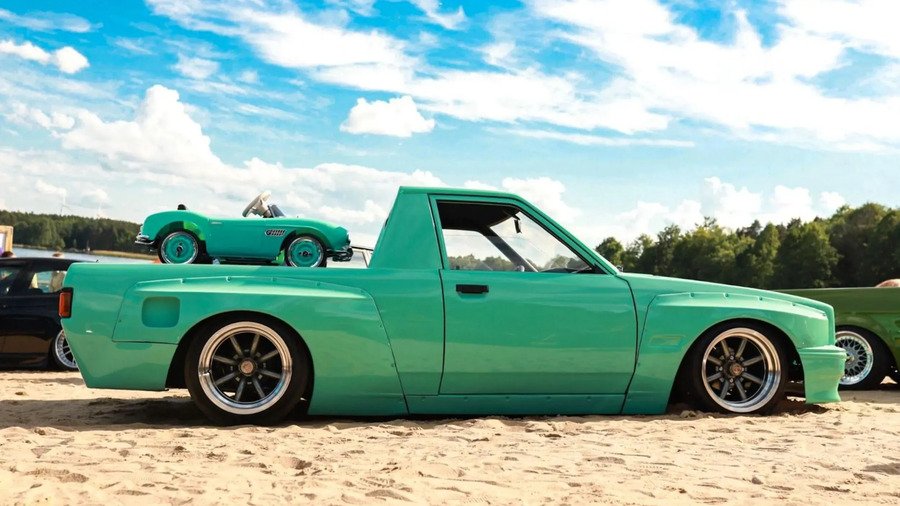
The masters soon found that was no longer enough. They fitted massive, square fender flares to the body, instantly adding 20 centimeters of width to the car. Hidden beneath these were 15-inch wheels with 11.5-inch width and stretched rubber. Everything was painted mint green, including parts that are typically left black or chrome. The result was something midway between a toy car and a Japanese drifting project.
The Corolla has completely changed its aesthetic here. Four round LED headlights and a new, deep bumper make it suspiciously similar to the old BMW 3 Series E30. You might think you’re looking at a secret Bavarian pickup from the eighties. The technical aspects are much more understated than the exterior suggests. Under the hood sits a naturally aspirated, 1.3-liter inline-four engine producing around 109 hp. It has a manual transmission and rear-wheel drive—which is especially enjoyable because the KE70 was among the last Corolla generations to feature a classic rear-wheel-drive layout.
The main appeal of the project is the price. They asked only 9,500 euros for a unique car—a vehicle of its kind you are unlikely to find, even at a major gathering. For comparison, a standard new car today can easily cost the same amount, but it probably won’t have a mint finish, air suspension, or the ability to gather the entire courtyard around it in five minutes. The seller explained the parting simply: he enjoys building projects, and his collection of cars had become too large. Something like, «the closet won’t close anymore.»