Исходный размер 1140x1600

Nothing to Hide: How Dodo Pizza Turns Openness into Persuasion

Данный проект является учебной работой студента Школы дизайна или исследовательской работой преподавателя Школы дизайна. Данный проект не является коммерческим и служит образовательным целям
Проект принимает участие в конкурсе

Business should be as open as a pizza
Fyodor Ovchinnikov, founder of Dodo Pizza

Rubricator

  1. Introduction
  2. Communication Channels and PR Strategies
  3. Theoretical Framework: a Two-Sided Model
  4. Analysis
  5. Conclusion
  6. Sources

1. Introduction

big
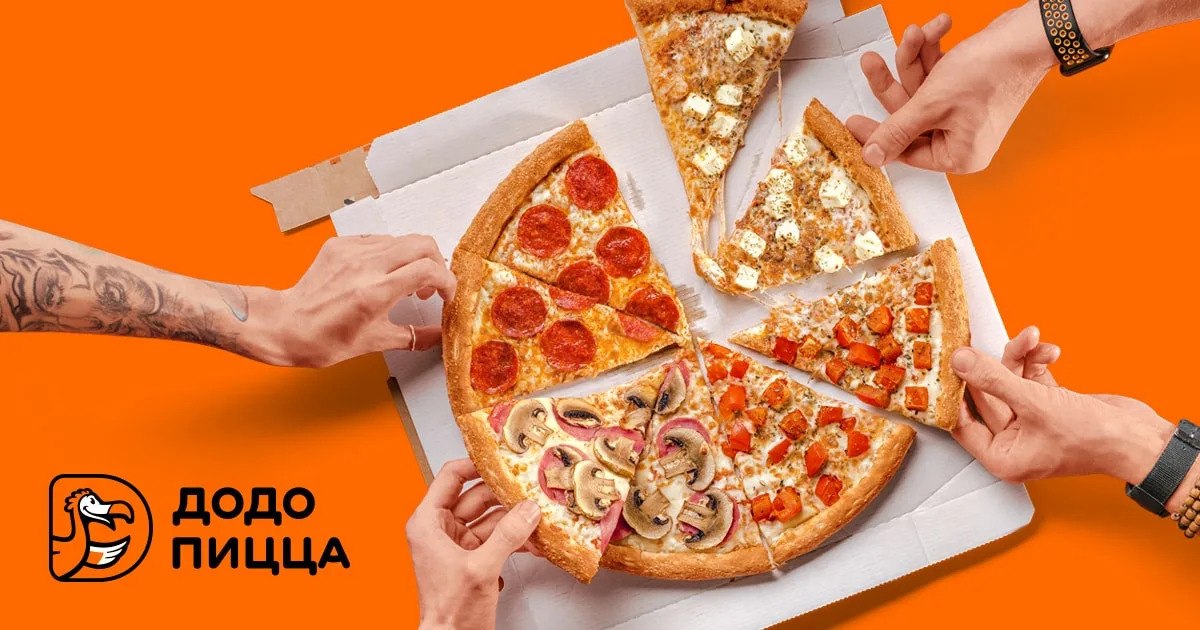
Исходный размер 1200x630

Advertising banner on the website

Dodo Pizza is a Russian chain founded by Fyodor Ovchinnikov in 2011 in Syktyvkar. By February 2026 it had grown into Dodo Brands, headquartered in Dubai, with 1,631 outlets in over 25 countries and a place among the world’s ten fastest-growing franchises.

What matters for the analysis is the positioning: Dodo calls itself «a technology company that makes pizza.» Everything runs on its own cloud system, Dodo IS, and on radical openness — kitchen cameras since 2012, public financial dashboards, an open rating for every outlet, and a founder who blogged the failures as well as the wins. Underneath the pizza, the brand sells technology, transparency, and trust.

The image rests on two codes: openness (nothing to hide) and «space» (a big mission, a sense of «we»). Together they form the paradox this analysis unpacks — an honest tech company with a big dream.

The audience spans several segments, addressed differently: millennials and Gen Z (speed, app, humour), families (quality, a reason to gather), office workers (convenience, pushes), franchisees and investors (open data, a transparent model), and staff (the «Dodo family»). To all of them the message is the same: an open tech company that makes good pizza honestly, and with you.

2. Communication Channels and PR Strategies

Dodo’s communication is omnichannel, sorted by control into owned, earned, and paid.

Исходный размер 1280x720

Dodo Pizza mobile app interface

The owned channels are the core. The website and app are the main point of contact — ordering, customisation, loyalty, instant rating — alongside Dodo IS and the public dashboards. Direct CRM marketing (email and push via Mindbox) alone drives about 19% of delivery revenue, so this «personal» channel is really a sales channel.
post

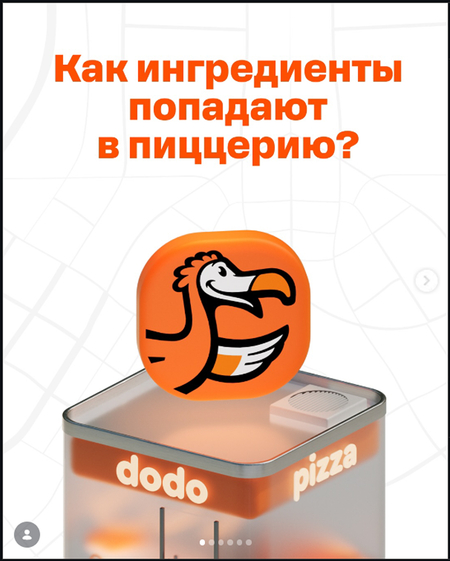
The earned channels carry the public life: social media (VK, Telegram, YouTube), reviews, press, the founder’s blog, and influencer work. The network publishes around 170 000 posts a year, so local marketers run their own communities while head office shares know-how, and the tone is deliberately human — posts from named employees, not a press office.

Исходный размер 800x450

Pizza preparation process at Dodo Pizza

The paid and offline channels — local targeting, in-app promos, interiors, packaging, events, and above all the open kitchen — lean on reach and value rather than hard performance marketing. Openness itself also works as a channel: cameras, dashboards, ratings, and an honest blog all say «nothing to hide, ” doing three jobs at once — a rational argument (ELM), an affordance of transparency, and a claim to dialogue.

The PR strategy follows from this: Dodo talks about its own mistakes before critics can. When a courier was fired in 2026 for wrapping a freezing dog in a company blanket and the story hit the news, the founder apologised publicly — fast crisis communication that also exposed the gap between the image of openness and practice on the ground.

3. Theoretical Framework: a Two-Sided Model

ELM (Petty and Cacioppo) explains persuasion through two routes. On the central route, people weigh the substance — facts, quality, competence — and the belief sticks; on the peripheral route, they go on surface cues — tone, emotion, imagery, a sense of «we» — which is faster but less durable. Which route fires depends on the customer’s motivation and ability.

Исходный размер 1920x1080

The Elaboration Likelihood Model (ELM) of persuasion

U&G (Katz, Blumler) covers the consumer side: people actively pick channels to meet needs — information, entertainment, social connection, status, convenience — and, through selective exposure, screen out ads that interrupt them. So a brand has to live where its audience already is and earn attention rather than buy interruption.

Affordances theory (Cabiddu, De Carlo and Piccoli) explains the environment: an affordance is an opportunity to act where a platform’s features meet a brand’s goals. Its key marker is coperception — the brand seeing itself and the platform together («we use X in order to…»), a sign of maturity.

Исходный размер 1920x1080

Social media affordances and engagement types in the Dodo ecosystem

Together, affordances describe the environment, ELM the messages inside it, and U&G the motives that pull people in; dialogic and critical theory then test whether the result is real dialogue and what it leaves out.

4. Analysis

4.1. The brand’s side through ELM

Исходный размер 1280x720

Dodo Pizza mobile app interface

post

On the central route, Dodo’s persuasive material is everything that invites a rational check on quality: process transparency (cameras, open data), ingredients and standards, delivery times and guarantees, the open rating as proof, and the technology itself as a sign of competence. This carries most weight on big orders and with experienced customers.
post

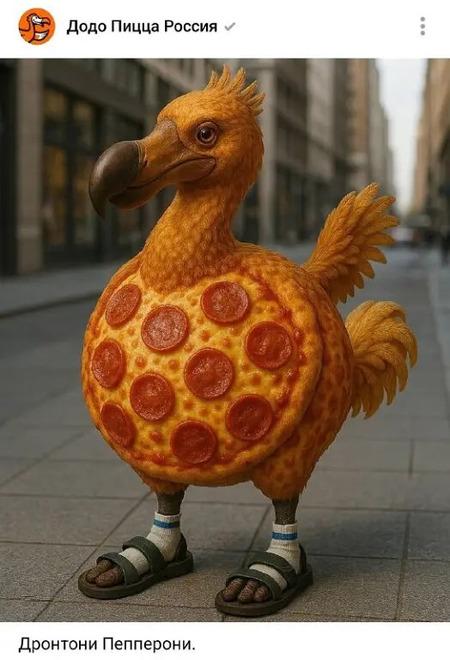
On the peripheral route, persuasion is about feel: the friendly «we’re like you» voice, the «Syktyvkar to the stars» story, the «Dodo family, ” and the whole visual world. None of it asks for analysis, which is why it works for first-timers and impulse orders. The key point is that Dodo does not pick a route — it shifts the mix to fit the moment (as Allison et al. find in crowdfunding): high stakes and an experienced customer lift the central route, low stakes and a new customer lift the peripheral.

4.2. The brand’s side through affordances

Исходный размер 1280x720

Examples of Dodo Pizza YouTube Shorts content

Persistent engagement means constant presence — posts, stories, livestreams, kitchen backstage, cameras, dashboards — which keeps the brand visible between orders and turns customers into co-authors through UGC. The cost is that any slip is instantly public.

post

Customized engagement runs on data: profiles, order history, recommendations, a «favourite pizza, ” personal offers and replies create the feeling of being known, and drive roughly a fifth of delivery revenue. The risk is the line into „creepy.“ Triggered engagement fires when the customer moves first — a review, a complaint, a news hook. The courier-and-dog case (2026) is the clearest example: trigger (firing plus coverage), response (public apology). Fast, but it exposed the seam between image and day-to-day.

By Cabiddu’s measure of coperception, Dodo’s data culture puts it in the mature camp on paper — yet the courier case shows a clear head-office view does not guarantee the same standard on the ground.

4.3. The consumer’s side through U&G

post

Flipping the lens, the audience chooses Dodo to meet real needs: the utilitarian need (eat fast, save time, order in a couple of taps) is met by the app and delivery; the informational need (to know and control) by transparency; the affective and social need (belonging to the «Dodo family, ” entertainment) by community and memes, which is exactly where ELM’s peripheral cues land; and a quieter status need by personal offers.

A younger audience also screens hard and avoids interruptive ads, so Dodo’s bet on value and presence in „their“ spaces is the right call: the brand has to be chosen, not imposed. This is where the two sides meet — what the audience wants (U&G) is exactly what the affordances supply and the ELM signals target.

4.4. The dialogic check

Run through Kent and Taylor’s checklist — feedback loop, useful information, return visits, easy interface, conservation of visitors — Dodo scores high on infrastructure. Feedback is built into the product, disclosure is near-exemplary (open accounts, dashboards, ratings), and the interface is simple. But the harder topics — courier pay and workload, franchisee errors, packaging — surface only when prompted or after they become news, as with the courier case. The setup is strongly dialogic, but real dialogue stops where the sensitive zones begin.

Исходный размер 736x414

UI/UX design and features of the Dodo Pizza mobile application

4.5. The critical note

Исходный размер 1200x600

Promotional banner for the Dodo Pizza mobile application

Marcuse’s lens adds the catch: the communication presents itself as freedom and choice while reproducing the same consumer order. The «perfect tech company that just makes pizza and happiness» keeps the uncomfortable parts off-screen — labour conditions, a «democratisation» where capital still decides — and converts feeling into loyalty and engagement rather than into any real argument about how things run.

Dodo Pizza lifestyle advertisement examples

5. Conclusion

post

Through these theories, Dodo’s communication is tightly built. ELM shows it mixing rational and peripheral appeals by stakes; affordances show why that works online; U&G shows each segment getting its gratification. The dialogic and critical lenses mark the strain: strong dialogic infrastructure is not real dialogue, and an honest image can mask structural problems.

First, strengthen the central route where the stakes are high — explicit guarantees, delivery terms, honest failure stats — since motivated, able customers respond to substance.

Second, ease off the peripheral route on sensitive topics (labour, safety, ecology); too many memes risk the Dr. Fox effect, charm without change.

Third, turn the dialogic façade into policy: regular public Q&As, honest incident reports, and fixes worked out with customers and staff.

Fourth, use persistent and triggered engagement to carry hard topics, not just promotions — that is coperception in practice.

Fifth, keep a critical eye on the image: naming the «one-dimensional» tension openly is what would back up the claim to honesty.

Исходный размер 1920x1080

Examples of Dodo Pizza advertising and information materials

6. Sources

Библиография
1.

Allison T. H., Davis B. C., Webb J. W., Short J. C. Persuasion in Crowdfunding: An Elaboration Likelihood Model of Crowdfunding Performance // Journal of Business Venturing. — 2017. — Vol. 32, No. 6. — P. 707–725. — URL: https://www.sciencedirect.com/science/article/pii/S0883902617307784 (accessed: 11 June 2026).

2.

Cabiddu F., De Carlo M., Piccoli G. Social Media Affordances: Enabling Customer Engagement // Annals of Tourism Research. — 2014. — Vol. 48. — P. 175–192. — URL: https://www.sciencedirect.com/science/article/pii/S0160738314000796 (accessed: 11 June 2026).

3.

Calhoun C. Communication as Social Science (and More) // International Journal of Communication. — 2011. — Vol. 5. — P. 1479–1496. — URL: https://ijoc.org/index.php/ijoc/article/view/1331 (accessed: 11 June 2026).

4.

Craig R. T. Communication Theory as a Field // Communication Theory. — 1999. — Vol. 9, No. 2. — P. 119–161. — URL: https://onlinelibrary.wiley.com/doi/10.1111/j.1468-2885.1999.tb00355.x (accessed: 11 June 2026).

5.

Cropanzano R., Mitchell M. S. Social Exchange Theory: An Interdisciplinary Review // Journal of Management. — 2005. — Vol. 31, No. 6. — P. 874–900. — URL: https://journals.sagepub.com/doi/10.1177/0149206305279602 (accessed: 11 June 2026).

6.

Dias P. Motivations for Multi-screening: An Exploratory Study on Motivations and Gratifications // European Journal of Communication. — 2016. — Vol. 31, No. 6. — P. 678–693. — URL: https://journals.sagepub.com/doi/10.1177/0267323116674111 (accessed: 11 June 2026).

7.

Johnson D. W., Johnson R. T. New Developments in Social Interdependence Theory // Genetic, Social, and General Psychology Monographs. — 2005. — Vol. 131, No. 4. — P. 285–358. — URL: https://www.tandfonline.com/doi/abs/10.3200/MONO.131.4.285-358 (accessed: 11 June 2026).

8.

Katz E., Blumler J. G., Gurevitch M. Uses and Gratifications Research // Public Opinion Quarterly. — 1973. — Vol. 37, No. 4. — P. 509–523. — URL: https://academic.oup.com/poq/article-abstract/37/4/509/1816598 (accessed: 11 June 2026).

9.

Kent M. L., Taylor M. Toward a Dialogic Theory of Public Relations // Public Relations Review. — 2002. — Vol. 28, No. 1. — P. 21–37. — URL: https://www.sciencedirect.com/science/article/pii/S036381110200108X (accessed: 11 June 2026).

10.

Lee S. T. A User Approach to Dialogic Theory in a Facebook Campaign on Love and Marriage // Media, Culture & Society. — 2014. — Vol. 36, No. 4. — P. 437–455. — URL: https://journals.sagepub.com/doi/10.1177/0163443714523809 (accessed: 11 June 2026).

11.

Petty R. E., Cacioppo J. T. The Elaboration Likelihood Model of Persuasion // Advances in Experimental Social Psychology. — 1986. — Vol. 19. — P. 123–205. — URL: https://www.sciencedirect.com/science/article/pii/S0065260108602142 (accessed: 11 June 2026).

12.

Marcuse H. One-Dimensional Man: Studies in the Ideology of Advanced Industrial Society. — Boston: Beacon Press, 1964. — URL: https://www.routledge.com/One-Dimensional-Man-Studies-in-the-Ideology-of-Advanced-Industrial-Society/Marcuse/p/book/9780415289770 (accessed: 11 June 2026).

13.

Dodo Brands: official website and blog [Electronic resource]. — URL: https://dodobrands.io (accessed: 11 June 2026).

14.

Dodo Brands Posts 22% Revenue Growth in 2025 [Electronic resource] // QSR Media. — 2026. — URL: https://qsrmedia.com/legal/news/dodo-brands-posts-22-revenue-growth-in-2025 (accessed: 11 June 2026).

15.

Dodo Pizza [Electronic resource] // Wikipedia: The Free Encyclopedia. — URL: https://en.wikipedia.org/wiki/Dodo_Pizza (accessed: 11 June 2026).

16.

Dodo Pizza Strategy for 2025–2030: Global Expansion & Innovation [Electronic resource] // Dodo Brands. — 2025. — URL: https://dodobrands.io/post/dodo-pizza-strategy-2025-2030/ (accessed: 11 June 2026).

17.

Dodo Pizza: «Direct Marketing Brings Us 19% of Delivery and Takeaway Revenue» [Electronic resource] // Mindbox Journal. — 2019. — URL: https://mindbox.ru/journal/cases/dodo-pitstsa-pryamoy-marketing/ (accessed: 11 June 2026).

18.

Russia’s Dodo Brands Launches First Dual-Branded Store in the UAE [Electronic resource] // World Coffee Portal. — 2025. — URL: https://www.worldcoffeeportal.com/news/russias-dodo-brands-launches-first-dual-branded-store-in-the-uae/ (accessed: 11 June 2026).

Источники изображений
1.

Dodo Pizza. About // Official website of Dodo Pizza. Available at: https://dodopizza.ru/moscow/about (accessed 11 June 2026).

2.

Hongdau Studio // Instagram. Available at: https://www.instagram.com/hongdau.studio/?utm_source=Pinterest&utm_medium=organic (accessed 11 June 2026). Instagram is blocked in the Russian Federation; its owner, Meta Platforms Inc., is designated as an extremist organization and banned in Russia.

3.

Design Dodo // Telegram channel. Available at: http://t.me/designdodo (accessed 11 June 2026).

4.

Trendsetter // TamTam. Available at: https://tamtam.chat/trendsetter/AZZKIUslLz0 (accessed 11 June 2026).

5.

Note: Google Images and Yandex Images were used as image search tools; all images are cited by their original source pages rather than by the search engines themselves.

Мы используем файлы cookies для улучшения работы сайта НИУ ВШЭ и большего удобства его использования. Более подробную...
Показать больше