A lecture for high school students is about painting and other forms of modern art that shape creative industries today.
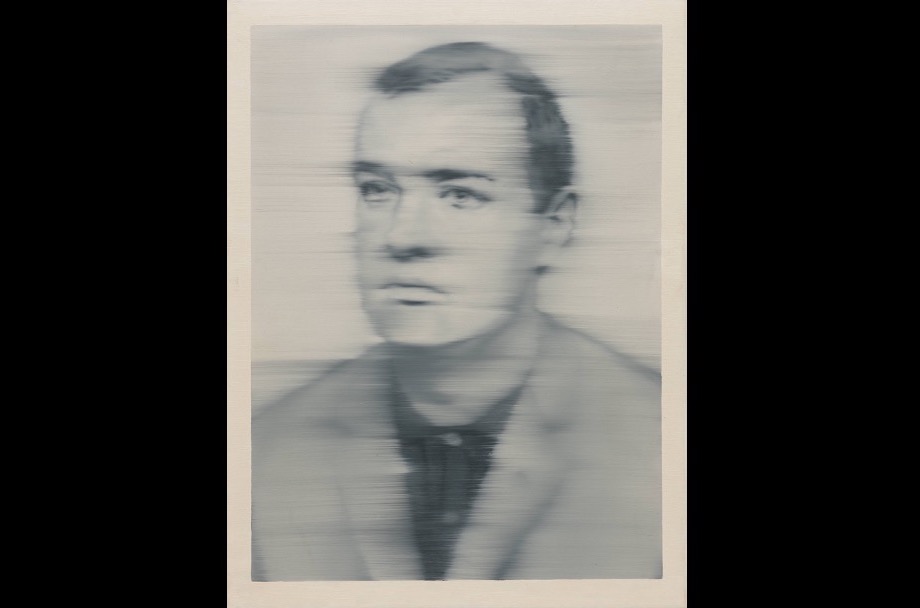
Gerhard Richter. Müller Portrait. 1965. Source: sfmoma.org
Mr. Mueller is looking at us from a photograph. Well, he’s not looking at us, he’s looking away. And to be more specific, it’s not a picture, it’s a painting by Gerhard Richter in 1965. It is much larger than a photograph (80 centimetres high and 60 in width) and on the woolly surface of the canvas, the layers of paint are clearly visible. Why does the painting pretend to be a blurry photograph? What impression does painting have on us? What secrets reveal to a careful viewer?
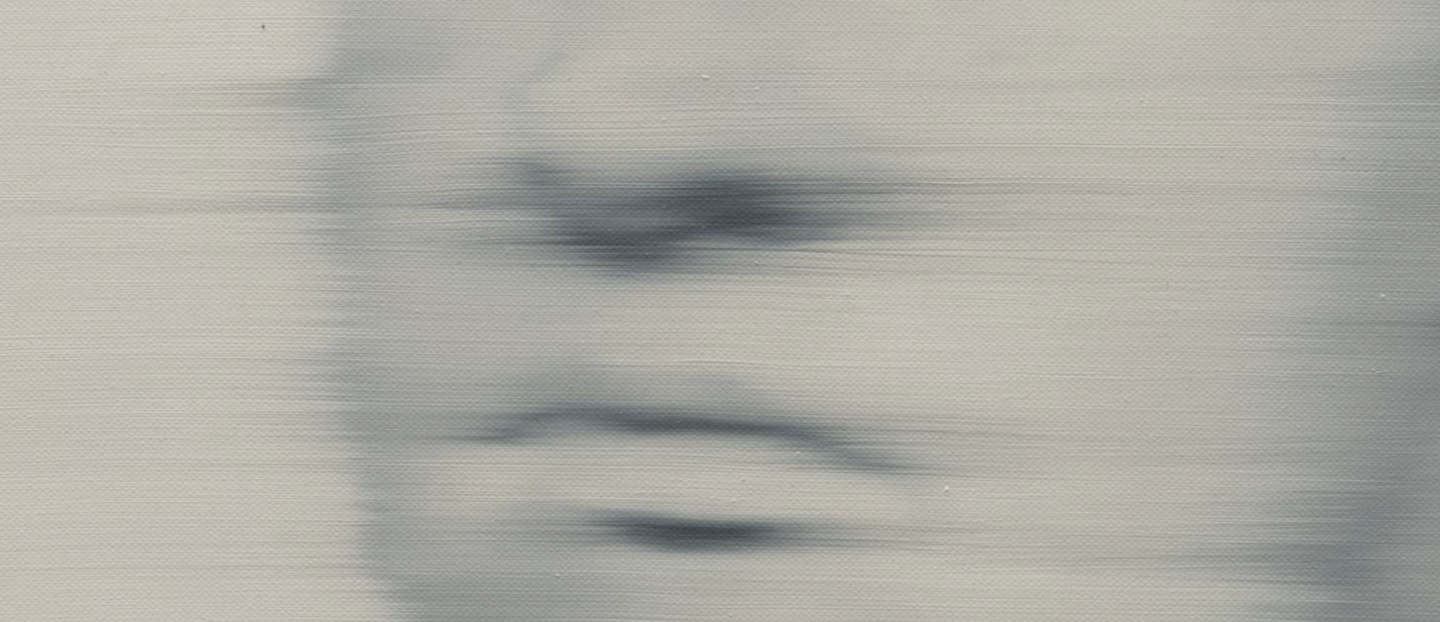
Gerhard Richter. Müller Portrait. 1965. Fragment. Source: sfmoma.org
To answer these questions, let us return a few centuries ago, at a time when artists began to think seriously about the nature of their art, their techniques and their techniques. Anthical art was considered to be the main goal of the artist memesis, to imitate nature, to be able to notice and reproduce all the wealth of the forms of the visible world. But then it was more of a general recommendation, and in the Renaissance era, several interpretations were written with clear instructions to build a vision and to depict the human body in the right (mathematically correct) proportions.
Albrecht Durer. An illustration of the publication. «Guidance for measuring the circulatory and the ruler». 1527
The artist came closer to solving the mysteries of human vision, creating increasingly sophisticated optical illusions, «truths,» erasing the boundaries between the imaged and the seen.
Yoris Hoefnagel. «Laughing. The stem of the eye.» 1561-1562 /1591-1596. The image is cadroned.
By the early 19th century, artists were finally perfecting themselves. Academic studies show all the diversity of nature, any fabric, embroidery or gemstone, any emotion, heartbeat under the soft skin…
Jean-Ogust-Dominique Engre. The Portrait of Countess Turmon. 1812. Fragment
Two women’s portraits of Engra’s brush
…and it’s at this point in the art of painting that the picture becomes.
Dagerrotype. Women’s portrait. 1840s.
Eugene Delacroix was interested in photography, and Claude Monet admires the possibilities of modern technology, dreaming of making his eyes capable of capturing the smallest details and nuances of color as well and objectively as the machine does. Impressionists achieve perfection in transmitting a visible eye reality, and the artist almost becomes a machine. But it is at the time of the celebration of the role of nature that a sacramental question arises before the painting: if it is enough to create an image to press the button of the machine, why do you care to paint the canvas?
Claude Monet, «The arrival of the train at the San Lazar station», 1867 / / Alfred Stiglitz «Man’s Hand», 1902
Maybe paintings have to find another way? Playing things you can’t catch with your eyes alone? Emotions, impulses, philosophical structures, higher senses.
Paul Cesann. «Pine near Axe.» 1897 (fragment)
Pete Mondrian. New York. 1942 (fragment)
Thus began the history of modernistic art, obsessed with the movement towards new discoveries, the creation of different styles and forms, and the vivid manifestation of the individuality of each artist. And half a century later, in the 1950s, the painters seem to have completely forgotten about copying nature. An abstract image has become a new standard for art. The experience of creativity has come to the fore, and traditions and crafts have become as if unimportant. A master artist is replaced by a chaman artist. He no longer imitates nature; he himself is nature.
Jackson Pollock’s on the job.
Jackson Pollock. «Number one. A lavender smoke.» 1950. moma.org
Painting turns into a clean gesture, an emotional surge that makes a mark on the canvas. Everything becomes possible.
We need June Pike. «The Zen for the Head.» 1960. moma.org
The 1960s are a time of full creative freedom when more instruments and formats are emerging: performance, happening, video art, sound, glitch, robotics, virtual reality… it seemed like painting was in the past.
We need June Pike. A fragment of the video installation.
And yet artists are again mixing paint with their palettes. Why?
Gerhard Richter’s on the job.
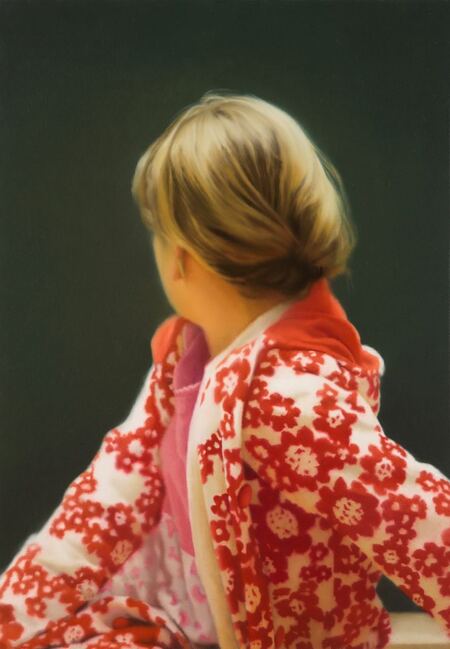
In a modern culture filled with digital images and online events, it is easy to lose ground under our feet. French philosopher Jean Bodriyar called this state «hyperreality»: everything seems very convincing, but people can pretend to be others, facts can be fae, it’s hard to trust statistics, books, photos… the sense of reality is getting weaker. These questions can be dealt with by a painter who creates images with his own hands. He gives the image materiality by means of canvas and paint. Scrambling the boundaries between imaginary and real.
Gerhard Richter. «Betty turned around.» 1988. Source: Artchive.ru


