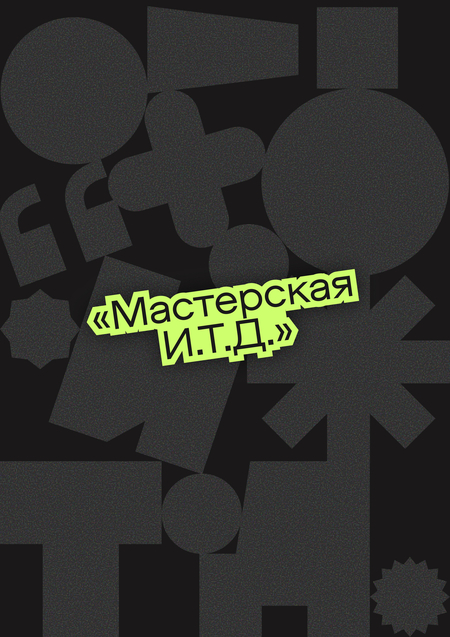
Исходный размер 2289x3240

Master Workshop I.T.D / Communication Theory

Данный проект является учебной работой студента Школы дизайна или исследовательской работой преподавателя Школы дизайна. Данный проект не является коммерческим и служит образовательным целям
Проект принимает участие в конкурсе
big
Исходный размер 3840x2134

Communication Theory in Design

Communication theory plays a fundamental role in the field of design, particularly in branding. Design serves not only aesthetic purposes but also functions as a strategic communication tool that conveys messages, values, and meanings to a target audience. According to communication theory, designers act as senders who encode messages into visual elements such as logos, colors, typography, and illustrations. Consumers then decode these messages based on their experiences, cultural background, and personal perceptions.

big
Исходный размер 2079x214

Effective communication in design requires a deep understanding of the audience. Research on adolescent communication shows that young consumers are especially sensitive to visual, emotional, and authentic messages. They are more likely to engage with brands that reflect their identity, values, and lifestyle. Therefore, successful branding for younger audiences should prioritize emotional connection, visual storytelling, and clear, relatable communication.

big
Исходный размер 2079x214

Furthermore, the Elaboration Likelihood Model (ELM) explains that design influences consumer perception in two ways: through emotional and visual elements that immediately capture attention, and through deeper processing of information about the brand and its values. For many everyday products, initial attention is often drawn by peripheral cues such as attractive visuals, appealing characters, and positive emotions. However, long-term trust and loyalty are strengthened when design also communicates meaningful product benefits and brand values. In this way, design acts as a bridge between brands and consumers, creating both immediate engagement and long-term relationships.

Presentation for a General Audience

Product Description

«Master Workshop I.T.D.» is a contemporary theatre studio for teenagers aged 14–18, based at the Museum of Moscow.

The format includes regular classes and intensive workshops in which participants try themselves in different roles within contemporary theatre: performer, director, researcher, and curator.

This is not preparation for admission to theatre schools, nor a traditional drama club.
It is a space where theatre is used as a tool for thinking, exploration, and expression.

Participants work with contemporary theatre practices, create their own artistic statements, explore the city and themselves through performative and research-based methods, and learn to collaborate and shape a collective creative process.

Participants work with contemporary theatre practices, create their own artistic statements, explore the city and themselves through performative and research-based methods, and learn to collaborate and shape a collective creative process.

Исходный размер 3600x1720

Target Audience

Teenagers aged 14–18 in Moscow who are interested in art, creativity, and self-expression.

Исходный размер 3600x450
Исходный размер 2079x135

✦ Already attend or have tried extracurricular activities (clubs, studios, courses)
 ✦ See additional education as a form of personal development rather than exam preparation ✦ Receive information through social media and friends

Исходный размер 2079x135

✦ Freedom of expression and individuality ✦ Respect for personal boundaries
Interest in self-exploration and understanding the world ✦ Sensitivity to atmosphere and environment

Исходный размер 2079x135

✦ To find like-minded peers and a sense of community
 ✦ To try different creative roles without obligation or evaluation
 ✦ To find a «third place» beyond school and home
To feel part of a cultural process

Исходный размер 2079x135

✦ Fear of «not fitting in» or lacking experience ✦ Perception that the studio is «too serious» or focused on theatre school admission
 ✦ Lack of self-confidence
 ✦ Dependence on parental decision
 ✦ Lack of time due to school workload

Исходный размер 5030x1798
Исходный размер 5056x1802

Mission and Brand Values

The studio works with contemporary theatre and a living cultural context. It is not a traditional school theatre club, but a space for speaking about what is happening here and now. The focus is on modern language and teenage experience.

Исходный размер 3616x2176

The studio creates a space where personal boundaries and emotional well-being are respected. Participants are free to be different — active or reserved, confident or uncertain. Support is more important than pressure. «Master Workshop I.T.D.» is a place where people with a shared interest in art and self-expression come together. Participants do not simply study side by side — they gradually become part of a shared creative process. It is an experience of belonging and collaboration.
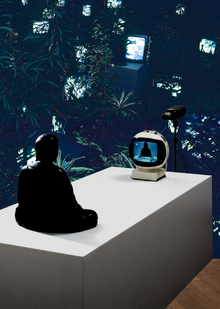
Mission: to create a space for teenagers where theatre becomes a method of exploring the self, the city, and contemporary reality — through practice, freedom of expression, and collective creative work.

Исходный размер 2450x946
Исходный размер 3840x2456

Presentation for a Professional Audience

«Master Workshop I.T.D.» is a contemporary theatre studio for teenagers aged 14–18 based at the Museum of Moscow. From a professional perspective, the project operates as a hybrid cultural and educational system that combines contemporary theatre practice, informal learning, and collaborative creative production. The studio is structured as a modular program consisting of regular sessions and intensive workshops. Each module is based on contemporary performative, research-based, and practice-oriented methodologies.

The structure of the program allows participants to move between different functional roles, including performer, director, researcher, and curator. This role distribution is used as a methodological tool to reflect the logic of contemporary collaborative creative processes, where authorship is decentralized and production is distributed across participants.

Исходный размер 3840x1084

The studio does not function as a traditional theatre school or as a preparatory program for professional theatre education. It is also distinct from conventional extracurricular theatre clubs focused primarily on performance outcomes. Instead, it is positioned as an experimental platform for cultural production, where learning and artistic practice are integrated within a single process-oriented framework. The main focus of the program is the process of creation rather than the final artistic product. Participants develop both individual and collective projects using contemporary theatre methodologies, including performative research, collective improvisation, and contextual analysis. Theatre is treated as a medium for constructing and testing forms of communication within social and cultural contexts.

Исходный размер 3840x2456

From a professional standpoint, the project can be understood as an interdisciplinary environment where education, artistic practice, and cultural research intersect. It emphasizes collaboration, iterative development, and flexible role structures as key principles of contemporary design and production processes.

How Communication Theory Served as the Basis for the Presentations

Communication theory served as a conceptual foundation for structuring both the general and professional presentations of the «Master Workshop I.T.D.» project. The central theoretical assumption applied in the project is that communication is not a linear transmission of information, but a dynamic process of encoding, transmission, and decoding meaning between sender and receiver. This framework directly informed the decision to develop two distinct presentations targeting different audience groups. The general audience presentation and the professional audience presentation are not identical translations of content, but differentiated communicative constructs shaped by audience expectations, knowledge levels, and interpretative contexts.

Исходный размер 4602x792

In the general audience presentation, communication is designed to maximize accessibility and immediate comprehension. This is achieved through simplified structure, clear narrative logic, and emphasis on relatable concepts. In terms of communication theory, this corresponds to encoding strategies that reduce complexity and prioritize intuitive decoding by non-specialist audiences. In contrast, the professional audience presentation is structured around higher conceptual density and methodological precision. It assumes familiarity with contemporary theatre discourse and therefore allows for more abstract and system-oriented communication. This reflects encoding strategies that are optimized for specialized decoding within a professional interpretative framework.

Исходный размер 2079x214

The Elaboration Likelihood Model (ELM) was applied to justify this differentiation in communication strategies. The general audience presentation primarily engages peripheral processing routes, relying on clarity, structure, and accessible framing to support immediate engagement. The professional presentation activates central processing routes, where understanding is achieved through engagement with conceptual structure, methodological logic, and systemic relationships within the project. Encoding/decoding theory further supports this approach by emphasizing that meaning is not fixed within the message itself but is actively constructed by the receiver. Based on this assumption, the project deliberately avoids a single fixed interpretation and instead produces multiple communicative versions of the same conceptual system.

Исходный размер 3840x2144

As a result, the two presentations function as parallel translations of a single communicative model, adapted to different interpretative conditions. Communication theory in this project is therefore used not as a descriptive background, but as an operational framework that defines how meaning is structured, differentiated, and transmitted across audiences.

Библиография
1.

Communication Theory: Bridging Academia and Practice [Lecture materials]. Moscow: HSE Art and Design School.

Источники изображений
1.

Янина В. (2026). Мастерская И.Т.Д. | коммуникационный бриф. HSE Art and Design School Portfolio. https://hsedesign.ru/project/masterskaya-i-t-d-kommunikacionnyj-brif-fa69004ccaab49b1ae25bb82094c428b

2.

Янина В. (2026). Мастерская И.Т.Д. | брендинг. HSE Art and Design School Portfolio. https://hsedesign.ru/project/masterskaya-i-t-d-brending-78e9c39dfcf845a6b0cd73f917cf04b9

Мы используем файлы cookies для улучшения работы сайта НИУ ВШЭ и большего удобства его использования. Более подробную...
Показать больше