
CONCEPT
Media concept for discovering books based on interests, mood, and life context.
Visual idea: books, notes, associative photographs, text fragments, and a calm editorial aesthetic.
This is a medium that helps a person find literature not only by genre, author, or popularity, but also through their individual interests, emotional state, and life circumstances.Unlike traditional book recommendations, the project starts the search not with a book, but with the person themselves.
Person → Interests → Context → Personalized Book Recommendation.
How Media Works

How the user interacts with the media:
— Takes a quiz or selects a topic of interest.
— Receives a curated selection of books that match their preferences.
— Learns why these specific works might suit them.
— Can continue exploring their interests through new recommendations.
«I like Japanese cinema, and the aesthetic of solitude interests me, but I’m hoping for something more subdued.»
— The media analyzes the request and suggests books related to these interests.
Data sources for media
How sources are used.For example: to search for information about books, analyze interests, and identify thematic connections.Example: if a user is interested in Japanese cinema, the medium might consider not only book catalogs but also cultural resources to find literature with a similar atmosphere.A small clarification: user data is collected voluntarily—through tests, surveys, and content interaction.
What data do we receive from the sources?
The use of external data depends on the availability of sources and the conditions under which they are provided.
The Core Principle: Different sources serve different purposes. Some provide factual information about books, others help understand the audience, and third ones aid in generating content ideas.
If a user is interested in architecture and Japanese cinema, we map their cultural interests to the themes of the books and curate a personalized selection.
Data schema divided into human and machine processing
- General Data Flow Diagram
The process does not end with publication: user feedback feeds back into the system and helps improve future recommendations.
Example of a single query process:
The user takes the test → the system determines interests → the editor reviews the selection → the user receives recommendations.
What can be automated?
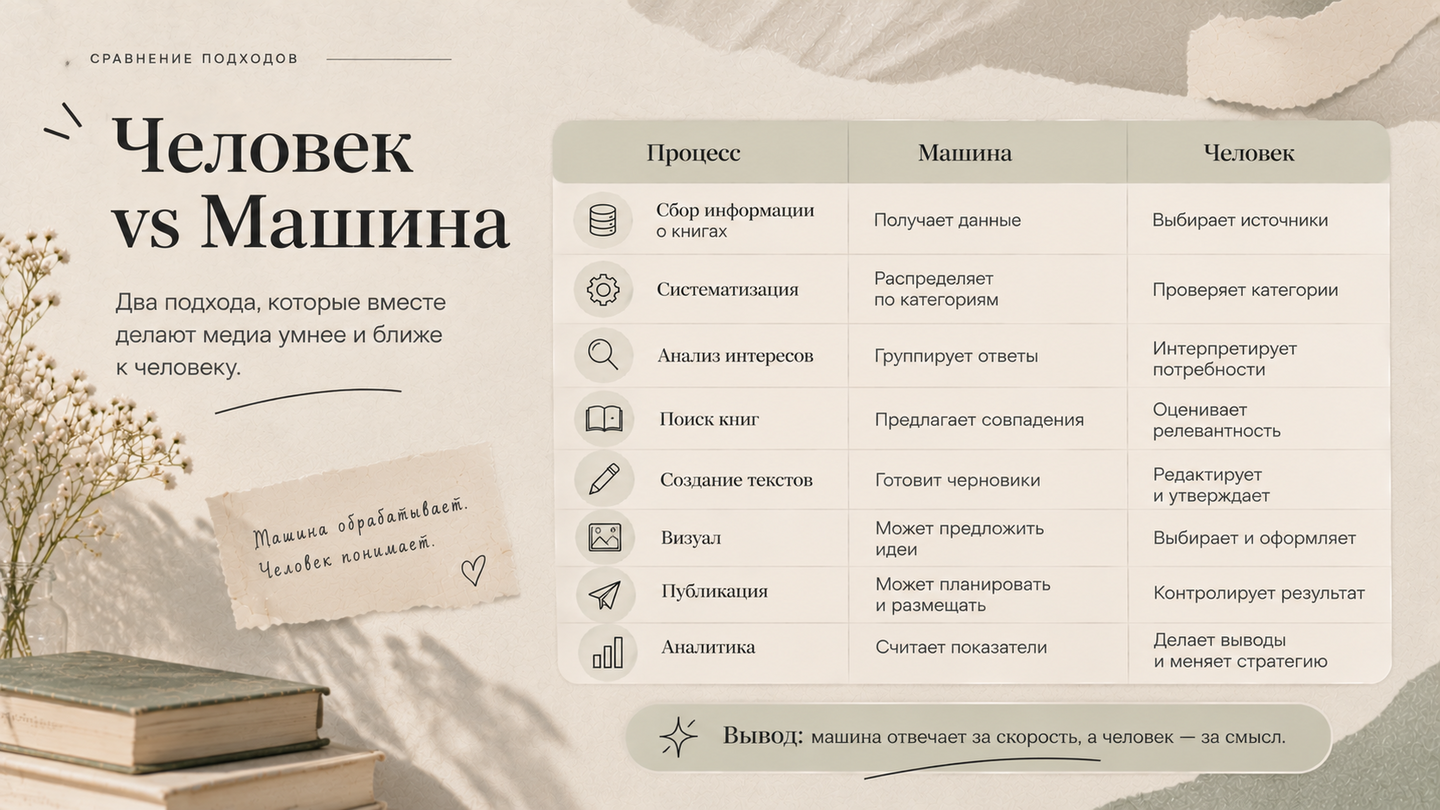
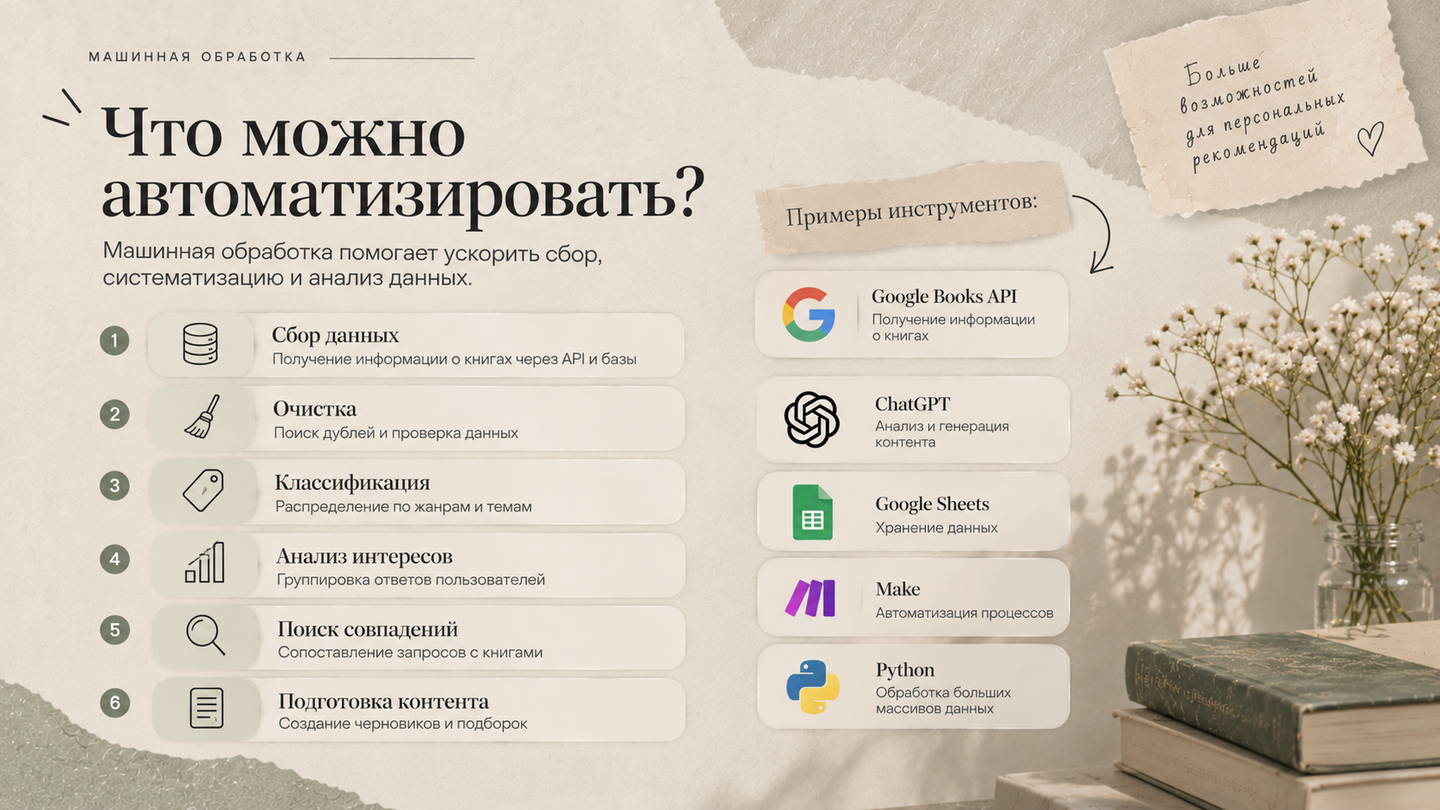

User selects interests in the assessment → the system highlights key themes → the algorithm searches for books with similar characteristics
Who is specifically responsible for these processes: an editor, literary reviewer, or content manager.Why you cannot fully entrust recommendations to an algorithm: it can account for keywords, but it is not always capable of correctly interpreting context and a person’s emotional request.
User Query: «I want a book with the atmosphere of Japanese cinema, but without a heavy plot.»— The AI highlights the key characteristics of the query and searches for suitable books. — The user assesses the atmosphere of the works, reviews the content, and selects the most appropriate options.
How is the personal recommendation generated?
A personalized recommendation is not a random selection by genre, but rather the result of matching interests, context, and literary content.
- Principles for Working with Automated Services