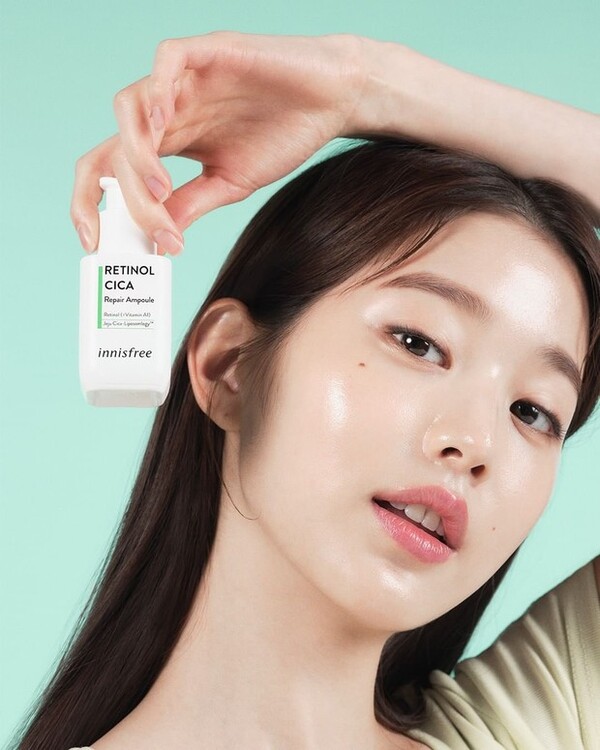
Innisfree is a Korean skincare brand built around one core idea: effective beauty comes from nature, and nature comes from Jeju Island. Innisfree was launched in 2000 by Amorepacific, South Korea’s largest beauty conglomerate. The brand name is taken from William Butler Yeats’ poem «The Lake Isle of Innisfree», which describes an escape to a peaceful island — exactly the feeling Innisfree wants to offer: a green haven away from urban stress.
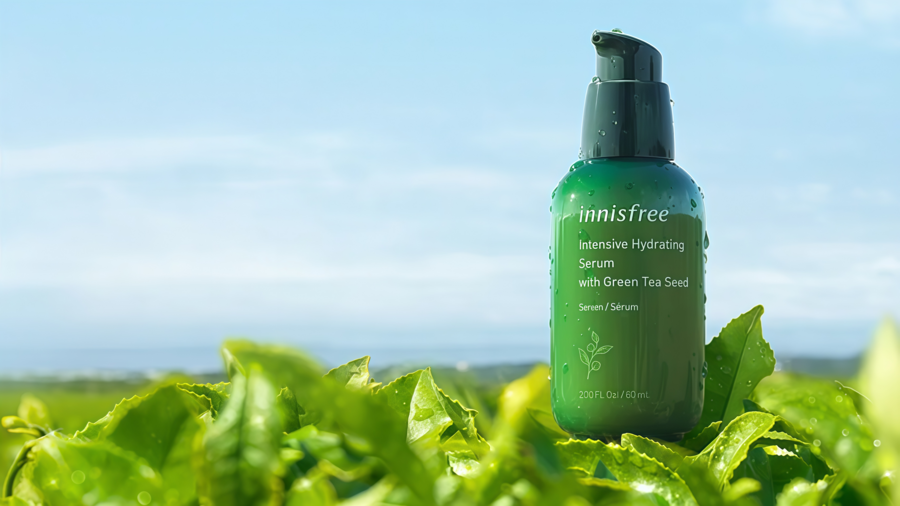
Unlike many fast‑beauty brands that focus only on active percentages or luxury packaging, Innisfree builds its entire identity around Jeju Island — its volcanic soil, pure water, green tea fields, and unique biodiversity.
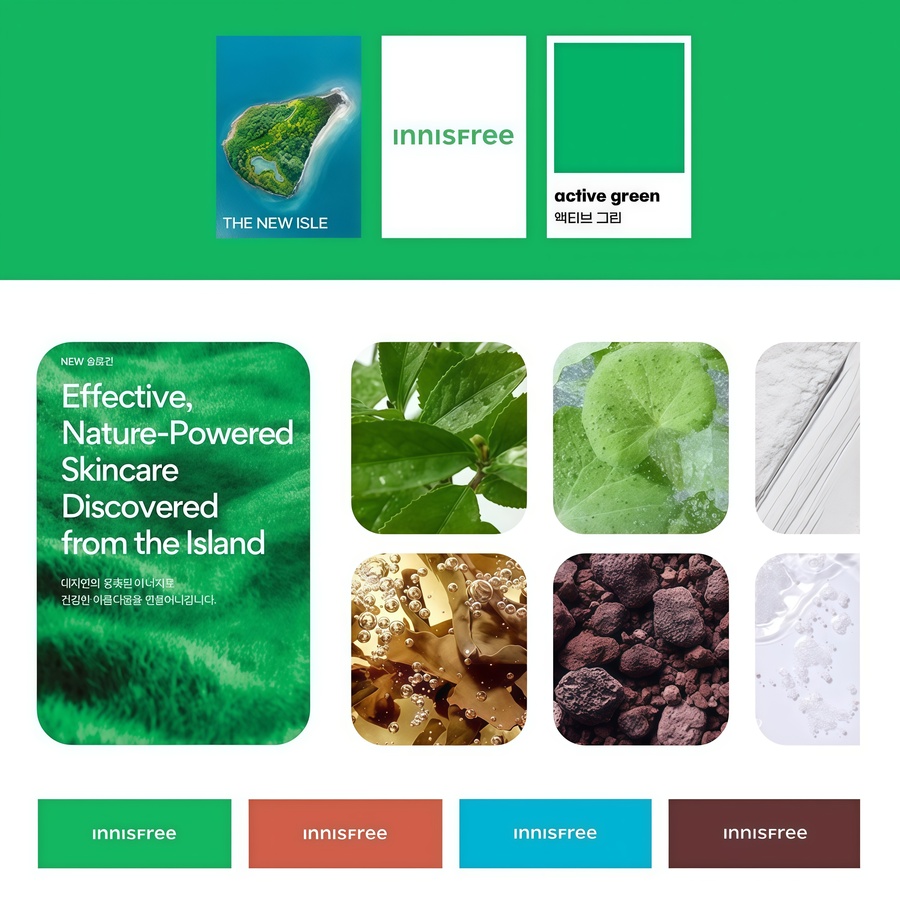
«Effective, Nature‑Powered Skincare Discovered from the Island»
The brand believes that real skin health comes from clean ingredients, responsible sourcing, and scientific research. Their communication therefore highlights purity, transparency, and the journey from nature to bottle.
Innisfree’s brand identity rests on three pillars:
- Honest communication The brand openly talks about ingredients from Jeju Island, their processing, and the importance of vegan products and recyclable packaging. This builds trust through transparency.
- Listening and adapting Innisfree sees its customers as active participants, not passive buyers. This happens through active social media presence and limited‑edition collaborations with other brands. The brand’s tone is warm and humble — like advice, not a lecture.
- Beauty as a daily ritual Innisfree presents skincare as part of an everyday ritual, not an endless fight against aging or imperfections. With simple yet effective products, the customer can take small but regular steps toward healthy skin. This not only reduces anxiety but also makes the brand feel approachable — a kind of «green pause» in a busy digital world.
As Innisfree has expanded into a more global and mature brand in recent years. The updated visual language reflects this shift. The new clean and minimal logo signals a more sophisticated, internationally oriented, and science-driven identity. The colour palette retains fresh green, white, and beige, still evoking nature, but now without appearing rustic. As a result, the brand’s visual communication has become more balanced and contemporary.
Target audience
Innisfree speaks to Gen Z and Millennials (17–34) in Korea, Southeast Asia, India, and the US — a generation raised in a digital environment. For this audience, authenticity matters more than perfection, transparency matters more than promises, and they prefer brands that align with their personal ethics (eco‑friendly, cruelty‑free). They are price‑sensitive but not cheap — they want good quality at a fair price.
Communication channels
Innisfree uses several main platforms to communicate with their audience, such as Instargam*, Youtube, Tiktok, adapting the content to each social network. The brand also has a website and a mobile app. Since Innisfree is a global brand present in many countries, it has not only a main oficcial account, but also separate local accounts, allowing to communicate directly with each audience in their language.
*Instagram is owned by Meta, which is designated as an extremist organization in Russia
Oficcial and local Innisfree Instagram accounts
Innisfree’s oficial website
The brand works with famous people, which helps increase its recognition among different audiences. Innisfree collaborates with K-pop idols, such as Jang Won Young from IVE and Mingyu from SEVENTEEN. One of their longest partnerships was with Yoona from Girls' Generation, who was the face of Innisfree for 11 years.
Lim Yoona as an ambassador for Innisfree
Mingyu as an ambassador for Innisfree
However, the brand does not limit itself only to Korean stars. In countries where Innisfree is also growing successfully, such as India, the brand works with local celebrities. For example, in 2024, Innisfree announced actress Wamiqa Gabbi as its first brand ambassador in India, because values matched the brand’s eco-friendly philosophy.
Wamiqa Gabbi as a first Indian ambassador of Innisfree
In addition to working with media personalities, Innisfree also has collaborations with other brands and artists. The brand has released limited edition collections with Disney and Looney Tunes. Innisfree also partners with artists — for example, with Steven Harrington for «The Isle Adventure» collection.
Disney and Looney Tunes collaborations (Innisfree’s Instagram)
Sanrio collaboration
Collaboration with Steven Harrington (Innisfree’s Instagram)
Theoretical Framework
We chose two theories for the analysis of the brand’s strategies. The first is ELM (Elaboration Likelihood Model). This theory explains how brands persuade people through either logic or emotions. The second is the Use and Gratification theory, which explains, why and how people seek out media.
Elaboration Likelihood Model
According to ELM theory, persuading the audience can happen through the central route (facts analysis and logical thinking) or the peripheral route (emotions). Innisfree uses both the central and peripheral routes because the brand targets different types of consumers with different levels of involvement.
Peripheral route
The peripheral route in Innisfree’s strategy targets an audience that is less interested in detailed ingredients and acts under the influence of emotions, visual images, and authority figures. The brand implements this route through two main channels.
Innisfree’s Instagram
The first one — eco-concept — is presented through aesthetics: images of Jeju Island, green packaging, and the atmosphere of «naturalness» create a pleasant feeling of being close to nature without the need for deep factual analysis.