Introduction
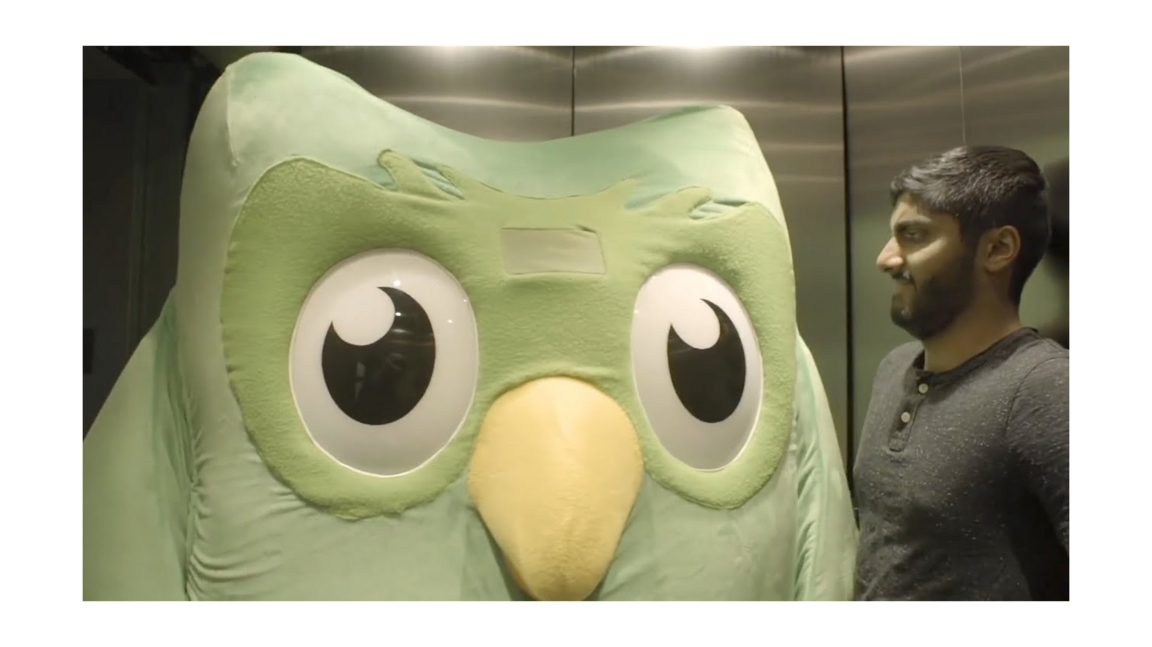
That’s exactly what interacting with the Duolingo mascot feels like. A green bird named Duo stares at you from the screen with the look of someone you’ve let down. She texts you at 2 a.m. She pops up in TikTok videos with the caption «You missed a lesson.» It has become a meme, an icon, and a cultural phenomenon—all within the confines of a language-learning app.
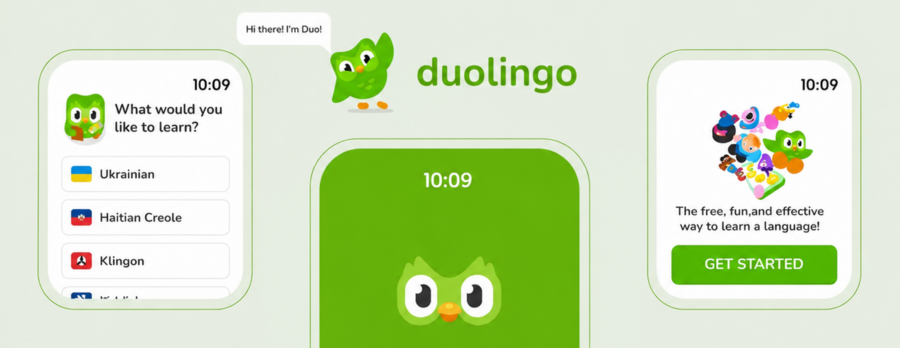
Duolingo is an American EdTech company founded in 2011. The platform offers free language learning through short, interactive lessons. To date, Duolingo has over 500 million registered users worldwide and is the most downloaded educational app in the history of the App Store and Google Plау.
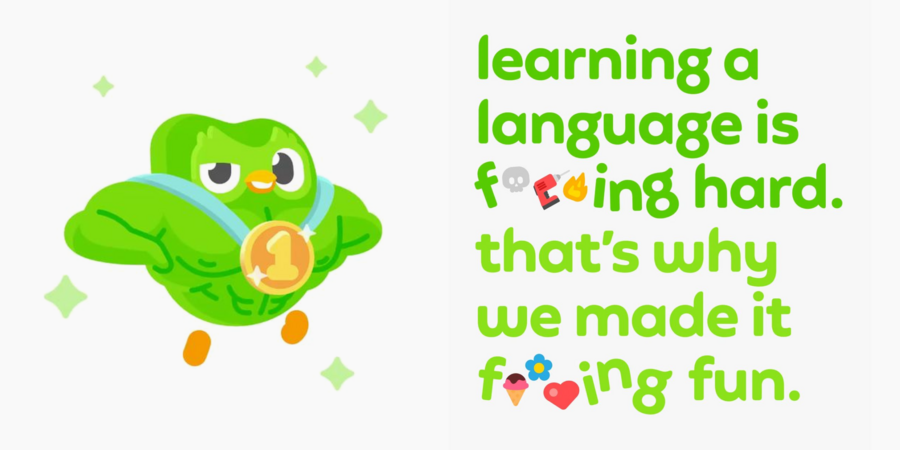
Duolingo’s core positioning is built on a paradox: a serious goal is presented through light-hearted means.
The brand actively uses memes, self-deprecating humour, provocative humour and viral content to stay on the radar even among those who don’t use the app. This allows Duolingo to compete not only with other EdTech platforms, but also with streaming services and social media for users’ attention.
Duolingo Audience
The brand’s target audience consists primarily of members of Generation Z and Millennials (aged 18–35) who spend a significant amount of time on TikTok, Instagram and Reddit, and who value authenticity, humour and an unconventional approach to communication. At the same time, the platform’s free, open-access model and gamification make it accessible to schoolchildren, students and adult users worldwide.
Communication Channels
Duolingo’s public communication space is much broader than a typical educational app. The brand is present not only inside its product, but also across social media, owned media, PR, pop culture and user-generated content. Its official digital ecosystem includes the Duolingo app and website, the Duolingo Blog, Instagram, YouTube, TikTok, LinkedIn and X. In recent years, the brand has also expanded its presence through Reddit, WhatsApp channels, influencer content and localized social media accounts in different markets.
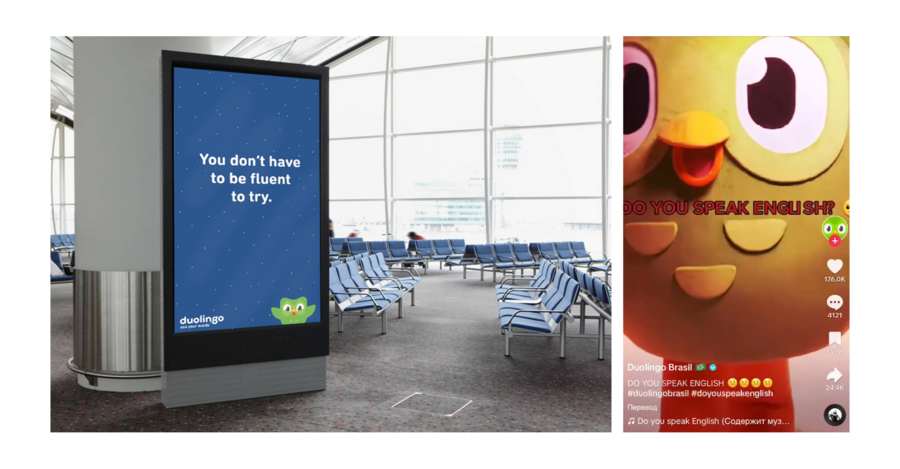
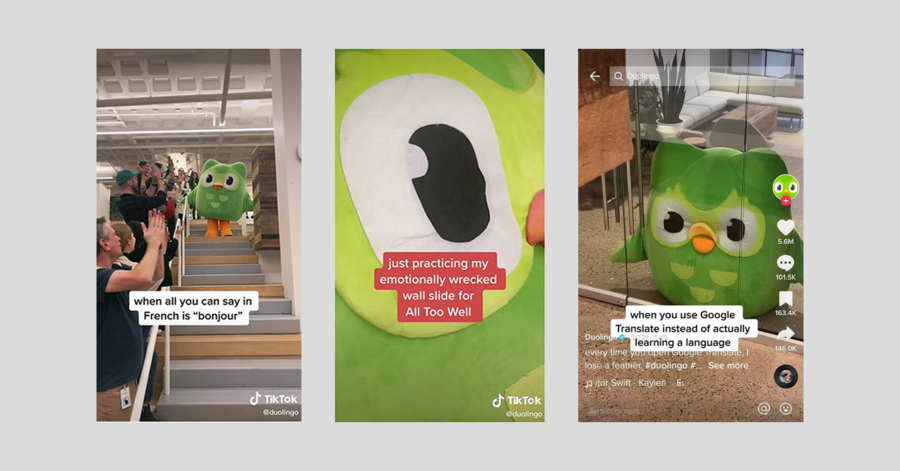
The most visible part of Duolingo’s communication is its social media presence, especially TikTok and Instagram. Instead of using these platforms only for traditional educational advertising, Duolingo presents itself as an entertainment-oriented brand. Its content often takes the form of memes, short sketches, trend-based videos and pop-cultural references.
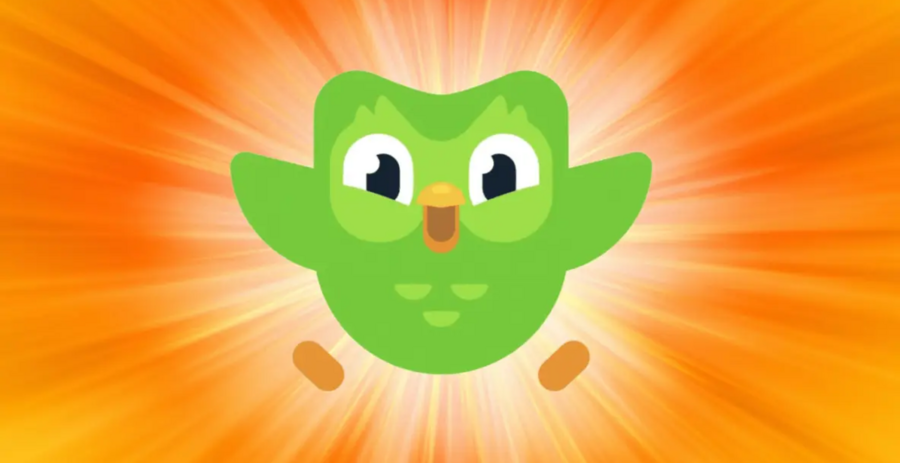
The central figure of this communication is Duo, the green owl mascot. On social media, Duo is not only Duolingo’s logo or reminder icon, but a recognizable character with a humorous and sometimes exaggerated personality. TikTok plays an especially important role in Duolingo’s public image. The platform allows the brand to react quickly to trends, use popular sounds and participate in internet culture.
Instagram supports a similar communication style through Reels, memes and visual posts. YouTube is used for video content and Shorts, while LinkedIn helps Duolingo present its employer brand and corporate personality. X is mainly used for witty reactions, jokes and real-time interaction with public conversations. Facebook has a more traditional role and helps the brand maintain contact with a broader audience.
taken from TikTok
One of Duolingo’s main PR strategies can be described as «entertain first, promote second.» The brand rarely communicates language learning as something formal or difficult. Instead, it presents learning as part of everyday digital culture: streaks, reminders, memes about Duo and jokes about motivation become recurring themes in its communication. This helps Duolingo stay visible even outside the direct context of education.
Another important strategy is community-based communication. Duolingo often reacts to comments, user jokes and memes created by its audience. The brand’s social media tone is informal and responsive, which makes its public presence feel closer to an internet personality than to a traditional company account. User-generated content, comments and audience reactions often become part of the brand’s wider communication.
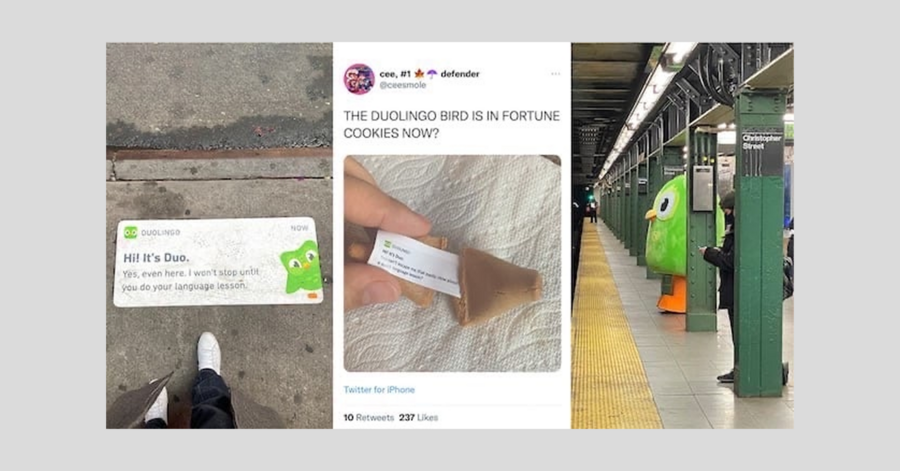
Duolingo also uses PR stunts and unexpected campaigns to attract attention. For example, the 2025 «death of Duo» campaign turned the mascot into the center of a viral online event. The campaign generated discussion across social media and received reactions from other brands and users. This type of communication shows how Duolingo uses humor, surprise and character-based storytelling to create newsworthy moments.
Overall, Duolingo’s communication channels help the brand move beyond the category of a simple educational service. TikTok and Instagram create humor and virality, X supports quick reactions and public dialogue, YouTube and creators expand reach, the blog and press channels explain updates, and the app itself continues the same recognizable tone through reminders, streaks and gamified motivation.
This section shows the main communication platforms and PR strategies of Duolingo, while the following analysis section will examine specific examples in more detail.
Uses and Gratifications Theory
According to Uses and Gratifications Theory, the audience is active and purposefully seeks out media that best satisfy their needs, which can be divided into four types according to Blumler and McQuail.
— Diversion — the need for escape from routine, entertainment, and emotional release — Personal identity — the need for self-understanding through comparison with others and through achievements — Personal relationships — the need for social interaction and emotional connection with other people — Surveillance — the need to obtain information and feel a sense of control over a situation
Duolingo actively engages all these needs in its promotion. Working to satisfy the cognitive goal of «learning a new language,» the brand creates a way to do this without great effort — through entertainment, social interaction, and visible results. Duolingo consciously competes not with other educational platforms, but with TikTok and mobile games. The brand has moved from the field of «learning quality» to the field of «attention and entertainment,» which is precisely what allows us to speak of the transformation of an educational service into an entertainment brand.
The most vivid example is the brand’s philosophy, formulated by Duolingo CEO Luis von Ahn: «Learning is hard, so make it fun — and make it weird.» This approach breaks the pattern of traditional educational services, where studying is associated with effort and discipline. Duolingo offers the opposite — a game-based approach with emotional involvement through interaction with the mascot. The brand consciously lowers the psychological barrier to entry. A user who fears «failing» at learning is given permission to make mistakes, laugh, and not take the process too seriously. This approach directly addresses the need for diversion, transforming a boring process into entertainment.
This idea is further supported by the streak mechanism — a consecutive day counter — which turns language learning into a daily ritual with game elements that users do not want to interrupt. Maintaining the streak itself becomes an engaging task for users, providing emotional release, while also satisfying the need for surveillance. A person feels a sense of control over the situation and their progress, which is achieved through concrete visual confirmations of success and effort invested — something they can take pride in and do not want to lose. This unwillingness to lose accumulated progress is what transforms learning into a game that is frightening to abandon.
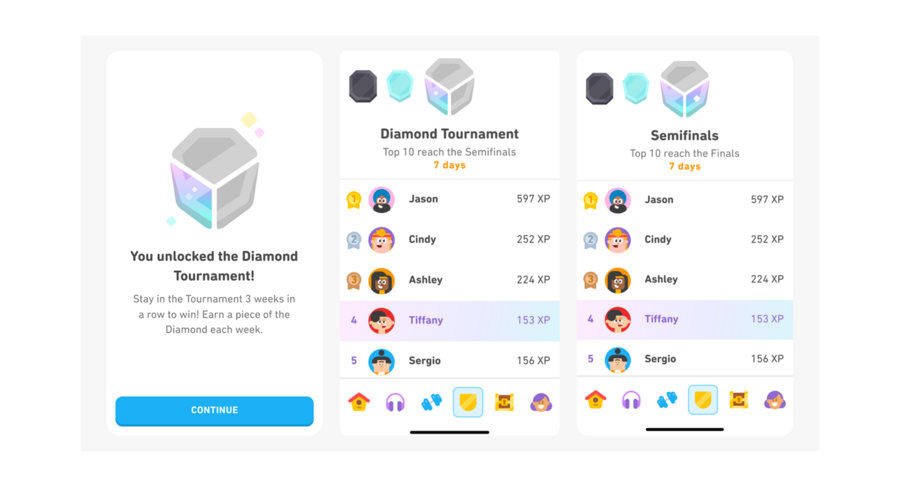
Any achievements users gain in the process — a long streak, praise from Duo, advancement in the league system — work to satisfy the need for personal identity. They give users a status they can be proud of and the ability to define themselves through a clear hierarchy. Comparing one’s results with others in the leaderboard addresses personal relationships. The very fact that other people are experiencing the same journey creates an illusion of shared presence. The friend race mechanism allows for direct interaction — seeing a friend’s progress, competing, or encouraging one another.
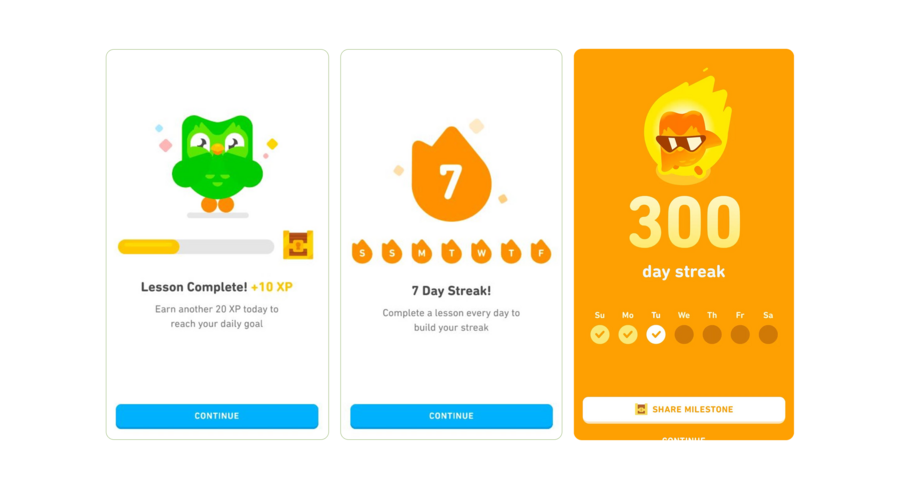

Furthermore, content across different social networks is divided according to these types of needs. TikTok features short, absurd videos for diversion (pure entertainment). Instagram* focuses on character development and regular interaction with the character for personal relationships. X (Twitter) features real-time dialogue and integration into current discussions for social integration. YouTube features long-form campaigns and educational content that satisfy the need for surveillance. Each platform targets its own audience, but together they reinforce the brand’s positioning as an entertainment brand.
At the same time, the content is not univocal: the same post or notification can satisfy different needs for different users. For one person, it is a way to learn Spanish. For another, it is a way to escape from work. For a third, it is a way to feel part of a community. The brand does not impose a single meaning but allows everyone to find their own.
*Instagram is owned by Meta Platforms Inc., which is considered extremist and banned in the Russian Federation.
Narrative Paradigm
The Narrative Paradigm asserts that people perceive life as a series of stories with characters, conflicts, beginnings, middles, and ends. What persuades people is the quality of stories — their coherence, truthfulness, and resonance with the audience’s values.
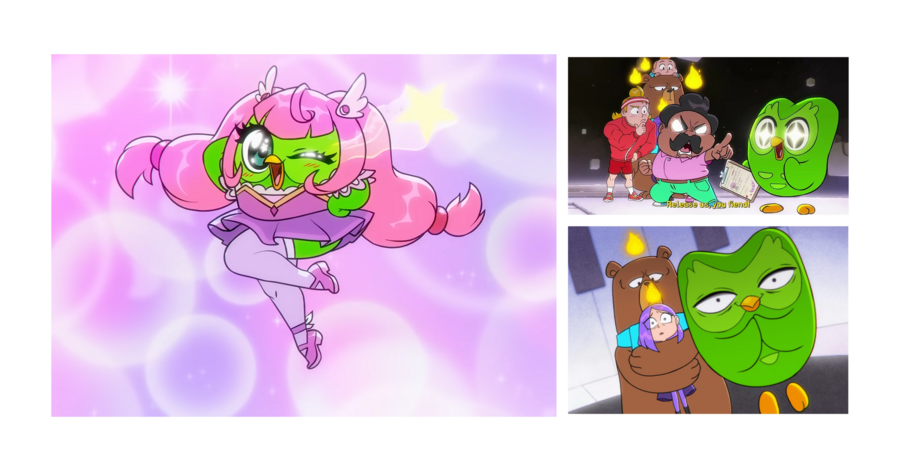
At the core of Duolingo lies a simple story that everyone understands and that grabs attention immediately: there is an owl named Duo, obsessed with the idea that everyone should learn languages. If the user does not complete lessons, Duo becomes sad, angry, and «harasses» them. If the user does complete lessons, Duo rejoices and praises them. The user finds themselves inside a story where they interact with the character, influence his emotions, and receive feedback. Thus, the user comes for Spanish but stays because they want to know what happens next with the owl.
The main element of the entire narrative is Duo. A green owl with an unusual and specific character (crazy, obsessive), motivation (to make everyone learn), and weakness (fear of being abandoned). The character is consistent and behaves predictably, which creates coherence. Moreover, this image of a «tyrannical» but funny owl resonates with the values of Generation Z: absurdity, self-irony, dark humor. The story feels convincing precisely because the character behaves predictably and speaks to the audience in its own language.
The central conflict of the narrative — without which no story is possible — arises between the user’s desire to be lazy and Duo’s obsession with making them learn. The user becomes the engine of the story’s development, constantly engaging in this conflict — choosing whether to complete a lesson or skip it.
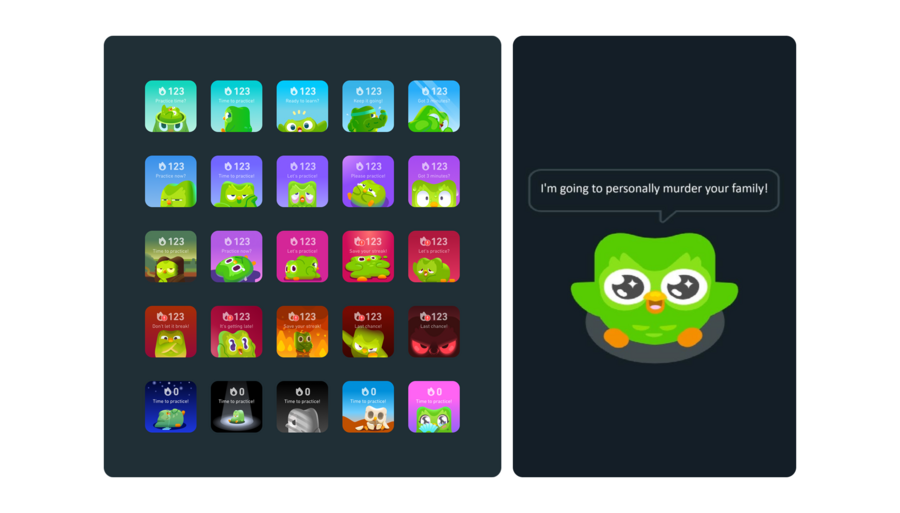
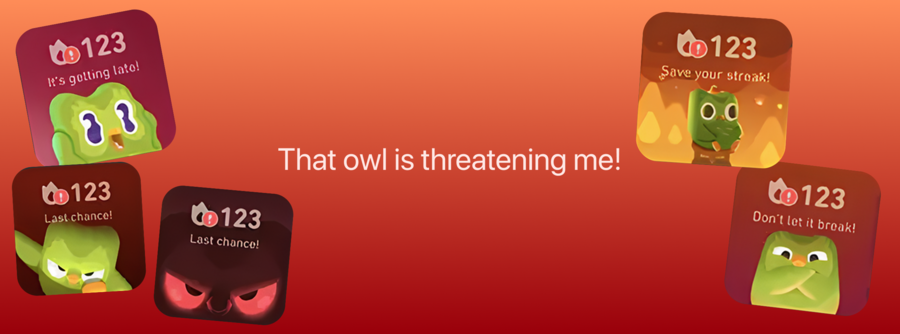
This is vividly expressed in unusual push notifications with reminders, which create the impression that the user is interacting not with an automated system but with a character who has feelings. From the perspective of communication theory, this fosters parasocial relationships — a one-sided emotional connection with a media character. The user understands that Duo does not exist, yet regular interaction creates an illusion of personal communication, which strengthens audience loyalty and engagement. As a result, notifications are perceived as part of a game — a continuation of the story about the crazy owl who watches over their progress. Consequently, entertaining interaction comes to the forefront, while the educational function recedes into the background.