
Contents
[1] Introduction [2] Communication Channels [3] Theoretical Framework [4] Analysis [5] Conclusion & Recommendations
Introduction
In the contemporary fashion industry, a brand is no longer merely a clothing manufacturer but an independent participant in the communication process. Through visual identity, advertising campaigns, digital platforms, and audience engagement, brands shape perceptions of lifestyle, values, and cultural codes. In this context, clothing becomes more than a functional product — it serves as a carrier of meaning through which companies build relationships with their audiences and foster communities of like-minded individuals.
From a communication theory perspective, a brand can be viewed as a system of signs and messages that continuously interacts with consumers across multiple channels. In the digital environment, communication has become increasingly dialogic: audiences not only receive brand messages but also participate in their interpretation, discussion, and dissemination. As a result, the success of a contemporary fashion brand depends not only on product quality but also on its ability to consistently communicate its identity and cultivate long-term relationships with customers.


Ushatava Garderobe FW25/26
The Russian fashion house Ushatava was selected as the subject of this study. The brand was founded in 2015 in Yekaterinburg by Nino Shamatava and Alisa Ushakova, and its name, pronounced [ushatáva], is derived from the founders’ surnames. Today, Ushatava positions itself as an experimental fashion house focused on creating practical yet distinctive designs. Each collection explores the contemporary wardrobe, combining functionality with expressive silhouettes and a modern perspective on fashion.
A key characteristic of the brand is its commitment to creating clothing that transcends short-term trends and instead develops its own distinctive visual language. The brand is built around three main lines: Research, an experimental runway direction that reflects its unique perspective on contemporary fashion; Garderobe, a functional collection of everyday wardrobe essentials designed to be mixed and matched; and Special, a line created for special occasions, featuring more complex silhouettes, statement cuts, and striking details. This approach allows the company to explore conceptual ideas while maintaining the practical value of its collections.

Ushatava Garderobe collection FW25/26
In its communication with audiences, the brand focuses not only on showcasing its products but also on explaining the ideas behind them. Ushatava regularly shares insights into the concepts of its collections, the characteristics of its materials, the design process, and the cultural context underlying its creative decisions. This strategy aims to foster a strong community around the brand and cultivate long-term customer loyalty.
The target audience is between 25 and 40 years old, with the core consumer group consisting of individuals aged 28–35. The brand primarily targets residents of major cities with fast-paced lifestyles. Its main markets are Moscow, St. Petersburg, Yekaterinburg, and Almaty.
The brand’s audience is characterized by a strong interest in contemporary art, design, architecture, and cultural events. These consumers seek individuality while also valuing comfort, functionality, and quality. Although they stay informed about current fashion trends, they take a conscious approach to building their wardrobes, favoring durable and versatile pieces over short-lived trends.
Communication Channels
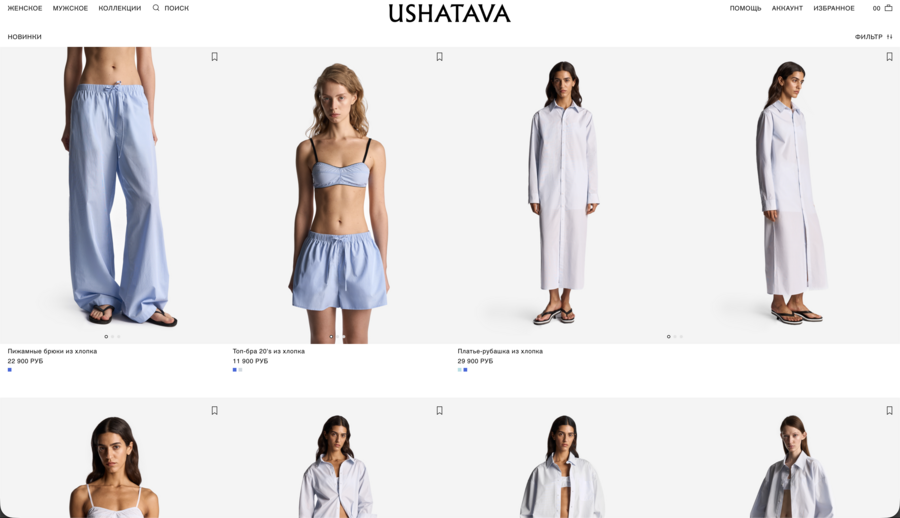

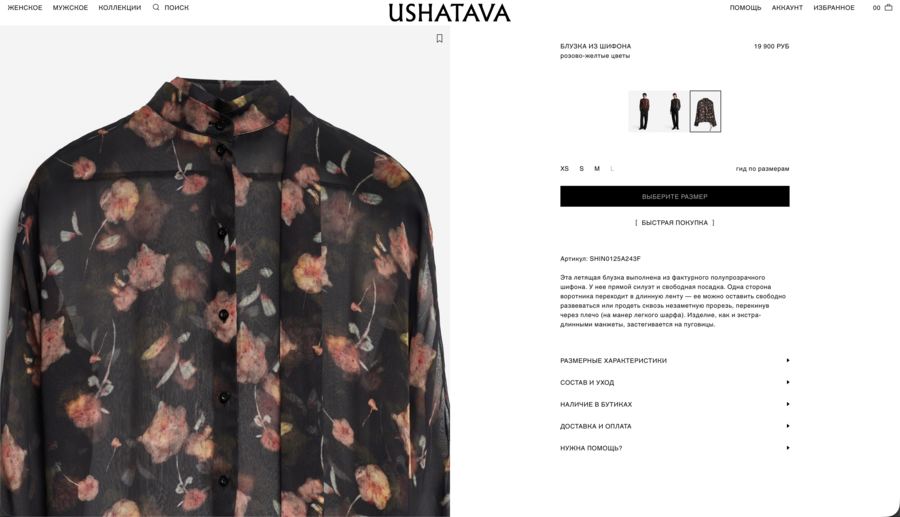

The brand’s official website
Ushatava maintains a strategic presence across five key digital platforms, each carefully positioned to serve a distinct function within its ecosystem. This multi-channel architecture enables the brand to communicate with different audience segments while preserving an authentic, cohesive voice.
The brand’s social networks: instagram*, telegram, VKontakte
— Website (the primary platform for e-commerce, the complete product catalog, brand information, and customer data collection)
— Instagram* (visual campaigns, lookbooks, editorial photography, and communication of the brand’s aesthetic values)
— Telegram (exclusive updates, collection launches, behind-the-scenes content, and direct communication with the community)
— YouTube (the brand’s archive, atmospheric long-form content, campaign films, and advertising videos)
— Facebook* (additional channel for campaign distribution and audience outreach)
— VK (a community space for news, updates, and audience discussions)
The brand’s YouTube channel
Ushatava’s PR strategy is centered on editorial storytelling and the cultivation of a strong visual identity. The brand relies on high-quality fashion campaigns, cinematic imagery, and carefully curated content rather than aggressive advertising. Collaborations with artists, creatives, and cultural initiatives reinforce Ushatava’s positioning within the contemporary fashion landscape. Through consistent aesthetics and emotionally driven narratives, the brand builds a lifestyle image and maintains a close relationship with its audience.
Theoretical Framework
To analyze Ushatava’s communication strategy, two communication theories were selected: the Uses and Gratifications Theory and the Elaboration Likelihood Model. These theories make it possible to examine the brand’s communication from two perspectives: understanding why audiences engage with Ushatava’s content and identifying the ways in which the brand creates perceived value for its products in the minds of consumers.
Uses and Gratifications Theory
Uses and Gratifications Theory was developed by Jay Blumler and Denis McQuail in the 1970s as a response to media effects research that largely viewed audiences as passive recipients of messages. In contrast, the theory argues that audiences are active participants in the communication process who consciously select media content based on their own needs and goals.
According to the theory, people use different media to satisfy specific needs, while media compete for audience attention alongside other sources of experience. Researchers identified four main categories of needs:
- Diversion
- Personal Relationships
- Personal Identity
- Surveillance
Elaboration Likelihood Model
The Elaboration Likelihood Model, developed by Richard Petty and John Cacioppo in the 1980s, explains how persuasive messages influence audiences. According to the theory, communication can be processed and evaluated through two main routes: the central route and the peripheral route.
The Central Route involves active cognitive processing of information. Individuals carefully evaluate the content of a message, assess its arguments, and form attitudes based on the facts and information presented. The effectiveness of communication depends on the quality of these arguments: strong arguments generate positive cognitive responses, weak arguments lead to negative reactions, while neutral arguments are unlikely to produce significant attitude change.
The Peripheral Route relies on simplified cognitive processes and external cues that are not directly related to the message content. In this case, perceptions are shaped by factors such as visual appeal, source credibility, brand likability, social endorsement, or a sense of exclusivity and scarcity.
Analysis
Uses and Gratifications Theory
This theory provides a useful framework for analyzing Ushatava’s communication strategy, as it makes it possible to examine not only the messages the brand communicates to its audience, but also the needs that consumers satisfy through their engagement with the brand’s content.
Personal Identity
One of the key functions of communication is the construction and reinforcement of audience identity. The brand consistently promotes values such as conscious consumption, contemporary design, cultural awareness, and individual self-expression. Through founder interviews, stories about the brand’s philosophy, and insights into the concepts behind its collections, audiences are able to identify with these values and use the brand as a means of expressing their own identity.
Posts from the brand’s telegram channel
Surveillance
The brand’s communication also serves an informational function by providing audiences with insights into contemporary design trends, the garment creation process, material selection, and the sources of inspiration behind its collections. Ushatava shares the concepts behind each season, details of garment construction, and artistic references, allowing followers to gain not only promotional information but also a broader cultural perspective.
Posts from the brand’s telegram channel