
Structure
- Introduction
- Communication Channels
- Theoretical Framework
- Analysis
- Conclusion & Recommendations
- List of Literature
1. Introduction
Oatly is a Swedish food and beverage company that specializes in oat-based dairy alternatives. Founded in the 1990s and built on research conducted at Lund University, the company has become one of the most recognizable brands in the plant-based food industry. Oatly produces a wide range of products, including oat milk, yogurt alternatives, ice cream, cooking creams, and spreads. However, the brand is not positioned merely as a producer of food products. Instead, it presents itself as a company that seeks to transform the food system by promoting more sustainable consumption habits and reducing the environmental impact associated with traditional dairy production.
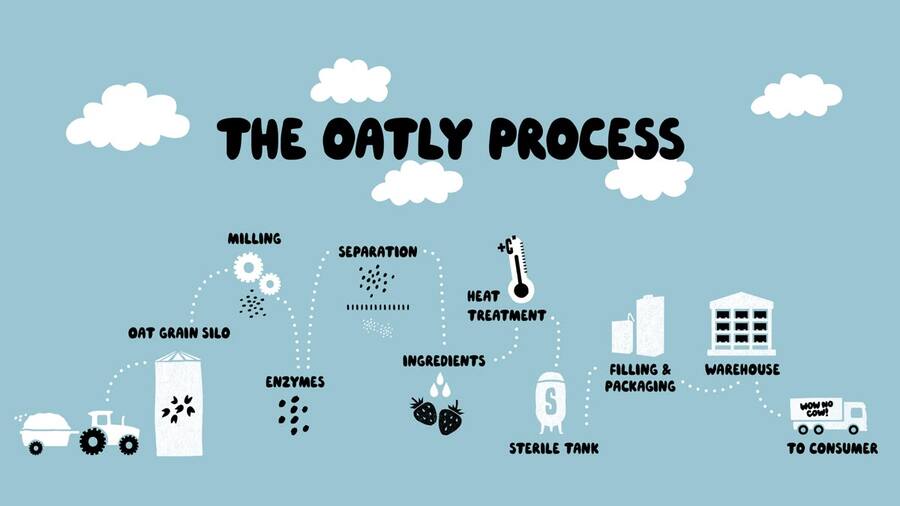
From a communication theory perspective, Oatly’s positioning can be understood as value-based and purpose-driven branding. The company consistently communicates a central message: choosing oat-based products is a more environmentally responsible alternative to consuming conventional dairy products. Sustainability is therefore not a secondary attribute but the foundation of the brand identity. Oatly defines itself as a «climate solutions company, ” emphasizing its contribution to addressing climate change through innovation in food production. This approach allows the brand to differentiate itself from competitors not only through product features but also through a broader social and environmental mission. The brand’s communication strategy relies heavily on creating a distinct identity through transparency, humor, and unconventional messaging. Oatly often uses informal language, self-aware comments, and direct conversations with consumers. Such communication helps reduce the distance between the company and its audience, creating a sense of authenticity. According to communication theory, this can be interpreted as a strategy of relationship building, where the brand attempts to establish dialogue rather than simply deliver advertising messages. Oatly’s packaging, advertising campaigns, and public statements frequently include explanations of environmental issues, production methods, and company values, encouraging consumers to engage with the brand on an ideological level.
Another important element of Oatly’s positioning is its role as a challenger brand. Instead of competing solely on taste or price, Oatly challenges established norms in the food industry, particularly the dominance of dairy products. The company frequently compares the environmental footprint of oat-based products with that of dairy alternatives and encourages consumers to reconsider traditional consumption patterns. This strategy creates a strong brand narrative in which Oatly is presented as an agent of change rather than just a commercial organization.
The target audience of Oatly is broad but can be divided into several key segments. The primary audience consists of environmentally conscious consumers who are interested in sustainability and climate issues. These individuals are often willing to modify their consumption habits in order to reduce their ecological impact. Oatly’s communication appeals to this group by providing information about carbon emissions, resource efficiency, and sustainable food systems. A second important audience includes younger consumers, particularly Millennials and Generation Z. These groups are generally more receptive to brands that express clear social values and engage with global issues. Oatly’s playful tone, creative visual style, and strong presence on digital platforms align well with the communication preferences of younger audiences. The brand’s informal and often humorous messaging helps it stand out in a crowded media environment and increases its shareability on social networks. A third segment includes health-conscious consumers who may be interested in plant-based products for nutritional or lifestyle reasons. While environmental sustainability remains the dominant message, Oatly also communicates product benefits such as convenience, versatility, and suitability for people who avoid dairy products.
Geographically, Oatly targets urban populations in international markets, including Europe, North America, and Asia. Urban consumers are often more exposed to sustainability discussions, plant-based trends, and alternative food cultures, making them a receptive audience for the brand’s message.
2. Communication Channels
The official Oatly website is one of the main communication channels. It provides information about products, company values, sustainability goals, and climate-related initiatives. The website works as an owned media platform where the brand controls its message and builds transparency. By sharing information about its environmental impact and production methods, Oatly strengthens trust and credibility among consumers.
Social media is a key part of Oatly’s public communication. The brand actively uses Instagram to share creative campaigns, product content, sustainability messages, and humorous posts. The platform helps Oatly connect with younger audiences through visual storytelling and informal communication. Facebook is also used for broader audience engagement, including campaign updates and brand news.
LinkedIn serves a different purpose by targeting professional audiences such as employees, investors, and business partners. Through this platform, Oatly communicates its corporate achievements, sustainability strategies, and role in the future of the food industry. YouTube is another important channel where the company publishes advertisements, videos, and educational materials. Video content allows Oatly to explain complex topics like climate impact in an accessible way.
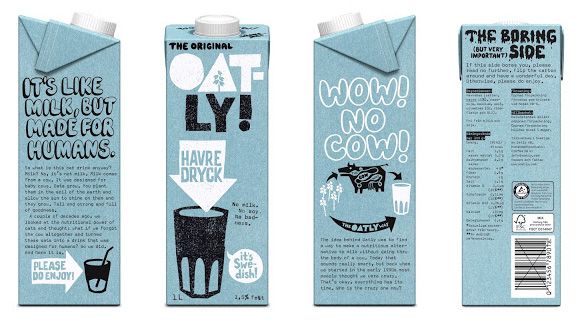
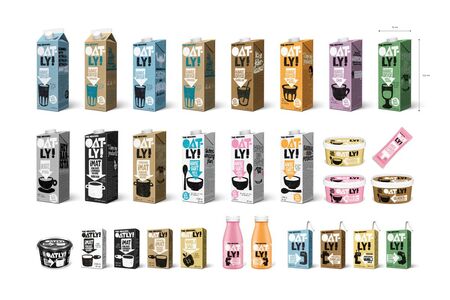
Packaging is also an important communication tool for Oatly. The brand uses its cartons as a medium to communicate with consumers through humor, creative text, and sustainability messages. This makes the product itself part of the brand’s communication strategy.
3. Theoretical Framework
This analysis applies two communication theories to evaluate Oatly’s brand communication: — The Elaboration Likelihood Model (ELM) by Petty and Cacioppo — Dialogic Theory by Kent, Taylor and Pearson
These theories were selected because Oatly uniquely combines fact-based persuasion (sustainability data) with open, sometimes provocative dialogue with its audience, which is a rare combination in the plant-based food industry.
Elaboration Likelihood Model (ELM) — Petty & Cacioppo
The Elaboration Likelihood Model explains that people process persuasive messages in two different ways.
When the audience cares a lot about a topic and has the time, knowledge, and ability to think critically, they follow what is called the central route. In this case, they carefully analyze facts, data, and strong arguments. This leads to a strong and long‑lasting change in their attitudes.
On the other hand, when the audience does not care much about the topic or cannot think deeply because they are busy, distracted, or lack knowledge, they follow the peripheral route. Here, people do not analyze facts. Instead, they rely on simple mental shortcuts or cues such as humor, attractive design, a likable spokesperson, or social proof — the feeling that «everyone is doing it». The attitude change that results from the peripheral route is weaker and more temporary, but it can reach a much larger audience.
Oatly uses both routes very effectively. For environmentally engaged consumers, they provide clear data on CO₂ emissions and water savings. For broader, less involved audiences, they rely on dark humor, a hand‑drawn visual style, and a distinctive, sometimes sarcastic tone of voice.
Dialogic Theory — Kent, Taylor & Pearson
Dialogic theory explains how organizations should ethically build quality relationships with publics through dialogue — not one-way communication.
Five key features of dialogue:
- Mutuality: Acknowledgment that organization and publics are tied together; collaboration.
- Propinquity: Communication happens before decisions are made; publics help shape outcomes.
- Empathy: Support, trust, and communal orientation; publics are encouraged to participate.
- Risk: Vulnerability, unanticipated consequences, acceptance of «strange otherness».
- Commitment: Genuineness, honesty, commitment to conversation and mutual understanding.
Oatly’s communication practices strongly reflect three core principles of dialogic theory: mutuality, risk, and commitment. The brand regularly publishes critical emails from retailers, openly acknowledging that its relationship with business partners and consumers is mutuality. By exposing itself to public criticism, Oatly demonstrates a willingness to be vulnerable, which is a risk. Finally, its consistent tone of voice over many years, its refusal to delete negative comments, and its direct engagement with critics show a genuine commitment to ongoing conversation, not just one‑way promotion.
The principles of propinquity and empathy are less clearly present. Oatly rarely invites its audience to co‑shape decisions before they are made, and its sometimes sarcastic tone can be seen as lacking traditional empathy. However, the brand’s overall approach remains one of the best examples of dialogic communication in the food and beverage industry.
4. Analysis
This section applies the two theoretical frameworks — ELM and Dialogic Theory — to real examples of Oatly’s brand communication. Each example is illustrated and analyzed from a scientific perspective.
ELM Analysis — Central Route
The screenshot shows an Oatly website section that presents factual data comparing the environmental impact of oat milk with cow’s milk. The post includes specific numbers — for example, how much less CO₂ is emitted, how much less water is used, and how much less land is occupied.
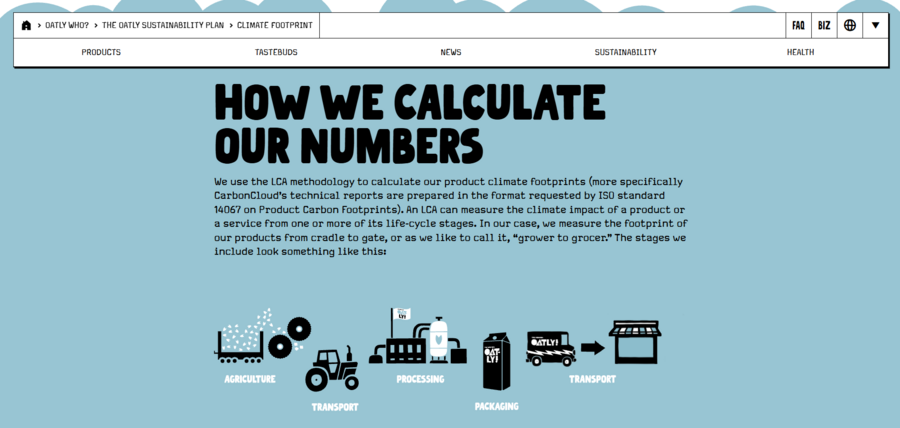
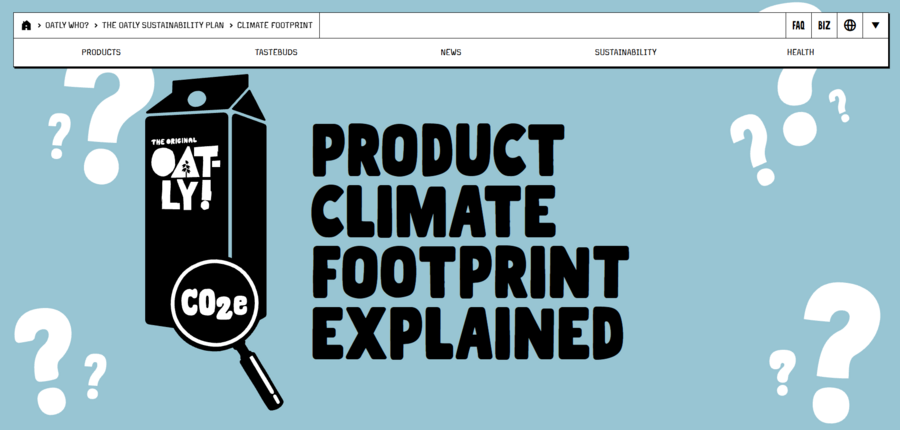
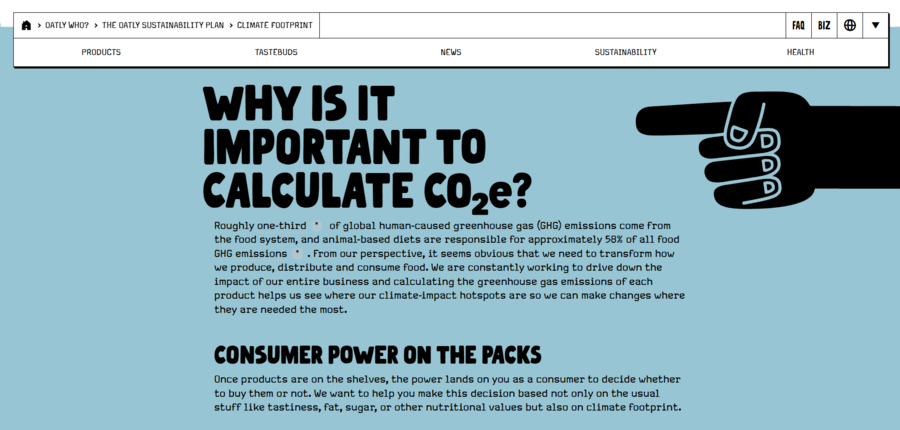
For a consumer who already cares about climate change and has the time and knowledge to read and compare, this information triggers the central route of processing. The consumer does not just glance at the post. She carefully examines the facts, checks whether the numbers seem credible, and compares oat milk with other plant‑based or dairy alternatives.
As a result, she forms a strong, rational, and long‑lasting positive attitude toward Oatly. She trusts the brand not just because it is funny or stylish, but because the numbers make sense. This is exactly how the central route works: high personal relevance leads to deep thinking, and deep thinking leads to durable persuasion.
ELM Analysis — Peripheral Route
The screenshot shows an example of Oatly’s communication that relies on humor, distinctive hand‑drawn illustration, and a provocative slogan rather than factual data.