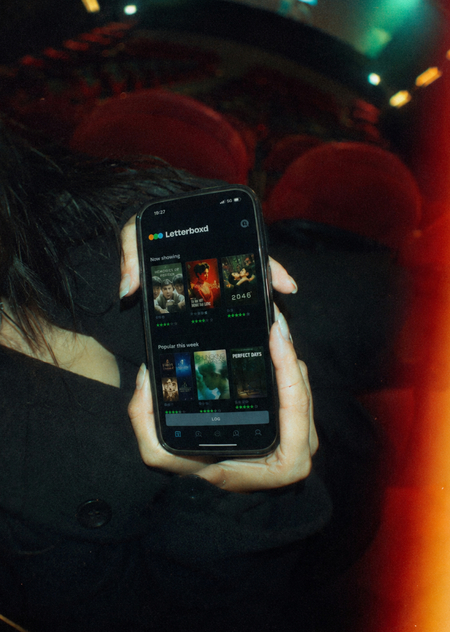
Данный проект является учебной работой студента Школы дизайна или исследовательской работой преподавателя Школы дизайна. Данный проект не является коммерческим и служит образовательным целям
Проект принимает участие в конкурсе

Track films you’ve watched. Save those you want to see. Tell your friends what’s good.

Letterboxd

Brand Background and Positioning

Letterboxd is an online social platform for movie lovers that combines the functions of a movie database, a viewing diary, and a social network. It is also available as a website, but is more often used as an application on a smartphone.

The service was founded in 2011 by New Zealand developers Matthew Buchanan and Carl von Randow. Initially, the platform was created as a place for users to record their movie viewings, rate them, and write reviews. However, over time, Letterboxd has evolved into a full-fledged digital community, uniting millions of viewers worldwide.
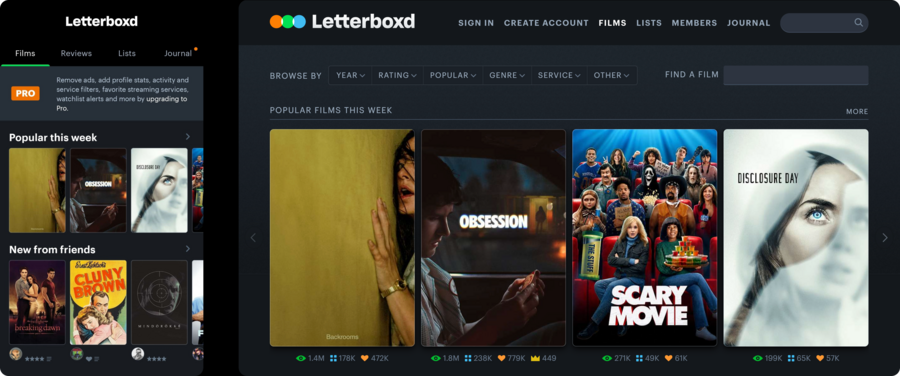
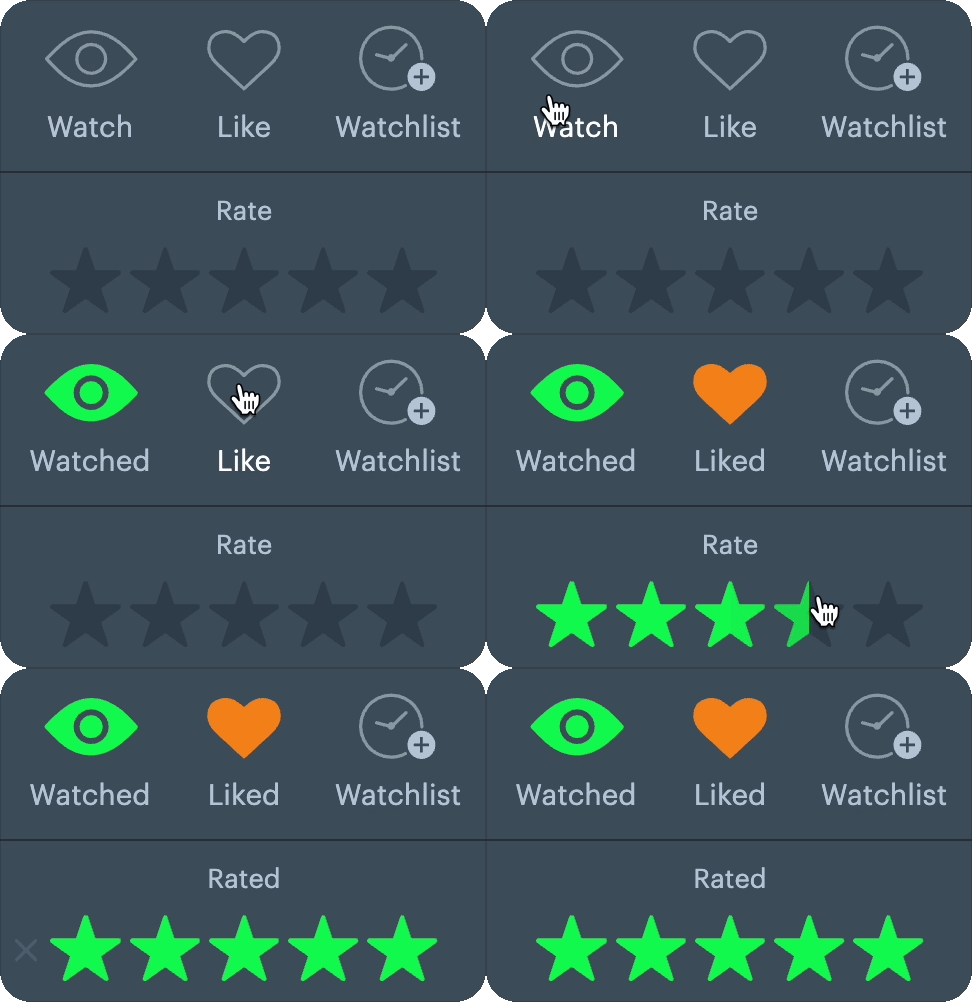
Letterboxd’s logo / Screenshots of the main page

Letterboxd users can rate movies they’ve watched, write reviews, follow friends and follow their activity, and save movies they want to watch. Unlike the typical rating system on IMDB, users rate movies out of 5 stars, with the option to rate half a star, making ratings more flexible. Users can also add a movie to their favorites or skip rating altogether and use the app as a viewing diary without ratings. Also, if a person has no ideas what to watch, they can find movie lists from other users by category or even write their own.
post

The site is known for attracting film buffs who enjoy debating the movies they’ve seen. According to an internal survey conducted in 2022, users, on average, watched more films and spent more money on movies than the average moviegoer. Unlike many digital services, the company has rarely used large-scale advertising campaigns to attract users. In 2023, the company reported surpassing 10 million users, and by the end of 2024, the platform’s audience exceeded 17 million. A significant event in the company’s history was the acquisition of a controlling stake by Canadian investment company Tiny in 2023.

Letterboxd’s key target audience is Millennials and Gen Z, who actively use digital platforms. For many users, their Letterboxd profile becomes part of their digital identity: favorite movie lists, published reviews, and ratings became kind of a form of a unique profile. This platform fulfills not only the need to find information about movies but also deeper social needs related to self-presentation, community, and participation in cultural discussions. Those things build a strong connection between Letterboxd and the audience due to the lack of similar alternatives.

Speaking of this connection, a distinct feature of the brand is its close connection to contemporary internet culture. Letterboxd actively integrates into the social media ecosystem, where users regularly post screenshots of their ratings, lists, and reviews. Social media even sees trends featuring the Top-4 Letterboxd Films. Many films receive additional attention thanks to discussions on the platform. Furthermore, Letterboxd features renowned directors, actors, critics, and film industry figures, reinforcing its status as a significant contributor to contemporary cinematic culture.

Communication channels

Letterboxd uses a combination of owned, earned, and social media communication channels that reinforce its identity as a community-driven platform for film enthusiasts. Unlike many digital brands, Letterboxd relies less on traditional advertising and more on user-generated content, community engagement, and organic visibility. This strategy strengthens the sense of authenticity that attracts its core audience.

The primary communication channel is the Letterboxd platform itself. Through the website and mobile application, users can log films, write reviews, create lists, follow other members, and interact through likes and comments. The interface encourages continuous participation and transforms communication into a daily activity rather than a one-time interaction.

Исходный размер 1160x414

Screenshots of users' top-4 on Letterboxd

— Social media

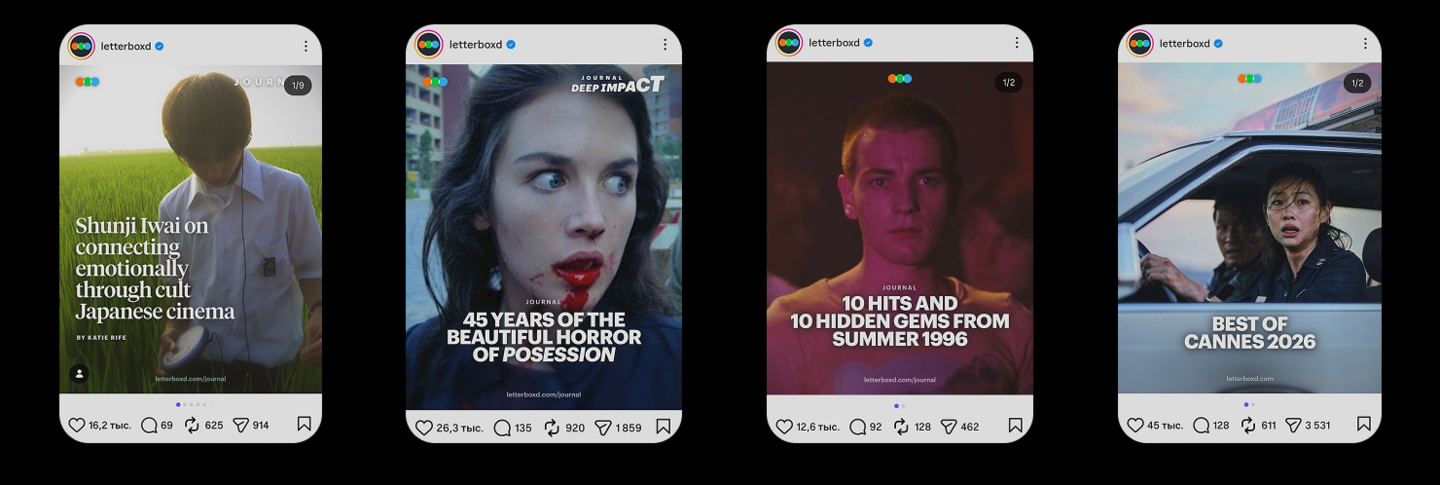
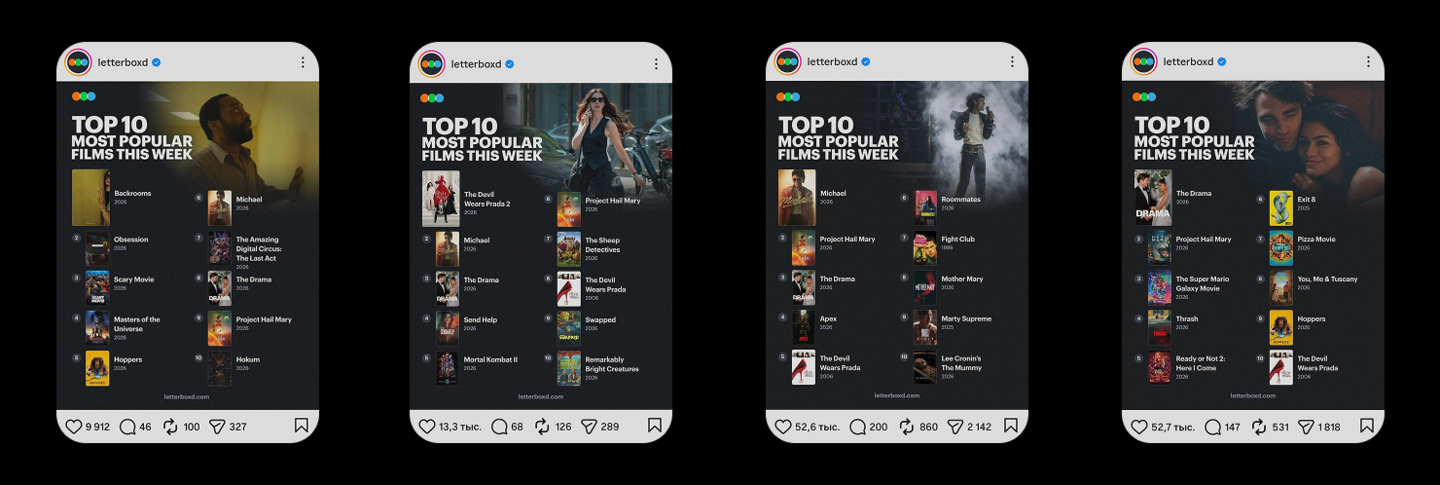
Instagram* is one of Letterboxd’s most active social media channels. The brand publishes film recommendations, interviews, statistics, community highlights, and promotional materials related to major film releases.

The visual style is consistent with the platform’s identity and appeals to younger audiences who value aesthetics and self-expression. Instagram also encourages users to share screenshots of their profiles, ratings, and favorite film lists, creating additional organic promotion.
0

Letterboxd posts on Instagram* (*banned in Russia)
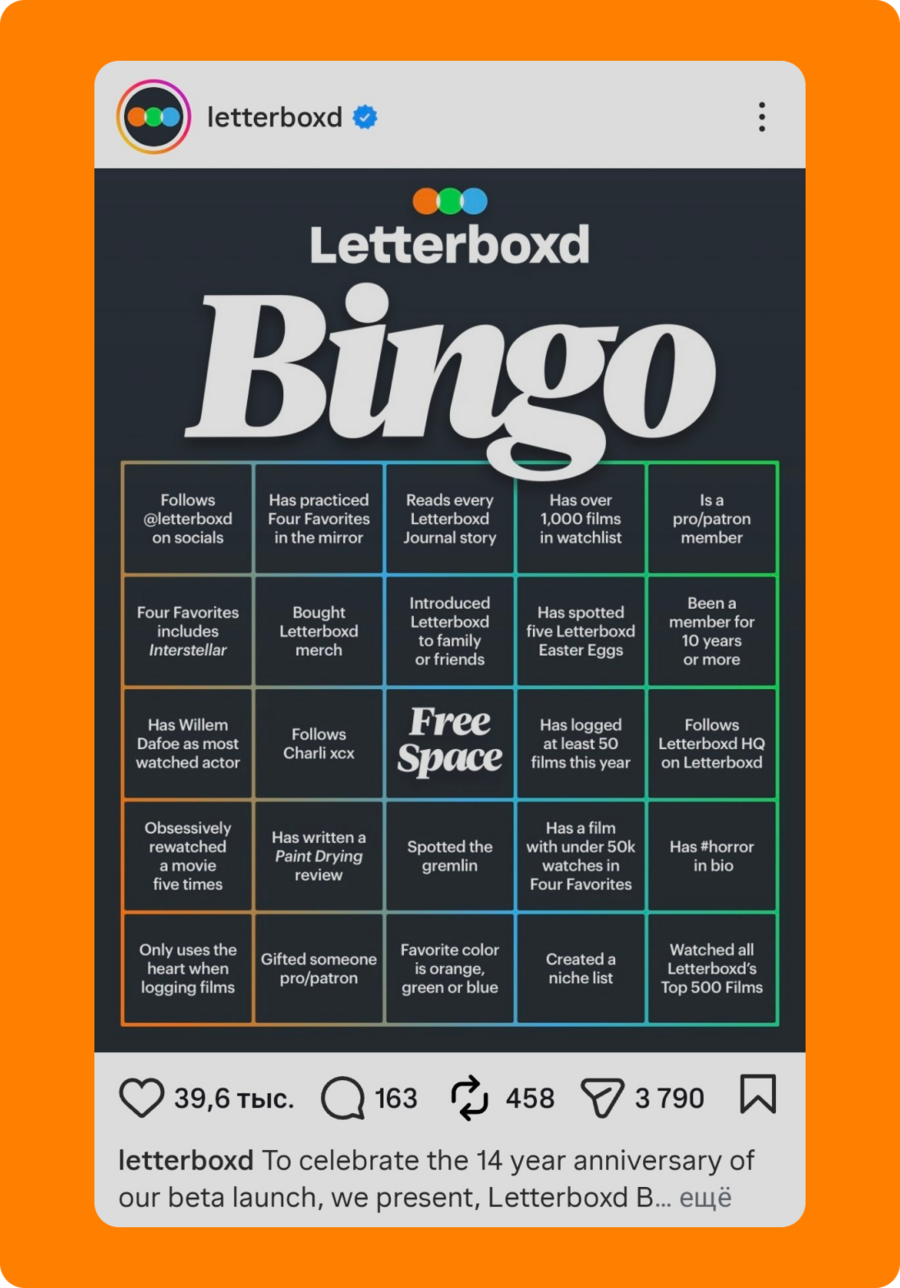
Letterboxd posts on Instagram* (*Meta banned in Russia)

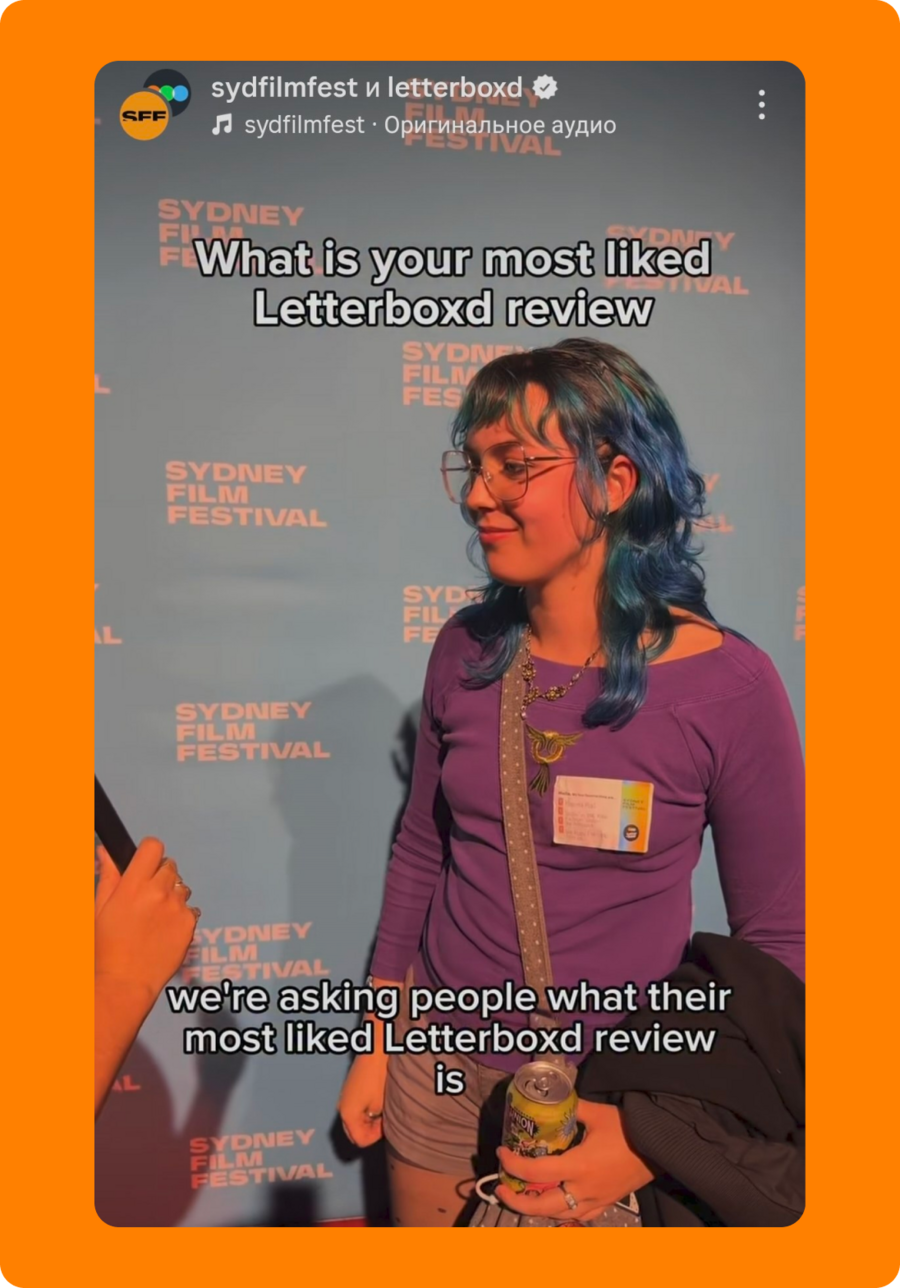
TikTok allows Letterboxd to engage directly with Gen Z audiences. The platform publishes short videos featuring film recommendations, trending movies, humorous content, and community discussions.

TikTok communication reflects the informal and playful tone commonly found on Letterboxd itself. This helps maintain a coherent brand personality across platforms.

Исходный размер 1201x622

Letterboxd videos on TikTok

On X*, Letterboxd participates in real-time conversations about cinema, major film events, award ceremonies, and popular cultural discussions. The platform often uses humor, memes, and conversational language, reinforcing its image as a culturally aware and community-oriented brand.

Исходный размер 1623x350

Letterboxd posts on X* (*banned in Russia)

Letterboxd’s YouTube channel serves as an important communication channel that extends the brand beyond the platform itself. Through interviews with directors, actors, critics, and content creators, Letterboxd actively participates in contemporary film culture and industry discussions. Popular content formats, such as celebrity watchlists, film recommendations, and conversations about personal viewing habits, attract both existing users and broader cinema audiences.

These videos reinforce the platform’s credibility and position Letterboxd not only as a social networking service for film lovers, but also as a media brand that contributes to larger cultural conversations about cinema. By featuring well-known figures from the film industry, the platform strengthens its authority, increases audience engagement, and further develops its image as a central hub for film discussion and discovery.

Исходный размер 800x525

Letterboxd YouTube channel

— User-Generated Content and External Social Media

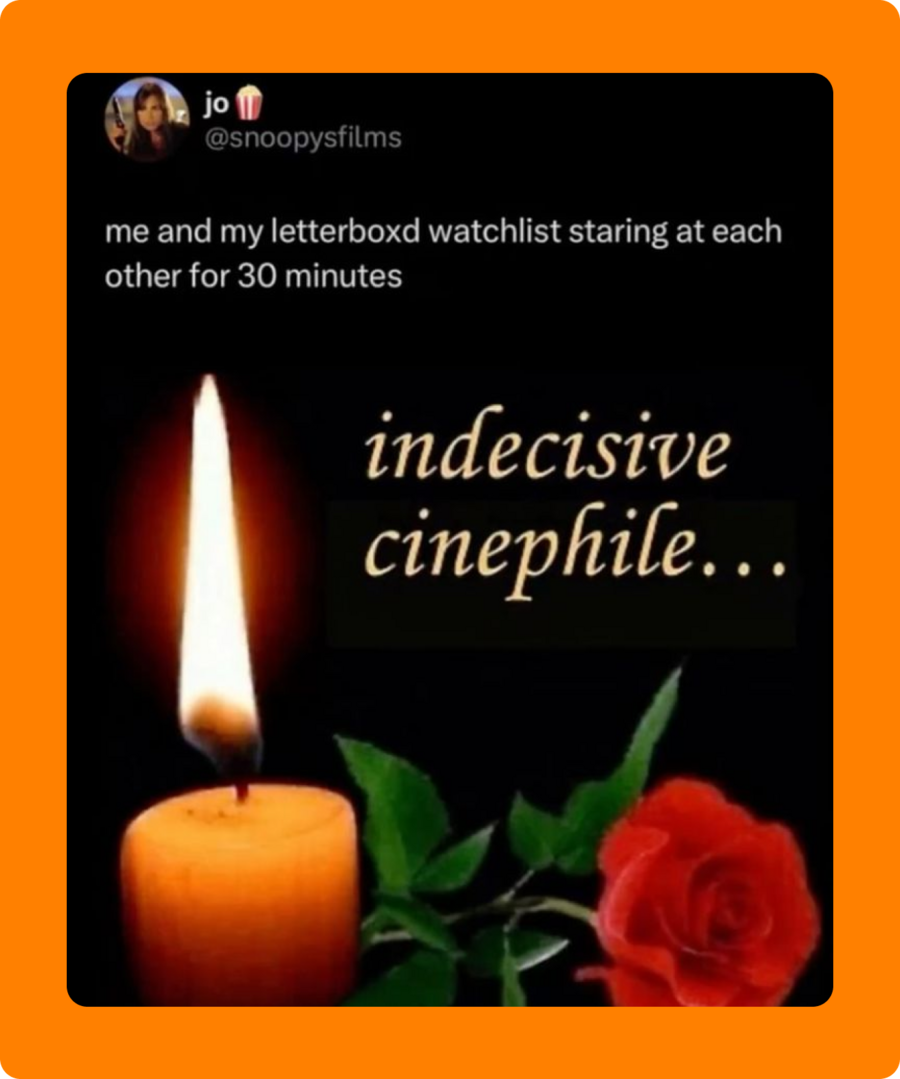
Perhaps the most important communication channel is content created by users themselves. As noted earlier, Letterboxd has become deeply integrated into internet culture, where users regularly share screenshots of reviews, ratings, favorite films, and rankings on various social media platforms.

This form of communication generates significant earned media and allows the platform to grow organically through community participation. Trends such as sharing a «Top-4 Films» grid demonstrate how users become active promoters of the brand.
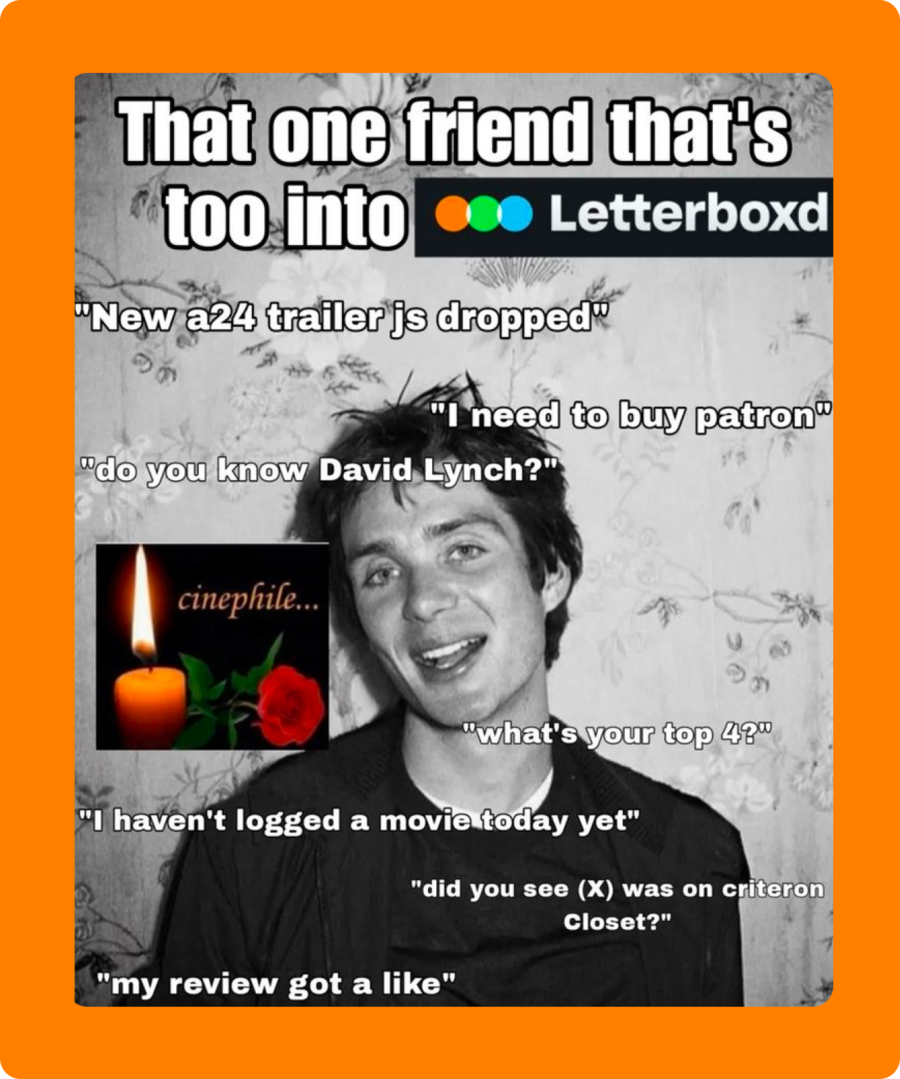
Letterboxd in memes

— Merchandise and Brand Lifestyle

Letterboxd extends its communication strategy beyond digital platforms through branded merchandise. The company offers a curated selection of products, including apparel, accessories, posters, stationery, and film-related gifts. Rather than functioning solely as a source of revenue, the merchandise reinforces the platform’s identity and allows users to express their affiliation with the Letterboxd community.

The products reflect the visual language and cultural values of the brand, emphasizing film appreciation, creativity, and community participation. By purchasing and displaying these items, users publicly signal their connection to the platform, transforming brand engagement into a form of identity expression.

Исходный размер 3731x1164

Letterboxd Gift Guide

— Complaints

Despite its popularity, Letterboxd receives several recurring complaints from users. One common criticism concerns the recommendation system, which many users consider less personalized than those offered by streaming platforms. Some users also express dissatisfaction with the growing influence of popular reviewers, arguing that highly visible opinions can dominate discussions and reduce diversity of viewpoints.

Another concern involves the platform’s social features. While Letterboxd encourages interaction, some users feel that meaningful discussions are limited because comment sections are relatively simple compared to traditional forums. In addition, occasional complaints arise regarding moderation decisions, review visibility, and the balance between community freedom and content control.

Some users have also criticized certain premium features being available only through paid subscriptions, arguing that additional statistics and personalization tools could be more accessible. However, these concerns generally do not outweigh the positive perception of the platform, and Letterboxd continues to maintain strong user loyalty and engagement.

Another concern some users have is that the platform becomes less serious about film reviews prioritizing the one-sentence meme reviews, which some may view as removing any real discussion about cinema.

Letterboxd actively addresses complaints through updates, feature improvements, and ongoing dialogue with its community. The company’s transparent communication style and close relationship with users help maintain trust even when criticism arises.

Theoretical Framework

Communication on Letterboxd reflects not only interaction between users, but also broader patterns that contribute to the platform’s overall identity. These patterns can be understood through Politeness Theory and Social Exchange Theory.

Politeness Theory (Brown & Levinson, 1987) explains how people manage «face», defined as «the public self-image that every member wants to claim for himself». On Letterboxd, this idea goes beyond individual conversations and becomes part of the platform’s culture. Users do not simply share opinions about films, they express them in ways that follow common stylistic patterns, such as humor, irony, and indirect criticism. These patterns show that facework is not only individual but also collective, helping to create a consistent tone that influences how the platform presents itself.

In this way, Letterboxd can be seen as a space where self-presentation and platform identity are closely connected. By using strategies such as softening criticism or relying on shared cultural references, users both manage relationships with others and present themselves in a way that fits the platform’s style. This means that politeness is not only about avoiding conflict, but also about aligning with a broader communicative norm that shapes the platform’s «voice».

Social Exchange Theory helps explain why these patterns are repeated. Social interaction can be understood as a process where people seek benefits and try to avoid negative outcomes. On Letterboxd, benefits include likes, visibility, and recognition, while possible costs include criticism or being ignored. Because of this, users are more likely to adopt communication styles that receive positive responses. Over time, this reinforces the platform’s tone and strengthens its identity as a witty and culturally aware media space.

Together, these theories make it possible to analyse Letterboxd not just as a place for interaction, but as a platform where repeated communication practices shape a clear and recognisable public image.

Analysis

One of the most noticeable features of communication on Letterboxd is the nature of user reviews. Funny reviews of films, even those with serious plots, are more common. Letterboxd users frequently use humor, irony, memes, and cultural references. Even negative film reviews are often expressed in a humorous manner, which helps soften the criticism and avoid direct confrontation.

Исходный размер 2623x1168

Popular «one-sentence» rewiews on Letterboxd

From the perspective of Brown and Levinson’s Politeness Theory, this can be seen as a face-saving strategy for participants in communication. Users strive to express their opinions in a way that avoids unnecessary conflict while simultaneously demonstrating their community affiliation. The use of irony and shared cultural codes helps make communication more comfortable and maintains the friendly atmosphere of the platform.

Letterboxd’s interface is designed to encourage ongoing user engagement. After watching a movie, users can rate it, write a review, mark it in their diary, add it to a list, or share it with others. When you first open the app, a sort of «Tinder» of movies appears. You swipe the ones you’ve watched in one direction and the ones you’re planning to watch in the other.

From a Social Exchange Theory perspective, such a system creates a clear reward mechanism. Social rewards such as likes, comments, and followers become incentives for continued engagement on the platform. The more attention user content receives, the more likely it is that the author will continue publishing new reviews and lists.

Исходный размер 1201x622

Screenshots of users' film collections on Letterboxd

One of Letterboxd’s most important promotional channels is user content. According to Social Exchange Theory, users receive several rewards simultaneously.

First, they demonstrate their personal taste and develop a digital identity. Second, they receive attention from friends and followers. Third, they become part of a broader community of film fans. Because such posts often elicit a positive response from the audience, users continue to create similar content, effectively acting as voluntary brand ambassadors.

Исходный размер 1201x622

Screenshots of users' film diaries on Letterboxd

Despite a high level of audience loyalty, users occasionally criticize the recommendation system, paid features, and limited functionality. Letterboxd strives to respond to such concerns through platform updates, social media posts, and open dialogue with the community. According to Politeness Theory, this strategy helps maintain a positive public image of the brand and demonstrate respect for its audience. At the same time, Social Exchange Theory shows that maintaining trust is mutually beneficial: users feel their opinions matter, and the platform maintains high levels of engagement and loyalty.

Conclusion & Recommendations

The analysis demonstrates that Letterboxd has successfully developed a distinctive communication strategy based on community participation, cultural relevance, and user-generated content. Rather than relying heavily on traditional advertising, the platform encourages users to become active contributors to its public image. This approach has helped Letterboxd grow into one of the most influential digital communities for film enthusiasts.

From the perspective of Politeness Theory, communication on Letterboxd is characterized by informal, humorous, and often indirect forms of expression. Users frequently soften criticism through irony, jokes, and shared cultural references, which contributes to a friendly and recognizable communication style. This creates an environment where self-presentation and community belonging are closely connected. Social Exchange Theory further explains why these communication patterns remain stable. Users receive social rewards in the form of likes, visibility, followers, and recognition. As a result, communication styles that generate positive feedback become more common and gradually shape the platform’s overall identity.

Overall, Letterboxd can be considered a highly effective example of a digital brand whose communication strategy is built around community interaction rather than corporate messaging.

— Recommendations

Although Letterboxd’s communication strategy is highly effective, several improvements could strengthen audience engagement. The platform could increase direct interaction with users through more community-driven campaigns and interactive social media activities. Expanding collaborations with filmmakers, critics, and content creators would further reinforce its cultural authority and attract new audiences. Letterboxd could also provide more educational content related to film history and analysis, enhancing its value for users interested in deeper engagement with cinema. At the same time, it is important for the platform to maintain its informal, community-centered communication style, as this remains one of its strongest competitive advantages and a key factor in user loyalty.

Библиография
Показать полностью
1.

bajzus. In defense of the «one-sentence meme/joke review» [Electronic resource] // letterboxd.com. — URL: https://letterboxd.com/bajzus/list/in-defense-of-the-one-sentence-meme-joke/ (accessed: 12 June 2026).

2.

Brown P., Levinson S. C. Politeness: Some Universals in Language Usage [Electronic resource] // pure.mpg.de. — 1987. — URL: https://pure.mpg.de/rest/items/item_64421/component/file_2225570/content (accessed: 12 June 2026).

3.

EBSCO Research Starters. Social Exchange Theory [Electronic resource] // ebsco.com. — 2019. — URL: https://www.ebsco.com/research-starters/social-sciences-and-humanities/social-exchange-theory (accessed: 12 June 2026).

4.

HSE University. Цифровая образовательная среда [Electronic resource] // edu.hse.ru. — URL: https://edu.hse.ru/course/view.php?id=133853 (accessed: 12 June 2026).

5.

Letterboxd // letterboxd.com. — URL: https://letterboxd.com/ (accessed: 12 June 2026).

6.

NoGood. Letterboxd Marketing Strategy: A Masterclass in Building Community [Electronic resource] // nogood.io. — 2026. — 18 May. — URL: https://nogood.io/blog/letterboxd-marketing/ (accessed: 12 June 2026).

Источники изображений
Показать полностью
1.

Project cover. Generated by AI (ChatGPT)

2.

bestletterboxd (X*) // x.com. — URL: https://x.com/bestletterboxd (accessed: 12 June 2026).

3.

Letterboxd // letterboxd.com. — URL: https://letterboxd.com/ (accessed: 12 June 2026).

4.

Letterboxd Gift Guide // letterboxd.com. — URL: https://letterboxd.com/gift-guide/ (accessed: 12 June 2026).

5.

Letterboxd HQ // youtube.com. — URL: https://www.youtube.com/@LetterboxdHQ (accessed: 12 June 2026).

6.

Letterboxd (Instagram*) // instagram.com. — URL: https://www.instagram.com/letterboxd/?hl=ru (accessed: 12 June 2026).

7.

Letterboxd (TikTok) // tiktok.com. — URL: https://www.tiktok.com/@letterboxd (accessed: 12 June 2026).

8.

Letterboxd (X*) // x.com. — URL: https://x.com/letterboxd (accessed: 12 June 2026).

Мы используем файлы cookies для улучшения работы сайта НИУ ВШЭ и большего удобства его использования. Более подробную...
Показать больше