Проект принимает участие в конкурсе

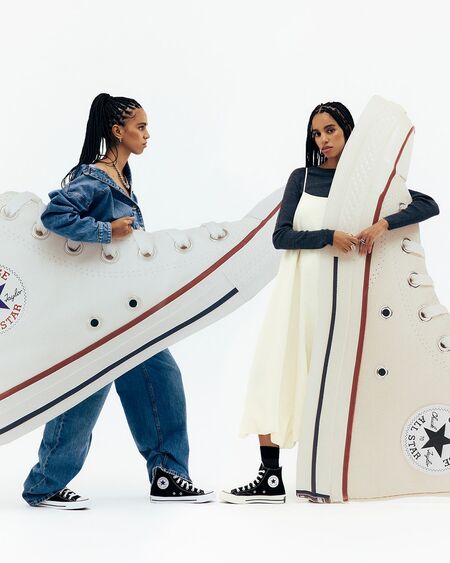
Shoes are boring. Wear sneakers.

01 — Introduction

Converse’s communication strategy examined through the Elaboration Likelihood Model and Uses and Gratifications Theory

A Brand that became culture

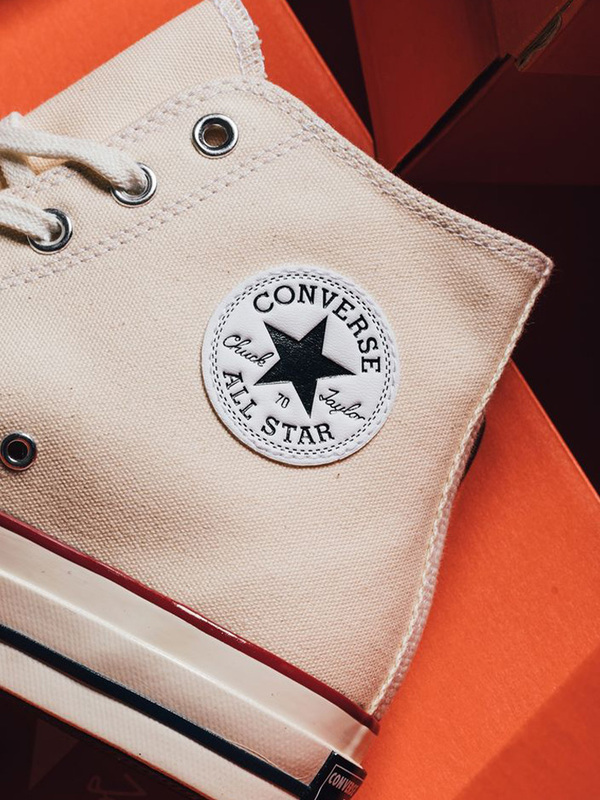
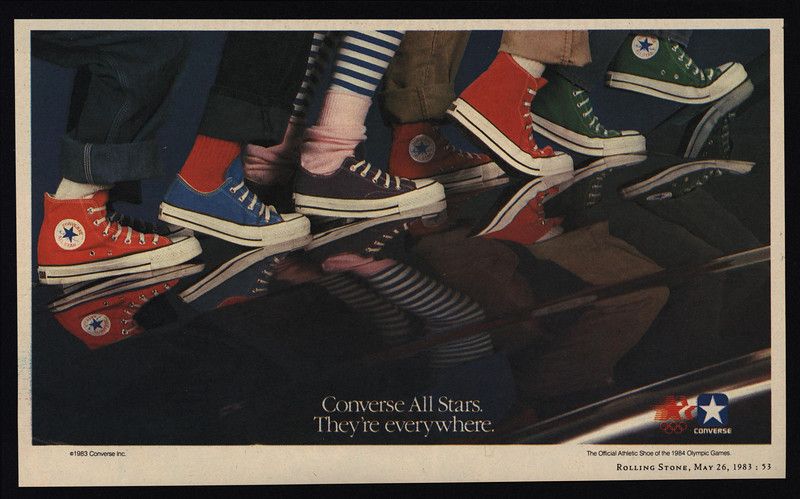
Converse is one of those rare brands that turned footwear into a symbol of self-expression. Founded in 1908 in Malden, Massachusetts, the company evolved from basketball equipment into a global cultural icon.

Since 2003, Converse has been part of Nike, Inc., yet it maintains a distinct identity and positioning — deliberately distancing itself from athletic performance in favour of creativity, rebellion, and authenticity.
Исходный размер 800x499

Brand Positioning

Converse positions itself not as a sportswear brand, but as a cultural and creative institution. Its core promise: self-expression matters more than function. The slogan «Shoes are boring. Wear sneakers.» is a manifesto against conformity. Converse doesn’t sell footwear — it sells membership in a tribe of creators.

1908 Year founded ≈$2B Annual revenue 170+ Countries of presence #1 Chuck Taylor — best-selling sneaker in US history

Target Audience

1. Age: 15–30 / Gen Z & Millennials Young people who value authenticity, anti-mainstream aesthetics, and belonging to subcultures. The core consumer base of the brand.

2. Profile: Creatives & Artists Musicians, visual artists, skaters, street-culture enthusiasts. These people bring the brand to life through their own lives and work.

3. Geography: Global Urban Youth Urban audiences across North America, Europe, and Asia. A shared value — individuality — transcends cultural differences worldwide.

4. Values: Heritage Seekers Consumers who appreciate authentic design with history and are willing to pay for cultural meaning, not just function.

02 — Communication Channels

Public Presence

Converse employs a multi-channel strategy, adapting tone and format to each platform while maintaining a single consistent voice: bold, honest, and community-driven.

Instagram: 10M+ followers Visual storytelling: artist collaborations, user-generated content (UGC), and Converse Custom campaigns. The primary image-building channel.

TikTok: 5M+ followers Musicians, visual artists, skaters, street-culture enthusiasts. These people bring the brand to life through their own lives and work.

YouTube: Long-form content Urban audiences across North America, Europe, and Asia. A shared value — individuality — transcends cultural differences worldwide.

Facebook: Mature audience Consumers who appreciate authentic design with history and are willing to pay for cultural meaning, not just function.

Twitter/X: Brand voice Cultural commentary, real-time trend participation, and direct dialogue with consumers and the press.

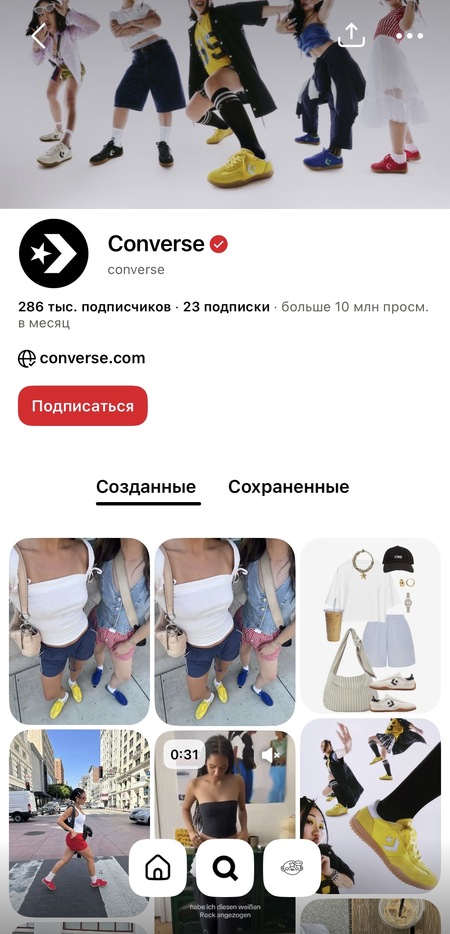
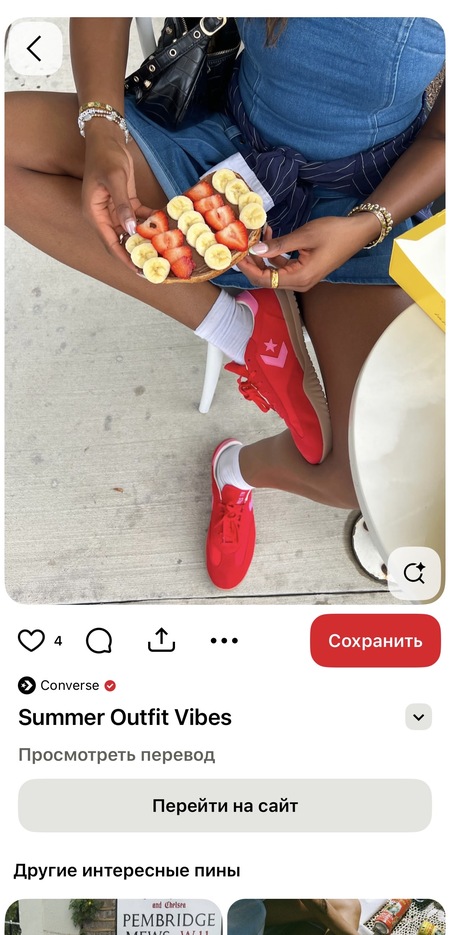
Pinterest: Inspiration Visual mood boards for styling, DIY customisation ideas, and lookbooks. A key channel for discovery and organic traffic.
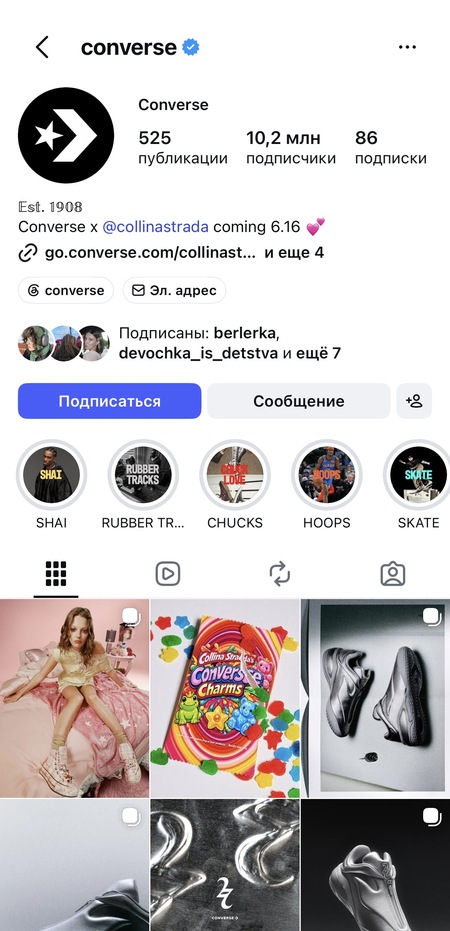
converse instagaram

Исходный размер 2536x1436

converse youtube

converse pinterest

PR Strategies

1. Co-Creation Campaigns The «Made by You» campaign turned consumers into brand co-authors. Over 7 million fan-submitted photos became the advertising itself. The brand disappeared — the people remained.

2. Artist & Celebrity Collaborations Tyler the Creator, Billie Eilish, A$AP Rocky, Joy Division. Each partnership is not just a limited release — it is a cultural event in its own right.

3. Limited-Edition Drops A scarcity strategy that generates hype and drives organic conversation — replacing conventional advertising with demand-driven buzz.

4. Cultural Event Sponsorship Music festivals, art exhibitions, skate events. The brand appears where its audience already lives — not in gyms, but at concerts and galleries.
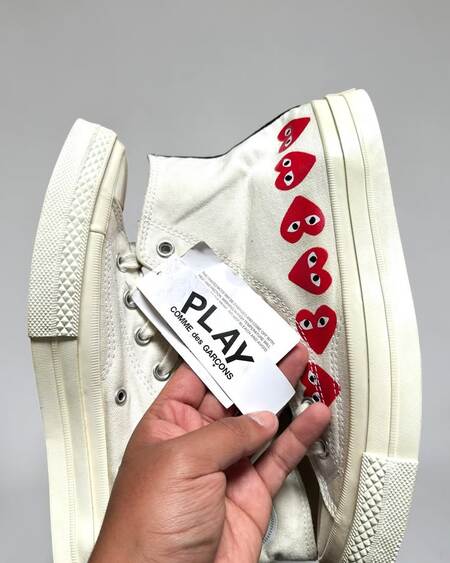
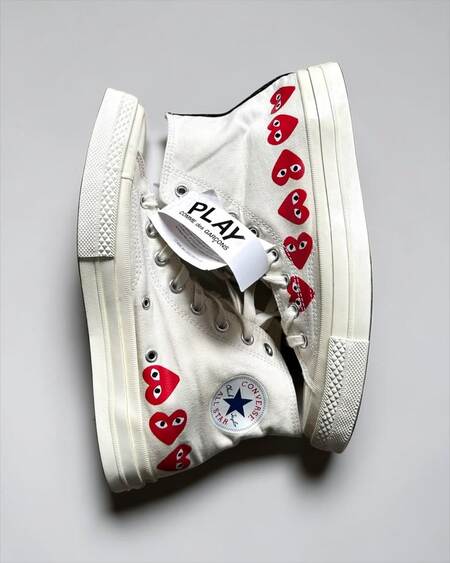
Converse x Comme des Garcons Play Chuck, 70 Multi Heart Hi

03 — Theoretical Framework

Two complementary theories form the analytical backbone of this study: ELM — to understand the mechanics of persuasion, and UGT — to explain the logic of audience engagement across social media platforms.

Elaboration Likelihood Model (ELM) Petty & Cacioppo, 1986

The model describes two routes of persuasion: the central route (deep cognitive processing of arguments) and the peripheral route (fast decision-making based on emotional cues — visuals, authority, aesthetics). ELM allows us to analyse how Converse persuades different audience segments through different tools.

Uses and Gratifications Theory (UGT) Katz, Blumler & Gurevitch, 1973

UGT frames audiences as active agents who consciously choose media and content to satisfy specific needs: information, identity, entertainment, social integration, participation, and escapism. The theory explains WHY people follow Converse, interact with its content, and share it with others.

ELM: Two Persuasion Routes in Converse Communication

Central Route

High involvement — the consumer actively evaluates arguments Authenticity — real fan stories build long-term conviction Format — long-form films, documentary series, artist interviews Example — «Made by You»: 7M+ consumer stories as the argument Outcome — deep loyalty and durable brand attitude

Peripheral Route

Low involvement — fast decisions driven by emotional cues Association — trust in the artist transfers to the product Format — TikTok videos, Instagram aesthetics, collabs Example — Tyler the Creator × Converse: artist’s audience becomes brand’s audience Outcome — rapid reach, new audience acquisition

Исходный размер 2882x1034

converse official website

UGT: Six Audience Needs and Converse’s Response

Исходный размер 1877x838

«The brand skilfully activates both routes simultaneously: peripheral cues attract new audiences, while central-route content deepens loyalty among existing fans.»

04 — Analysis

ELM — Central Route

«Made by You» — Argument as Advertising Converse’s global «Made by You» campaign (2015 — present) invited consumers worldwide to share the stories behind their worn-in Chuck Taylors. More than 7 million photos were submitted by users and became the raw material for advertising billboards displayed in 13 cities across the globe.

From an ELM perspective, this is a textbook example of the central persuasion route: rather than passively absorbing a slogan, the consumer actively processes genuine stories from genuine people. This deep emotional argumentation operates at a profound level of cognitive elaboration, forming a durable positive brand attitude.

Visual Evidence — Central Route Converse placed large-scale black-and-white photographs of worn sneakers on the streets of major world cities — no polished product shots, no idealised imagery. Just the owner’s story. Each pair of shoes became a narrative about individuality.

Billboards appeared in New York, London, Shanghai, Sydney, and 9 other cities. Consumers recognised themselves — triggering deep identification with the brand.

ELM — Peripheral Route

Tyler the Creator × Converse — Trust Transfer The collaboration with Tyler the Creator (Golf Le Fleur × Converse) is a classic demonstration of the peripheral persuasion route. Tyler’s fans do not analyse leather quality or sole technology. They automatically transfer their loyalty to the artist onto the product, via a fast peripheral cognitive cue.

The same mechanics apply to the Billie Eilish collaboration: the custom Chuck 70 palette is not just footwear — it is an artefact of fandom belonging. The brand functions as a bridge between the artist and their audience.

Visual Evidence — Peripheral Route Instagram posts announcing collaborations receive 3–5× more engagement than standard product content. Comments under the Tyler × Converse post are dominated by references to the artist’s fanbase — not to product specifications.

Example: A$AP Rocky × Converse collab, 2023. The post accumulated 1.2M+ likes in 24 hours — without a single mention of material, construction, or shoe technology.

UGT — Need Activation

post

#ConverseAllStar Challenge — Entertainment and Participation The TikTok challenge #ConverseAllStar accumulated over 1 billion views in 2022. Viewed through the UGT lens, this format simultaneously satisfies multiple needs: entertainment (the content is inherently engaging), participation (users create their own videos), and social integration (the hashtag unites a community).

Converse doesn’t create content — it creates infrastructure for self-expression. This aligns perfectly with the core brand positioning and simultaneously maximises organic reach at near-zero media cost.

Visual Evidence — UGT Analysis of comments under «Converse By You» campaign posts reveals a recurring UGT identity-need pattern: users don’t simply showcase a product — they explain WHO they are through their customisation choices.

«Made them to match my first guitar,» «this is my first concert captured here» — typical captions beneath custom-designed sneakers. The shoe becomes a personal diary.

Two-Way Communication — PR

Dialogue or Monologue? Audience Interaction In its PR communication, Converse demonstrates elements of the dialogic approach (Kent & Taylor, 1998): the brand reposts UGC, replies to comments, and publicly acknowledges criticism. The «Converse By You» platform is an example of dialogic architecture, where the consumer becomes the designer.

However, in its handling of comments and complaints, the brand remains largely reactive. Proactive two-way dialogue — initiated Q&A sessions, open feedback channels, public co-design forums — is underdeveloped and represents a clear opportunity for growth.

Visual Evidence — PR / Dialogue The «Converse By You» section on the official website allows every consumer to assemble a unique sneaker online. This is not merely e-commerce — it is an engagement tool that builds a personal connection between the individual and the brand.

The customisation interface generates emotional investment before any purchase decision is made. Users invest time creating «their» product — and the conversion probability increases dramatically as a result.

Исходный размер 2882x884

05 — Conclusion & Recommendations

Converse’s communication strategy is highly effective across most measurable dimensions: the brand successfully occupies cultural territory that is ordinarily inaccessible to corporate players. The ELM and UGT analysis confirms that this success is systemic — it is not accidental, but the result of deliberate communication design.

That said, several areas remain underdeveloped. Below are four evidence-based recommendations grounded in the theoretical framework applied throughout this study.

Recomandations:

  1. Deepen Two-Way Dialogue Implement dialogic theory principles more actively (Kent & Taylor): hold regular open Q&A sessions with the brand team, establish a public co-design forum. Moving from «we speak, you listen» to genuine conversation will strengthen the UGT participation need and increase audience investment.

  2. Expand Inclusive Representation Converse declares inclusivity, but campaigns remain centred around a narrow set of aesthetics. Systematically representing diverse cultures, ages, and bodies in UGC campaigns will broaden authentic identification across the full target audience.

  3. Central-Route Content on TikTok Converse’s TikTok presence is built almost entirely on peripheral cues. Introducing short documentary series about creative communities would activate the central ELM route and deepen engagement on a platform where it is currently absent.

  4. Leverage AI-Driven Personalisation Develop personalised content streams in the app and on the website — tailored to individual interests, purchase history, and customisation preferences. This would strengthen the UGT needs of information and identity at the individual level.

06 — References & Image Sources

Библиография
1.

Converse — Official Website. — URL: https://www.converse.com/ (accessed 13 June 2026)

2.

Converse Custom — By You. — URL: https://www.converse.com/c/custom (accessed 13 June 2026)

3.

Converse Instagram. @converse. — URL: https://www.instagram.com/converse (accessed 13 June 2026)

4.

Converse TikTok. @converse. — URL: https://www.tiktok.com/@converse (accessed 13 June 2026)

5.

Converse YouTube. Converse official channel. — URL: https://www.youtube.com/@Converse (accessed 13 June 2026)

6.

Nike, Inc. // Annual Report — Converse segment. Nike Investor Relations. URL: https://investors.nike.com/Home/default.aspx (accessed 13 June 2026)

7.

Segre, L. (2022). Converse 'Made by You' campaign analysis. Journal of Brand Strategy, 11, 145–162.

8.

Katz, E., Blumler, J. G., & Gurevitch, M. (1973). Uses and gratifications research. The Public Opinion Quarterly, 37, 509–523.

9.

Kent, M. L., & Taylor, M. (1998). Building dialogic relationships through the World Wide Web. Public Relations Review, 24, 321–334.

Мы используем файлы cookies для улучшения работы сайта НИУ ВШЭ и большего удобства его использования. Более подробную...
Показать больше