INTRODUCTION
KM20 is a multi-format concept store founded in Moscow in 2009 by Olga Karput, one of the most influential figures in global fashion according to The Business of Fashion. It is located in Stoleshnikov Lane in the heart of Moscow and spans 2,500 sq. m. across three floors, housing a fashion retail space, a sneaker zone, a gallery, and a restaurant with a terrace. KM20 is not simply a retailer — it is a cultural institution. In 2017, Highsnobiety named KM20 the best concept store in the world. The store is known not only for its curated selection of clothing brands but also for its fashion events — from exhibitions to concerts — held each season, and for introducing Russians to dozens of new fashion brands.

KM20 offline shop / Moscow
Thus, its core positioning can be described as not just a store — a community. KM20 positions itself as a space where fashion, culture, and human connection converge. KM20’s target audience: fashion-forward urban consumers aged 18–35, predominantly based in Moscow. They are culturally engaged, digitally active, interested in streetwear and high fashion, seek exclusivity and belonging to a creative community.
The KM20 buyer team does not cling to established names — they drop brands that have outlived themselves and support promising, lesser-known labels. This curatorial boldness attracts a sophisticated, trend-conscious audience that values authenticity over mass-market appeal.
COMMUNICATION CHANNELS
KM20 operates across several communication platforms, each serving a distinct purpose within the brand’s broader communication strategy. Notably, the brand does not employ mass-audience channels such as outdoor advertising — a deliberate choice that itself communicates exclusivity and reinforces the brand’s identity as a curated, community-oriented space. Firstly, KM20 has several social networks (such as Instagram* (*Instagram is recognized as extremist and banned in the Russian Federation), Telegram and VKontakte) to share information about fashion campaigns, collaboration in the field of art, event announcements lifestyle Images and community-oriented content. Communication is very visual and helps to attract an audience. Another online communication channel being used by brand — its website. For the store’s 15th anniversary, KM20 partnered with the Embacy team to create an online shopping experience that reflects their avant-garde ethos — a clean yet edgy layout mirroring KM20's unique blend of sophistication and street style.
KM20 also uses some Offline PR channels: for example, direct communication through events — brand positions itself as a community — people come not only as buyers but to socialize, to be part of a circle that the store has built over its years of existence. Seasonal events, brand dinners, and designer meet-and-greets are key communication tools. Last but not least, influencer collaborations is another way for brand to communicate with customers. KM20 works with designers and cultural figures (Gosha Rubchinskiy, Raf Simons, Off-White, etc.) creating co-branded narratives that extend the brand’s cultural reach.
THEORETICAL FRAMEWORK
The first theory through which brand communication can be analysed is Semiotic Tradition, which, as outlined by Robert T. Craig (1999), understands communication as the process of sharing meaning through systems of signs. Representation and transmission of meaning is always given through signs and symbols — a principle illustrated by the contrast between luxury brand aesthetics and mass-market advertising, both of which encode culturally specific meanings without explicitly naming them. Within this tradition, Roland Barthes (1957, 1967) provides the most analytically precise framework for examining how brands construct meaning.

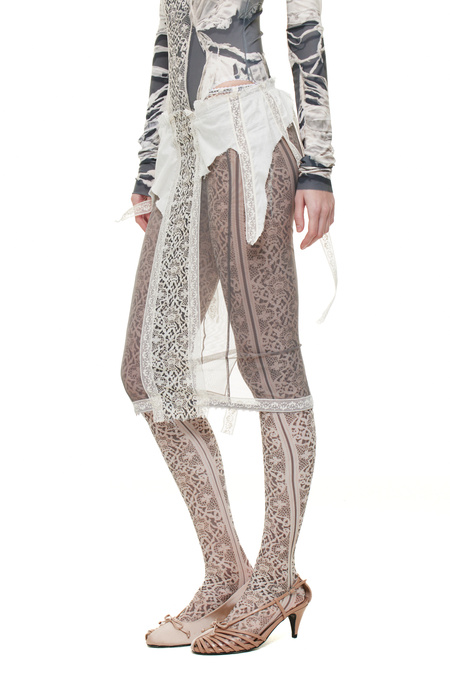
DILARA FINDIKOGLU, 'CAGE OF INNOCENCE', KM20 collection
Barthes argues that signs operate on two successive levels. At the first level — denotation — a sign carries its literal, surface meaning. At the second level — connotation — that same sign accures cultural and emotional associations that are not explicitly stated but are nonetheless legible to a socially positioned reader. It is at this connotative level that the ideological work of brand communication is performed. When connotations become sufficiently naturalised and no longer perceived as constructed but as self-evident — they solidify into what Barthes calls myth: a third-order semiotic operation through which historically contingent cultural values are presented as simply «the way things are». This framework is particularly useful for the analysis of KM20 because the brand’s communicative output is a dense system of signs. Every curatorial decision, visual, caption, and collaborative partnership functions not only as product communication but also as a contribution to an ongoing mythological project.
The second theory we have chosen is dialogic. It was developed by Michael Kent and Maureen Taylor in 1998 as an answer to one fundamental question: can the Internet become a space for a real dialogue between an organization and its audience, or will it remain just a new channel for the old one-way communication?
The theory grows out of a broader PR tradition, primarily Relationship Management Theory and the four Grunig models, where two—way symmetric communication is considered ideal. But Kent and Taylor went further: They are not just talking about a two-way exchange, but about the quality of this exchange. Not every response to a comment is a dialogue. A real dialogue requires a special relationship ethic.
The central idea of the theory is that dialogue is not a technique or a tool, but a philosophy. An organization that practices dialogue does not try to convince the audience that it is right. It’s genuinely open to being changed by the conversation itself. This fundamentally distinguishes dialogical communication from rhetorical or persuasive communication — one always has a predetermined goal, while here the goal emerges through the process.
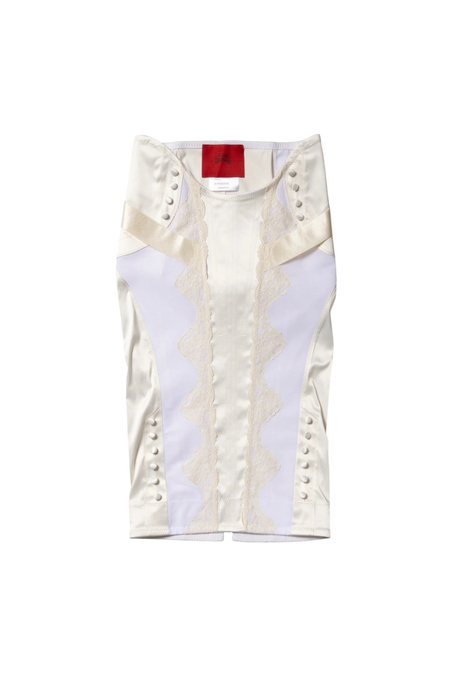
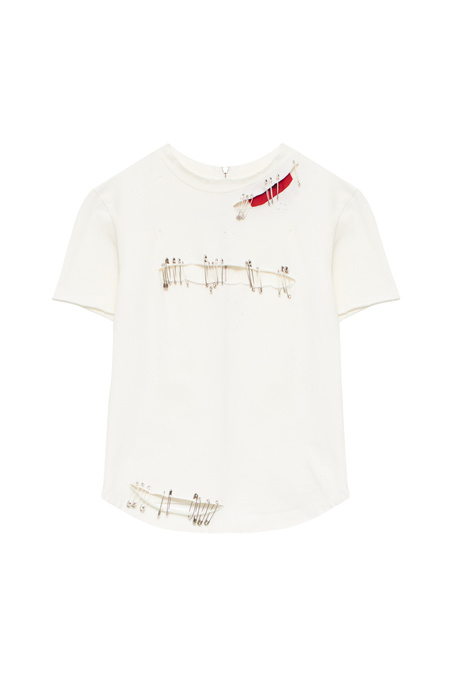
DILARA FINDIKOGLU, 'CAGE OF INNOCENCE', KM20 collection
The theory describes five characteristics that make communication truly dialogical. They don’t work individually — it’s a system where each element supports the others. KM20 is interesting because all five principles are visible in its strategy — not as a result of consciously following theory, but as an organic consequence of how Olga Karput understands her business. At the same time, it is important to note one limitation: dialogic theory in its classical sense also requires concrete online dialogue tools — dialogic loop on the website, regularly updated content, the opportunity to ask a question and get an answer. KM20 has strong offline communication, but how consistently it works online is a separate question.
ANALYSIS
Semiotic Tradition
At the denotative level, KM20's digital communication presents a relatively legible set of referents: clothing, editorial photography, new arrivals, event coverage, and brand collaborations. Posts denote products and cultural moments. A telling example is the collaboration with Raf Simons for the store’s 10th anniversary in 2019: at the denotative level, the object is a black tote bag bearing a yellow rose print and the KM20 logo in calligraphic script. Yet at the connotative level, the object communicates something else entirely — this was Raf Simons' only collaboration with a retailer worldwide, and that fact alone transforms the accessory from a product into a sign of belonging to an exclusive circle.
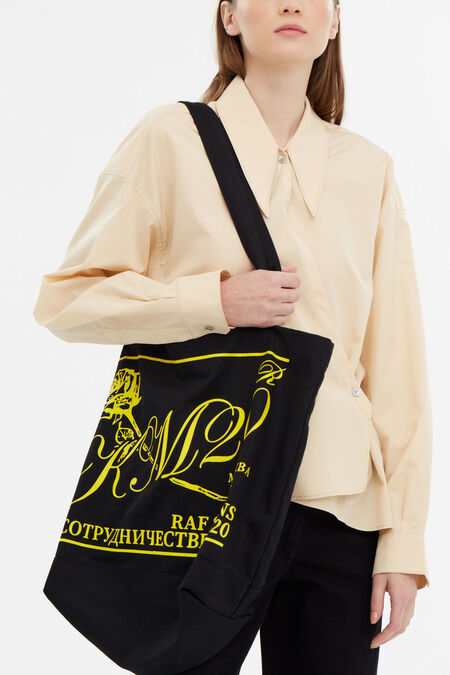
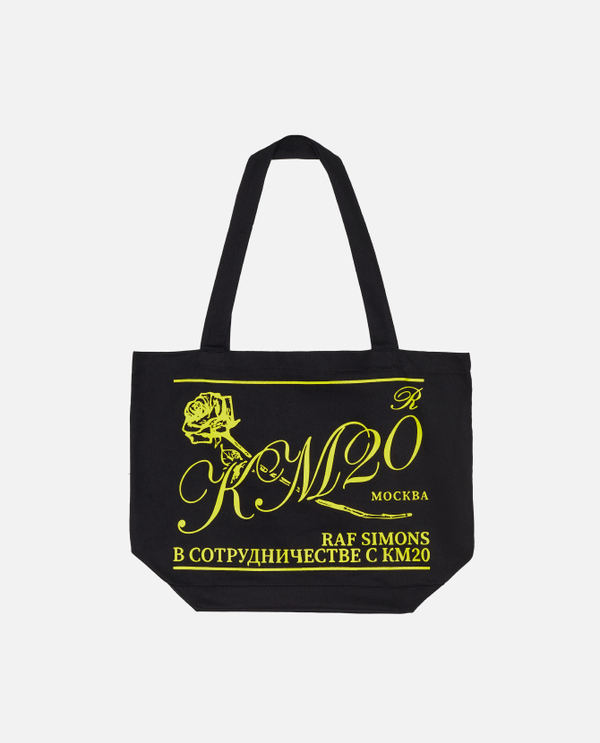
Raf Simons x KM20 Tote Bag
The visual language KM20 deploys across its channels — raw industrial interiors, deliberately non-glamorous editorial styling, a consistent juxtaposition of streetwear and high fashion — connotes a specific and carefully constructed set of cultural values: authenticity, insider status, curatorial authority, and a studied distance from conventional luxury aesthetics. This logic is made tangible in the collaboration with Los Angeles-based brand Alexander DiGenova: the capsule featured deliberately distressed hoodies and t-shirts bearing the Cyrillic print «ВОДКА» — the simulated wear and studied anti-aesthetics are not incidental, but function as signs encoding distance from gloss and allegiance to a different, more authentic value system.

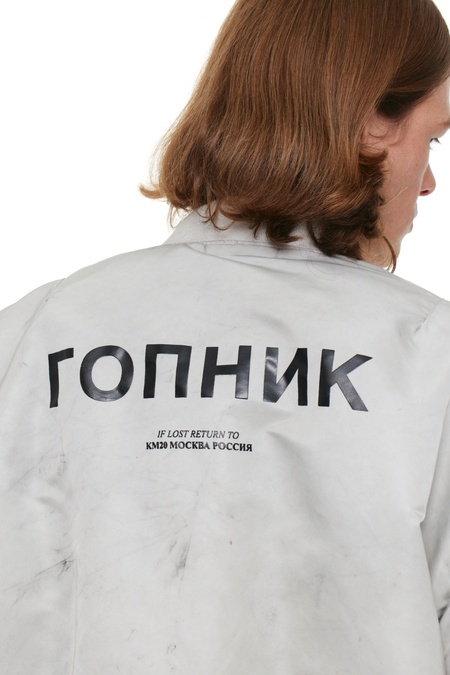
ALEXANDER DIGENOVA, KM20 collection

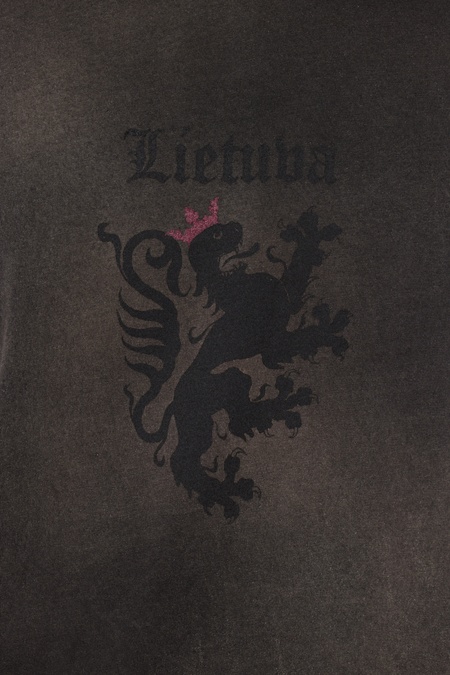
ALEXANDER DIGENOVA, KM20 collection
The brand’s aesthetic communicates not through explicit statement but through the accumulated weight of its sign choices: this is not for everyone, and its exclusivity is precisely its value. This connotative register is consistent across platforms, suggesting that the sign system is deliberately maintained rather than incidentally produced. As a result of communication, the myth is created that exclusivity naturally means cultural value and excellent taste. Consumers are encouraged to associate rarity with importance and status.


ALEXANDER DIGENOVA, KM20 collection
At the mythological level, KM20 constructs a powerful cultural narrative: that shopping here is not consumption, but cultural participation. The brand positions itself as a community — a circle that people join not merely as buyers but to communicate and belong. This is the myth at work: the act of purchasing is transformed into a sign of belonging to Moscow’s creative elite. Moreover, KM20 uses social media not only to broadcast messages, but also to encourage interaction which supports the dialogue and allows the audience to contribute to the communication process. The launch of a YouTube series on fashion and style — with the members of Cream Soda appearing as guests in the first episode — illustrates how the brand produces cultural content in which the audience sees itself not as the target of advertising, but as a participant in a broader conversation about contemporary culture. Instead of acting solely as consumers, subscribers become members of the brand’s community.
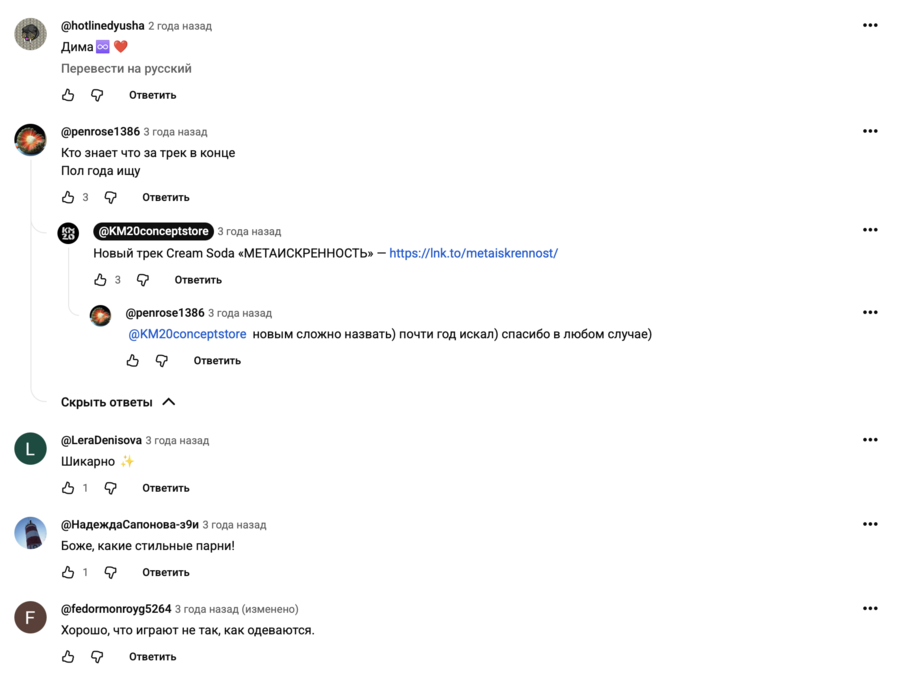


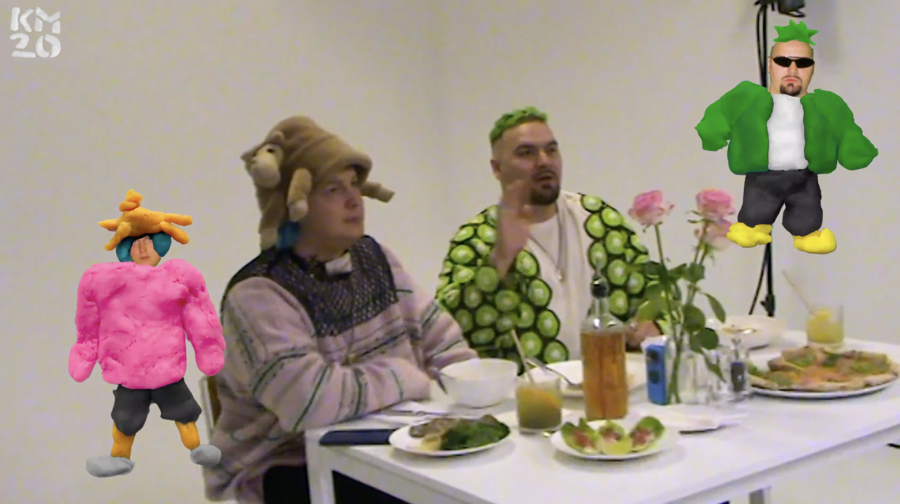
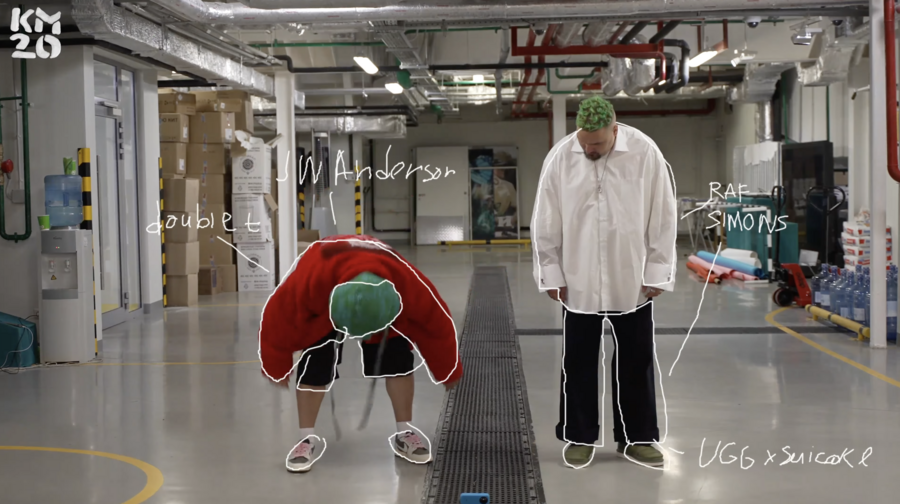
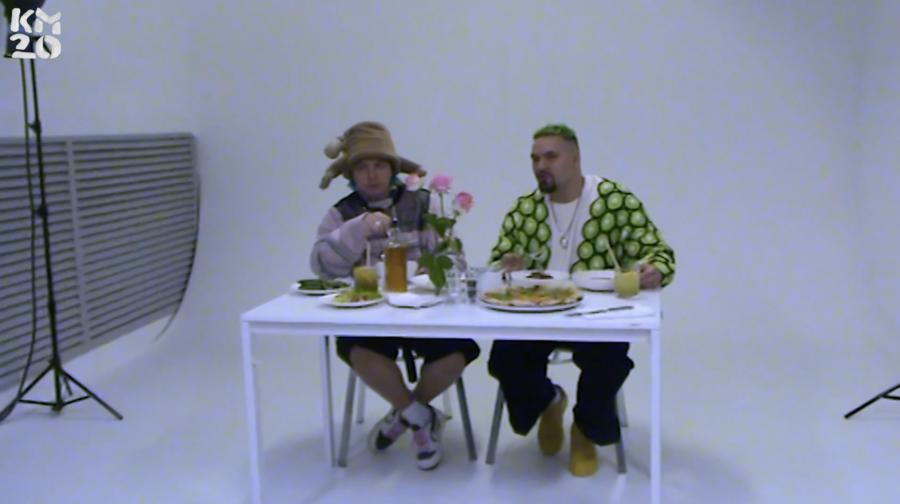
KM20FRIENDS: CREAM SODA
This myth is reinforced across every sign system the brand deploys — the curation of brands, the architecture of the space, the language of captions, the choice of collaborators. The buyer team constantly refreshes the brand list, dropping names that have lost their relevance and elevating promising unknowns — each such decision is a mythological statement: we define what is culturally legitimate.


DILARA FINDIKOGLU, KM20 collection