
Structure:
[1] Introduction [2] Communication Channels [3] Theoretical Framework [4] Analysis [5] Conclusion & Recommendations [6] List of literature and sources
Introduction
Brand Background and its Evolution
The history of the Aviasales company is an example of a large-scale transformation of a digital product and its communication model. Originating in the late 2000s as a personal blog of the founder with a simple search bar for finding cheap flights, the platform gradually evolved into the largest independent metasearch engine in the CIS. However, key changes occurred not only at the technological level but also in the media landscape.
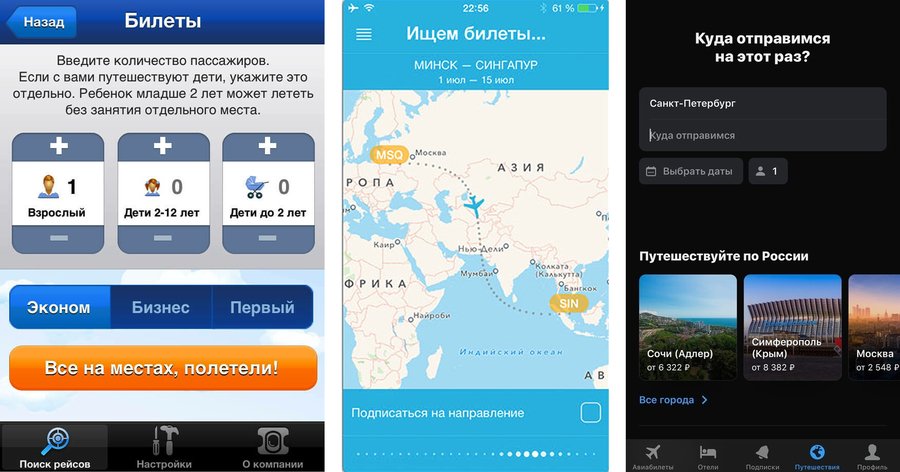
Comparison of the application interface in different years / 2012, 2014, 2020
Aviasales has long outgrown the status of a transactional platform and has become a content ecosystem and an influential travel media outlet. The company’s structure includes its own editorial team that produces special projects, guides («PSZHR»), instructions, and handbooks. In terms of Griffin’s theory (communication as a relational process), the brand made a strategic shift: from transmitting dry utilitarian messages to building long-term emotional connections with the audience through high-quality content.

Brand Positioning and Tone of Voice
The uniqueness of Aviasales' market positioning is built on the rejection of traditional «cold» corporate communication. The brand consciously constructs the image of a «regular guy» or the ideal travel companion—an experienced, ironic friend who knows everything about travel and is ready to communicate as equals. Their Tone of Voice is characterized by high adaptability, edginess on the verge of a foul, active use of relevant humor, and instant reaction to socio-cultural and global trends (situational marketing).
A post on social media
From the perspective of Julia Wood’s systemic communication approach (Wood, 2004), individuals interact with each other using symbols to create and interpret meanings. Aviasales masterfully operates with specific verbal and non-verbal symbols of the digital environment: internet memes, slang, intentional use of colloquial speech, emojis, and GIFs. The use of this system allows the brand to break down the social distance with the consumer.

The brand does not exist in a vacuum: any news from pop culture, a global internet trend, or a high-profile event is instantly integrated into Aviasales' messages, transforming commercial advertising into an organic part of the user’s daily information flow.
Comments and responses to users on social networks
Target Audience: Core Segment
The primary audience of Aviasales consists of digitally active people aged 18–35 (millennials and Gen Z). Within this macro-segment, two groups stand out: «digital nomads» (freelancers and remote workers for whom moving around is a lifestyle) and «budget explorers» (students and young professionals looking for ways to save money without losing quality). This audience possesses a high level of digital literacy, a clip-thinking mindset, and a need for interactivity. Aviasales encodes its messages to resonate with the everyday context of young people—burnout, the pursuit of freedom, a love for pop culture, and irony.
Posts that provide insights to a young audience
Target Audience: Secondary and Mature Segment
Despite the focus on youth culture, Aviasales' economic model requires engagement with a secondary audience as well (35–50+ years old, family travelers, B2B). For them, excessive humor and memes can become a barrier. The solution is the segregation of channels: entertainment and getting closer to youth take place in Telegram and TikTok, while stability, expertise, and reliability are maintained on the website, in the personal account dashboard, and in email newsletters. For the mature audience, the brand creates meanings of safety and accuracy: clear infographics, breakdown of entry regulations, and baggage calculators. This allows the company to preserve its identity without alienating conservative, paying users.
Advertising for secondary and mature audiences
Communication Channels
Overview of the Aviasales Communication Ecosystem
Aviasales' communication strategy is implemented through a network of digital channels that form a media ecosystem. The brand builds its presence across all key types of social media (according to Kaplan and Haenlein, these are Web 2.0-based internet applications that allow the creation and exchange of user-generated content). Aviasales adapts its activity to the specifics of each application (blogs, microblogs, social networks, messengers), utilizing the characteristics of modern media: two-way contact, asynchronicity, and mobility. The ecosystem accompanies the user at all stages—from passive entertainment in the social feed to the utilitarian purchase of a ticket.

Channel 1 — Telegram Channel as the Epicenter of Situational Marketing
The official Aviasales Telegram channel acts as the core of the entire communication ecosystem and the main tool for situational marketing. Within this platform, the brand functions in the format of a hybrid microblog, combining the functions of an agile tourism news aggregator and an entertainment community page. The speed of reaction to news hooks here is maximized, highlighting the synchronous potential of the medium: the brand responds to world events, pop culture trends, and memes within a few hours, and sometimes even minutes after they appear.
The specifics of the messenger leave an imprint on the structure of messages. Long texts are practically non-existent here. Communication is built on short, concise text blocks accompanied by a bright visual element (a picture, a screenshot, or a GIF). The most crucial feature of this channel is high Interactivity. Open comments and reactions turn the channel into a platform for mass interpersonal communication, where users actively engage both with the brand itself and with each other.
A post with an ironic meme
Channel 2 — Instagram and TikTok: Aesthetics and Visual Engagement
On Instagram and TikTok, Aviasales bets on visual storytelling and dynamic content: short vertical videos with atmospheric shooting, music, and irony. Unlike the text-based Telegram, non-verbal cues play a key role here. The strategy balances between the aesthetics of travel and mocking real tourist struggles (carry-on baggage, acclimatization, language barrier). The absence of detailed texts is compensated for by a dynamic sequence of video frames, which reduces social cues but enhances emotional engagement and virality—users actively share videos in their stories.
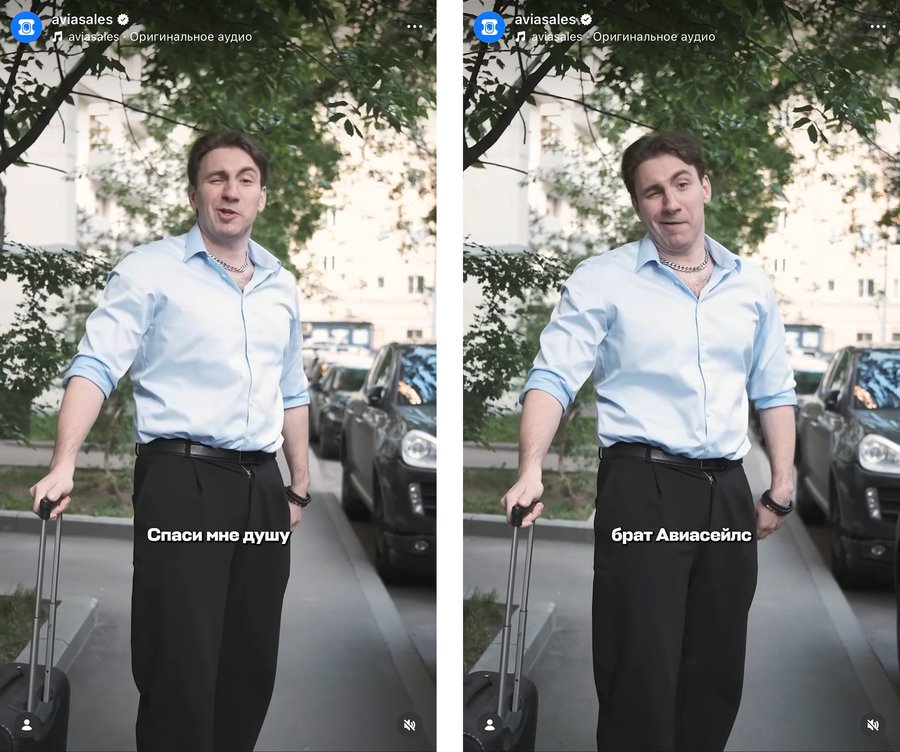

A post with an ironic meme
Channel 3 — Email Newsletter: Personalization and Overcoming Routine
The Aviasales email newsletter represents an example of how a traditional, utilitarian channel of communication—often perceived by users as spam—turns into a tool for audience retention and building personal relationships. The brand completely breaks the template of dry commercial emails containing a list of prices. Each email is formatted as a personal, friendly message written on behalf of a specific author («Hi, this is Roma from Aviasales»).
Within this channel, communication bears a pronounced asynchronous character, giving the user an opportunity for deep, thoughtful reading. The text of the emails is filled with signature irony, metaphors, and insider jokes. At the same time, the brand strictly observes a value balance: the ironic introduction is always followed by analytical content—ticket selections, secret promo codes, changes in visa rules, or ready-made itineraries.
Communication on the website, conversational and friendly
Channel 4 — Push Notifications and App Interface
The Aviasales mobile application is the final point of user conversion; however, its communication function goes far beyond the technical processing of ticket purchases. The brand actively uses microcopy inside the app interface itself and a system of instant push notifications. This channel is based on absolute mobility, delivering messages directly to the user’s smartphone lock screen in real time.
Aviasales push notifications have become a separate phenomenon in the digital environment. Instead of standard phrases, the brand sends short, context-hitting lines: «Your exes have flown to Paris, and you are still working» or «It’s warm in Sochi, we checked.» Inside the app itself, while waiting for the flight search results, the user is also entertained with humorous captions and animations on the loading screens. Such a communication solution turns a routine technical search process into a gamified experience, reduces stress levels from potentially high prices, and definitively solidifies the brand’s status as a live companion.
Communication in the app
Channel 5 — Out-of-Home Advertising and Guerrilla Marketing
Aviasales, while remaining a digital service, effectively utilizes offline channels (out-of-home advertising and guerrilla marketing). Their physical advertising is not about brand imagery but acts as an extension of the digital content strategy governed by the same laws. The brand places billboards in meaningful locations (airports, construction fences during the vacation season, central streets during city events), where the environment itself creates an additional ironic meaning. The medium becomes a non-verbal cue that prompts people to take photos of the advertisement and share them on social networks, triggering the re-replication of content.
Advertising at the airport
Theoretical Framework
To understand the communication success of Aviasales, a simple description of their activities is not enough—an academic approach is required. As a methodological basis, we have chosen two complementary concepts: the Uses and Gratifications Theory (Blumler & McQuail, 1972) and the theory of the core features of social media. The first explains what user needs the brand satisfies, while the second explains how Aviasales encodes messages taking into account the technological specifics of modern platforms.
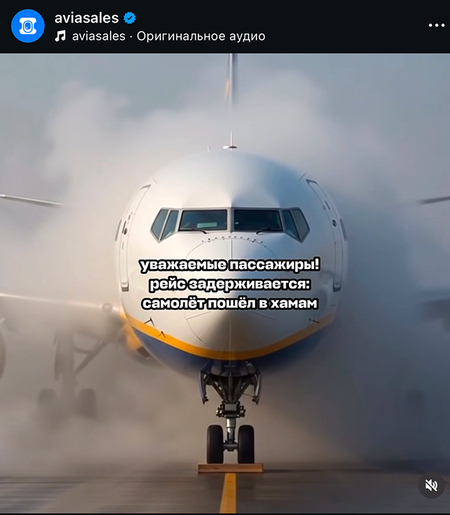
Theory 1 — Uses and Gratifications Theory and the Concept of the Active Audience
The classical approach to media studies often viewed the audience as a passive object of influence. However, the Uses and Gratifications Theory (Blumler & McQuail, 1972) fundamentally changes this paradigm. Its key postulate is that media consumers represent an Active audience. People use media materials consciously and purposefully, seeking to satisfy their specific social and psychological needs. The meanings that the audience extracts from the content directly depend on its internal motives.
Aviasales builds its content strategy on a precision understanding of the motivation scales (Motive scales development) of its subscribers. The brand does not try to impose advertising but offers content that addresses two fundamental needs of the audience:
Diversion (Distraction / Entertainment): The need to escape from routine, relieve stress, and get emotional release. Aviasales satisfies it through an endless stream of situational humor, memes, and ironic comments.
Surveillance (Observation / Information Gathering): The need to understand the surrounding world and solve practical problems. The brand addresses it with the help of expert guides, breakdowns of visa rules, and up-to-date tourism news. The consumer subscribes to Aviasales channels completely voluntarily because they know that this media resource effectively satisfies their demands.
Humorous posts on social media