I am for an art that takes its form from the lines of life itself, that twists and extends and accumulates and spits and drips, and is heavy and coarse and blunt and sweet and stupid as life itself.
What happens when art leaves the museum and enters everyday life?
By the end of the 1950s many artists no longer seemed interested in answering this question theoretically. Instead they began testing it in practice. Consumer goods appeared in galleries, artistic events moved into public space, and everyday experience itself became artistic material. Art was no longer expected to stand apart from life. It was expected to become part of it.
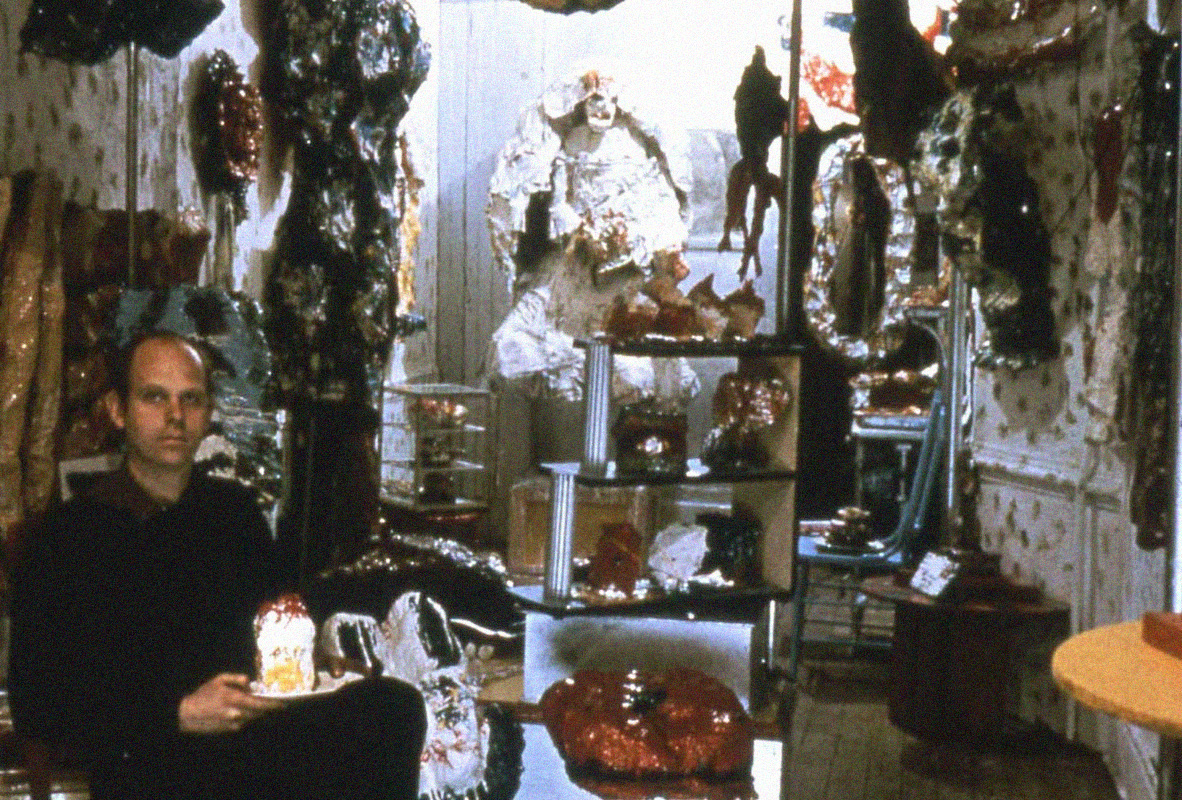
Claes Oldenburg in The Store, New York, 1961
The relationship between art and everyday life became a central concern of many postwar artists. Rather than treating everyday life as something external to art, they increasingly viewed it as the very place where art should happen. This shift could be seen across a wide range of artistic practices, from Pop Art and Happenings to installations and participatory forms of art. Despite their differences, these practices shared a common ambition — to challenge the separation between art and ordinary experience.
Origins. From ready-made to reality
Of course this idea did not emerge out of nowhere.
Several decades earlier, Dada had already challenged traditional artistic values, questioning what could be considered art in the first place. Its most influential figure, Marcel Duchamp, pushed this challenge further through his ready-mades. In The Richard Mutt Case (1917), written in defense of Fountain, Duchamp argued that an ordinary object could become art through the artist’s choice.
Marcel Duchamp, Fountain, 1917
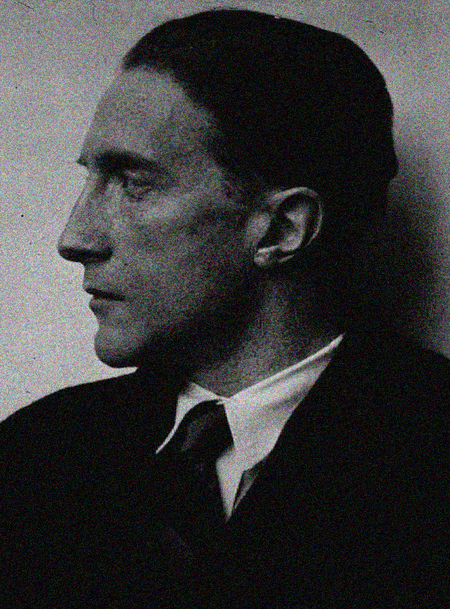
Marcel Duchamp
1887–1968
French-American artist, writer, and theorist associated with Dada. Best known for introducing the ready-made, a concept that challenged traditional definitions of art and transformed ordinary objects into artworks.
Most famous works: Fountain (1917), Bicycle Wheel (1913), Bottle Rack (1914), L.H.O.O.Q. (1919).
Yet Duchamp’s gesture still depended on the institution of art. A urinal became art because it entered the artistic context. By the 1950s and 1960s, however, manny artists wanted to push this logic further. Their goal was not simply to bring everyday objects into art, but to question whether art and everyday life needed to remain separate at all.
Theories of everyday experience
This shift was accompanied by important philosophical developments.
In Eye and Mind (1961), Maurice Merleau-Ponty argued that perception is always embodied and rooted in lived experience. We do not observe the world from a distance — we exist within it. Around the same time, Guy Debord, writing for the Situationist International, criticized modern society for transforming lived experience into passive spectacle. In texts later collected as Writings from the Situationist International, he argued that people should actively construct situations rather than merely consume images and representations of reality.
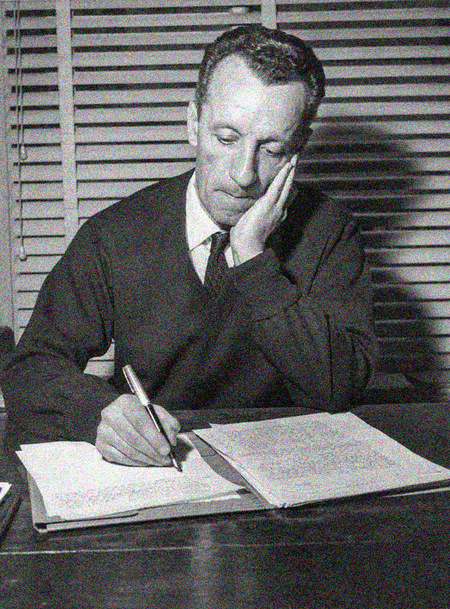
Maurice Merleau-Ponty
1908–1961
French philosopher and one of the leading figures of phenomenology. His writings on perception and embodied experience reshaped twentieth-century discussions of art, vision, and human experience.
Most famous texts: Phenomenology of Perception (1945), Eye and Mind (1961), The Visible and the Invisible (1964).
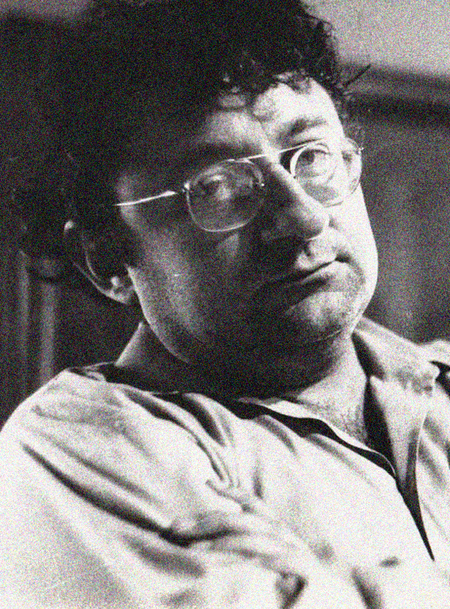
Guy Debord
1931–1994
French writer, filmmaker, and political theorist. Founder of the Situationist International, known for his critique of the «society of the spectacle» and the passive consumption of images in modern life.
Most famous works: The Society of the Spectacle (1967), Critique of Separation (1961), On the Passage of a Few Persons Through a Rather Brief Unity of Time (1959).
Neither philosopher was writing specifically about Pop Art or Happenings. Nevertheless, their ideas help explain why so many artists became dissatisfied with the isolated art object. If experience itself had become the central question, then perhaps art should be sought not beyond everyday life but within it.
Consumer culture and Pop Art
This transformation was also connected to the rapid expansion of mass media and consumer culture after the Second World War.
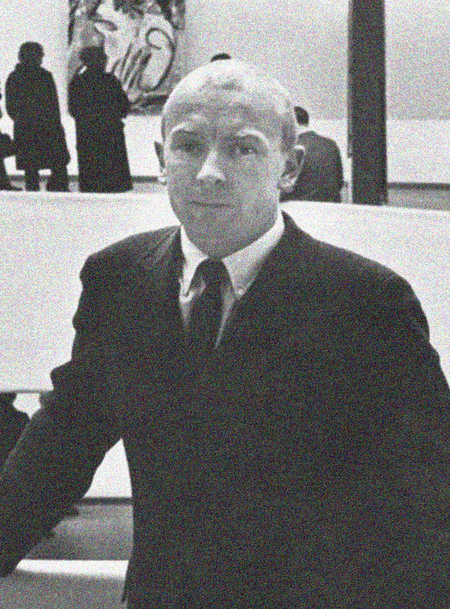
Lawrence Alloway
1926–1990
English-born art critic and curator. A key theorist of Pop Art who examined the relationship between contemporary art, mass media, and popular culture.
Most famous texts: The Arts and the Mass Media (1958), American Pop Art (1974), Network: Art and the Complex Present (1984).
In The Arts and the Mass Media (1958), Lawrence Alloway rejected the traditional distinction between high and low culture. Advertising, television, magazines, and contemporary art increasingly belonged to the same visual environment. Richard Hamilton developed a similar argument in For the Finest Art, Try Pop (1961), treating consumer imagery not as a threat to art but as one of its most important resources.
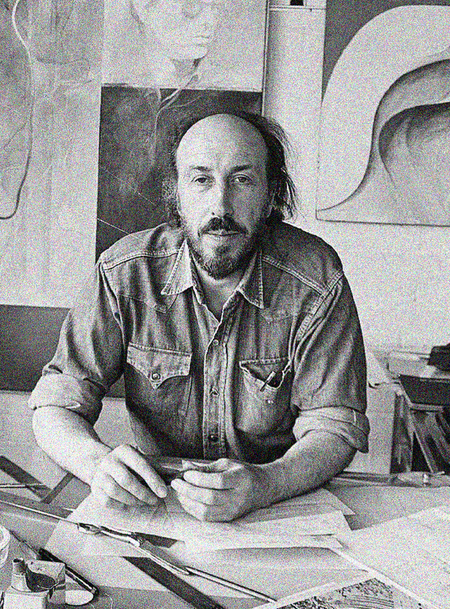
Richard Hamilton
1922–2011
British artist and designer. Often regarded as one of the pioneers of Pop Art for his exploration of advertising, consumer culture, and mass-produced imagery.
Most famous works: Just what is it that makes today’s homes so different, so appealing? (1956), Hommage à Chrysler Corp. (1957), $he (1958–61), Swingeing London 67 (1968–69).
Richard Hamilton, Just what is it that makes today’s homes so different, so appealing? , 1956
These ideas became particularly influential for Pop Art. Instead of resisting consumer culture, many artists began to treat it as artistic material. The supermarket, the billboard, and the magazine page became as relevant to artistic practice as the studio.
Andy Warhol, Campbell’s Soup Cans, 1962
Claes Oldenburg and the everyday object
No artist expressed this position more clearly than Claes Oldenburg.
His manifesto I Am for an Art… remains one of the most direct statements of the new relationship between art and life. Rather than defining art through aesthetic criteria Oldenburg described an art connected to food, streets, bodies, accidents, shops, and ordinary routines. The list is deliberately excessive, almost chaotic, as if the point were to demonstrate that nothing in everyday life should be excluded from artistic attention.
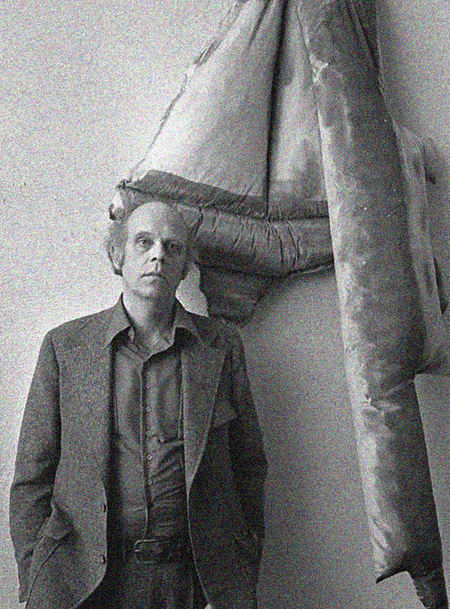
Claes Oldenburg
1929–2022
Swedish-born American sculptor, installation artist, and writer. Famous for transforming everyday consumer objects into monumental sculptures and for advocating the integration of art and life.
Most famous works: The Store (1961), Floor Burger (1962), Lipstick (Ascending) on Caterpillar Tracks (1969), Clothespin (1976).
Showcase cakes, Klas Oldenburg, 1962
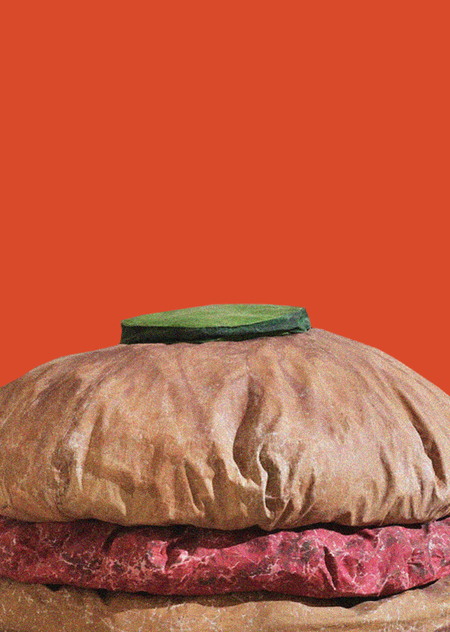
This approach can be seen in works such as The Store (1961), an installation consisting of handmade replicas of commercial goods, and Floor Burger (1962), which transformed a familiar consumer object into a monumental sculptural form. In both cases, the everyday object remains recognizable. Art does not transcend reality. It exaggerates it.
Outdoor Burger, Klas Oldenburg, 1962
When art becomes an event
Similar concerns appeared in the work of Allan Kaprow and Piero Manzoni.
In Assemblages, Environments and Happenings (1959–65), Kaprow argued that art should become an event rather than a static object. His 18 Happenings in 6 Parts (1959) blurred the distinction between performer and spectator, artwork and experience. Manzoni’s Free Dimension (1960) questioned the limits of artistic production itself, suggesting that art could no longer be reduced to a physical object.