INTRODUCTION

This study focuses on the Genshin Impact brand, built around the video game of the same name — an open-world Action RPG with gacha mechanics, released in 2020 by Chinese company miHoYo Limited (HoYoverse) [6].
The game takes place in the fictional universe of Teyvat, which consists of several regions governed by divine beings known as Archons. Each region is inhabited by peoples connected to a specific element. The player character assumes the role of a Traveler wandering between worlds in search of a lost twin (brother or sister, depending on the protagonist’s gender).
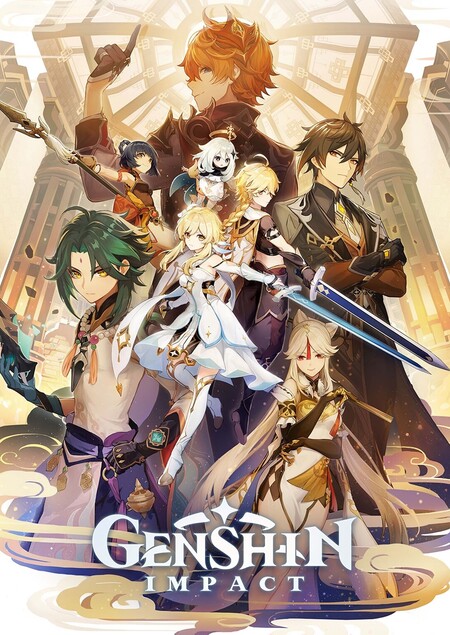
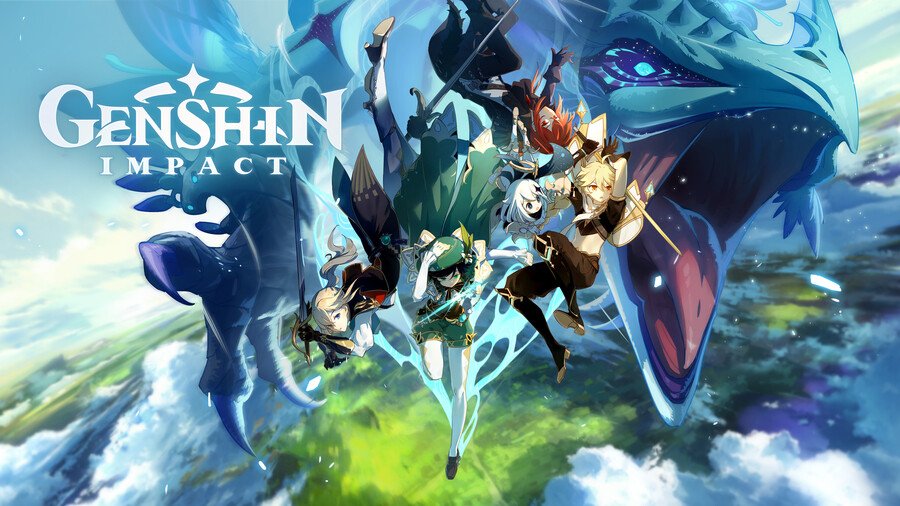
The vibrant yet simple visual design of the Genshin Impact world evokes associations with anime aesthetics and the design of another legendary game, The Legend of Zelda: Breath of the Wild [3]. The game’s slogan is «Explore the World of Adventure.» The logo features a stylized version of the game’s name, above which sits a four-pointed star framed by ribbons on either side; the brand colors are blue and white.
By 2025, the game’s audience exceeded 300 million users, half of whom are located in China, and the other half in other countries, including Russia, which ranks among the top five countries by number of downloads.
The average age of players is 18–30, with 40% being female and 60% male. The target audience is characterized by a high level of engagement, sustained through regular game updates. Although the game is free to play, its active users are financially comfortable enough to spend significant amounts on collecting in-game characters and other optional paid features [2].
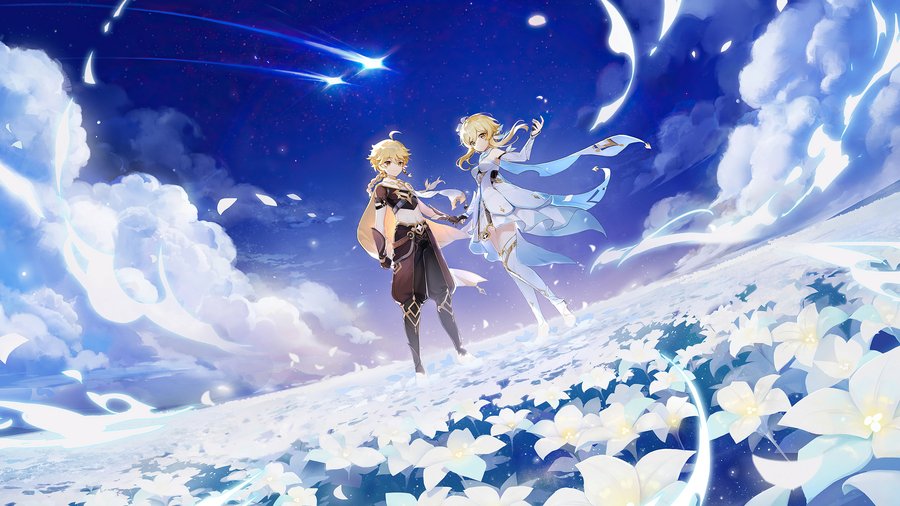
Genshin Impact promo material
COMMUNICATION CHANNELS
In 2021, the Genshin Impact brand used traditional TV advertising as a platform for communicating with Russian-speaking audiences; by 2026, primary communication takes place through the game’s official group on the social network VKontakte, which has 1.3 million subscribers [4]. The group regularly features announcements of upcoming promotions and game updates, while the active fan community ensures a high level of engagement through discussions and user-generated content. An overview of the brand’s current PR strategies can be traced through several advertising campaigns conducted in Russia between 2021 and 2026:
— Genshin Impact: Traditional TV Commercial (2021). In this campaign, the brand departed from the digital advertising typical of games in order to convey significance and scale, thereby increasing audience trust.
— DOOH advertising campaign for the #ENDLESSJOURNEY project at the Evropeysky shopping mall (2023): In this example, the brand demonstrated a strategy of entering the offline space by placing branding in a high-traffic location, helping to transform the virtual gaming experience into a physical event and attracting not only loyal fans but also a general audience.
— Genshin Impact × Dodo Pizza collaboration (2024). — Genshin Impact × One Price Coffee collaboration (2026). These two cross-brand collaborations reflect a strategy of embedding the brand into users' everyday consumer rituals. The use of gamification mechanics within the collaborations (exclusive items, promo codes) allows the brand to maintain a high level of engagement and sustained attention, while driving sales by linking the digital product to real-world food and beverage products.
— Genshin Impact × Likee collaboration (2025): The partnership with the popular Likee platform particularly highlights the brand’s focus on a younger audience. This campaign emphasized the use of short-form video content and challenges, which aligns with contemporary media consumption trends and helps maintain relevance through live interaction and fan community creativity.
Overall, the brand’s strategy is built on the synergy between its digital presence and offline activities, transforming the game into a cultural phenomenon integrated into the everyday lives of Russian consumers.
THEORETICAL FRAMEWORK
Two models were chosen as the analytical framework for this study: the ELM (Elaboration Likelihood Model) (Petty & Cacioppo, 1986) and the Narrative Paradigm (Fisher, 1984). In our view, these two approaches are particularly well-suited as analytical lenses for examining all of the brand’s advertising campaigns mentioned above.
The ELM model makes it possible to classify the ways in which advertising campaigns are perceived through different routes of persuasion. The central processing route explains the engagement of the core target audience by analyzing the value of in-game bonuses within collaborations, while the peripheral route describes the response of broader audiences to visual cues and media authority figures [7].
The Narrative Paradigm model complements the analysis by viewing the brand as an evolving story. The persuasiveness of communications within this paradigm is assessed through Narrative Coherence and Narrative Fidelity, making it possible to determine how specific mechanisms may contribute to — or, conversely, undermine — a cohesive perception of the game world [8].
ANALYSIS
Part of Genshin Impact’s TV commercial on Russian television (2021)
In 2021, Genshin Impact aired short promotional videos on several Russian television channels (TNT 4, 2×2, STS Love, Fan).
In this advertising campaign, the brand primarily employed the peripheral route of the ELM model in order to increase brand awareness and encourage potential users to download the digital product — leveraging airtime on TV channels (Authority) to build trust with the target audience, as well as the visual aesthetics of in-game footage featuring the stunning landscapes of the Teyvat world and charming characters (Liking).
When examining this brand communication through the lens of the Narrative Paradigm, it is worth noting that the creators succeeded in conveying, within a short video, the feeling of a thrilling adventure in which the viewer can become the protagonist — creating a complete and coherent picture of the game world that is easily understood and feels finished and self-contained (Narrative Coherence).
#ENDLESSJOURNEY advertising campaign at a shopping mall in Moscow (2023)
In 2023, the brand organized a global campaign, #ENDLESSJOURNEY, timed to coincide with the second anniversary of the game’s release. The campaign was based on user testimonials from different countries, with the most compelling stories forming the basis of outdoor digital advertising. The Russian segment of the campaign took place at the Evropeysky shopping mall in Moscow, where the advertisements were displayed on large digital screens spanning the full width and height of the building [5].
Here, too, the brand employs the peripheral route of the ELM model, increasing awareness among a broad audience through striking visuals and the scale of the installation, as well as its placement in a prestigious shopping center.
The large-scale screen installation functions as a visual stage for the game’s story, supporting Narrative Coherence by immersing passersby in the game’s context and making them participants in the narrative within a physical space.
Genshin Impact and Dodo Pizza advertising collaboration with in-game characters (2024)
In 2024, the brand collaborated with the popular Russian pizza chain Dodo Pizza. During the limited-time promotion, customers could order the «Tasty Journey» combo — which included a themed pizza and a signature blue milkshake — and receive promo codes and character keychains from the game [1].
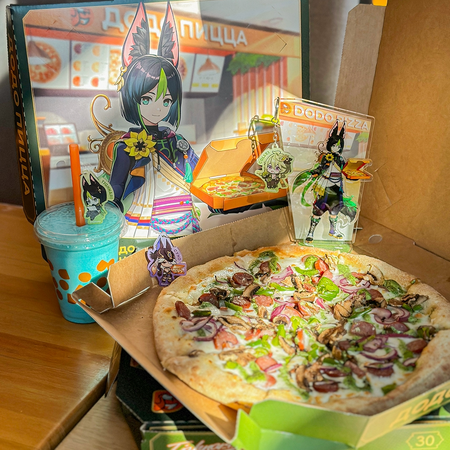
This advertising campaign used the Central Route of the ELM model to engage the core target audience — in particular through promo codes, whose value dedicated fans of the game could appreciate — while also activating the Peripheral Route for casual customers who might be drawn in by the eye-catching packaging and cute character mascots (Liking), as well as by the recognition and trust associated with a well-known local brand (Social Proof, Authority).
Food is an important element within the game itself — for example, a mushroom and meat pizza increases a character’s attack power — so the act of eating not only integrates the brand into fans' everyday lives, but also preserves the internal consistency and authenticity of the story for dedicated players (Narrative Coherence, Narrative Fidelity).
Advertising collaboration between Genshin Impact and Likee (2025)
In 2025, the campaign «Likee & Genshin Impact: Together with Mavuika» was launched, aimed at encouraging audiences to engage with the brand through creative activities. The campaign consisted of online activities on the Likee platform and an offline festival featuring cosplayers and influencers. Users could participate in a prize draw, compete in a video challenge with a prize pool of over 1 million rubles, and share their gaming experience in streams for a share of 300,000 rubles.
Offline festival «Likee & Genshin Impact: Together with Mavuika» (2025)
The involvement of influential bloggers indicates the use of the peripheral route of the ELM model (Social Proof, Authority), while the large cash prizes and engagement of cosplayers are directed at strong motivation and audience participation, which is characteristic of the central route (Central Route).
The creative participation of users generating their own narratives with game characters enhances Narrative Coherence, as fans themselves become co-authors of the story, projecting the game’s meanings onto their own videos.
Advertising collaboration between Genshin Impact and One Price Coffee (2026)
In 2026, a joint promotion with One Price Coffee is underway, where customers can try limited-edition drinks tied to Genshin Impact and receive prizes, promo codes, and participate in an offline meet-up with cosplayers.

From the perspective of the ELM model, this campaign combines both routes: the convenience of receiving rewards and promo codes (Central Route), and the appeal of the campaign mascot — the charming in-game character Navia — which falls under the peripheral route of persuasion (Liking).
Enjoying favorite drinks in the aesthetic of the game makes the game world feel more real and tangible for the audience, strengthening the sense that the story aligns with a person’s lived experience (Narrative Fidelity).