«Am I?» — AI Media on Music and Sound
«Am I?» is an AI medium that breaks down the barriers between people and music. We demonstrate that creating a track, jingle, meme song, or soundtrack no longer requires a studio, instruments, sheet music, or years of study. An idea and a neural network are enough. We are not replacing musicians—we are giving everyone a chance to hear their music and answer the question: «Am I?”—“Did I create this?»
The primary goal of this project is to make music creation accessible to absolutely everyone through neural networks, reducing the path from idea to finished track to just five minutes. We are not trying to replace musicians; rather, we are giving everyone a chance to hear their own music. The narrow scope of our media covers music generation, remixing, restoration, and monetization using neural networks for creative, meme, and business purposes. The project serves two segments: B2C (hobbyist musicians and meme creators) and B2B (advertising agencies, small businesses, and podcasters). Our main distribution channels include Telegram (the core hub), TikTok/Reels/Shorts (viral traffic), YouTube (tutorials), Zen (long-form articles), and Discord (community). The project’s unique value proposition is built on three pillars: a song in five minutes without instruments or sheet music; AI music that is simultaneously humorous and profitable; and the presence of our own community of neuro-musicians where people exchange prompts and collaborate.

Data Sources for Media
For comprehensive media production, we utilize both internal and external data sources. Internal data includes information we generate ourselves. This encompasses analytics from our social media platforms—view counts, likes, shares, and comments from Telegram, VK, TikTok, and YouTube—which show which formats resonate best with our audience. It also includes data from our Discord and Telegram communities: subscriber requests, poll results, and suggested themes for challenges.
We are also building our own library of successful prompts for neural networks (Suno, Udio) that yield the best musical results, as well as user-generated content (UGC)—tracks, memes, and stories submitted by our subscribers.
External sources include everything we draw from outside. Primarily, this encompasses trends from music platforms: Spotify charts, Yandex Music, VK Music, and viral sounds from TikTok. Secondly, we track news from the AI industry—updates to the APIs and features of services like Suno, Udio, AIVA, and Mubert via their official blogs.
Third, the general media landscape: articles on VC.ru, Habr, and in relevant Telegram channels, which is necessary for competitor analysis. Finally, open datasets: information on copyrights, MIDI file databases, and open audio libraries for testing.
Data schema divided into human and machine processing
The content creation process in «Am I?» is a hybrid pipeline, divided into two parallel streams: human processing and machine processing.
Human-in-the-loop processing involves stages that require taste, context, and creativity. First, the team analyzes trends and selects a topic (for example, a cat meme or a concept for a coffee shop), then develops a concept and manually crafts a text prompt for the neural network. After this, the human reviews the generated options and selects the best one, assessing its aesthetics and humor. Next comes post-production: video editing, audio mastering, writing the post copy, and creating a cover image to add «soul» and context. It concludes with publication and live engagement with the audience: responding to comments, conducting polls, and moderating the Discord server.
In turn, machine processing handles the routine and speed. Scripts and bots automatically parse data from social media and music charts. Neural networks (Suno/Udio) generate audio tracks based on human prompts, while AI generators (Midjourney, Kandinsky) create covers and backgrounds. Machines also manage the automatic voice transcription for the podcast «Am I?», gather all analytics into a unified dashboard, and auto-post content on a schedule via Telegram bots.
These two streams constantly intersect: a person writes a prompt, the machine generates a track, a person selects the best one, and the machine masters the sound. Alternatively, the machine collects trends, a person conceptualizes a meme based on them, the machine generates the audio, and a person publishes it.
Guidelines for Automated Services in the Scheme
To ensure automation does not compromise the brand’s tone of voice or create legal or reputational issues, we have implemented strict guidelines for machine processing.
The first rule
The first rule concerns working with AI music generators (Suno, Udio): no track may be published «as is» without prior human listening, as the AI may produce flawed or bizarre lyrics. It is also forbidden to use prompts that directly copy the voices of real, living artists to avoid copyright issues, and a tag #AIMusic must be included in the description of any post featuring AI music, along with the service used.
The Second Rule
The second rule governs the automated parsing of trends and news: the bot collects data from TikTok and Spotify, but a human always makes the final decision on what to write about. The bot does not publish news automatically; it only compiles a morning digest for the team, and any news regarding AI service updates undergoes mandatory human fact-checking before publication.
The Third Rule
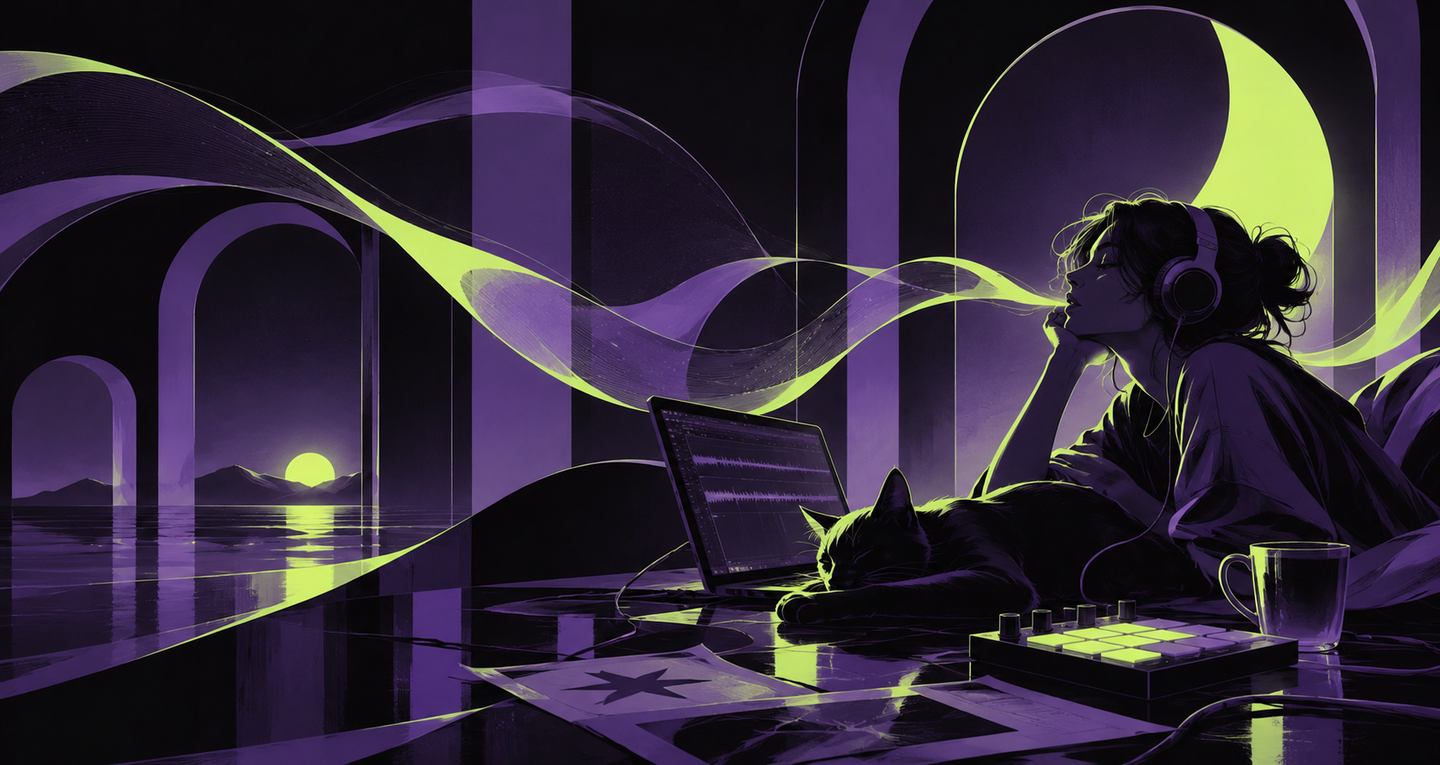
The third rule pertains to visual content generation: neural networks create covers using templated prompts set by the art director, mandating the use of a consistent color palette (deep violet and neon lime) to maintain visual style. Furthermore, the text «Am I?» is always overlaid manually in an editor because AI struggles with typography.
The Fourth Rule
The fourth rule pertains to the collection and storage of user-generated content (UGC): all subscriber tracks and photos are stored in a secure cloud, and their publication occurs only with the explicit consent of the creator. Furthermore, all user content undergoes automatic moderation for prohibited content before entering the main Discord chat.
Rule Five
The fifth rule governs automated posting in Telegram: the bot publishes content strictly according to the pre-approved content plan and does not respond to comments on behalf of the brand, because only a person can inject humor and communicate with the right tone of voice. Each automated post, however, includes a feedback button for live interaction.