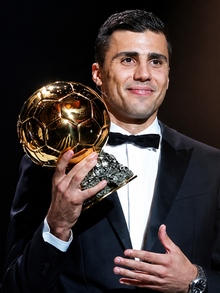
September 1st isn’t just the first day of the academic year—it’s also the final day of the football transfer window. Clubs rush to finalize all negotiations by this date, and players rush to complete their medical examinations; crucial paperwork is submitted at the very last minute; a player might arrive at the new club’s gates before the old one has approved the sale; and even a confirmed transfer can fall through just minutes before September 1st ends. Read the 10 craziest stories from the world of football transfers on sport.mediiia—from deals that were cancelled to transfers that were finalized after the official deadline.
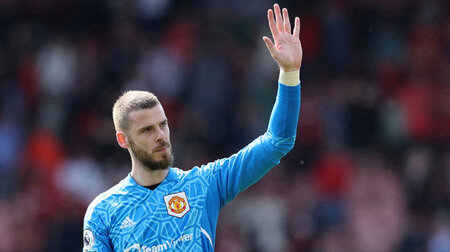
1. David de Gea → «Real Madrid»: One of the biggest transfers fell through over a few minutes
In the summer of 2015, David de Gea’s name dominated the front pages. The Spaniard was entering his fourth season with Manchester United, his contract was set to expire in a year, and Real Madrid was searching for a long-term replacement for Iker Casillas. However, substantive negotiations between the clubs only began on the last day of the Spanish transfer window.
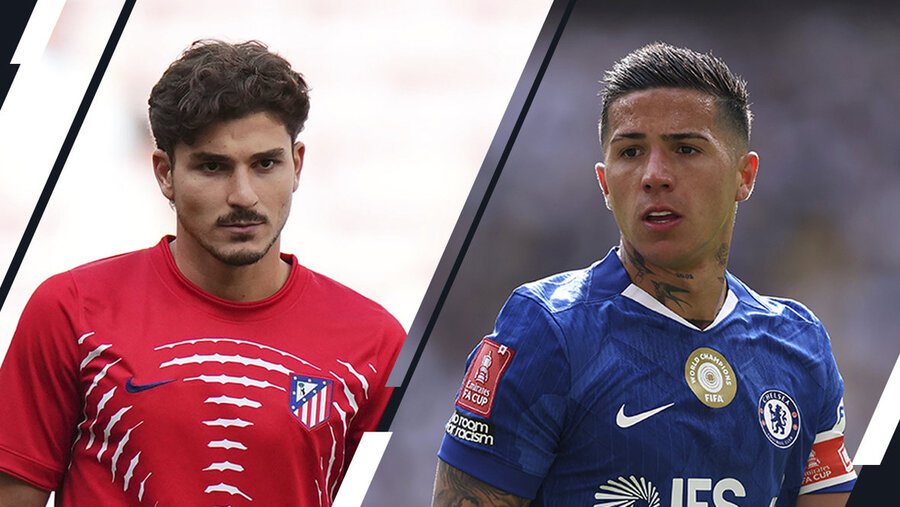
Ultimately, the clubs agreed on a rather complex structure: De Gea was to move to Madrid, while Nayves was supposed to move in the opposite direction to Manchester United. Both deals depended on each other, so it was necessary to process the paperwork for both goalkeepers simultaneously. This is where the problems began. According to United, at 10:32 British time, Real returned De Gea’s documents without a signature page, and a few minutes later sent substantial changes. The Madrid club, in turn, insisted that the delays originated on the English side.
By the time everything was finally agreed upon, it was too late. The paperwork did not make it to the Spanish league in time, and the necessary data did not enter the FIFA TMS system. As a result, De Gea remained in Manchester, Nayves stayed in Madrid, and the next day, both clubs released detailed statements explaining why the other side was at fault for the collapsed deal.
2. Adrien Silva → «Leicester»: 14-second delay
In the summer of 2017, Leicester decided to sign Adriano Silva, a leader of Sporting and the Portuguese national team. The deal was linked to another last-minute transfer: Danny Drinkwater was leaving Leicester for Chelsea, and the Portuguese player was expected to take his place in the midfield. Silva’s fee was approximately £22 million.

At first glance, the clubs seemed to have managed everything. The transfer was agreed upon, the footballer was preparing to join a new team, and Sporting had announced a sale. However, upon verifying the registration, an almost unbelievable detail surfaced: the necessary documents were submitted to the system 14 seconds after the established deadline. FIFA’s electronic system automatically recorded the time, making it virtually impossible to argue against the fact of the delay.«Leicester» attempted to obtain an exception, appealing to FIFA, and subsequently considered litigation in the Court of Arbitration for Sport. The argument was understandable: the matter was not about hours or even minutes, but literally just a few seconds. Yet, FIFA remained uncompromising—Silva was not allowed to play for the English club until the next registration period.As a result, his full debut had to be postponed until January 2018. Later, Silva described this period as one of the toughest of his career and admitted he never understood the rigidity of FIFA’s decision. And when the footballer was finally registered, he chose the number 14 at Leicester—a direct reference to those fourteen seconds.
3. Peter Odemwingie → CPR: The player arrived to sign a contract even though the clubs had not yet agreed on the deal.
Peter Odemwingie’s story is a case where a transfer deadline practically turned into a television spectacle. By January 2013, the striker’s relationship with West Bromwich had soured, and Harry Redknapp’s club, QPR, was actively trying to sign him. Negotiations between the clubs were genuinely underway, leading the player to believe the transfer was virtually finalized.
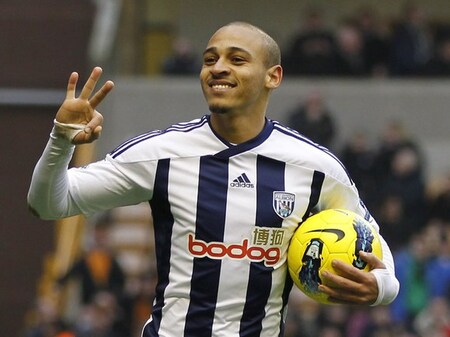
On January 31st, Odemwingie decided not to wait for official approval. He got behind the wheel and drove from Birmingham to London on his own, where TV cameras were already waiting for him near Loftus Road Stadium. The forward gave interviews, speaking about a potential transfer as if all that was left was to sign the paperwork. The problem was that West Bromwich Albion had not authorized him to negotiate with QPR and had not yet agreed to the sale.
So, the most awkward thing happened next: Odemwingie arrived at the stadium of his potential new club, but they simply wouldn’t let him inside. Rednap later explained that the footballer likely genuinely believed that an agreement between the clubs had already been reached, even though it was not the case.
The parties never reached an agreement before the transfer window closed. Instead of a QPR presentation, Odemwingie had to return to West Bromwich Albion, where his behavior was publicly labeled unprofessional. The player himself later admitted that traveling to London without the club’s final permission was a mistake.
There have been broken deals and seconds-late signings in transfer deadline history, but footballers who show up themselves to finalize an unapproved transfer are rare.
4. Hakim Ziyech to PSG: Medical clearance obtained, agreement reached, but the transfer did not happen
In the winter of 2023, Hakim Ziyech was far from Chelsea’s first choice in attack. The Londoners had a very busy transfer window, signing Mikhail Mudryk, Noni Madueke, João Félix, and several other players, so the Moroccan was ready to leave. On the last day of the window, an option to join PSG on loan emerged.

Zies headed to Paris that same day. By evening, he had completed his medical examination and was at the PSG office with his representatives, awaiting the finalization of the deal. The clubs had managed to agree on the rental before the French deadline, so a portion of the issue was essentially resolved.
However, administrative chaos then ensued. PSG claimed that initially, the wrong version of the documents came from Chelsea, and subsequently, the correct paperwork arrived twice without the necessary signature. According to the English side, one of the signed letters never arrived due to a technical issue. By the time the final version of the document reached the French side, the deadline had passed.
PSG attempted to save the transfer through the French League’s legal commission. However, they refused to make an exception and did not register Zies. He was already in Paris waiting for the announcement, and the BBC reported that the player had even contacted Chelsea owner Todd Boehly directly, trying to expedite the process.
The next day, instead of training with Mbappé, Messi, and Neymar, Zies had to return to Chelsea.
5. Fernando Torres → «Chelsea»: One transfer set off a chain of events worth tens of millions
The 2011 winter deadline day remains one of the most famous in the history of English football. Just days before the transfer window closed, Fernando Torres asked Liverpool to release him to Chelsea. The London club had already offered around £40 million for the Spaniard, but was told no. Liverpool was not willing to lose its main striker without massive compensation and the ability to find a replacement immediately.
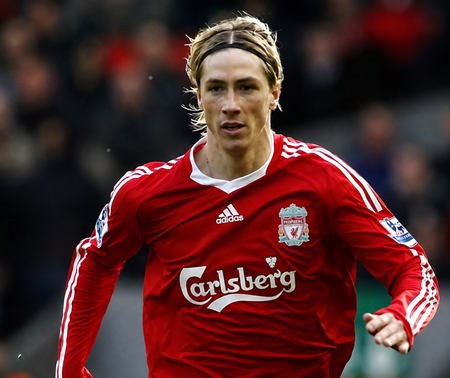
The situation rapidly accelerated on January 31. Roman Abramovich agreed to pay £50 million, making Torres the most expensive signing for the British club at that time. For Liverpool, this meant they had to find a new forward within a matter of hours. Instead of stopping with Luis Suárez, whose transfer from Ajax was already underway, the club decided to go further.
This is how Andy Carroll came about. Newcastle fully understood Liverpool’s position and was unwilling to part with its top scorer cheaply. In the end, the Merseyside club agreed to £35 million—a colossal sum for a 22-year-old forward. Carroll went to Liverpool for a medical, and the deal was finalized that same evening.
A unique chain reaction occurred: Chelsea spent £50 million on Torres, and Liverpool almost immediately spent £35 million on Carroll and £22.8 million on Suárez. The key catalyst for all this activity was Torres’s decision to leave in the very final days of the transfer window.
It is also interesting how differently the fates of these signings played out: Suárez became one of the Premier League’s main stars, whereas Torres at Chelsea and Carroll at Liverpool never managed to fully justify the record amounts spent on them.
6. Robinho → Manchester City: awaited an answer from Chelsea in the morning, became the main transfer for the new City in the evening
For most of the summer of 2008, Robinho was set to leave Manchester City. Chelsea was heavily pursuing him; the Brazilian himself wished to depart Real, and negotiations between the clubs continued right up to the last days of the transfer window. The story escalated to the point where Chelsea’s website accidentally allowed people to order a team jersey bearing Robinho’s name even before the deal was finalized.

But on September 1st, an event occurred in English football that completely changed the landscape. Abu Dhabi United Group agreed to purchase Manchester City, and the new owners immediately decided to showcase their ambitions in the transfer market on their very first day. City attempted to sign Dimitar Berbatov from Manchester United, showed interest in David Villa and Mario Gomes, and eventually shifted focus to Robinho.The speed of the entire process was later described by the player’s agent, Wagner Ribeiro. According to him, earlier that morning, he congratulated Robinho on his upcoming move to Chelsea, but around 10:45 PM, a representative from Real Madrid unexpectedly asked him if he would agree to move to Manchester City. His answer was affirmative.As a result, City paid £32.5 million—a British transfer record. The deal was finalized in the final hours of the window, and the club, which hadn’t been considered the top contender for the Brazilian player that morning, snatched him from Chelsea.In effect, this was the first major symbol of the new era for Manchester City: the new owners hadn’t even fully integrated into the club, and they had already broken the country’s transfer record.
7. Radamel Falcao → Manchester United: Official transfer at half-past one in the morning
In the summer of 2014, Manchester United was undergoing a major overhaul. Following David Moyes’ unsuccessful season, Louis van Gaal took over the team, and the club had already spent significant money on Ángel Di María, Luke Shaw, Ander Herrera, and Marcos Rojo. However, the most unexpected transfer was left until the final day of the window.

On the morning of September 1st, it was announced that United had reached an agreement with Monaco to rent Radamel Falcao. The Colombian striker had recently scored dozens of goals for Porto and Atletico, and during the summer, he had only just completed his recovery from a serious knee injury that caused him to miss the World Cup. The English club agreed to pay around £6 million for the season-long loan and gained the option to keep the forward after the loan period ended.However, time was running out. Falcao needed to fly to Manchester, undergo a medical examination, finalize a personal contract, and complete the transfer paperwork. The club was unable to complete all the procedures by the standard English deadline of 11:00 PM.A special extension saved the deal: because the clubs could confirm that they had already reached an agreement and started the process before the window closed, United was granted additional time. As a result, the transfer was only finalized at 1:30 AM.Thus, United fans faced the deadline without knowing for sure whether one of the world’s most famous strikers would become a player for their club. The answer only came two and a half hours after the official closing of the transfer market.
8. Andrey Arshavin → «Arsenal»: transfer agreed upon in extra time
After the bright UEFA Euro 2008, Andrey Arshavin became one of Europe’s most talked-about footballers. Over the summer, he was heavily linked with «Barcelona» and «Tottenham,» but he remained with «Zenit.» In the winter, «Arsenal» became the main contender, and negotiations stretched through nearly all of January.

The main obstacle was money. Zenit initially valued the player at around £20 million, while Arsenal offered significantly less. Separately, the parties debated Arshavin’s bonuses: the Russian club demanded the return of a portion of the loyalty bonus the player received after signing his previous contract. At one point, Arsène Wenger even rated the probability of the deal closing at 91%, but there was still no agreement by the deadline.On the final day, the situation shifted several times. Arshavin had already undergone a medical examination, then Zenit representatives announced that the transfer had fallen through, after which negotiations resumed. By the official deadline, the parties ultimately agreed on approximately £15 million, and the necessary paperwork was submitted to the Premier League.However, no official announcement was made that evening. The League was still verifying the documents, and questions arose around the deal because some agreements might have been submitted after the window closed. Arsenal insisted it had fulfilled its obligations on time, and the Premier League ultimately confirmed that, in essence, the agreement was concluded before the deadline and could be registered.It wasn’t until February 3rd, almost a day after the window closed, that Arsenal finally announced Arshavin as its player. His agent called the negotiations the most complicated transfer in 16 years of his career.
9. Benjamin → «Manchester City»: Missed flights, pre-midnight medical exams, and a five-day wait
In January 2008, Benjamin Mwaruwari was Portsmouth’s top scorer in the Premier League, so his sudden sale to Manchester City was a surprise in itself. Portsmouth needed money to sign Jermaine Defoe from Tottenham, prompting the club to agree to let their striker go literally on the last day of the transfer window.
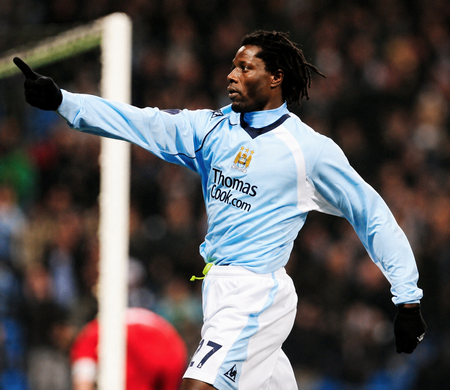
The real journey and the race against time began. Benjamin was scheduled to fly out of Southampton at 3:15 PM, then at 5:00 PM, but he missed both flights. The 6:45 PM flight was canceled, and the next departure was also delayed. Sven-Joran Eriksson waited for the newcomer in Manchester until around five in the evening, but the forward did not arrive at the training base until 11:15 PM—just 45 minutes before the deadline.
There was no time left for a full medical examination. The doctors conducted only a basic check, and the clubs rushed to send the paperwork to the Premier League. After midnight, it became clear that the registration had not been completed through the standard process, and for several days, it was uncertain whether the transfer would take place. An additional complication was City’s concern regarding the player’s knee condition.
It wasn’t until February 5th, five days after the deadline, that Manchester City officially confirmed the transfer. The initial fee was £3.87 million and could increase depending on the number of matches Benjamin played. The Premier League approved the deal after reviewing the documents and the circumstances of their submission.
10. Antoine Griezmann $\rightarrow$ «Atlético»: A Return No One Expected Until the Last Day