How do you gauge the stature of a footballer if his key actions are invisible?
Rodri rarely made the headlines. He didn’t score forty goals a season, rack up millions of views with flashy dribbling, or look like a superstar even on teams that won everything. Yet, Pep Guardiola built one of history’s strongest clubs around him, and the Spanish national team—with Rodri’s participation—became Europe’s, and then the world’s, best.
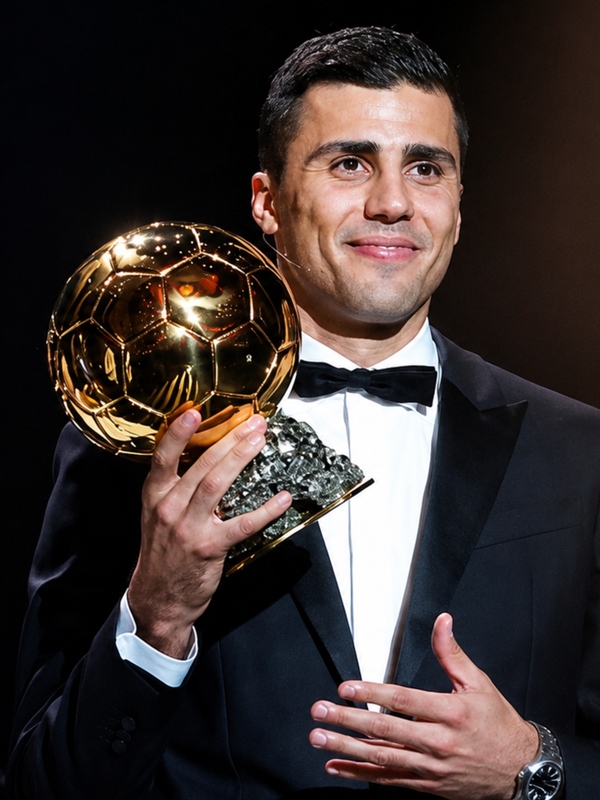
The paradox of this player is that his path to the summit of world football began with failure. When Rodri was seventeen, the Atlético academy rejected him. Several years later, the same athlete won the Golden Ball and forced the football world to look at the role of the defensive midfielder in a completely new light.
1. Why Rodri is the era’s leading footballer that almost no one notices
Football has long accustomed us to seeking greatness where it is easiest to see it. We remember the authors of winning goals, admire the dribbling, and rewatch long-range shots and passes that instantly turn into viral clips. The history of the game almost always belongs to those whose actions can be summarized in one sentence: he scored, he saved, he beat a player, he turned the match around.
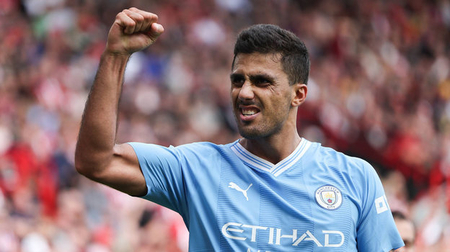
Describing Rodri’s work is significantly more challenging because his best decisions often occur mere seconds before a critical moment and remain outside the scope of typical observation. One perfectly timed movement alters the angle of a pass; several meters covered without the ball nullify a counterattack before it even begins; a cautious backward pass proves more valuable than a risky advance, as it allows the team to maintain control and await a truly advantageous progression.
This type of football rarely makes an immediate splash; it only truly unfolds when the viewer stops focusing solely on the ball and starts observing the positioning of the entire team. This is precisely why Rodri’s influence remained less visible than that of his teammates, whose contributions are more easily quantified by goals, assists, and spectacular highlights.
At Manchester City, attention naturally gravitated toward Kevin De Bruyne, Erling Haaland, Bernardo Silva, and Phil Foden, and in the Spanish national team—Lamine Yamal, Nico Williams, and Dani Olmo. However, the space for most of their best actions was created by the player whom the camera could only capture for a few seconds: Rodri received the ball from defenders, extracted the team from pressure, dictated the tempo of the attack, and was the first to react to potential turnovers.
Formally, he is a defensive midfielder, but his role effectively encompasses almost every phase of the game. In attack buildup, Rodri acts as the linchpin between defense and midfield, deciding during extended possession when the team needs to accelerate and when it must compel the opponent to shift without the ball again. After a turnover, he must assess the danger before anyone else, seal the central corridor, and prevent the opposition from exploiting the space in front of the defenders.
This type of play does not fit neatly into conventional statistics. Rodri might not deliver an assist, but his preceding pass forces the defense to shift and open up the necessary zone. He may not execute a flashy tackle because he has already occupied a position that causes the opponent to forego a dangerous pass altogether. His value becomes most evident not during a moment of brilliance, but precisely when he is not on the field.
Before his severe injury in September 2024, Rodri’s personal unbeaten streak in the Premier League reached 52 matches.
In the 2023/24 season, he missed only three league matches due to suspensions, all of which resulted in a defeat for Manchester City. These figures do not mean that one individual single-handedly won the games, but they convincingly demonstrate how much more stable Guardiola’s setup became with Rodri anchoring the midfield.
Furthermore, his exceptional quality was never built around a single, obvious attribute. Rodri cannot be called the fastest midfielder, the best dribbler, or the most inventive creator of the latest passes. His strength lies in the rare combination of spatial awareness, physical reliability, precision under pressure, and the ability to almost flawlessly assess the risk of every decision.
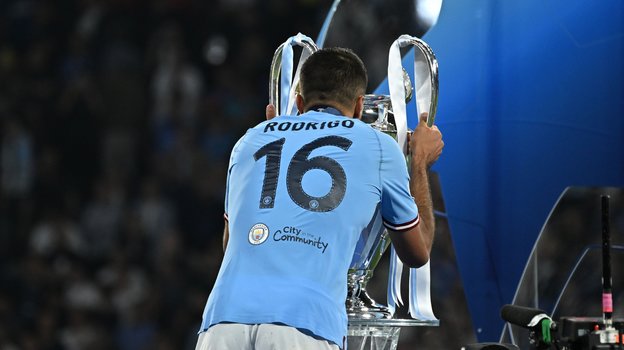
In the 2022/23 Champions League victory, Rodri played in 12 matches, scored twice, maintained a passing accuracy of 93,8%, and was the author of the only goal in the final against Inter. Following the tournament, UEFA technical observers named him the best player of the season. A similar story unfolded a year later at Euro 2024: while the public was discussing Yamal, Rodri, who completed 411 accurate passes out of 439, received the award for the tournament’s best player.
2. The boy kicked out of the Atlético academy
Football academies rarely make decisions by chance. Every young player is monitored by coaches, scouts, and conditioning specialists who assess technique, character, processing speed, and endurance. It is a complex system designed to identify future professionals as early as possible.
And yet, no system can see the future.
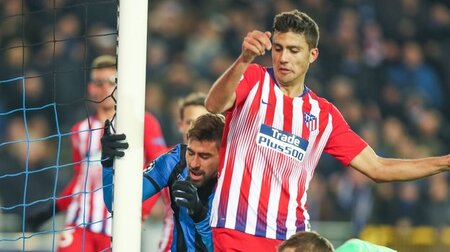
Rodri was born on June 22, 1996, in Madrid. He started playing soccer at Rayo Majadahonda and found his way into the Atlético academy at the age of eleven. For a child from the outskirts of the Spanish capital, this transition represented the chance to follow the dream of thousands of young players: from youth teams to professional soccer within one of the country’s largest clubs.
However, during his adolescence, Rodri developed differently from many of his peers. At sixteen or seventeen, the physical disparity between players can be immense—some already resemble nearly finished adult athletes, while others are only just beginning to grow and build strength. Academies face a complex choice at this stage: evaluate a footballer as he is right now, or try to project his potential several years into the future.
In 2013, Rodri left the Atlético system and moved to Villarreal. Over time, numerous simplified narratives emerged surrounding this episode—as if he was discarded solely because of his slight build or if they outright claimed he would never become a professional. Reliable sources confirm his departure from the academy, and Rodri later shared that he was indeed very slender as a youth and started growing noticeably late, but definitive statements about the club’s exact judgment should be avoided.
Atlético’s mistake was not in failing to notice the real issue: at that stage, Rodri did not appear physically prepared to dominate the central field. The problem lay in the inability to accurately predict what the young player would become after completing his growth phase.
Rodri himself later recalled that period without wanting to frame it as a story of revenge. He acknowledged his own physical immaturity and viewed early photographs from Villarreal—where he looked significantly thinner than in later years—with irony. This perspective speaks volumes about his character: instead of explaining his success through someone else’s error, he perceived the past as part of a long process of maturation.
After several years in the Atlético system, he had to seek a new path, and the move to Villarreal could have appeared to be a step backward. In reality, it was this club that gave Rodri what he most lacked in Madrid—the opportunity to develop without the immediate pressure to meet the standard of a ready-made professional athlete.
3. «Villarreal» gave Rodri time
At Villarreal, no one expected the new midfielder to become a first-team player within just a few months. Rodri was allowed to strengthen gradually, acclimate to the demands of professional soccer, and progress sequentially through the youth, reserve, and senior teams. Such a path rarely forms the basis of football legends, as fans tend to better remember players who burst onto the big scene at seventeen or eighteen. However, for Rodri, the lack of haste turned out to be more important than instant fame.
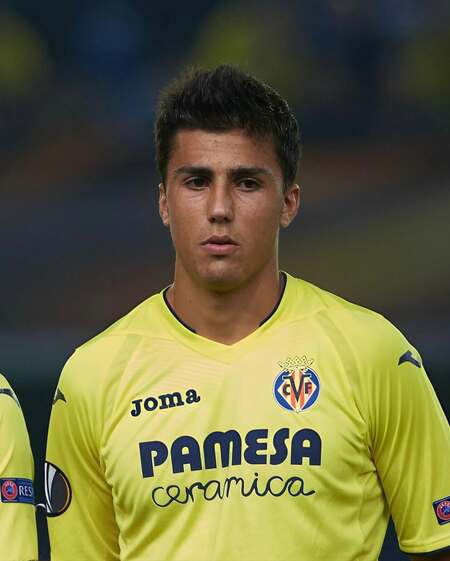
He initially played for the club’s youth teams before moving up to Villarreal B. His debut for the reserve team took place on February 7, 2015, in a Segunda B match against the reserve side of Espanyol. Within two weeks, Rodrigo made his first start, gradually cementing his place in the second team’s main squad.
The next step was the first team.
On December 17, 2015, Rodrigo debuted for Villarreal in the Copa del Rey match against Huesca, and on April 17, 2016, he played in La Liga for the first time, coming on as a substitute in a game against Rayo Vallecano.
Rodrigo was not a revelation of the season following one standout match. He was not presented as the next big star of Spanish football. He earned every subsequent opportunity gradually, as the coaching staff was convinced that the young midfielder was capable of handling a higher level of play.
Perhaps the physical limitations of the early period indirectly influenced his style, although Rodrigo himself never asserted this directly. Lacking a clear advantage in speed or strength, he had to be better at reading the play—specifically, choosing his position and avoiding situations where he would have to correct an error through athleticism. This remains an analytical assumption, but foresight eventually turned into one of the most recognizable traits of his game.
By the 2017–18 season, Rodrigo had fully established himself with the first team and became one of the most reliable young midfielders in the league. He ultimately played 84 matches in all competitions for Villarreal, and in March 2018, Julen Lopetegui first called him up to the Spanish senior national team. His debut came in a friendly against Germany, where Rodrigo came on as a substitute for Thiago Alcântara.
Over several years, not only his status and physical attributes changed. Rodrigo maintained his composure while controlling the ball but became more assertive in duels, developed a better understanding of defensive structure, and learned to make decisions that weren’t always spectacular but made the team more solid.
It was these qualities that led Atlético to bring back the former academy product, and later convinced Guardiola to see him as a successor to Fernandinho. However, running parallel to his football development in Castellón was another story—one equally important to understanding Rodrigo: after his morning training sessions, he didn’t go home; he went to university.
4. Rodri didn’t put the rest of his life on hold.
Professional football seems to suggest that a young player must temporarily set aside everything unrelated to their career. Education can be finished later; the usual student life can be replaced by training sessions and travel, and thoughts about the future can come after the sports career begins to wind down.
Rodri chose a different path. While playing for Villarreal, he enrolled at the University of Jaume in Castellón, where he studied business administration, and continued his studies even after moving to Manchester City. He explained this pragmatically: a football career is time-limited, so he wanted to invest in his future outside of the pitch. His studies took about six years, after which the Spaniard earned his degree.
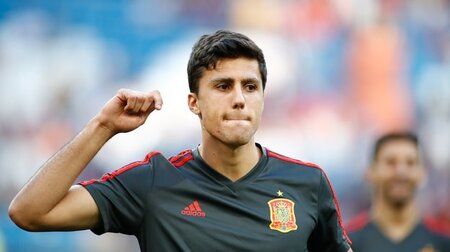
What is far more interesting than the diploma itself is his relationship with the university. Rodri did not view his studies as a heavy sacrifice or a display of exceptional discipline; on the contrary, he called his time as a student one of the best periods of his life. The university allowed him to socialize with peers, decompress after training, and partially maintain a normal growing-up experience—something athletes who enter the exclusive world of professional soccer too early often miss.
For a period, he lived in the student residence, even though he was already advancing toward the main squad of Villarreal. It was there that Rodri met his future partner, Laura, who was studying medicine. In his accounts of this time, there is almost no heroic tone: he recalls lectures, interactions with other students, rare outings with friends, and the opportunity to temporarily forget about the pressure of soccer.
It would be too convenient to draw a direct link between his education and his footballing intelligence. There is no basis to claim that business administration courses taught Rodri how to manage the pace of a match or read the pitch. However, this story truly reveals an important trait of his character: he never saw success in soccer as a reason to abandon other interests or cease developing outside of his profession.
Rodri noted that after morning training, a significant portion of the day often remained for the player, and the question was simply how to manage it. He could not study at the same pace as regular students; he traveled to Spain for exams and later partially shifted to remote learning, but he believed that patience and consistency allowed him to balance both spheres.
The logic of his entire future career was already visible in this approach. Rodri never sought necessarily the fastest route to success and was willing to move slower when he understood the objective. At the university, this manifested in returning to study materials after training and matches, and later on the field, it translated into the ability not to rush an attack if the more rational decision was to retain possession and wait for a change in the situation.
5. Return to Atlético
Football comebacks almost always involve an effort to frame the past in a beautiful narrative. The club speaks of a homecoming, the player dons familiar colors again, and the previous parting begins to be perceived as a deliberately staged part of a greater journey.
Rodri’s story was more complex. In 2013, he left the Atlético academy, and five years later, the Madrid club brought him back as one of Spain’s most promising central midfielders. This was not a sentimental correction of an old mistake, but a sporting decision: Atlético was acquiring a fully developed player capable of immediately bolstering the first team.
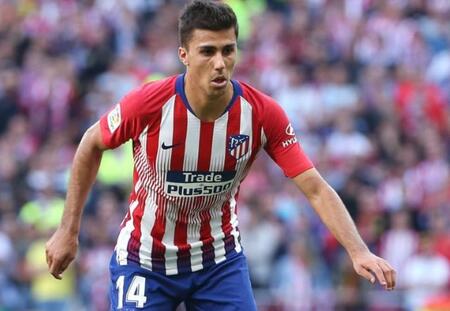
In the summer of 2018, Diego Simeone’s team was undergoing a central line overhaul after the departure of veteran captain Gabbi. Rodri was not his direct replacement, but he possessed the necessary combination of discipline, reliability during the start of an attack, and the ability to protect the space in front of the central defenders.
Working with Simeone allowed him to develop the side of the game that received less focus in the more possession-oriented Villarreal. The Atlético system demanded constant off-the-ball concentration: the midfielder had to maintain compactness, cover zones on time, and understand how one wrong movement could disrupt the entire defensive structure.
Rodri spent only one season in Madrid, but he quickly became an important player for the team. He participated in 47 matches across all tournaments, scored three goals, and won the UEFA Super Cup, in which Atlético defeated Real.
Over that year, he learned to connect two sides of his game: his composure and precision in possession were complemented by a deeper understanding of defense. However, it gradually became apparent that Rodri’s rarest talent wasn’t just his ability to dismantle opponents' attacks. He wanted to control the game through possession—constantly receiving the ball from defenders and independently determining the team’s pace of progression.
Therefore, Manchester City’s interest seemed like a logical continuation of his development. Guardiola was searching for a successor to Fernandinho—a player capable of simultaneously shoring up the defense and becoming the launching point for positional attacks. In the summer of 2019, the English club activated Rodri’s release clause, paying approximately £62.6 million.
Just one year after returning, Rodri left Atlético again.
This time—for good.
6. How Guardiola Made Rodri Reconsider Football
The move to Manchester City seemed logical: Rodri had had a strong season at Atletico, was already playing for the Spanish national team, and possessed the qualities that suited Guardiola’s football. However, the level of demands proved to be significantly higher than he anticipated. The difference was not only in the intensity of the Premier League or the technical level of his teammates. At City, Rodri had to perceive the playing field differently. Possession in Guardiola’s teams is not an end in itself; it serves as a means to control the opponent’s positioning, meaning every movement by one player affects the positions of all the others.
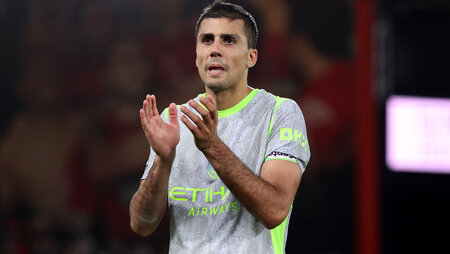
At Atlético, Rodri was required to maintain compactness, cover the defenders, and help the team transition quickly to attack after winning possession. In Manchester, he needed to simultaneously account for several potential developments in each sequence: when to drop between the center-backs, when to push higher, whether to accelerate play with a vertical pass, or to recycle the ball backward to change the opposition’s structure again.His first seasons were a long adaptation process, during which positional discipline received special attention. Later, Rodri noted that returning to Atlético taught him how to be stronger without the ball, while working with Guardiola and his staff helped him gain a new understanding of his own positioning and degree of freedom within the team system.The most difficult part was not memorizing combinations, but understanding the principles deeply enough to find solutions independently. Rodri needed to stop reacting to an already established situation and learn to anticipate how it would change after the next movement.Initially, he remained in the shadow of Fernandinho, who had played that role for years and intuitively understood the coach’s demands. The Brazilian didn’t just win the ball and distribute passes; he constantly corrected minor structural mistakes made by his teammates, preventing them from developing into dangerous attacks. Replacing such a player in just a few months was impossible.Therefore, Rodri’s initial period in England cannot be considered a story of instant success. He regularly took the field, made mistakes, analyzed them, and gradually turned complex instructions into automatic actions. Over time, the need to constantly search for the right option disappeared; he developed a sense that he already knew where his teammates would be and which areas the opponent would try to utilize.Rodri stopped merely fulfilling Guardiola’s requirements and began seeing the game within the same coordinate system.
7. How He Became a Key Player for Manchester City
Rodri’s early successes remained almost invisible, as he played alongside footballers whose actions were far easier to turn into headlines. When City won, the public discussed De Bruyne’s passes, Gundogan’s goals, Mares' runs, and later, Haaland’s and Foden’s scoring.
The paradox was that it was Rodri’s work that allowed these players to showcase their best qualities more frequently. When the defenders were under pressure, he offered them a safe passing option. During a build-up attack, he decided whether to accelerate the advance or to pass the ball back again. After a turnover, he covered the central zone, and when a defender or a winger shifted, he instantly occupied the vacated space.
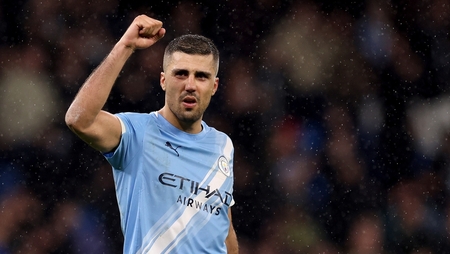
Such actions rarely make clips, but it was from them that the team’s resilience was built. Rodri linked the different phases of the game in such a way that City could simultaneously attack with a large number of players while remaining ready to halt a counterattack.
Guardiola emphasized that Rodri was capable of controlling the tempo, playing short and long passes, and taking responsibility and shifting his position depending on the team’s needs during complex moments. Over time, the Spaniard gained more freedom, began moving forward more often, and started influencing not only the initiation but also the conclusion of attacks.
Statistics gradually confirmed what coaches and teammates had noticed before the general public. By September 2024, Rodri had conceded only 21 of the first 195 Premier League matches for City since his arrival, and the midfielder’s personal unbeaten streak reached 52 matches. In the 2023/24 season, he did not play in three league matches—in all of them, the team lost.
However, even this data does not fully explain his influence, since Rodri’s most significant quality is his timing. He rarely tries to create a spectacular moment at any cost; instead, he more often makes a decision that leaves the team in control of the next few attacking phases.
By 2023, the perception of him had completely changed. Rodri was no longer seen merely as a worthy successor to Fernandinho or one of Europe’s best defensive midfielders. He became the player around whom the entire structure of Manchester City revolved.
And soon, he was about to perform the most incredible feat in the modern history of the club.
8. The Goal in the Champions League Final and the Moment That Changed Manchester City’s History
By the summer of 2023, Manchester City had been considered one of Europe’s strongest teams for several seasons. The club won English championships, set records, and regularly reached the later stages of the Champions League, but the main European trophy remained out of reach. Defeats against Tottenham and Lyon, followed by the loss to Chelsea in the 2021 final, gradually shaped the team’s reputation—a squad that, despite possessing clear on-field superiority, lacked the final push. Therefore, the match against Inter on June 10, 2023, in Istanbul was perceived not just as another final, but as a test of Guardiola’s entire project.
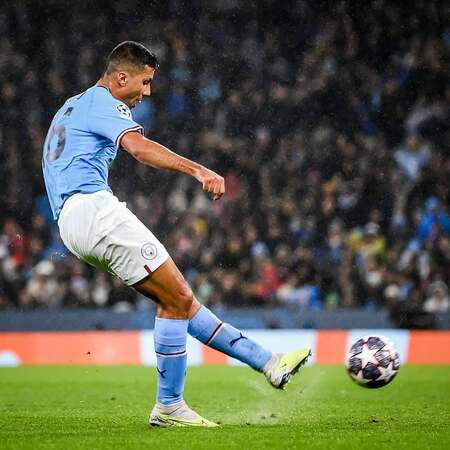
The match proved significantly tougher than many anticipated. Inter defended compactly, restricting space in the central zone and preventing City from launching their customary quick attacks. In the first half, Kevin De Bruyne left the field due to injury, which served as a painful reminder of the Chelsea final, which the Belgian player also couldn’t see through to the end.After the break, the tension continued to build, and the stakes of every decision became higher. The breakthrough came in the 68th minute when Bernardo Silva drove down the right flank and directed the ball into the center of the penalty area. Inter’s defenders broke up the pass, but the rebound landed in a zone Rodri had already occupied.The Spaniard initially intended to shoot hard and high, but seeing several players ahead of him, he decided to place the ball with greater precision. The shot into the far corner was beyond Andre Onana’s reach.1–0.This goal was the only one scored in the final and brought Manchester City its first Champions League victory—along with the English Premier League title, the FA Cup, and the premier European trophy. Rodri received the award for Best Player of the Final and was later recognized as the best player of the entire tournament season.The moment itself, as well as its creator, was symbolic. A more obvious scenario might have involved a winning goal from Haaland, who had put up a phenomenal scoring season, or De Bruyne, who had been the team’s primary playmaker for years. Instead, however, the fate of the final was decided by a player whose work usually happens out of the spotlight.Rodri came into the spotlight at the very moment when remaining unnoticed was no longer possible.
9. Euro 2024: Best Player of the Tournament
Before Euro 2024, Spain was not considered the undisputed favorite. After winning the 2012 European Championship, the national team struggled to reclaim the top spot, and the new generation had yet to achieve the status of the team featuring Xavi, Iniesta, Busquets, and David Silva.
In just a few weeks, that perception changed. Luis de la Fuente’s team won all seven matches, sequentially defeating Italy, Germany, France, and England, among others. Spain became the first national team to achieve seven victories in a single Euro without needing a penalty shootout, setting the tournament record for most goals scored in one championship—15.