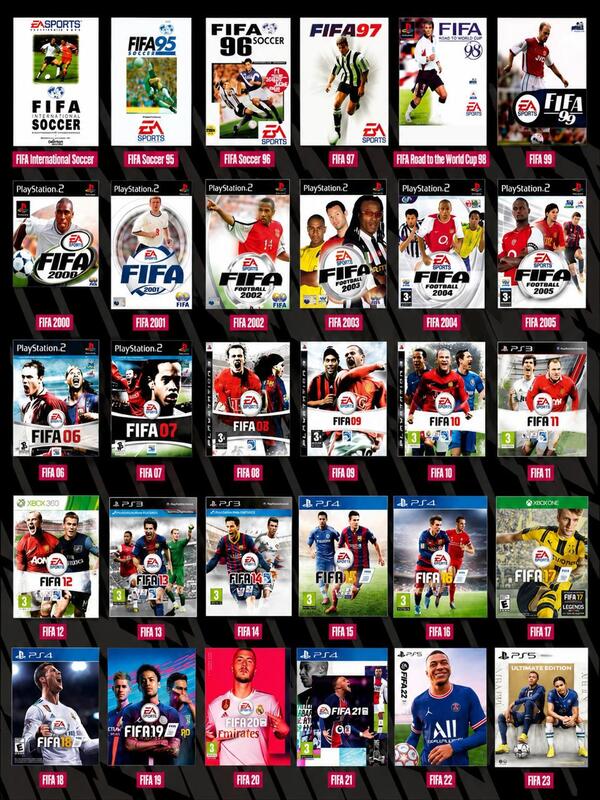
The debate over the best soccer video game is almost as endless as the one between Messi and Ronaldo. For the PlayStation 2 generation, it’s undoubtedly the PES series. Others might recall hundreds of hours spent on FIFA. And the fans of Football Manager are even more certain: managing a club from the office is far more interesting than running around the field.
The editors at sport.mediiia have compiled 10 video games that left a notable mark on soccer culture.
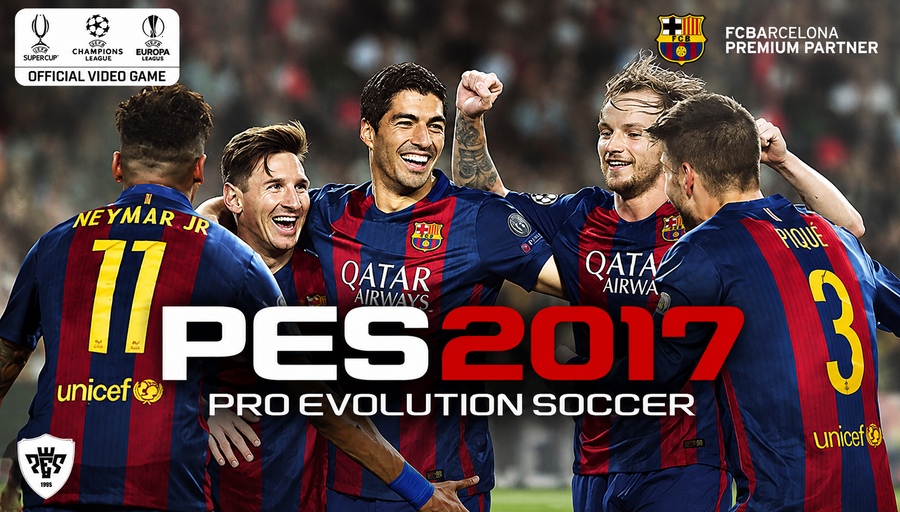
1. Pro Evolution Soccer 6 — the leading contender for the best soccer simulator
Year: 2006
Developer: Konami
Series: Pro Evolution Soccer
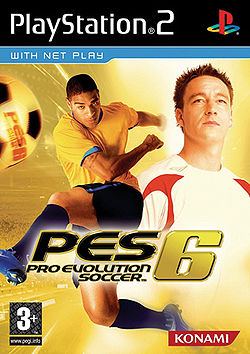
The game appeared in the fall of 2006, a time when the rivalry between FIFA and Pro Evolution Soccer was at its peak. Today, FIFA is considered the dominant football series, but in the mid-2000s, the situation was different: PES regularly received rave reviews for its gameplay, while FIFA largely benefited from its licenses and presentation.
PES 6 became an almost perfect embodiment of Konami’s philosophy of that era. The controls were simple enough to jump into playing with friends almost immediately, but hidden beneath that simplicity was immense depth. The footballers interacted with the ball, moved, and shot in distinct ways. Moreover, the best among them were truly unique—this wasn’t just about a few extra points in their stats.
From this emerged an entire gaming mythology. Adriano, playing for Inter, became one of the most famous virtual footballers of his generation: his power and shot are still remembered in PES communities. Master League spawned its own legends like Castolo and Minanda, and the lack of certain official licenses gave rise to a massive culture of user-created mods that corrected names, emblems, and rosters.
The main proof of PES 6's status is its longevity. Twenty years later, fans continue to return to it, and in debates over the greatest PES title, the fifth and sixth installments are considered the pinnacle of the classic series. These games are still recommended for their captivating gameplay and, especially, for their signature ball physics.
2. Sensible World of Soccer—a game ahead of its time
Year: 1994
Developer: Sensible Software
Series: Sensible Soccer
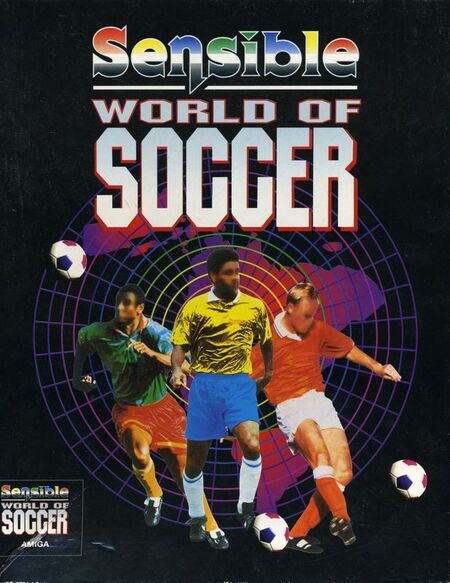
Sensible World of Soccer is a top-down game featuring footballers rendered in a few dozen pixels and graphics that seem incredibly simple by today’s standards. Yet, beneath this simplicity lay one of the most ambitious football games of its era.
SWOS merged matches with management: transfers, full seasons, and the ability to switch between clubs and tournaments. The developers combined arcade action with a management simulator long before career modes became standard.
Furthermore, the core football mechanics were incredibly fast-paced. The player controlled not only the direction of movement but also the ball, and mastering curved shots became a distinct challenge.
The game cultivated such a devoted audience that its legacy remains vibrant three decades later. FourFourTwo magazine ranked Sensible World of Soccer as the best football game in history—even above PES 6 and FIFA.
3. Championship Manager 01/02 — a project that made fans believe in fictional stars
Year: 2001
Developer: Sports Interactive
Publisher: Eidos Interactive
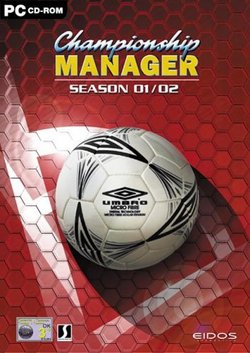
If there is one game that best explains the cult status of football managers, it is undoubtedly Championship Manager 01/02. In this game, you could not directly control the players on the field. The player became the head coach: scouting transfers, selecting the lineup, setting up tactics, and watching how their decisions played out in matches. But the real magic of the game was its database. A pantheon of virtual legends was formed among fans: Maxim Tsygalko, Cherno Samba, Tonton Zola Mukoko, and many others. Some real footballers became far more famous among gamers thanks to inflated statistics than they were in real life. CM 01/02 is still played years after its release. Myles Jacobson of Sports Interactive has stated numerous times that it is the project the studio is most proud of—it was when the team radically upgraded its approach to development and testing. In 2008, the Championship Manager 01/02 game was officially made free, and the fan community continues to update its databases to this day.
4. FIFA 14 — The Golden Age of the Series
Year: 2013
Developer: EA Canada
Series: FIFA
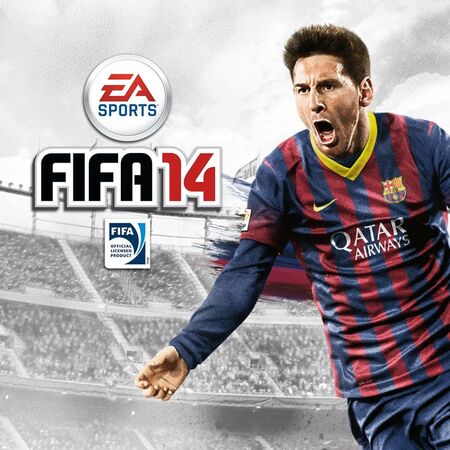
Choosing the best FIFA is significantly harder than defining a definitive PES. Older generations favor FIFA 98 and 07, while many love FIFA 12 or 13, and younger gamers often reminisce about FIFA 15 and 17. However, in modern fan discussions, FIFA 14 most frequently emerges as the undisputed leader.Its cult status isn’t just due to gameplay. It was an era when the Ultimate Team mode had become a mass phenomenon, but hadn’t yet devolved into an endless conveyor belt of promo cards and aggressive microtransactions. The career mode remained genuinely deep, and the soundtrack continued to shape the musical tastes of the generation.In 2014, the game received a massive free World Cup update, allowing players to assemble teams for the Brazil World Cup. Many fans recall this mode with particular fondness, considering it the defining strength of FIFA 14.
5. FIFA Street 2 — a game where every goal could be a highlight
Year: 2006
Developer: EA Canada
Series: FIFA Street
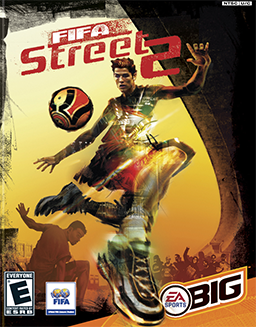
In the mid-2000s, EA decided that a football simulator didn’t have to resemble a real match. This led to the creation of FIFA Street—and its second installment became a cultural touchstone for an entire generation of players. Instead of massive stadiums, the game featured tight, urban courts. Instead of rigid tactical formations, the focus was on dribbling, walls, tricks, and one-on-one skill. Players were encouraged not just to get the ball into the goal, but to outmaneuver opponents stylishly, building an advantage through spectacular moves. And all of this featured real superstars. Ronaldinho became the face of the game—the perfect footballer for a project centered on technique, improvisation, and street aesthetics. FIFA Street never replaced the main series, but it evolved into a distinct cultural phenomenon. Even years later, communities regularly request that the franchise return or that a full remake of the second installment be made.
6. Football Manager 2024 — The chance to build your dream club: from transfers to tactics
Year: 2023
Developer: Sports Interactive
Series: Football Manager
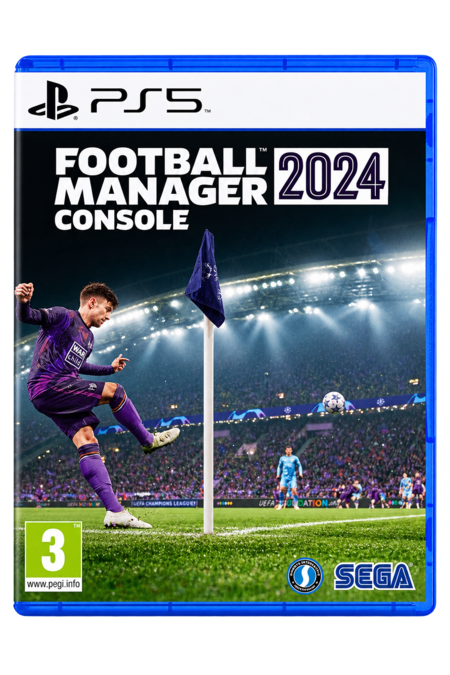
In FM24, you can manage transfers and contracts, dispatch scouts worldwide, develop the academy, build your coaching staff, and establish your own tactical system.Every decision, however, is interconnected: a promising newcomer risks failing to integrate with the team, a leader may demand a new contract, and a perfectly functioning tactic can suddenly stop delivering results.One of the primary reasons for Football Manager’s cult status is its massive database of real-life players and clubs. The search for young talent is particularly valued: you can discover an unknown teenager, purchase him for a modest fee, develop him over several seasons, and eventually turn him into one of the world’s best players.But Football Manager excels most due to the narratives the player creates themselves. In FIFA, you naturally choose «Real» or «Manchester City, ” but in FM, one of the most engaging scenarios is taking over a small club from a lower division, building its infrastructure and squad over years, climbing through several leagues, and eventually qualifying for European competitions.Football Manager 2024 has become an especially important installment in the series: it introduces the ability to control nearly every aspect of the club’s life. Transfers and negotiations with agents have been more deeply refined, the handling of set pieces has been updated, and new tools for squad building have been added. Additionally, you can carry over your career from the previous installment and continue a story already in progress.Consequently, people value Football Manager not for its graphics or spectacular goals. Its main achievement lies elsewhere: after several seasons, the virtual club genuinely starts to feel like your own, and winning a league title after numerous transfers, failed seasons, and the search for the right tactics can bring as much joy as a triumph in a typical football simulator.
7. 2010 FIFA World Cup South Africa — a World Cup you can relive
Year: 2010
Developer: EA Canada
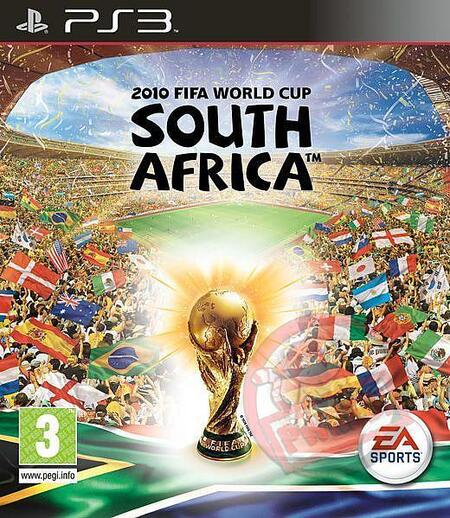
In an era when EA released standalone games for the World Cup, 2010 FIFA World Cup South Africa became one of the series' most striking experiments. It took the familiar foundation of FIFA and transformed it into a full-fledged simulator of the planet’s premier soccer tournament.The game’s main feature was its scope. It featured all 199 national teams that participated in the 2010 World Cup qualification cycle—so players weren’t restricted to Brazil, Spain, or Germany.EA aimed to transport not just the sport, but the entire visual atmosphere of the tournament in South Africa: official stadiums, vibrant decorations, national flags, fan reactions, and a distinct television aesthetic. The stands felt noticeably more alive than in standard entries of the series, and the cameras regularly captured passionate fans and goal celebrations.The soccer mechanics were also enhanced: controls became more responsive, goalkeepers smarter, ball handling more accurate, and penalties received a new mechanic. This was perfect for a World Cup game—because a single penalty shootout could potentially decide the entire tournament.One of the most engaging modes was «Captain Your Country.» In this mode, players could create their own footballer or select an existing one and guide them through the national team, gradually fighting for a spot in the squad and the captain’s armband.There was also the «Story of Qualifying» mode, built on the real matches from the 2010 World Cup qualifiers: the player was presented with a specific in-game scenario and had to repeat or alter what happened on the pitch.It was precisely this combination of details that made the game so much more than just FIFA 10 with World Cup branding. 2010 FIFA World Cup South Africa recreated the very feeling of the tournament—a brief event where every match matters, and a national team that usually flies under the radar can suddenly become the main protagonist.
8. FIFA '98: Road to World Cup — FIFA, which first displayed the scale of global football
Year: 1997
Developer: EA Canada
Series: FIFA
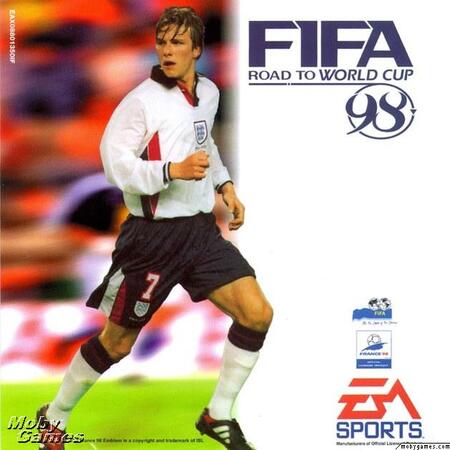
A key feature was the Road to World Cup mode, which focused on the qualification for the 1998 World Cup in France. The game featured 172 national teams, meaning players could choose far more than just the football giants. Players had the opportunity to take a smaller team, guide it through the qualifying tournament, and attempt to reach the World Cup—for a 1997 football game, this scale was impressive.At the same time, FIFA 98 significantly advanced the football simulation itself. Players had more options when controlling the ball, the animation was improved, and there was the ability to change tactical setups and formations. The series was gradually moving away from a simple football arcade and progressing toward the large simulator that FIFA would become in the following years.One of the most unique features was indoor football (Indoor Mode). Matches took place on a small, walled field where the ball would bounce off the boards, making the game significantly faster than regular football. Space was limited, attacks barely stopped, and the walls could be used as part of the plays.The game’s soundtrack became another part of its legacy. The main track was «Song 2» by Blur, and the famous «woo-hoo» would start playing almost immediately after launching. Eventually, FIFA would make music a vital part of its identity and introduce players to hundreds of artists, but FIFA 98 was one of the first releases in the series where a specific song became so closely tied to the game itself.Great attention was also paid to the atmosphere of international football. Real stadiums, national team kits, qualifying tournaments across different confederations, and a huge number of national teams created the feeling that before the player was not just a collection of matches, but an entire map of world football.
9. International Superstar Soccer Deluxe — Konami soccer classic before the PES era
Year: 1995–1996
Developer: Konami
Series: International Superstar Soccer
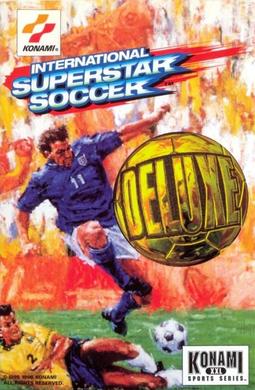
Long before the era of FIFA versus PES, Konami already had its own cult series—International Superstar Soccer.
Instead of chasing licenses, the developers focused on pure gameplay. Players responded instantly to input; the ball wasn’t «stuck» to their feet, and simply pressing the shooting button wasn’t enough to score. Players needed to execute combinations, deliver crosses, play proactively, and use tricks.
The animations were particularly impressive for their time: players slid during tackles, fell after hard collisions, struck the ball with their chests, and handled the ball in various ways. Today, these elements are standard, but on 16-bit consoles of the mid-90s, such detail created a rare sense of an authentic soccer match.
ISS Deluxe successfully balanced the simulator with the arcade. The controls were easy to master, making the game perfect for local two-player matches, but as players progressed, deep tactical options unfolded. A distinctive feature was the absence of official licenses. Fictional names were used instead of real ones, although many characters clearly referenced the superstars of the time. Over time, these «almost real» rosters became a part of the nostalgia for that era.
ISS Deluxe clearly proved that soccer could be engaging without an abundance of modes or photorealistic graphics. The core remained the match itself: a fast pace, responsive controls, and so much freedom of action that even two matches with the same teams could develop completely different scenarios.
It is important not to confuse International Superstar Soccer with the later PES. ISS and the Winning Eleven series (from which Pro Evolution Soccer later evolved) were created internally at Konami by different teams and initially developed as separate franchises.
10. PES 2013 — one of the last great games of the classic PES era