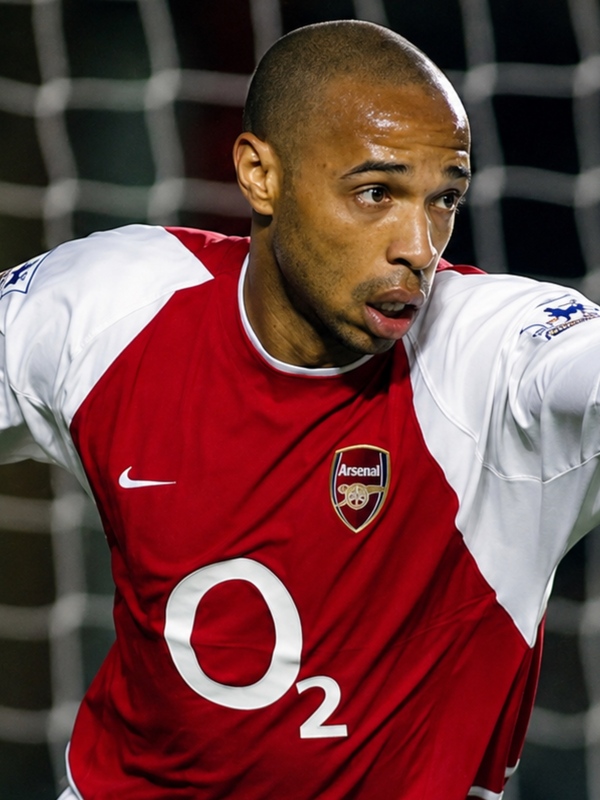
A footballer’s career can sometimes be changed not by a new club or even a new coach, but by a new role on the field. A player might look like just a good performer for years—until a coach finds a position where all their qualities begin to shine fully.
This is how Thierry Henry transitioned from a winger to one of Premier League’s greatest forwards, Andrea Pirlo found his place in midfield, and Joelinton went from an unconvincing striker to one of Newcastle’s key midfielders.
We’ve gathered 10 such stories and analyzed why a change in position proved so crucial for each of these heroes.
1. Thierry Henry: Winger $\rightarrow$ Center Forward
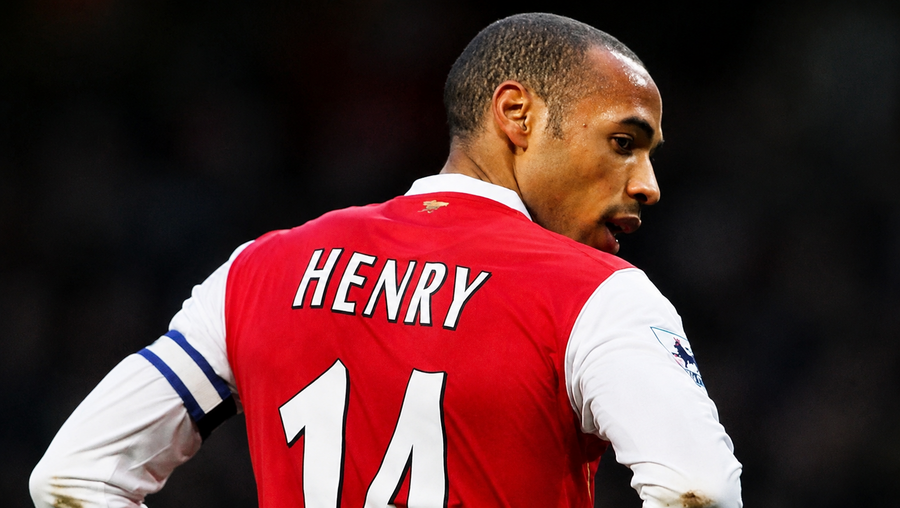
Henry is so firmly associated with the role of center forward today that it is easy to forget: before his transfer to Arsenal, he played predominantly on the wing for several years.
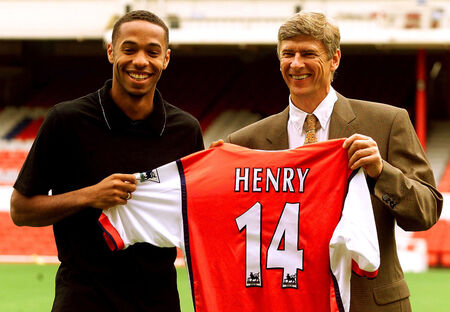
In Monaco, the Frenchman operated on the left wing; he played the same role for the French national team at the 1998 World Cup. After moving to Juventus, he was also utilized as a wide attacking player. Henry himself later recalled that by the time he moved to London, he had become so accustomed to playing on the flank that returning to the center required a complete overhaul of his game.
Arsène Wenger, who knew him well from his time at Monaco, immediately saw him as a forward and even before the transfer stated his intention to use him closer to the goal. Henry admitted that the new role was difficult at first—he too often dropped back to receive the ball out of habit from his winger days and didn’t always time his runs behind the defender correctly. To better understand the new position, he even asked Martin Keown what movements from central defenders particularly bothered center forwards.
Gradually, Henry began to master it. After moving centrally, he did not lose the qualities he gained from years of playing on the wings: speed, dribbling, and the ability to initiate attacks from wider positions. Crucially, he was now positioned significantly closer to the goal and received more opportunities to finish attacks.
Henry was not confined to the role of a classic 'nine'; he could drift out wide, receive the ball there, accelerate, and then move toward the goal from that position. Defenders had to make a choice—track him and leave open space in the center, or allow Henry the space to break away. This freedom of movement became one of the defining characteristics of his game at Arsenal.
In the Premier League, Henry scored 175 goals in 258 matches and won the Golden Boot four times. During his entire tenure at Arsenal, he scored 228 goals and became the club’s all-time leading scorer.
2. Gareth Bale: Left Back → Winger
Bale started his career in a place far removed from where he would later become a global star. At Southampton and in his first years after transferring to Tottenham, he was primarily viewed as a left attacking defender.

Bale’s early years at Tottenham were challenging due to injuries, making it hard to imagine that within just a few seasons, he would become one of Europe’s most dangerous attacking players.
Gradually, Tottenham’s coaches began utilizing him higher up the field, and this process accelerated under Harry Redknapp. Bale’s strongest attributes were his speed, physical power, ability to quickly advance the ball, and potent long-range shooting—all of which became significantly more dangerous when he received the ball not near his own penalty box, but closer to the final third of the pitch.
His true European breakthrough came in the 2010/11 season. In the Champions League, Bale scored a hat trick against Inter Milan at the San Siro, and in the return match, he once again became the central figure. It was after these games that talk about him began reaching far beyond England. Tottenham’s official website specifically highlights that hat trick as one of the moments when the European audience truly paid attention to him.
Subsequently, Bale continued to move closer to the goal, frequently drifting from the flank into central areas, transforming from a classic winger into a versatile attacking player. In 2013, he transferred to Real Madrid, already a two-time PFA Player of the Year winner and one of the most high-status footballers in the Premier League.
3. Andrea Pirlo: Attacking Midfielder $\rightarrow$ Deep-Lying Playmaker
Early in his career, Pirlo played significantly closer to the opponent’s goal. Positioned behind the forwards, his primary responsibility was creating offensive opportunities. In this role, the Italian also played for Inter, but he never managed to secure a place in the Milanese club.
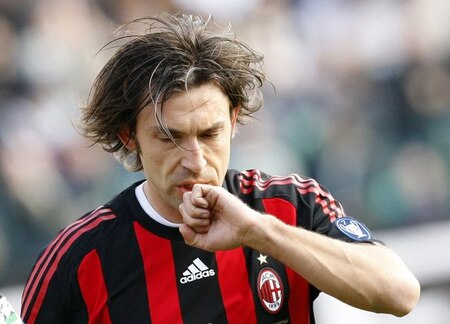
The turning point came with the transfer to Brescia in 2001. Coach Carlo Mazzone decided to push Pirlo deeper into the center of the field, closer to his own defensive line. The idea initially surprised even the player’s teammates, but Mazzone was confident in his decision and instructed the players to pass the ball to Pirlo as often as possible.
In this new position, his strengths were realized much better. Pirlo gained more space and time to make decisions, with nearly the entire opposing team positioned in front of him. Instead of constantly searching for the ball near the opponent’s penalty box, he could initiate attacks from deep, dictate their direction and tempo, switch play from one flank to another, and find teammates up front with long passes. UEFA later highlighted his ability to read the game, control its pace, and deliver the right pass from virtually any point on the field.
After moving to Milan, Carlo Ancelotti continued this idea. Initially, the coach used Pirlo in his familiar role as an attacking midfielder, but then moved him deeper. It was there that the Italian truly became the player through whom the team’s play was built.
This tactical shift largely defined Pirlo’s subsequent career. At Milan, he became one of the team’s key players, winning the Champions League twice—in 2003 and 2007. And when Pirlo moved to Juventus in 2011, he maintained the same role and helped the club win four consecutive Italian championships.
Why the change worked: Pirlo didn’t need to become physically faster or stronger. The new position allowed him to maximize what he truly surpassed most of his opponents in: vision of the field, passing accuracy, and the ability to control the team’s play.
4. Bastian Schweinsteiger: Winger $\rightarrow$ Central Midfielder
Early in his career, Schweinsteiger primarily played as a midfielder on the wing. He was very mobile, actively engaged in attacks, took the initiative, and tried to beat his opponents. This is how the fans of Bayern Munich and the German national team first saw him, though it later became clear that Schweinsteiger’s strengths allowed him to influence the game much more powerfully from the center of the field.
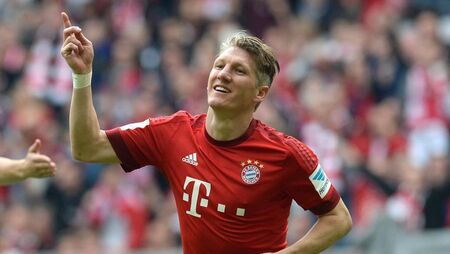
The major shift occurred after Louis van Gaal arrived at Bayern in 2009. The Dutch coach moved Schweinsteiger from the wing to central midfield, and this new position noticeably changed his role on the team. He was no longer required to primarily beat defenders and make runs down the flank; instead, he needed to participate in attack buildup, distribute passes, and help the team regain possession.
This is where the qualities that were not fully utilized on the wing proved particularly valuable. Schweinsteiger possessed excellent vision, a quality passing game, covered a large volume of ground, and could be useful both with and without the ball. Instead of a player responsible mainly for his section of the field, Bayern gained a midfielder capable of influencing the team’s play at virtually every stage.
Already in the 2009/10 season, Schweinsteiger regularly played in the center alongside Marco van Bommel and helped Bayern win the Bundesliga and the DFB-Pokal, as well as reach the Champions League final. In the following years, he firmly established himself in this position and became one of the team’s leaders.
The peak of this period was the 2012/13 season, when Bayern won the Bundesliga, the DFB-Pokal, and the Champions League. Schweinsteiger himself was named Player of the Year in Germany following 2013. Just one year later, he became world champion with the German national team, playing all 120 minutes of the final against Argentina.
The transition to the center didn’t just slightly alter his playing style—it largely defined the second half of his career. On the wing, Schweinsteiger was a talented attacker, but in the center, he became one of the premier midfielders of his generation.
5. Paul Scholes: Attacking Player → Central Midfielder
Scott’s history differs slightly from most examples in this collection because his transition to a new position was gradual. In the Manchester United youth team, he played closer to the attack, and at the start of his senior career, he could feature either alongside the strikers or in midfield. Scott could score from the beginning; for instance, in the 1995/96 season, he scored 14 goals across all competitions.
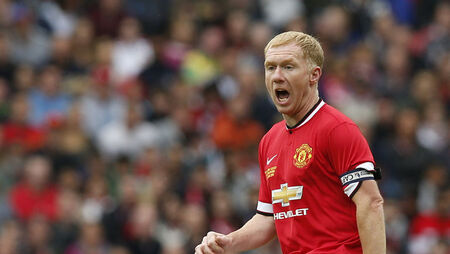
Over time, Sculze began to play more frequently in the center of the field. The 1997–98 season proved particularly significant; due to a severe injury to Roy Keane, United needed a new option in the midfield. Sculze received more playing time there and gradually established himself as a central midfielder.
This new position allowed him to utilize his strengths more fully. Sculze had an excellent view of the pitch, handled the ball precisely, and could create scoring opportunities for his teammates with a single pass. Furthermore, his experience playing near the goal never disappeared; he continued to regularly link up with attacks and scored many goals as a central midfielder.
With age, his playing style changed again. Sculze found himself less often near the opposition penalty box and more often initiating attacks from the center of the field. His main task became less about finishing plays himself and more about dictating how they would develop: holding the ball, finding an open teammate, or quickly shifting play to another area of the field with a long pass. This ability to manage the tempo of the game became one of his defining characteristics in the later years of his career.
Despite this evolution, his scoring prowess remained an important part of his legacy. Sculze scored 107 goals in the Premier League and won 11 English Championships and two Champions Leagues during his career with Manchester United.
Sculze started as an attacking-minded player, transitioned to a central midfielder, and in the final years of his career, increasingly directed the team’s play from the center of the field. It was there that he transformed into one of the most recognizable midfielders of his generation.
6. Robin van Persie: winger $\to$ center forward
At the beginning of his career, van Persie played primarily on the left flank. After his debut for Feyenoord, he played in that position for about a year and a half, although he admitted that he preferred to play closer to the center and participate more actively in finishing attacks.

After joining Arsenal in 2004, his role began to gradually change. Arsène Wenger saw in the Dutchman more than just a winger and utilized him in various attacking positions. Van Persie could play alongside the central striker, operate on the wing, or step into the primary forward role. Over time, the latter became his main position.
This role suited Van Persie particularly well. He was not a typical center-forward who spends most of the match in the box relying on physical duels with defenders. The Dutchman was adept with the ball, could participate in combinations, possessed an excellent left-footed shot, and knew how to find open space near the goal. Therefore, he could not only finish attacks but also drop back to receive the ball, interact with his teammates, and then push forward again.
The 2009–10 season was especially pivotal, as Wenger began regularly using Van Persie in the central attack. The manager himself compared this shift to his previous experience with Thierry Henry: in both cases, a player accustomed to initiating attacks from the wing gradually transformed into the team’s main striker.
The full potential of the new role unfolded over several seasons. In the 2011–12 English Championship season, Van Persie scored 30 goals, won the Premier League Golden Boot for the first time, and received the Player of the Year awards from the PFA and the Football Writers’ Association. By this point, he was no longer just a technically skilled attacking player for Arsenal, but one of the league’s premier forwards.
In the summer of 2012, Van Persie moved to Manchester United, where he confirmed this status almost immediately. In his first season, he scored 26 goals in the Premier League, became the league’s top scorer for the second consecutive year, and helped the team win the English league title.
It was as a center-forward that he spent the best seasons of his career and became one of the Premier League’s leading goalscorers in the early 2010s.
7. Moussa Dembélé: Forward $\rightarrow$ Central Midfielder
When Dembele moved from AZ to Fulham in 2010, he was primarily perceived as a winger. While he could play closer to the strikers or on the flank, his high scoring rate was never his main advantage. The Belgian stood out more for his technique, physical strength, and ability to retain possession even under pressure from multiple opponents.
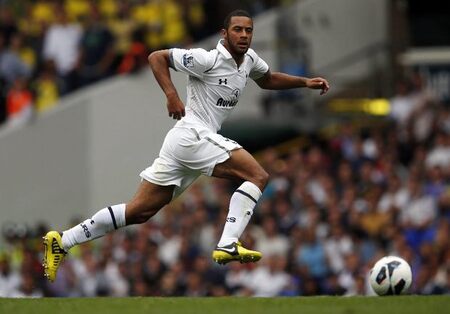
His role truly transformed after Martin Jol arrived. In 2011, the coach began deploying Dembele in central midfield, later explaining the decision quite simply: while English forwards are primarily expected to score goals, the Belgian’s greatest strengths lay in different aspects of the game. In the midfield, he could receive the ball more frequently, participate in attack build-up, and utilize his technical skills across various parts of the pitch.His ability to beat opponents proved particularly useful. As a striker, successful dribbling was expected to lead directly to a dangerous scoring opportunity, whereas in the midfield, Dembele could use a single move to bypass an opponent and help the team transition from defense to attack more quickly. Tackling him was also difficult—the Belgian shielded the ball effectively with his body and maintained control even under tight marking.The shift to midfield significantly changed Dembele’s status. Following a successful 2011/12 season at Fulham, larger clubs showed interest, and in the summer of 2012, the Belgian moved to Tottenham. It was there that he spent the majority of his career in England and finally cemented his position as a central midfielder.Under Mauricio Pochettino, he became an important part of a squad that finished in the top three of the Premier League twice.
8. Alphonso Davies: winger $\rightarrow$ left-back
Before moving to Germany, Davies primarily played in attack. With the Vancouver Whitecaps, he was more often deployed on the left flank, where he could fully utilize his speed and dribbling. It was precisely as this promising young winger that the Canadian caught the attention of Bayern, which he joined in early 2019.
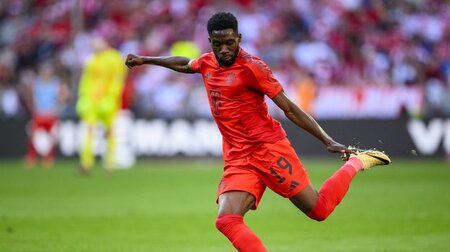
Switching to defense didn’t initially seem like part of a long-term plan. In the 2019/20 season, Bayern Munich faced squad issues in their defense: Niklas Süle suffered a severe knee injury, and Luca Hernández missed important matches. David Alaba began playing more frequently in central defense, and Davis gradually took over the vacant left-back position. Ultimately, the Canadian proved so effective in his new role that he secured it even after the return of other defenders. Bayern later highlighted this restructuring of their defense separately.
It turned out that moving back didn’t prevent Davis from utilizing the qualities that made him stand out in attack. His speed allowed him to regularly push forward and support attacks down the left flank, only to quickly return to defense. Furthermore, his experience as a winger helped him feel more confident with the ball and actively participate in the team’s offensive plays.
As early as the 2019/20 season, Davis became Bayern’s primary left-back: in the German league, he played 29 matches, and the Munich club won the Bundesliga, the DFB-Pokal, and the Champions League. One of the most memorable moments of that season was his performance in the Champions League quarterfinal against Barcelona, where Davis beat several opponents down the left flank and delivered a pass for Joshua Kimmich’s goal in a match Bayern won 8–2.
This was a rather unusual transformation: Davis was moved to defense largely due to personnel needs, but the new position allowed him to maintain his strong winger attributes while simultaneously blossoming in a completely different role. In just one season, he went from a young attacking player to the starting left-back of a treble-winning team.
9. Joelinton: Forward $\rightarrow$ Central Midfielder
Joelinton’s story is one of the clearest examples of how significantly a change in position can alter a football player’s career. While at Hoffenheim, the Brazilian played in the attack, and in his final season before moving to England, he scored 11 goals in 35 matches across all competitions. In the summer of 2019, he moved to Newcastle, where he was initially also used as a striker.
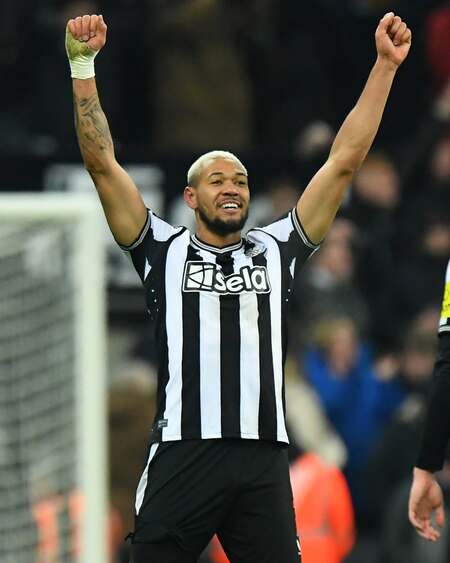
However, Joe Linton’s first few years in the Premier League were not easy. Expectations for him were primarily focused on scoring goals, but across his first two seasons, he scored only six goals in 69 league matches. That said, his game possessed other strong attributes: physical power, work ethic, an ability to compete for the ball, and active participation in pressing. As a forward, these qualities alone could not compensate for his lack of scoring output.
The situation began to shift after Eddy Howe joined in the fall of 2021. The new coach started utilizing Linton in central midfield, where the Brazilian was no longer required to be the primary goal scorer. Instead, he could engage in more tackles, help the team win possession, participate in pressing, and contribute to attacks from the center of the field.
The effect of these changes was quite swift. In his new role, Linton became much more influential on the team’s play and turned into one of Newcastle’s key players. He excelled at using his physical strength to compete for the ball and actively engaging in both defense and offense. In December 2021, the club specifically highlighted his dynamic performance in midfield against Manchester United, and by the second half of the season, he was regularly starting games.
By the end of the 2021/22 season, Linton was named Newcastle’s best player. For a player who was recently criticized for not scoring enough goals, this proved how successful the change in position had been. Later, he solidified his place in midfield and received his first call-up to the Brazilian national team in 2023.
In Linton’s case, the coach didn’t need to completely change his playing style—it was enough to find a position where the Brazilian’s strong attributes outweighed the number of goals scored. As a result, a footballer who couldn’t meet expectations as a striker became one of Newcastle’s essential players in the midfield.
10. Jamie Carragher: full-back $\rightarrow$ center-back