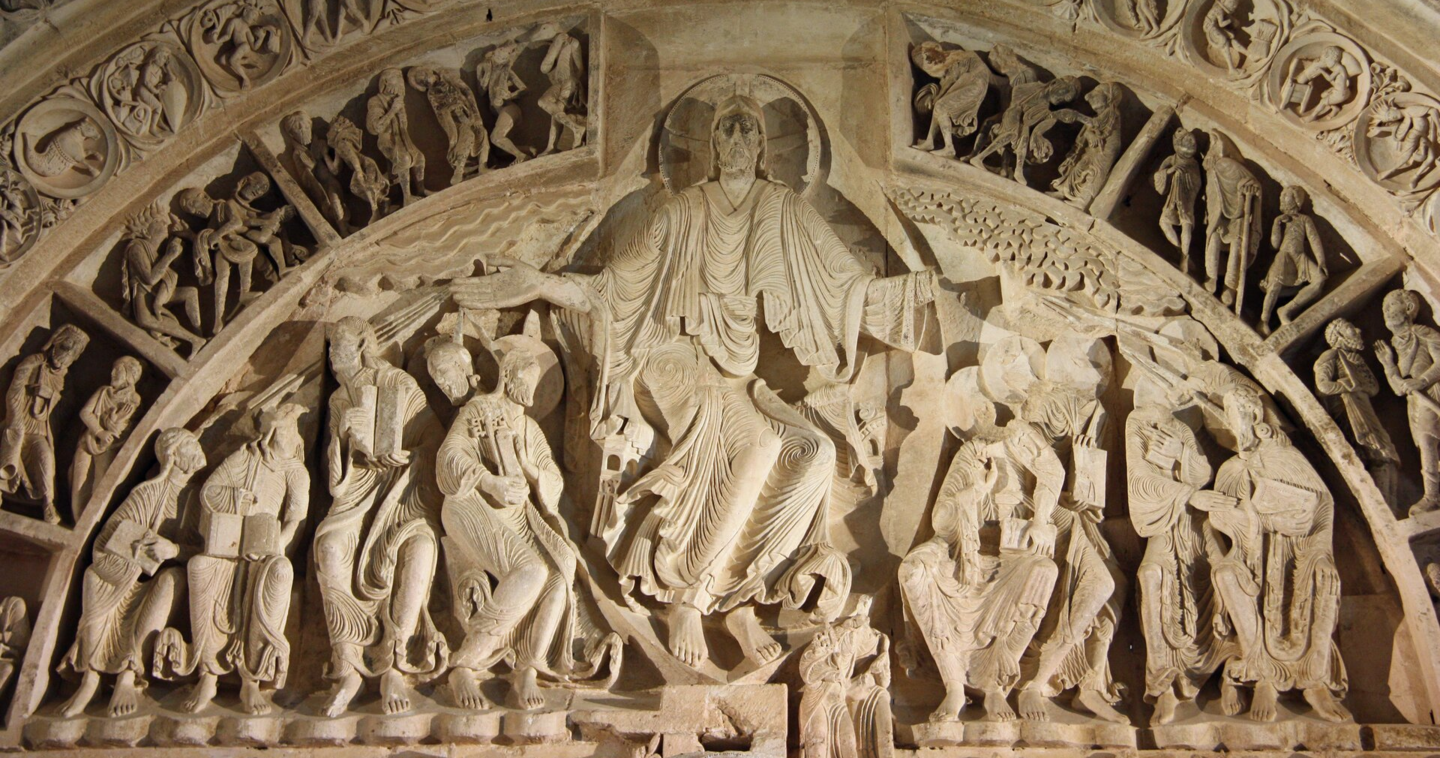
Concept
Medieval art frequently draws upon imagery that cannot be witnessed in the real world: celestial beings, demons, the Last Judgment, and eternal punishment. Artists and sculptors transformed concepts of the afterlife into concrete visual representations, employing human figures, fantastic creatures, unusual proportions, and expressive plasticity.
I was particularly intrigued by the sculptural compositions of church portals, where scenes of the Last Judgment occupied entire architectural spaces. Here, one can observe not only a religious narrative but also a complex system of artistic devices: the juxtaposition of characters, variations in scale, tense poses, and an unconventional interpretation of the human form.
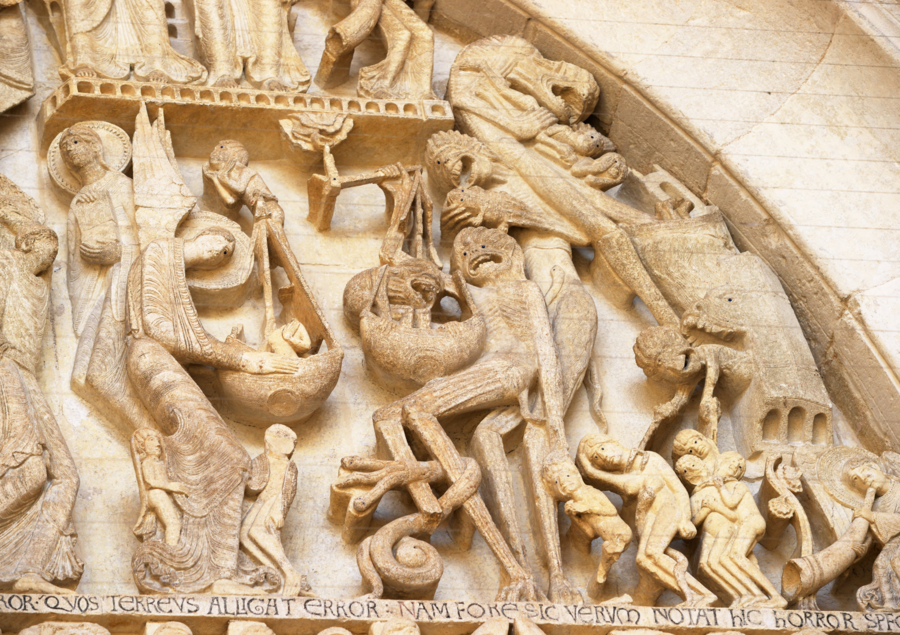
«The Last Judgment, ” tympanum of the west portal of Saint-Lazare Cathedral in Autun. Master traditionally called Gislebertus. Around 1130–1146. Stone.
What lies behind the stone images of the afterlife?
I have long been drawn to the dark and mysterious aesthetics of medieval art. I find it particularly fascinating how concepts of the unknown and invisible world were materialized—in stone, architecture, and the human form.Unlike the common perception of medieval sculpture as a rigid and static art form, portal compositions can be extremely expressive. They feature distorted bodies, tense movements, fantastic creatures, and intricate interweavings of figures.
How did fear transform into art?
Sculptures of medieval church portals are of particular interest due to the close relationship between image and architecture. The figures do not exist independently of the space; their placement is determined by the portal’s form, the scale of the architectural elements, and the overall organization of the composition.
Scenes of the Last Judgment are especially telling for studying these characteristics. In them, one can trace how the central position and large scale of some characters contrast with the dynamism and deformation of others. The imagery of heaven and hell receives distinct plastic expression, and the architectural structure helps unify numerous figures into a single narrative.
Studying these monuments allows one to examine the means by which medieval masters conveyed complex ideas through visual form, without being limited solely to the religious subject matter.
Is it possible to see what no one else has seen?
It was impossible to convey concepts of the afterlife through direct observation. Therefore, medieval masters turned to familiar forms of the human body, animal characteristics, and fantastic combinations, creating their own visual representation of the unseen world. However, what methods did they employ to allow the viewer to distinguish images of salvation from images of punishment? How did the plasticity of the figures, their positioning, and their interaction help communicate beliefs about a person’s fate after death?
The main question of my research: How did medieval sculptors create the visual image of the afterlife and what artistic means did they use to contrast heaven and hell?
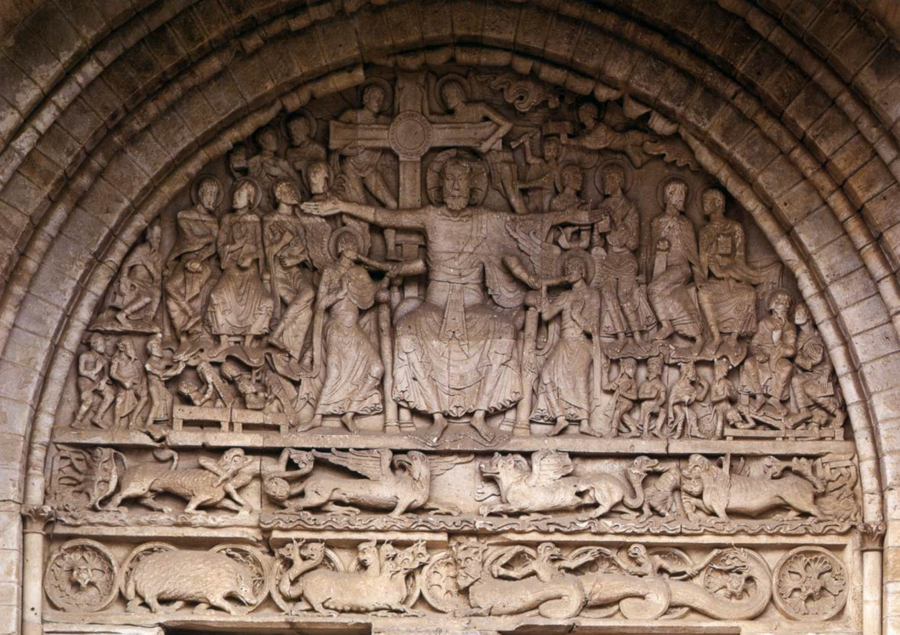
«Last Judgment, ” tympan of the west portal of St. Foy Abbey Church in Conques. Circa 1107–1125. Stone, relief.
One narrative—a multitude of artistic solutions
Despite the shared religious subject matter, medieval depictions of the Last Judgment exhibit a variety of artistic solutions. Some masters strove to convey the majesty and immutability of the divine order, while others emphasized the dynamism, expression, and dramatic power of human figures. I suggest that the image of the afterlife was shaped not only by the characters portrayed but also by the distinctive nature of their plastic interpretation. Scale, proportions, gestures, the positioning of figures, and the character of the relief itself became independent means of contrasting salvation and punishment.
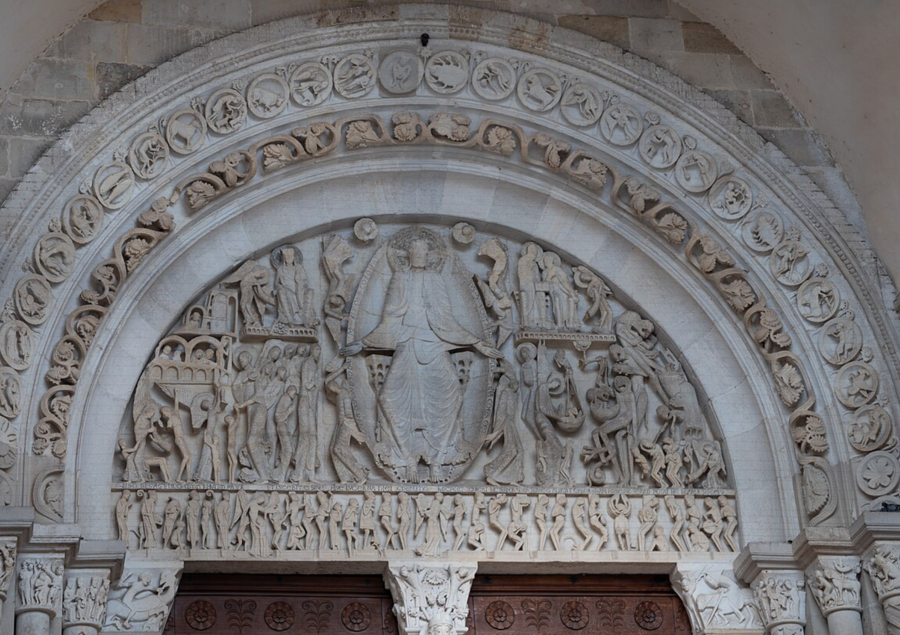
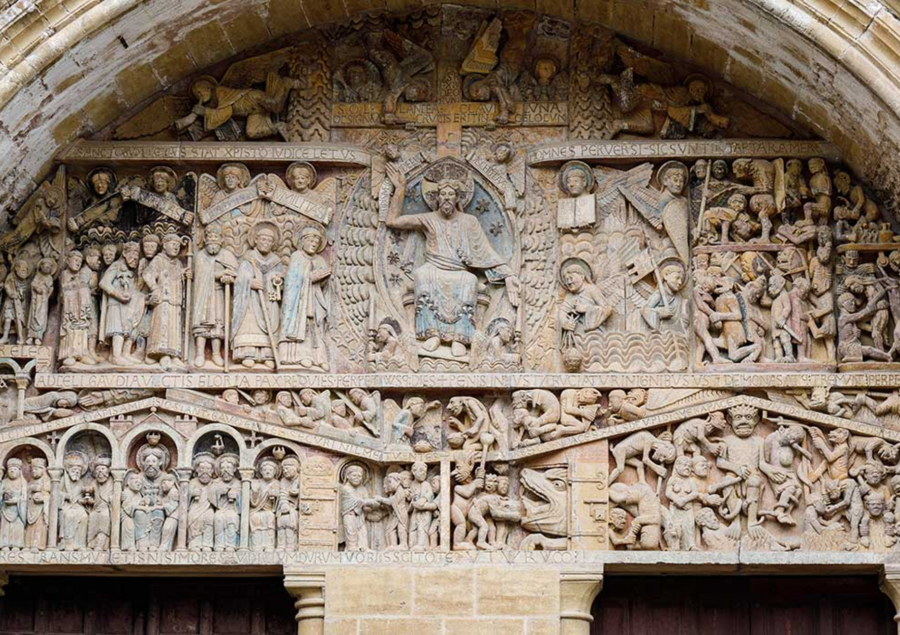
1. «The Last Judgment, ” western portal of the Saint-Lazare Cathedral. Master Gislebertus, c. 1130–1146. 2. „The Last Judgment, ” western portal of the Abbey Church of Saint-Ouen. Early 12th century. 3. „The Last Judgment, ” tympanum of the western portal of the Abbey Church of Saint-Pierre. c. 1130–1135.