Concept
Medieval painting often appears strange to a contemporary viewer: it lacks the familiar sense of spatial depth, and the sky and earth are frequently replaced by a gold background, making the faces and figures seem unnatural and distorted. However, beneath this appearance lies something deeper—this type of painting serves a different purpose, striving to depict what is absent from the physical world: visions, the structure of the afterlife, and the sacredness of the cosmos. The age prioritizes divine revelation as its primary guide, meaning artists do not simply attempt to «copy» reality. Instead, they invent a distinct visual language, employing a system of symbols and compositional choices that allowed medieval people to connect with the sacred.
The goal of my research is to analyze the primary visual devices by which Western European painting of the 8th–14th centuries forms the image of the invisible and the sacred, as well as to trace how these devices transform toward the end of the 14th century, laying the groundwork for the Proto-Renaissance and subsequent Renaissance art.
The choice of topic is supported by several factors. First, the task of representing something that lacks a terrestrial form seems paradoxical for painting. My research proposes to examine and study how the art of the 8th–14th centuries addressed this challenge. Second, the relevance of the issue. This study allows one to view medieval painting not merely as sketches preceding the Renaissance, but as a complex semiotic system with its own set of rules. The selection of this time period is due to the fact that it was during the Carolingian era (late 8th—9th century) that the visual language for depicting the sacred—which later evolved through the 14th century—was initially formed.
Principles of Material Selection and Analysis for Visual Research:
Paintings and book miniatures created in Western Europe between the 8th and 14th centuries were selected—works that most clearly address the concept of the unseen. Textual sources included materials directly related to the visual content (such as the text of the Book of Revelation, apocryphal texts, etc.). Analyzing these sources will help reveal precisely how the text was translated into the language of painting and what visual techniques the artist employed to illustrate different excerpts.
Research Outline:
1. The Unseen Vision. Apocalypse; 2. The Invisible World. The Afterlife; 3. Unseen Time. Calendar Scenes; 4. Conclusion.
Chapter 1. Invisible Vision. Apocalypse
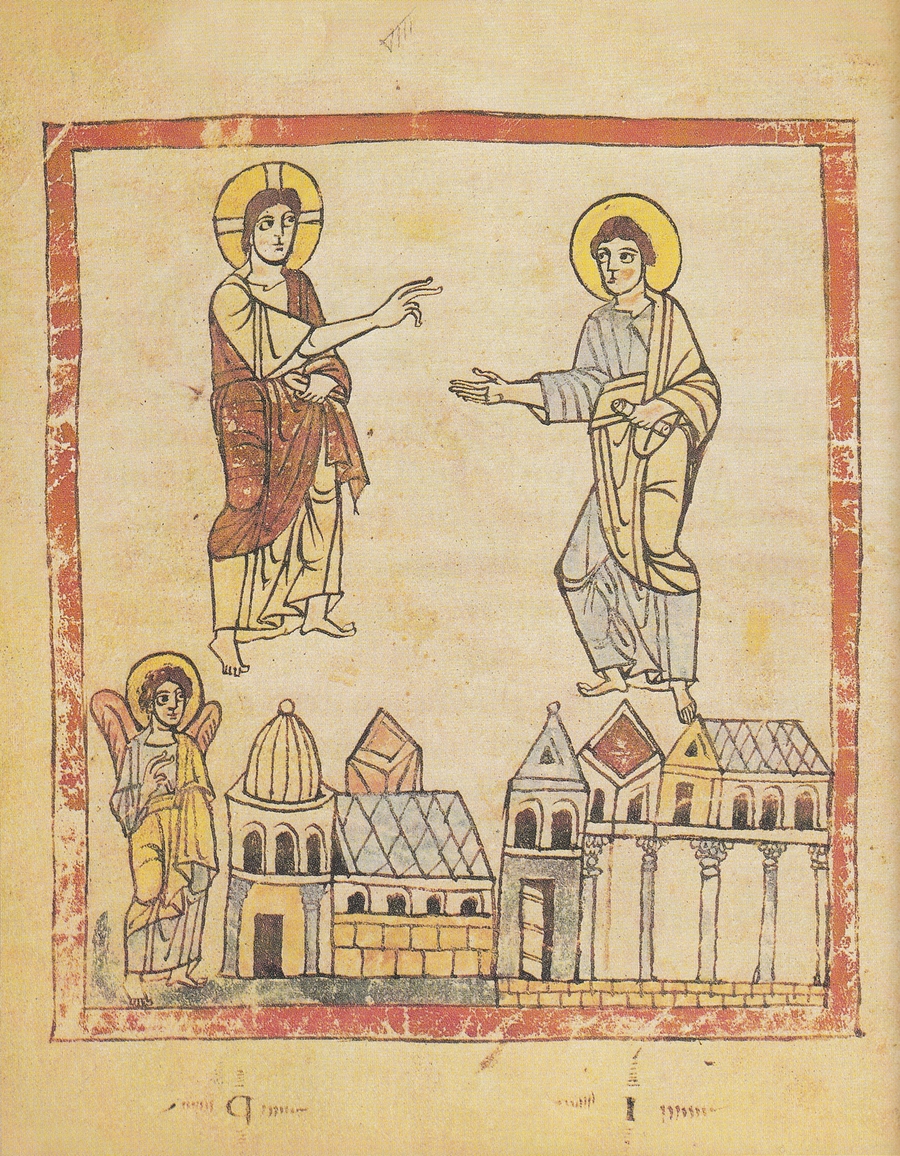
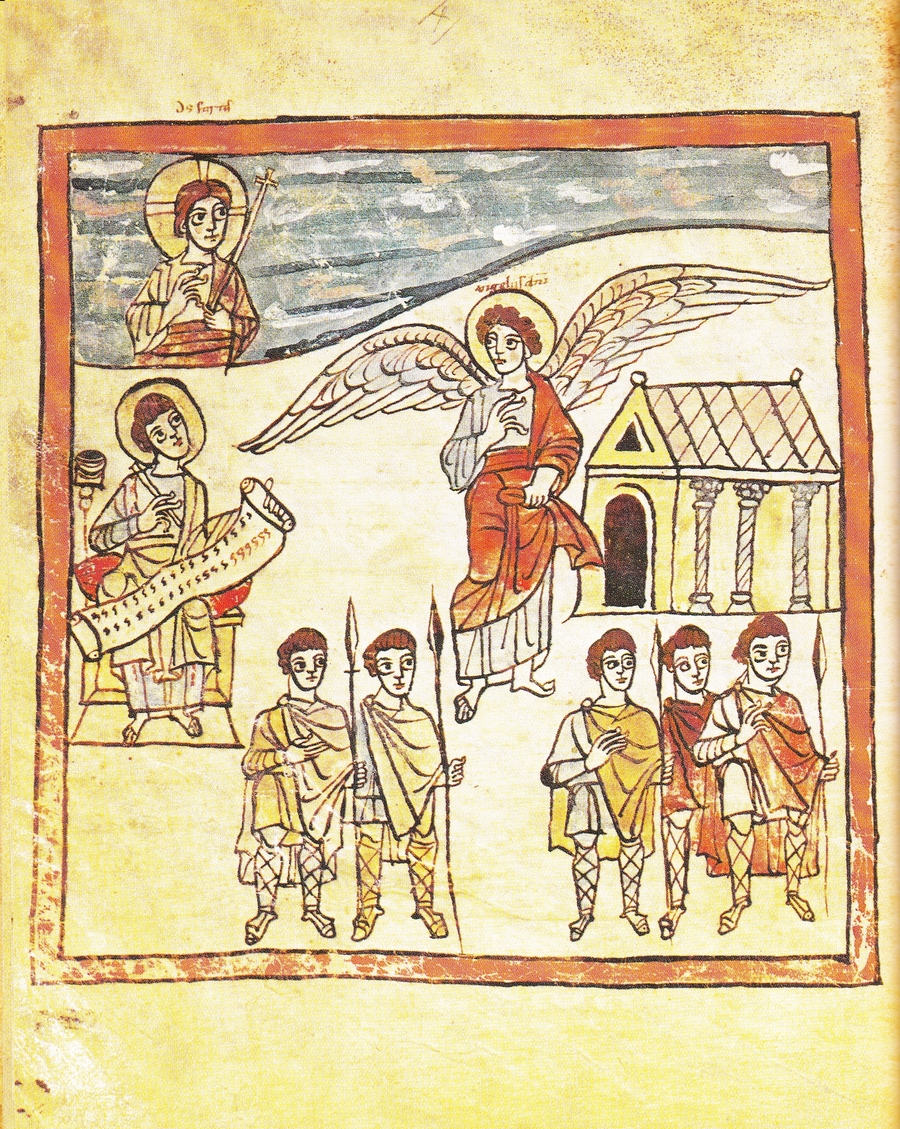
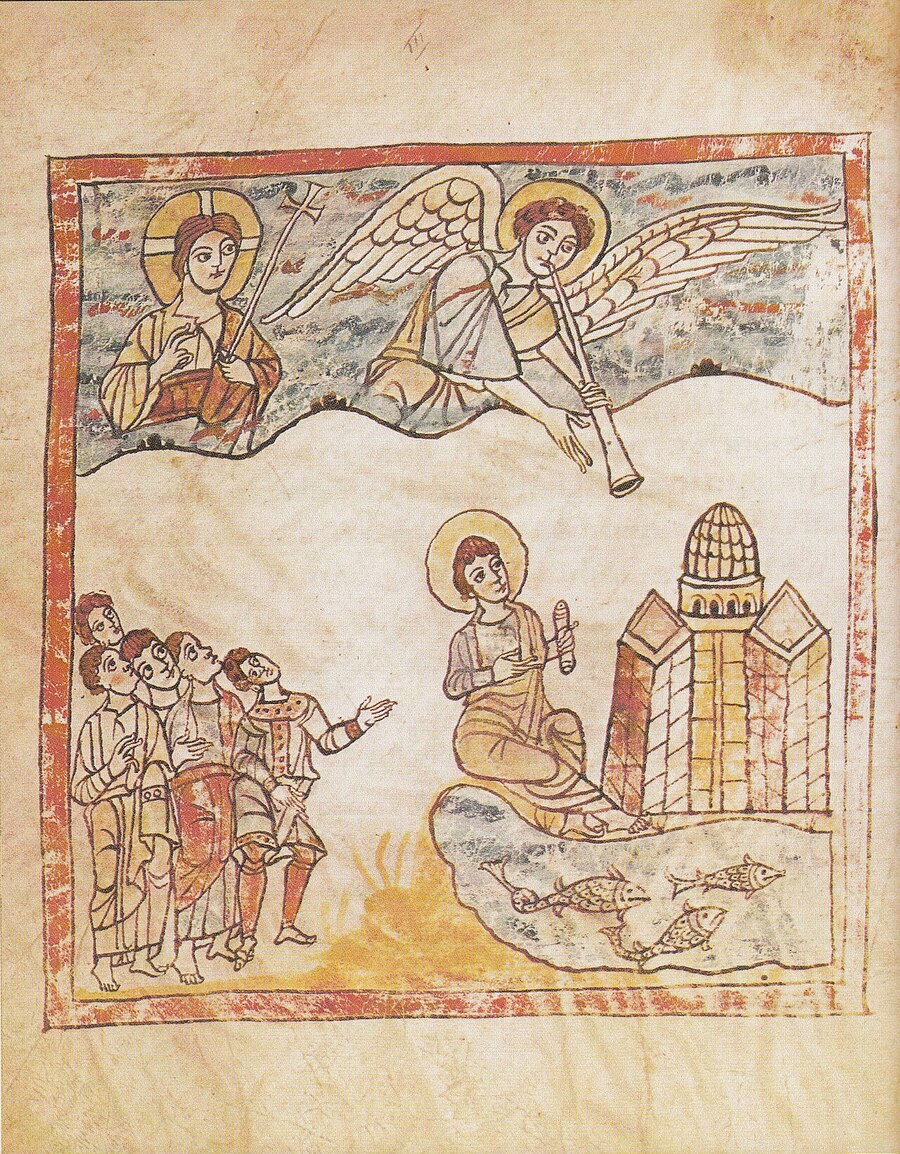
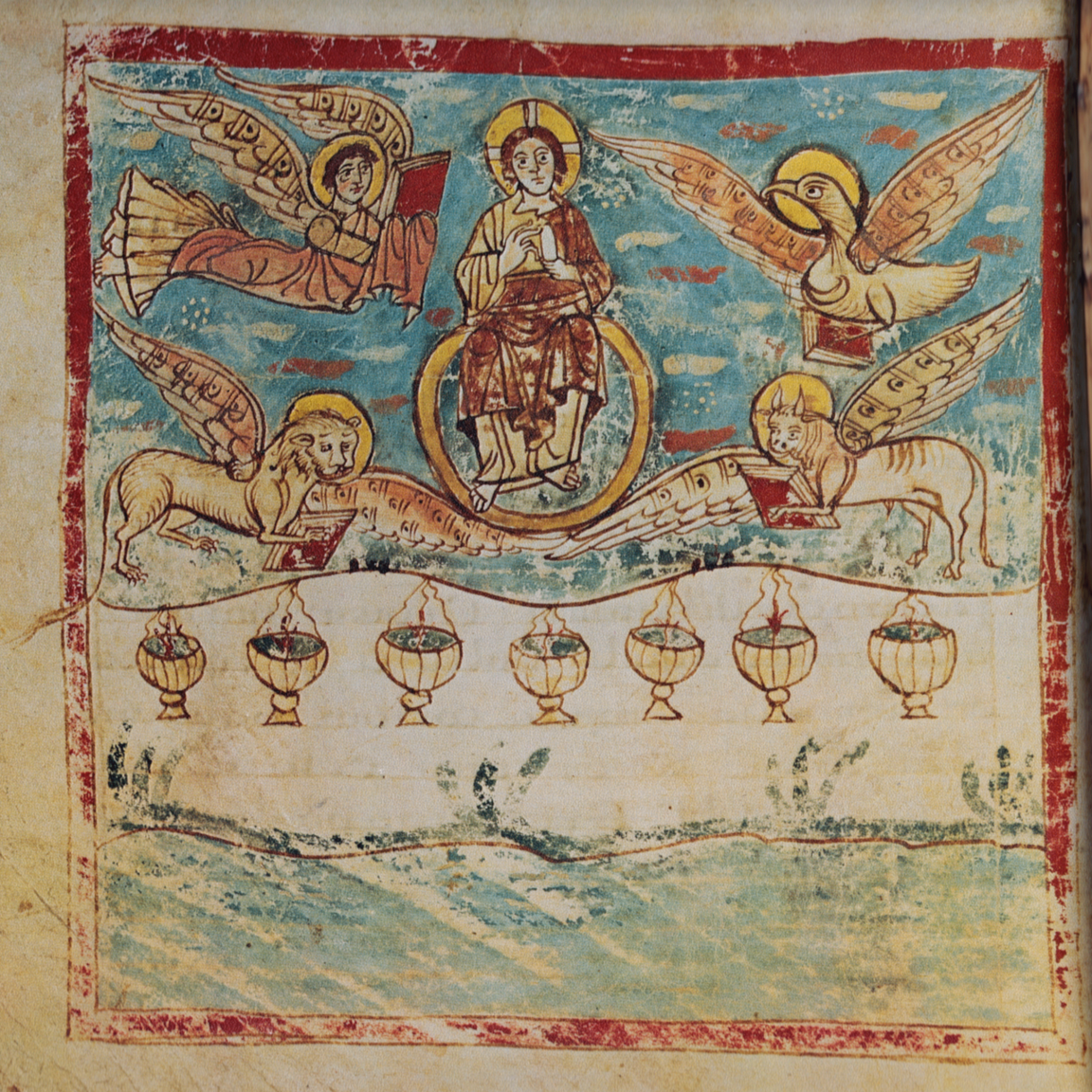
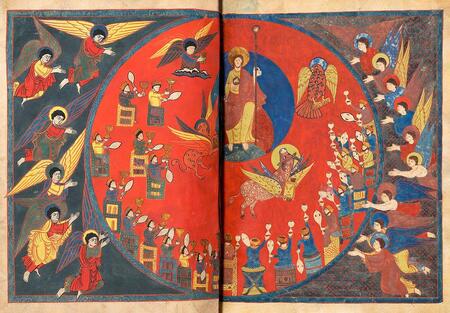
The Book of Revelation presents the painter with a paradoxical challenge: how to depict what has no earthly embodiment? The heavenly throne, the glass sea, the many-eyed beasts, and angels—none of this is visible to the human eye. Analysis of Apocalypse illustrations from the 8th–13th centuries shows that painting solves this problem by creating a set of visual formulas, where the image becomes an iconographic sign.
A striking example of early work with the invisible is the Trier Apocalypse (c. 800). Illustrating various scenes, the Carolingian artist eschewed spatial depth. The figures of the elders and evangelists are arranged in tiers—they seem to float against a horizonless background. Here, space is replaced by hierarchy—the more important the object, the higher it is placed. The invisible celestial throne is depicted as a conventional geometric structure. This visual device emphasizes that what is presented to the viewer is not physical reality, but divine revelation communicated through symbols.