1. Goal of the media
Create an independent magazine about contemporary youth culture and creativity. The media explores the people, communities, and phenomena that shape modern youth culture—fashion, music, photography, art, cinema, sports, automobiles, and the urban environment. The main goal is not simply to report on trends, but to showcase individuals who forge their own style and refuse to conform to pre-established templates.
2. Media Themes
Media Themes: youth culture, fashion, lifestyle, and contemporary art. The magazine explores youth through style, music, creativity, urban environment, sports, and personal stories, investigating the people and phenomena that shape modern culture. The primary focus is on personal style and self-expression, rather than simply following trends.
3. Competitors and Analysis
Direct Competitors:
Media outlets that already work with a similar audience and overlap in themes: fashion, culture, young talent, and art.
The Blueprint
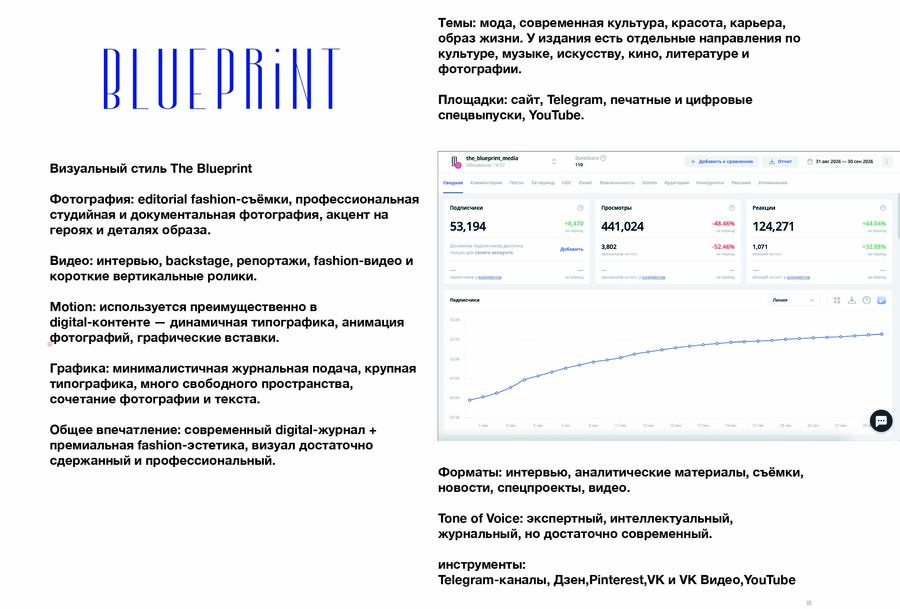
«The Blueprint»Similarity: both media operate at the intersection of fashion, culture, art, music, and people.Difference: The Blueprint is a fashion and culture media with a strong focus on industry and professional environments, while TRY is a youth media focusing on local culture through people, style, and creativity.
Dog.ru
Sobaka.ru
Similarity: Both media outlets cover people, style, music, art, and urban culture.
Difference: Sobaka.ru is a broad urban lifestyle media featuring a large volume of event and news coverage, whereas TRY is a more niche youth media focused on culture through people, style, and creativity.
Indirect Competitors:
These are projects that address the same audience need—to gain information, inspiration, and cultural context—but approach it differently.
«Afisha Daily»Similarity: Both media outlets cover contemporary culture, music, art, fashion, and urban life.Difference: Afisha Daily is a broad cultural and lifestyle publication focused on events and current affairs, whereas TRY is a more niche youth media that explores culture through people, style, and creativity.
«The Village»Where it overlaps with TRY: Readers come for new characters, settings, cultural events, and ideas for city life.How it differs: The Village focuses more on the urban environment, events, and daily life, whereas TRY focuses on youth culture through people, style, music, and creativity, with an emphasis on emerging talent and the independent scene.
Potential Competitors:
These are projects that do not currently align perfectly with my media, THE TRY MAGAZINE, but could begin competing for the same audience or attention.
«BURO»How it intersects with TRY: fashion, culture, music, art, heroes, and urban life; working with visual content and contemporary cultural phenomena.How it differs: BURO is a broader lifestyle/fashion media focusing on the industry, trends, and notable figures, whereas TRY is a more niche youth media focused on the local scene and people through their style, creativity, and lifestyle.
«WE»Similarity: Both media platforms engage with youth culture, fashion, creativity, and emerging figures.Difference: «WE» is a broader youth media outlet, whereas TRY focuses on the local cultural scene, exploring youth culture through people, style, and artistry.
4. Distribution Channel
Website / Digital Journal — the main platform for extensive articles, interviews, photo shoots, and stories.Telegram — project news, announcements, short-form content, recommendations, and article links.VK — posts, photos, cards, clips, and material promotion.YouTube / VK Video — interviews, mini-documentaries, reports, and hero features.Offline — photo shoots, events, collaborations with local brands, exhibitions, musicians, and community initiatives.Partnership Placements — local brands, cultural spaces, music venues, and other projects.
5. Target Audience
B2C