
Media Concept
Segment: Homeware & Drinkware.
Niche Topic: Tactile Ceramics for Slowing Rituals
Tea service and kitchen decor become tools for managing one’s state through touch. This niche topic allows us to engage an audience weary of visual noise and seeking physical methods of grounding.
Data sources for media
The primary goal is to unify information regarding the product, audience behavior, visual preferences, and content interaction outcomes.
1. Internal Brand Data Sources
1. Product and Production Data — Mug sizes: 200, 300, 400, and 450 ml. — Color palette: terracotta, mustard, olive, deep green. — Types of relief and decorative elements. — Material, glaze, and firing process specifics. — Mug creation stages: molding, relief shaping, drying, firing, glazing. — Information on collections, limited editions, and new products.Use: Creating expert and product content, publishing production stories, visual assets, and narratives for specific collections.2. Customer Data — Buyer age and geography. — Preferred mug sizes and colors. — Reasons for purchase: for self, as a gift, for the workspace. — Preferred usage scenarios. — Reviews regarding tactile feel, appearance, and product convenience.Use: Refining target audience profiles, developing personalized content, and identifying the most demanded product features.3. User-Generated Content (UGC)— Photos of mugs in home interiors. — Videos featuring mugs in daily rituals. — Customer reviews and stories. — Photos of mugs with pets. — Brand mentions on social media.Use: Building brand trust, showcasing real-life usage experiences, and fostering a community around the concept of tactile comfort.


2. External Data Sources
1. Social Media and Digital PlatformsKey Platforms:Instagram* — comments, reactions, saves, Reel views, user posts. Pinterest — popular visual solutions, search queries, thematic collections, and saves. Telegram — reactions to posts, comments, essay views, and discussions.Usage: identifying popular topics, formats, visual solutions, and audience interests.2. Analytical and Research PlatformsGoogle Trends — interest dynamics related to ceramics, home comfort, mindfulness, and rituals. Yandex.Wordstat — search query frequency and interest in specific product categories. Yandex.Rhythm — consumer trends and research related to comfort and self-care. RBC — studies on consumer behavior and economic trends.Usage: finding relevant topics for publications, confirming consumer trends, and identifying shifts in audience interests.3. Competitive Landscape DataSources include the pages of direct and indirect competitors:Gipfel. Marimekko and Iittala. Local ceramicists. Home textile and fragrance brands. Coffee brands and roasters.Data is collected on post formats, visual style, content frequency, engagement, comments, and promotional tactics used.Usage: identifying open thematic niches and searching for new ways to communicate with the audience.*Meta Platforms Inc.'s operations to operate Facebook and Instagram are recognized as extremist and are banned in the territory of the Russian Federation
3. Partner Data Sources
Supplementary sources include the organizations and specialists with whom the brand interacts:
— Coffee shops and coffee roasters. — Psychologists and mindfulness specialists. — Interior designers. — Boutique hotels and co-working spaces. — Bloggers who create content about home and lifestyle.
They can provide information regarding their audience’s preferences, popular consumption scenarios, topical requests, and results from joint publications.
Conclusion: The data source system must integrate three streams: product information, audience behavior data, and external cultural and consumer trends. This will allow for the creation of content that simultaneously showcases the value of ceramics, meets buyer demands, and supports brand positioning.
Data schema divided into human and machine processing
It is proposed to divide the data into two primary levels:
1. Human Processing — meaningful, creative, and strategic work with information. 2. Machine Processing — storage, structuring, classification, analysis, and automation of repetitive processes.
Both levels must be interconnected: humans define the meaning and direction of communication, while automated systems help process information and scale content production.
1. Level of Human Processing
At this level reside the data that require interpretation, emotional comprehension, and creative resolution.1. Strategic Data — Brand positioning. — Media goals and objectives. — Unique Selling Proposition (USP). — Brand values and philosophy. — Tone of Voice. — Competitive differentiation.This data determines the overall character of the communication. For instance, the core idea, «Mugs that hold you while you hold them, ” must be maintained across different content formats.2. Target Audience Data— Consumer needs and pain points. — Emotional drivers of purchase. — Everyday usage scenarios for the mugs. — Attitude toward tactility, coziness, and mindfulness. — Genuine reviews and user stories.The analyst interprets this data to determine which topics will be most relevant to different audience segments.For example:For the „Burned-Out Creator”—content about switching focus after screen time. For the „Ritual Seeker”—posts about small daily practices. For the „Meaning Giver”—stories about gifting and showing care. For the B2B segment—materials on creating ambiance in coffee shops and hotels.3. Creative Data— Publication ideas. — Reels scenarios. — Post copy and Telegram essays. — Visual concepts. — Metaphors and associations. — Product and creation storytelling.At this stage, the individual is responsible for the originality, emotional resonance, and adherence of the content to the brand philosophy.4. Quality Control— Verification that publications align with positioning. — Assessing information accuracy. — Checking visual identity consistency. — Approving advertising messages. — Final material sign-off before publication.
2. Machine Processing Level
At this level, the information is translated into a structured format that automated services can utilize.
1. Product Database
Each mug receives a unique record with the following characteristics: Product ID. Collection name. Volume. Color. Relief type. Shape. Material. Stock availability. Link to photos and videos.
2. Content Database
Each publication receives a separate record.
Key fields: Content_ID — unique publication number. Topic. Category. Target segment. Distribution channel. Format. Main text. Visual material. Publication date. Readiness status. Associated product.
3. Visual Asset LibraryA dedicated file classification structure is used to store images and videos.Parameters:Image or video ID. File type. Associated product. Mug color and shape. Shooting type: macro, product, interior. Presence of people or hands in the frame. Lighting. Atmosphere. Link to original file. Usage rights.This structure allows for rapid retrieval of necessary images for publications and enables the reuse of previously created materials.4. Analytics DatabaseAutomated services collect publication performance metrics:Views. Reach. Likes. Comments. Saves. Shares. Link clicks. Subscriber growth. Number of inquiries and applications.These metrics are linked to a specific publication, its format, theme, and target audience.This allows us to determine which topics and presentation styles perform best for the brand.
3. Interaction Between Two Levels
The system operates on the principle of information exchange between humans and automated tools.
Human → Machine: — Formulates strategy and thematic directions. — Approves product descriptions. — Creates or refines ideas. — Defines the target audience. — Establishes guidelines for visual and textual communication.
Machine → Human: — Structures information. — Proposes content variations. — Generates drafts of text and visual materials. — Prepares publications for various platforms. — Gathers statistics. — Identifies patterns and suggests topics based on results.
Human → Human + Machine: — Assesses quality. — Refines materials. — Approves publications. — Analyzes results. — Updates the content strategy.
In this way, the human remains responsible for the meaning, the creative concept, and the final decisions, while the machine handles the technical and analytical tasks.
Guidelines for Automated Services in the Scheme
To organize media production, it is proposed to utilize automated services at specific stages of the content cycle: from idea generation and material preparation to publication and results analysis. The primary condition is that all tools must operate within the scope of a unified brand concept and must not violate its visual or semantic identity.
1. Information Collection and Analysis Services
Purpose: To identify relevant topics, study audience interests, and analyze the competitive landscape.Potential Tools:Google Trends — analyzing the dynamics of search interest. Yandex.Wordstat — researching search queries. Built-in social media analytics — collecting publication statistics. ChatGPT — systematizing information, analyzing feedback, and finding thematic directions.Guidelines:1. Use only verifiable information sources. 2. Separate factual data from assumptions and interpretations. 3. Maintain links to studies and primary sources. 4. Do not transfer conclusions from competitive analysis without adapting them to your own positioning. 5. Regularly update information regarding audience preferences.Result: A structured database of topics, queries, needs, and competitive observations.
2. Text Content Generation Services
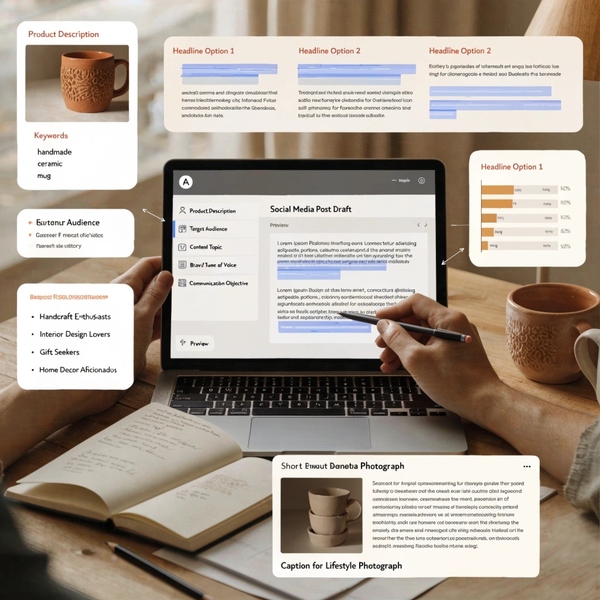
Purpose: Creation of posts, Reels scripts, Stories, Telegram essays, and advertising copy. The main tool is ChatGPT.Guidelines for operation:1. Before generation, provide the service with the brand description, USP, and target segment. 2. Specify the exact category and publication goal. 3. Define the format and approximate length of the text. 4. Maintain a consistent Tone of Voice. 5. Avoid boilerplate advertising phrases. 6. Retain the emotional component and the idea of tactile interaction. 7. Verify the accuracy of facts and ensure there are no unsubstantiated promises.Core Tone of Voice Rules:— Warm, calm, and attentive. — Emotional, but not overly sentimental. — Friendly, without pressuring the buyer. — Philosophical in posts about rituals and daily life. — Expert in materials about ceramics production and properties.Example prompt for the automated service:«Create an Instagram post for a tactile ceramics brand. The topic is why the relief on a mug helps shift attention from the digital environment to physical sensations. The target audience is a burned-out creator aged 25–38. The communication tone should be calm, warm, and mindful. Do not use aggressive sales tactics. The main idea is five minutes where hands are occupied with something pleasant, not a phone. At the end, add a question to engage the audience.»