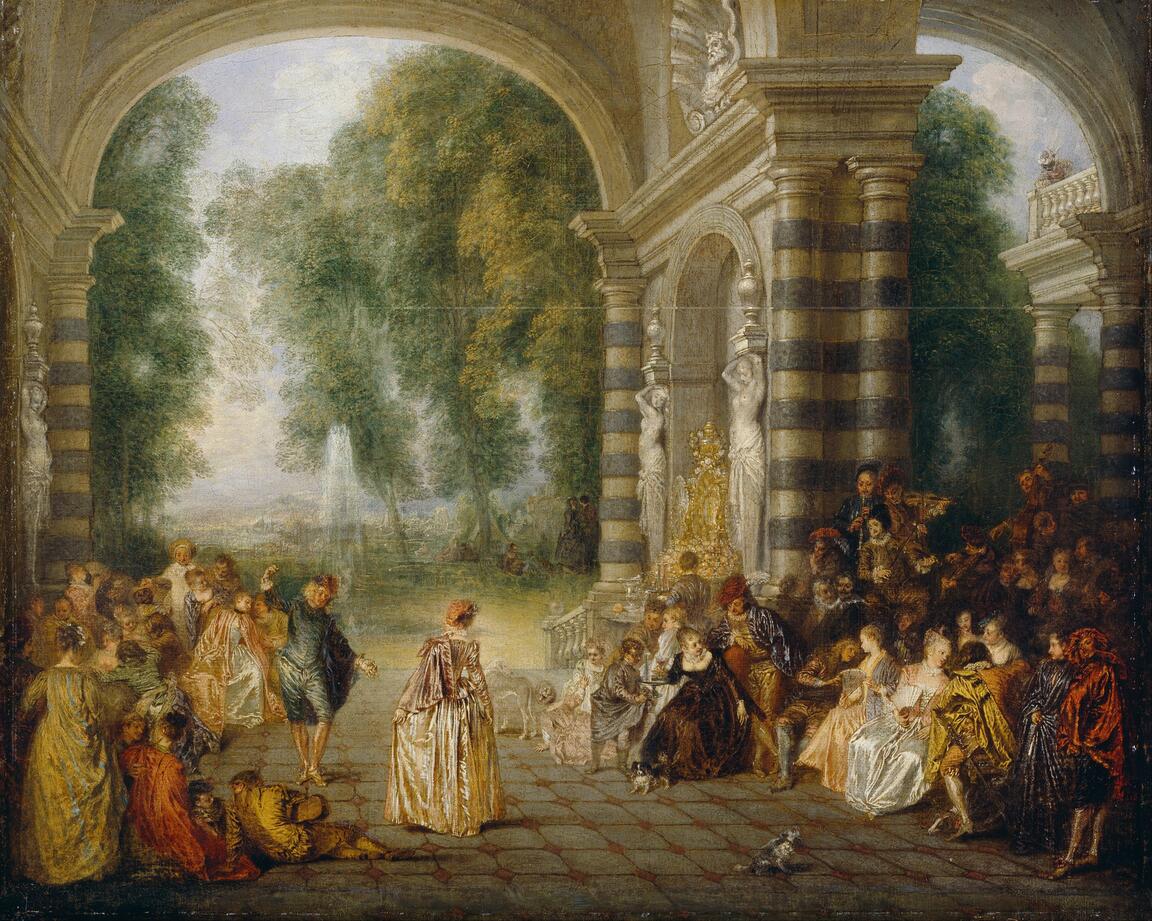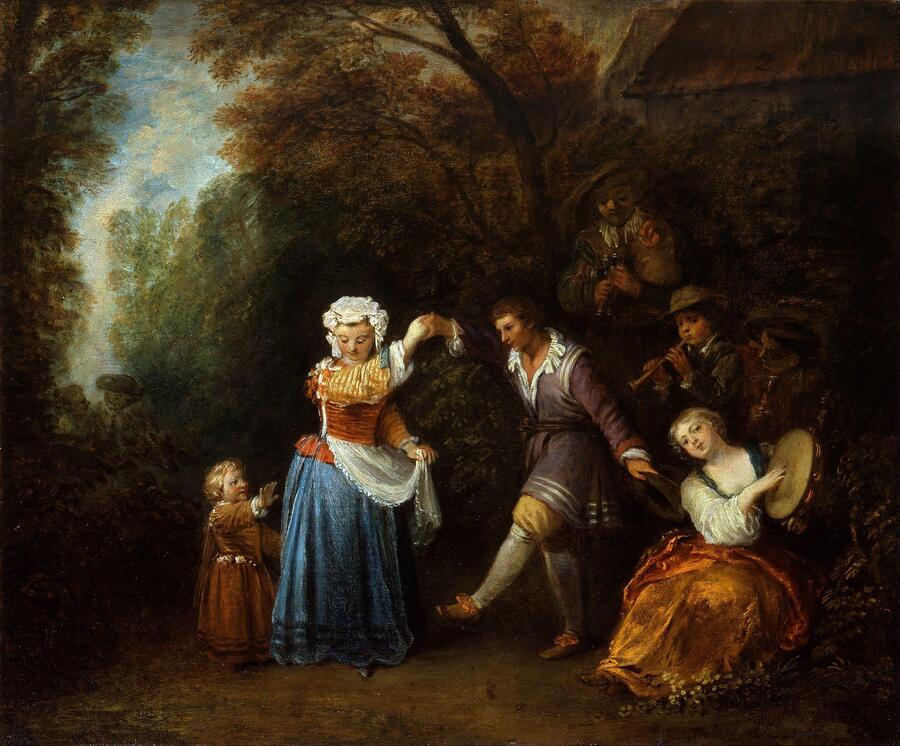
Пластика танца в творчестве Антуана Ватто и Никола Ланкре
Как художники передавали пластику человеческого тела, жесты и движение в танцевальных сценах.
I. Concept and Topic Selection
I decided to choose this topic for my visual research because I became interested in how artists depicted the human body in motion—specifically, which details allowed them to portray living and dynamic people. Dance is a unique form of movement where the body’s posture, gestures, turns, interaction between figures, and rhythm are critically important. Unlike depicting a static pose, a dance scene allows the artist to convey a sense of movement, lightness, balance, and the human emotional state. This is precisely why dance is a compelling subject for studying the artistic expressiveness of painting and graphics. For this research, I selected two French artists from the first half of the 18th century: Antoine Watteau and Jean-Honoré Fragonard. Their work is connected to the depiction of social life, celebrations, amusements, and gallant scenes, where dance occupies a significant role. By focusing on these specific artists, I can examine how artists of that era represented the movement of the human body and what techniques they employed to convey dance plasticity. Furthermore, their works offer the opportunity not only to identify the general characteristics of the 18th-century artistic language but also to compare their individual approaches to rendering dancing figures.
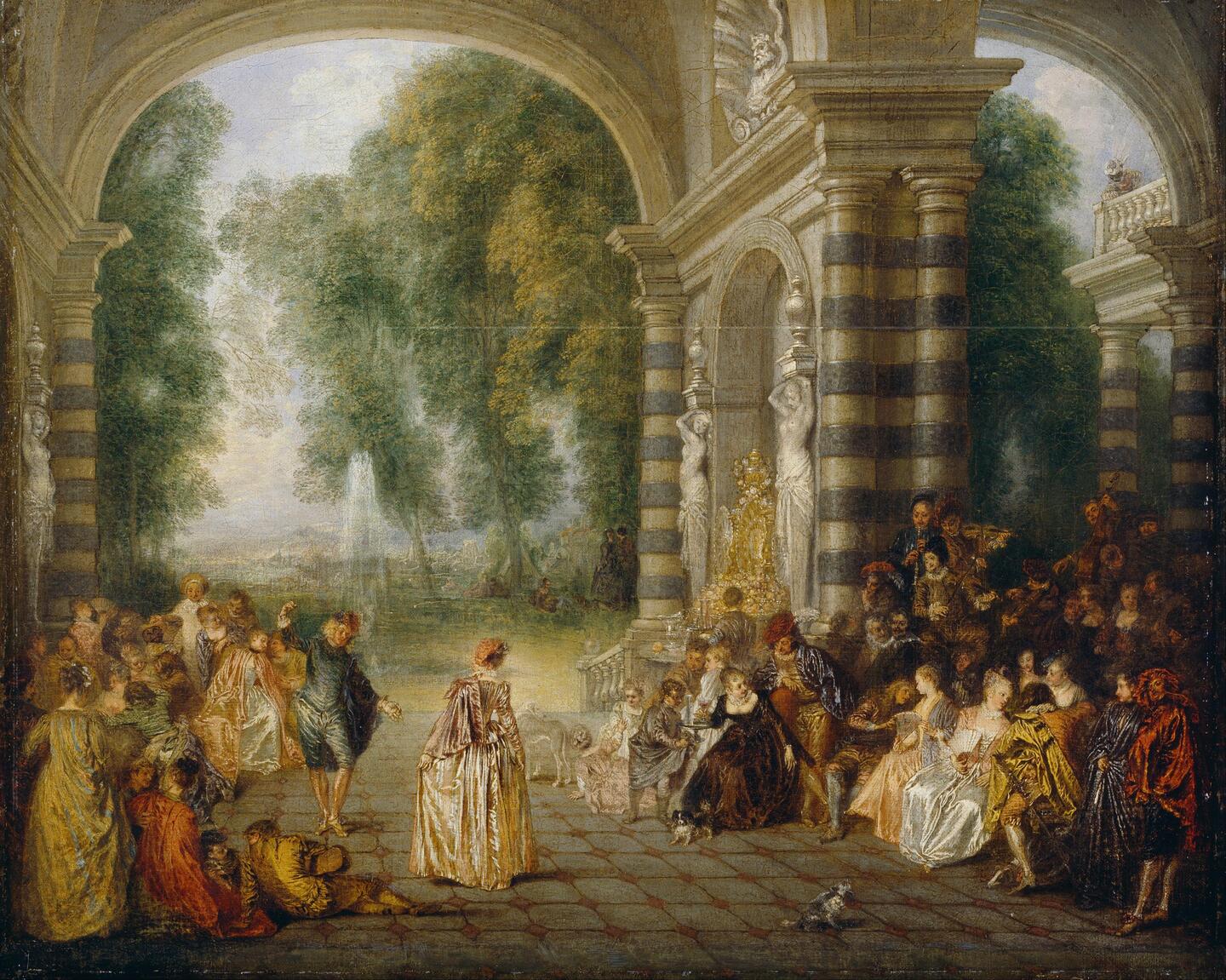
The relevance of this topic lies in the fact that dance scenes allow us to study not only the external form of movement but also the characteristics of the culture of a specific historical period. In the first half of the 18th century in France, dance was an important part of social life. It served as a means of communication, an element of court etiquette, and a display of refinement, grace, and social poise. Perceptions of bodily elegance and beauty were reflected in art, so images of dance can reveal the manners, gestures, and movements characteristic of that era. Of particular interest is the opportunity to examine dance not just as the subject matter of a work, but also as an artistic composition. Attention will be paid to the positioning of hands and feet, torso leans and turns, the distribution of body weight, the direction of the gaze, and the interaction between the dancers. Analyzing these details will help us understand how artists created a sense of movement and conveyed the character of the dance through these elements. It is also important to trace how the arrangement of figures, the direction of their gestures, and the relationship between their poses form the overall rhythm of the image. The selection of Watteau and Lankre is based on the fact that their works allow for the exploration of this theme from different perspectives. In Watteau’s work, movement is often conveyed through subtle gestures, relaxed poses, and smooth silhouette lines. In Lankre’s works, dance scenes offer the opportunity to focus on more distinct figure positions, the nature of movements, and the interaction among characters. Comparing their works will help reveal similarities and differences in the depiction of dance plasticity. Thus, this research aims to study how artists conveyed movement in painting and graphics through the positioning of the human body, gestures, and composition. This topic allows for the integration of historical and visual analysis, as well as a deeper examination of the relationship between art and the everyday and high society culture of 18th-century France.
Navigation
I. Concept and Topic Selection II. Dance as Part of Social Life III. The Figure of a Dancing Couple IV. Gesture Language V. Torso and Leg Movement VI. Rhythm, Interaction, and Dance Composition VII. Conclusion VIII. Bibliography
II. Dance as a Part of Social Life
In the works of Watteau and Lankre, dance is frequently depicted amid nature, architecture, musicians, and spectators. It becomes an element of social interaction, where not only the movements themselves but also the relationships among the participants are significant.