Пить коктейли стало не модно
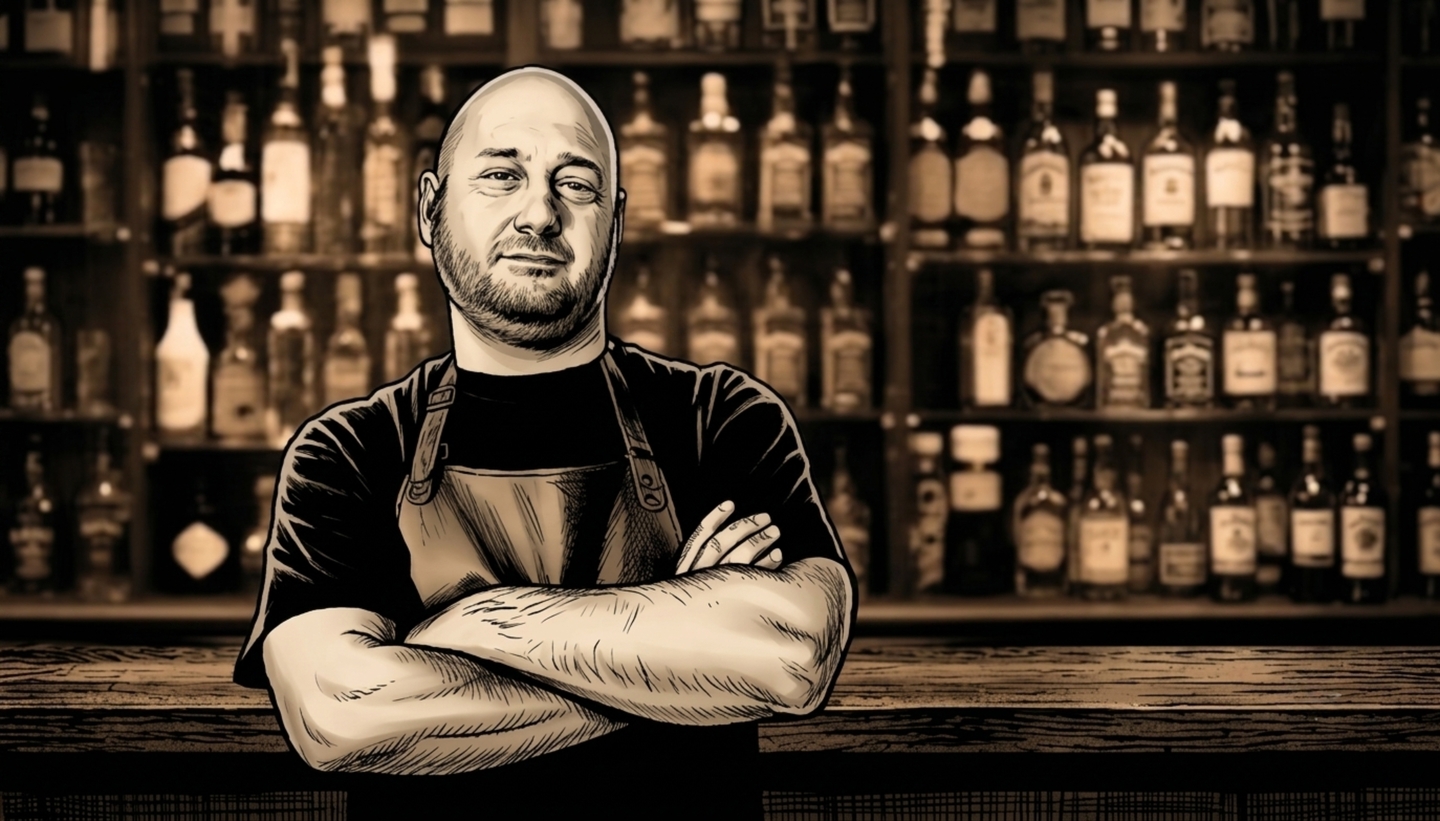
Интервью с главным миксологом страны Славой Ланкиным
Vyacheslav Lankin has stood behind the counter for over thirty years, since the early nineties.
He opened the first The Real McCoy in Moscow, established Delicatessen—a bar that made the top fifty best bars in the world for three consecutive years—and now runs Odd on Sadovaya-Karetnaya for patrons over thirty. We stopped by on Thursday. Thursdays at Delicatessen feature «Dirty Thursday»: once a week, they serve a Dirty Martini with quail eggs. We sat down and talked over it.
Drinking cocktails used to be fashionable: people chased after recipes, trying to figure out who invented a particular drink and under what circumstances. Now, many—and you are included—just grab a neat whiskey. Is this a simplification of taste?
Young people are into a new trend now. They barely drink alcohol. These seven-proof syringes of theirs—they’re weaklings, to be honest. If you grew up on cocktails, you drink cocktails. Today is Thursday, our Dirty Thursday: once a week we can indulge in a Dirty Martini with quail eggs.
It’s not about simplification; it’s about a loss of interest. Before, a guest would come every day and ask, «What’s new? What’s interesting?» Cocktail culture is incredibly potent: every drink comes with either a great story or a famous personality attached to it. Hemingway, Remarque, anyone.
A cocktail has always been a marker—a marker of the discretionary spending someone is willing to invest in social connection, just to arrive and feel like they belong. Until the 1950s, alcohol was built right into the American corporate lunch—like in Mad Men: people came, drank their martinis over lunch, and it was all written off as company expenses. Every housewife knew how to mix a martini. The husband would come home from work to find a ready-made, chilled one waiting in the freezer.
The bar gives people the opportunity to be a little different, to be in the know. I remember when a tea room opened—office girls started going there; it was important for them to drop in on Monday, «Oh, I was at the tea room.» Their friend might not know what it is, but she is special. She isn’t just one of the hundred thousand people sitting in the same skyscraper in the City. That’s the whole point.
The bartender used to be more than just a bartender—they were like an astronaut: a technologist, a chemist, a person with their own mythology. Now, an administrator often stands behind the bar. What happened to the profession?
Here is what happened: it was a new profession coupled with massive support from alcoholic beverage companies. They entered the Russian market—large, major players—and their market was growing by one hundred percent every year. Money had nowhere to go. And almost every company had one program: investing in bartenders. This is because the bar is the face of the brand. Today, you see a bartender pour you some Macallan or Jameson and tell you how great it is. Then, tomorrow, you come into the store, see that same bottle, and think, «Oh, I know that.» In other words, we were operating like an advertising agency.
I traveled half the world with an alcohol company—Brazil, Mexico, the States, all of Europe: Italy, France, Germany, England, Czech Republic, Netherlands, Iceland. All thanks to one company for which every bartender served as an ambassador.
Then everything changed. Bloggers and social media appeared, and companies started calculating the cost of exposure—having twenty people at the bar with a bartender, and us flying him to Mexico—it wasn’t profitable. And the wave began to recede. I always tell my young students: you think you are moving culture. You are not. Powerful marketing with million-dollar budgets does that. They once decided that the bartender was cool, and you got all the benefits. So, ride the wave while it lasts. But when it passes, you can row with all your might—you won’t get anywhere until the wave returns.
Many people in your circle are currently working alongside their children. Is it even okay to be involved with your own kids while you’re working?
It’s really difficult with your own kids. Everyone I ever worked with ended up saying, «Dad, thank you, we’d rather go somewhere else.» It’s impossible to work with you; you’re a tyrant. We’d rather come visit you.
But the kids of our friends worked with us, many of them. Summer internship: they stood as waiters and bartenders, gaining some real insight. That’s an American thing—when a child just works, and it doesn’t matter if he’s the son of a millionaire or not. Once they’ve worked, their attitude starts to change. Someone who has been a waiter themselves will never just tell another person, «Hey, you, come here.» They understand the complexity of that profession and will respect it.
We even have a saying, which we tell all our seniors: your children are our future. You’re at the point where you can’t drink much anymore, but the children will grow up. Over there in that hall sits Grisha with his son, Timofey. The young man is eighteen, just entering adulthood, and he’s interested in all of this. The older generation has talked about this a hundred times—they would just like to sit back—but he is curious. That is what our movement is, each succeeding generation. Well, let’s finish it all in one go. Cheers.