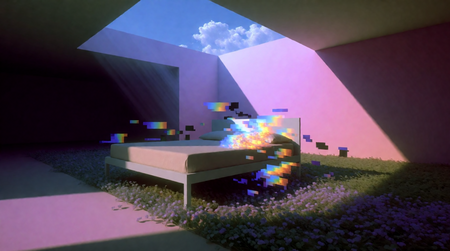
Медиа-проект по дизайну интерьера «Архитектура Смыслов»
1. Media Goal Description
Goal: To create a modern, expert media platform that helps practicing designers, architects, and advanced enthusiasts find fresh conceptual solutions, integrate sustainable design trends (ecology), and merge pure aesthetics with functionality.
Mission: To elevate visual and architectural literacy within residential and public environments, promoting thoughtful spatial design over the thoughtless replication of Pinterest trends.
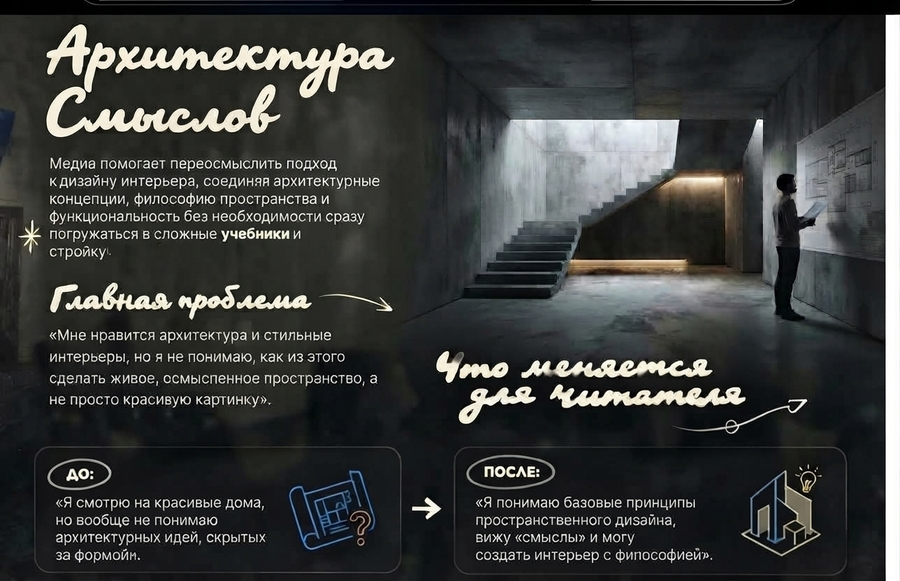
2. Future Media Themes
Broad Segments: Architecture, Interior Design, Urbanism.
Niche Topic: Conceptual Interior Design and Object Environment: Merging Brutalist Aesthetics (à la Ricardo Bofill), Sustainable Materials (recycled goods, wood, glass), and Modern Residential Ergonomics.
3. Competitors and Their Analysis
Direct competitors (same subjects, same formats)
- The Telegram channel «Architectural Excesses» / similar design channels — focuses on analyzing global architectural masterpieces and trends.
- The «Interior Stash» Blog (VK) — focuses on curated collections of beautiful furniture, room decor, and finished stylistic collages.
- The YouTube channel «Honest Architecture» — features video interviews with designers, analysis of real-world projects, and construction mistakes.
Indirect Competitors (addressing the same need for inspiration or renovation through different formats)
- Pinterest and Behance (search results) — a primary source of visual inspiration and mood boards for designers and clients.
- Professional online journals (e.g., AD Russia / Interior+Design) — high-gloss features and large-scale articles on premium projects.
- Construction YouTube channels («Renovation Without Problems») — focus on the technical aspects (engineering, blueprints, materials) without deep aesthetic analysis.
Potential competitors (other sectors vying for audience attention)
- Communities and media about contemporary art and galleries—these capture attention with visual trends, installations, and sculpture.
- Blogs about handmade and object design—the focus is on ceramics, artisanal furniture, and custom decorative elements.
Criteria for Competitive Analysis
Platforms: Telegram (primary expert content, longreads, case studies), Pinterest (visual traffic, cards featuring color palettes and mood boards), Behance/Portfolio platforms.
Tone of Voice: Professional yet accessible—avoiding undue snobbery. The author addresses the reader respectfully, acknowledging their existing visual knowledge, and functions as a curator of trends.
Visuals: Rigorous layout design, clean typography, architectural card composition, and the use of real renders, diagrams, and technical drawings instead of random internet imagery.
Competitor Tools: Publishing font/palette collections, interactive polls on ergonomics, and sharing concept art and zoning diagrams.
Key takeaways from competitor analysis:
Most competitors either descend into overly «technical pedantry» (blueprints and standards compliance) or lapse into superficial gloss («beautiful images without context»). Our insight: the audience craves dissected concepts—a deep analysis of why an interior works (examining light, lifestyle scenarios, and spatial philosophy).
Infographics and cheat sheets on materials science, ergonomics, and architectural history have high viral potential because users actively save them to their favorites.
4. Distribution Channel
Main channel: Telegram channel (ideal for long-form posts with detailed illustrations, diagrams, analyses, and building a designer community).
Additional Channels: Pinterest (posting architectural mood boards, color palettes, and zoning diagrams with links to articles). VK / Professional Platforms (content duplication to reach both student and professional audiences).
5. Target Audience Description
Segment 1. Students from relevant universities and emerging designers
Persona: Alice, 21, a student in the Environmental Design department.Context: She is looking for sources of inspiration for her coursework projects, studying complex spatial layouts, graphic software, and current visualization trends.What she wants: In-depth analyses of architectural concepts (such as the principles of Boll or minimalism), references to high-quality design solutions, and stylistic breakdowns without fluff.
Segment 2. Freelance Interior Designers
Persona: Stanislav, 31, a private interior designer with a two-person studio.
Context: He is constantly searching for new zoning techniques, unconventional materials (glass, metal, microcement), and innovative ideas for presenting projects to clients.
What he wants: Insights into material science, ready-made ergonomics schematics, market trends, and concepts for functional spatial transformations.
Segment 3. Clients Requiring Custom Design