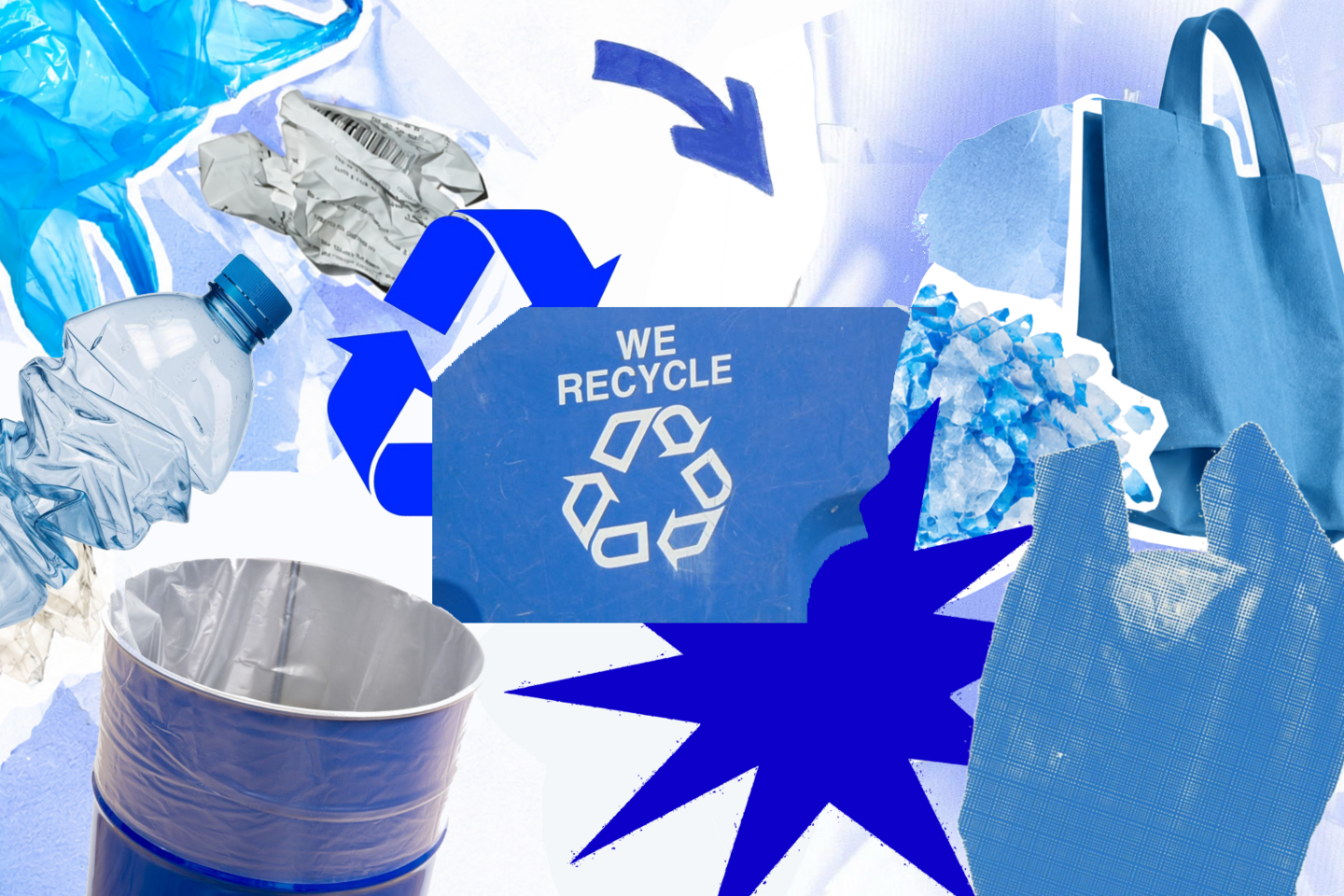
Where does it all go?
Issues
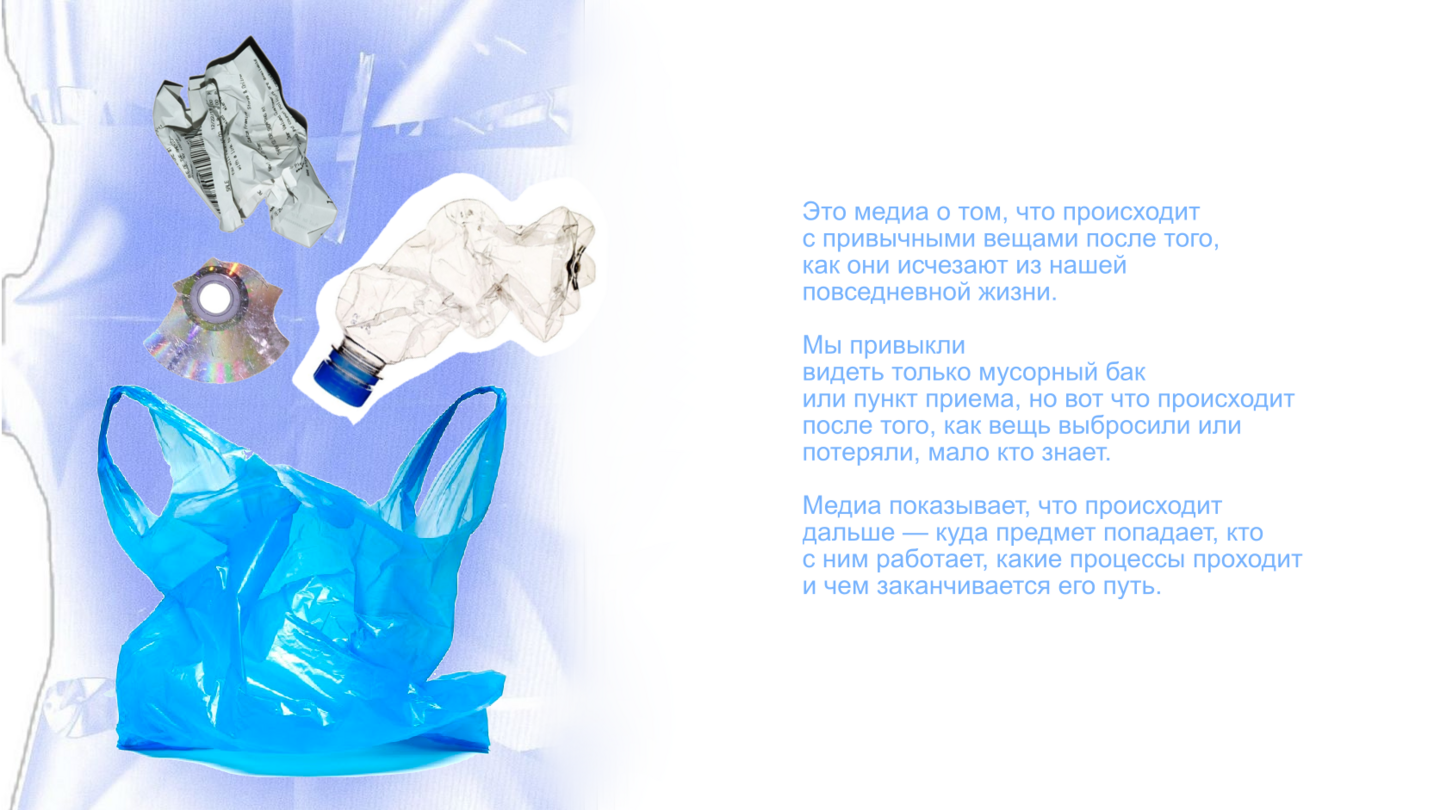
Problem 1. The fate of objects remains unseenWe see an item disappear from our lives, but we don’t know where it goes or what happens to it next. Problem 2. Process information is scatteredData on recycling, disposal, and reuse is housed in various sources, making it difficult to track the complete lifecycle of an object. Problem 3. The human element and decisions are obscured by the processesThe final product does not reveal the number of stages or the human labor behind it. The employees at sorting centers, recyclers, transporters, and other process participants remain invisible to us after an item has been discarded.
Media Goal
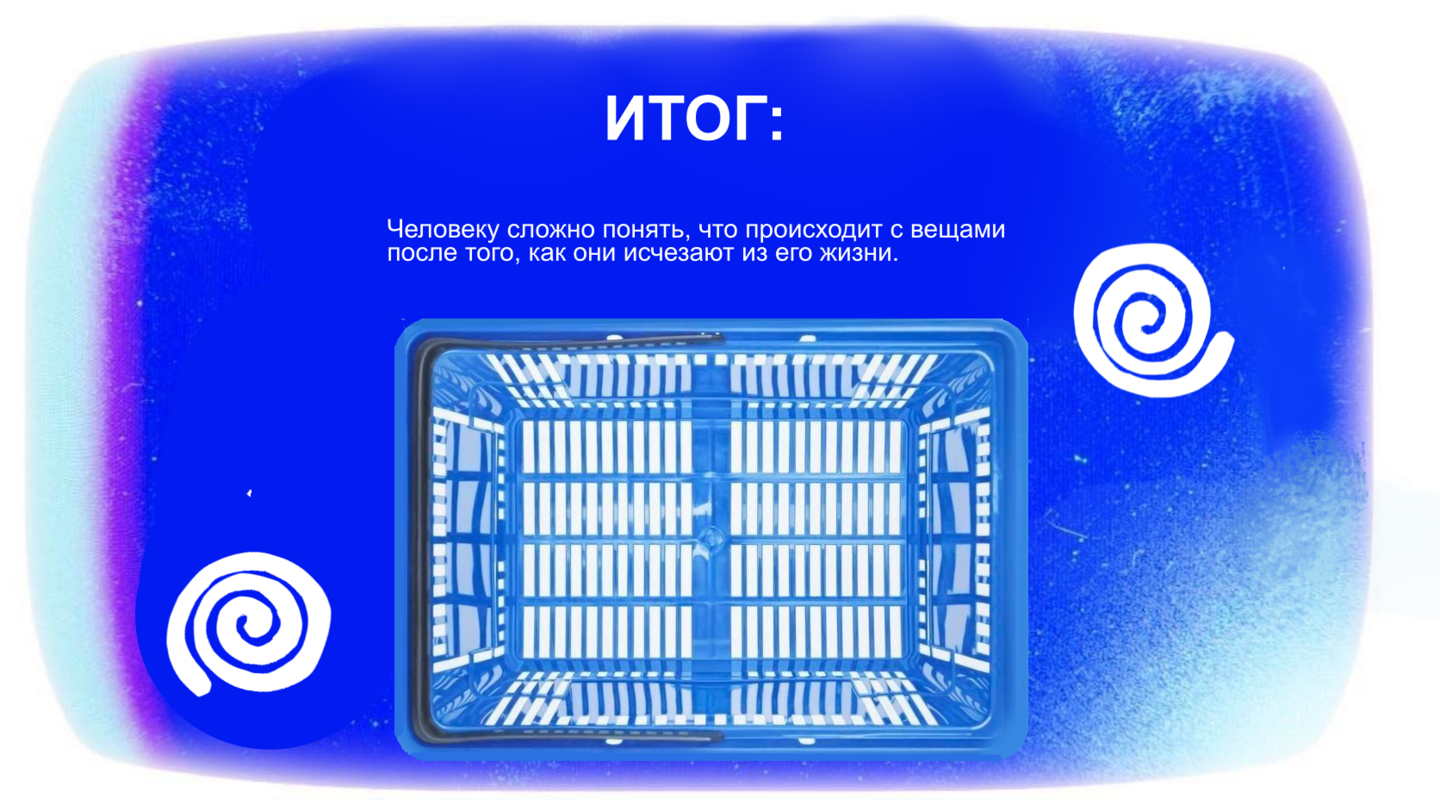
The goal of «Where Does It Go?» is to help people gain a deeper understanding of the world around them.The media allows viewers to discover what happens to familiar objects after they leave our lives—to see the processes of recycling, disposal, and reuse—and to understand the people and stages involved in their subsequent journeys.
Future Media Themes
The media reports on what happens to familiar objects after they disappear from our lives, focusing on their subsequent journeys, processes, and the people who usually remain out of the spotlight.
Competitors
For the competitor analysis of «Where Does It Go?», we reviewed urban and science-popular media, ecological projects, as well as platforms that discuss recycling, disposal, and the fate of various items. During the analysis, we examined publications and columns, taking into account the themes, target audience, depth of the material, content format, and how thoroughly the authors trace the journey of a specific object—such as clothing, electronics, products, or household waste.
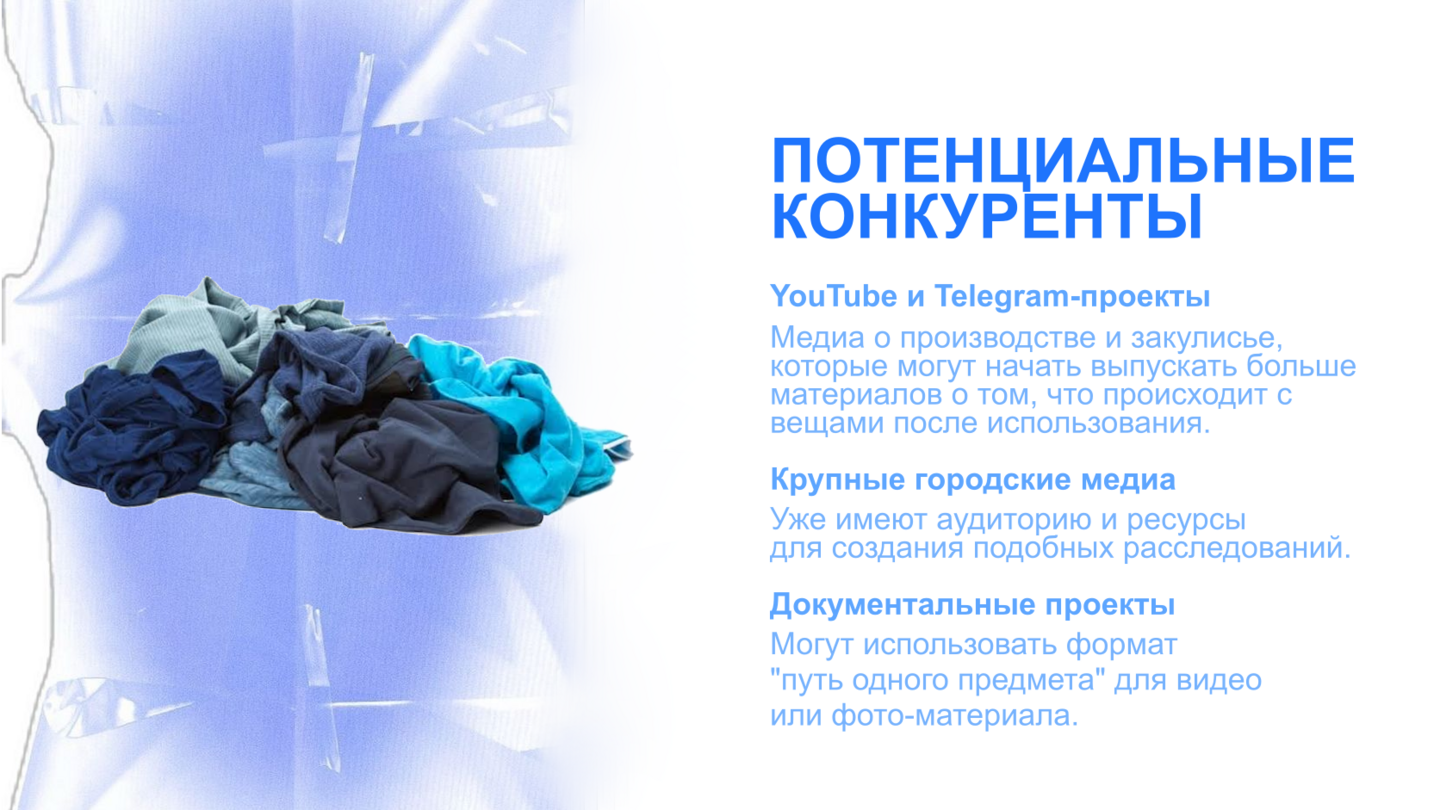
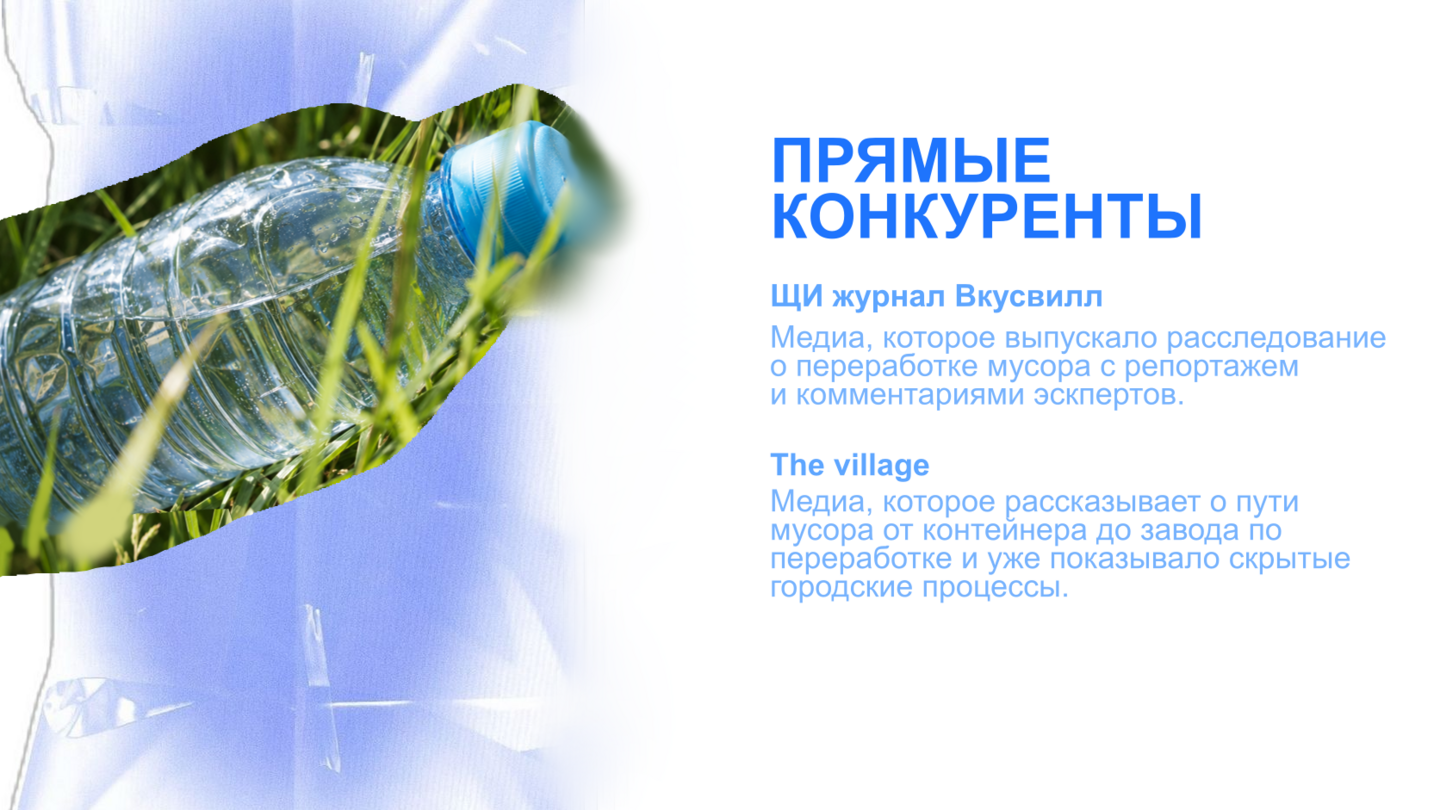
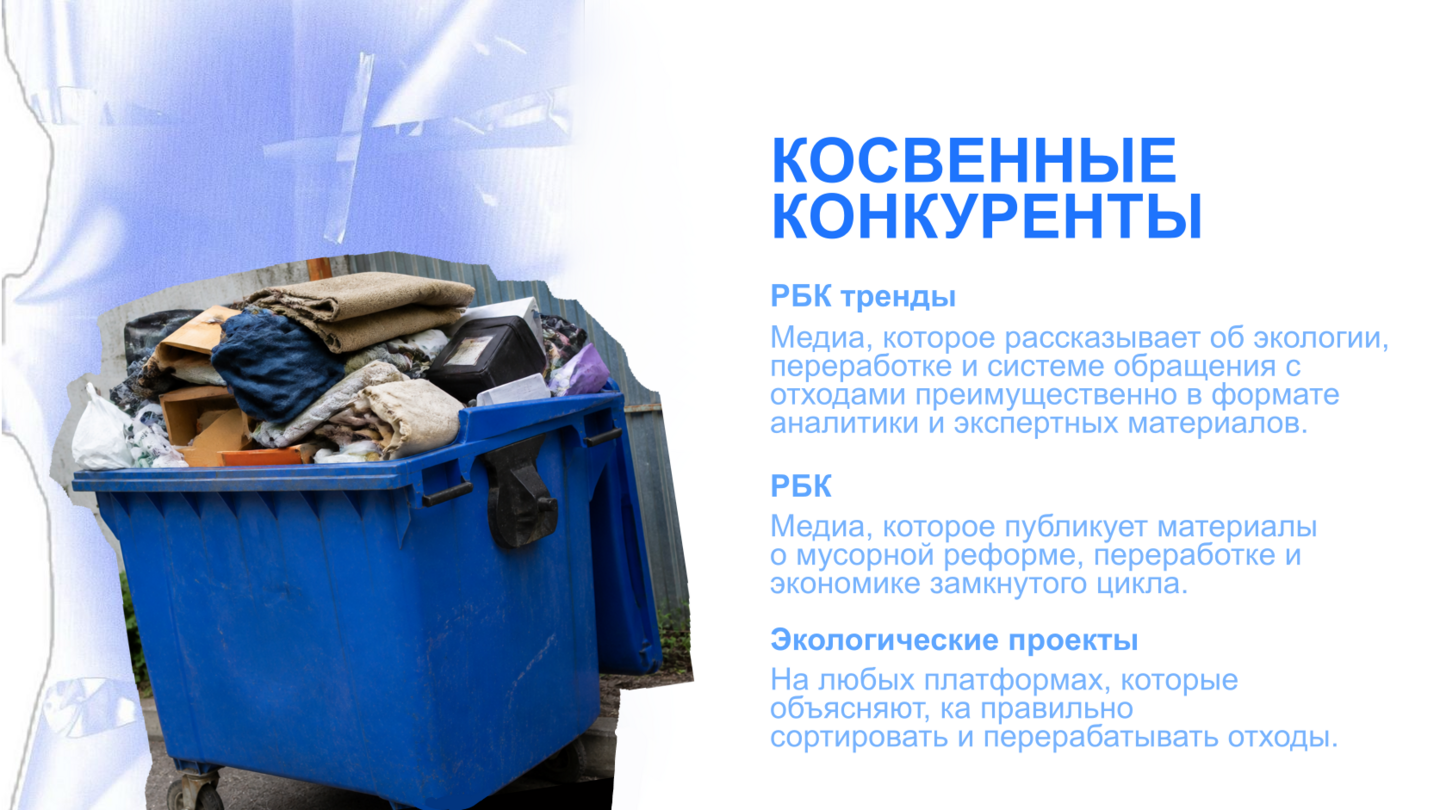
The analysis revealed that the theme of recycling, disposal, and urban infrastructure is already widely covered; however, the information tends to focus on specific stages or environmental issues. Therefore, «Where Does It Go?» can focus on clear, cohesive narratives tracking the journey of specific objects—showing where they end up after use, the processes they undergo, and who is involved in that work.
What is important to consider in media?
Distribution Channel
In summary, the user journey looks like this: Post / recommendation in VK → interest in what is happening with the object → transition to the Telegram channel → reading the full analysis → subscribing to the channel → interest in the next story
Media Target Audience
The target audience for «Where Does It Go?» consists of individuals interested in gaining a deeper understanding of the world around them, urban life, and the fate of familiar objects after they disappear from everyday use.
Curious individuals, aged 18–30, who enjoy unusual facts and stories about everyday objects. They read materials to achieve the «I never thought about that» effect.
Urban residents aged 18–35 who are interested in how city life and infrastructure operate: waste management, transportation, collection points, delivery, and production.
Conscious Consumers
Ages 20–35, interested in ecology, recycling, reusing items, and wishing to understand the consequences of their daily decisions.
UVP
«Where Does It Go?» transforms the fate of everyday objects into clear, cohesive narratives, allowing people to see where an item ends up after it leaves their lives, what stages it goes through, and how its journey concludes.
One, or several, objects Materials are examined both as the recycling of specific items and as the journey of all waste—things people stop using—from beginning to final destination.
Context of Each Stage Each story explains what happens to the object at every stage—where it goes, who works with it, and why the process is structured that way.