Chapter 1. Media Concept
Main Concept
Media explores how contemporary Russian designers are reinterpreting traditional forms, materials, crafts, and cultural motifs in current design. We examine not only modern objects but also their historical origins—from folk crafts and traditional constructions to ornaments and everyday items.
Primary Goal
Develop an understanding of the Russian cultural code as a relevant source of ideas for contemporary design and reimagine stereotypical perceptions of the Russian style.
Core Disciplines
— Product and Industrial Design — Furniture and Interior Design — Architecture and Spatial Design — Fashion and Textiles — Jewelry Design and Accessories — Contemporary Applied Arts
Main platforms: Telegram and VKontakte.
Chapter 2. Data Sources for Media
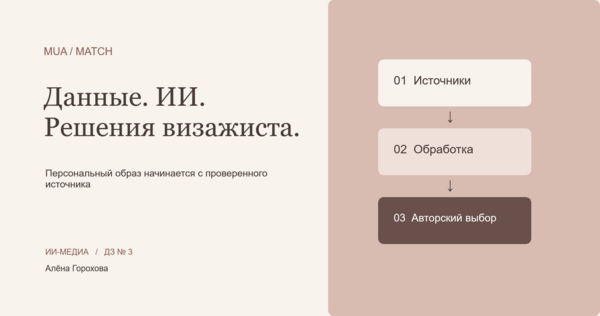
To prepare materials, we utilize two primary types of information: historical data on cultural heritage and current data on contemporary Russian design. Juxtaposing these allows us to discover and explore the connections between traditional forms and modern design solutions.
Museum Collections and Digital Archives
Sources: — Russian Museum Fund Catalog — All-Russian Museum of Decorative Arts — National Electronic Library — Regional Museum Electronic CollectionsWhat we receive: historical images of objects, information on provenance, materials, manufacturing techniques, dating, and regional characteristics.For which categories: «Footprints of the Past, ” „Design Atlas, ” „Object of Conversation.“
Contemporary designers and local brands
Sources: — Official websites of designers and studios — Social media of Russian brands — Portfolio and collection catalogs — Interviews and author commentaryWhat we get: new projects, object imagery, information on materials, concepts, production, and sources of inspiration.For which sections: «Our People, ” „Topic of Discussion, ” „Selection of the Week.“
Professional Media and Exhibition Projects
Sources: — Design Mate — Manner & Matter — «Tryntrava» — «Designed and Made in Russia»What we deliver: industry news, information on emerging artists, relevant collections, exhibitions, and current trends in Russian design.For which sections: «Weekly Picks, ” „Our People, ” „Reasons to Go Out.“
Cultural Institutions and Events
Sources: — Museum and gallery websites — Exhibition and festival posters — Lecture and masterclass announcements — Educational institution programsWhat we get: event dates, locations, program details, participant lists, and information on new cultural projects.For which sections: «Where to Go?», «Reasons to Go Out».
Experts and the Professional Community
Sources: — Interviews with designers and masters — Comments from art critics and researchers — Professional discussions — Submitter suggestions and questionsWhat you gain: original interpretations, expert explanations, additional information on works, and topics for future research.For which sections: «Our People, ” „Topic of Discussion.“
Working with Sources
Professional media and social networks assist in finding topics, but primary sources—museum catalogs, scholarly research, and authors' own commentary—form the foundation for verifying information.
Chapter 3. Data Processing Scheme
Automation is used during the information search, sorting, and preparation stages. The human is responsible for researching cultural context, fact-checking, and final editorial decisions.
General Workflow01. Information Gathering — MachineAn automated service monitors updates from selected websites, designer publications, museum collections, and event announcements.Result: A list of new materials with source links.↓02. Filtering and Classification — MachineThe system removes duplicates, categorizes materials by design discipline, and highlights key themes, authors, materials, and regions.Result: A structured database of potential topics.↓03. Editorial Curation — HumanThe editor assesses the media’s conceptual fit, verifies the accuracy of the information, and determines if a contemporary object can be reasonably linked to a cultural source.Result: An approved topic and a set of verified data.↓04. Content Generation — MachineAI assists in structuring the collected information, drafts a brief object description, and proposes a publication draft according to the selected category.Result: A text draft with source citations.↓05. Copyediting and Visual Design — HumanThe editor refines the phrasing and verifies facts and cultural parallels. The designer selects images and prepares cards or videos.Result: A finalized publication.↓06. Publishing — MachineThe service places approved materials according to the content plan on Telegram and VKontakte.Result: The published material.↓07. Feedback Analysis — Machine + HumanThe system gathers data on views, reactions, comments, and saves. The editor analyzes audience interest and adjusts future topics.Result: An updated editorial plan.Database StructureA card with a standardized set of fields is created for every piece of found material.Key Fields:— Object or Project Name — Author / Brand / Workshop — Information Source and Link — Publication or Creation Date — Design Discipline — Material and Manufacturing Technique — Region of Origin — Historical Context — Potential Connection to Cultural Heritage — Media Category — Image Source and Usage Rights — Verification StatusProcessing Statuses:Found → Under Review → Approved → In Progress → Complete → Published.
Thus, the database becomes not merely a collection of links, but a system for storing and preparing editorial content.
Chapter 4. Guidelines for Automated Services
For each automated stage, it is necessary to define the information sources, selection criteria, and constraints.
Service 1. Source MonitoringObjective: To find new materials relevant to the media’s theme.Guidelines:— Use only the approved list of open sources. — Check new publications daily—museum and archive materials—according to the thematic plan. — Select projects by Russian designers, research on traditional crafts, and current cultural events. — Record the title, author, publication date, and a link to the original source. — Exclude promotional posts lacking substantive information, duplicates, and materials without established authorship.Outcome: A list of potential topics for the editor.Service 2. Material ClassificationObjective: To categorize the found information into thematic categories and rubrics.Guidelines:— Determine the design discipline, object type, material, technique, and region. — Map the materials to the approved thematic plan. — Suggest a suitable rubric and publication format. — Do not establish historical connections solely based on superficial resemblance. — Mark unverified cultural parallels as hypotheses requiring editorial verification.Outcome: Material cards with thematic tags.Service 3. Text PreparationObjective: To draft publications based on data verified by the editor.Guidelines:— Use only information from approved sources. — Apply professional design terminology while explaining complex cultural phenomena in accessible language. — Maintain the structure: object → historical context → contemporary interpretation. — Do not use unverified dates, quotations, or author details. — Avoid clichés about the «Russian soul, ” superficial folklorism, and unsubstantiated historical parallels. — Keep source links for editorial review.Outcome: A draft publication that aligns with the media’s Tone of Voice.Service 4. Planning and PublicationObjective: To automate the placement of finished materials on social media.
Work Guidelines:— Utilize the approved content plan and publication schedule. — Post 3–4 carousel posts and 1–2 short videos per week. — Plan one major video piece per month. — Publish materials only after editor approval. — Verify the presence of images and necessary captions before publishing. — Duplicate approved materials to the VKontakte community.Result: consistent content output without the need for manual placement of every item.The Main Limitation of AutomationAI can find information, classify content, and assist with text preparation, but it should not independently establish historical connections.For our media, it is particularly important to distinguish between the documentarily verified influence of cultural heritage and the visual similarity of objects.The Final Workflow Model:The machine handles the speed of information processing. The human ensures the veracity, research depth, and overall quality of the final material.