КОГДА ЗАВОДСКОЙ ВАРИАНТ — ЭТО ТОЛЬКО ЧЕРНОВИК
ИСТОРИЯ ЛЮБВИ К ТЮНИНГУ УАЗОВ
Uaz tuning is like assembling your own superhero suit: you don’t just slap something on and head out. Instead, you meticulously choose every part, debate with friends whether armor or jet boots are more crucial, and eventually end up with a vehicle that looks like a legend and drives as if the laws of physics don’t apply to it. For many Uaz owners, the modification process itself is a form of meditation with a wrench—it involves engineering ingenuity, adrenaline, and that specific feeling when the right piece finally clicks into place after ten attempts, like beating a difficult level in a game. If you dig into the history, you’ll find that Uaz tuning started long before the word «custom» became trendy in car culture.
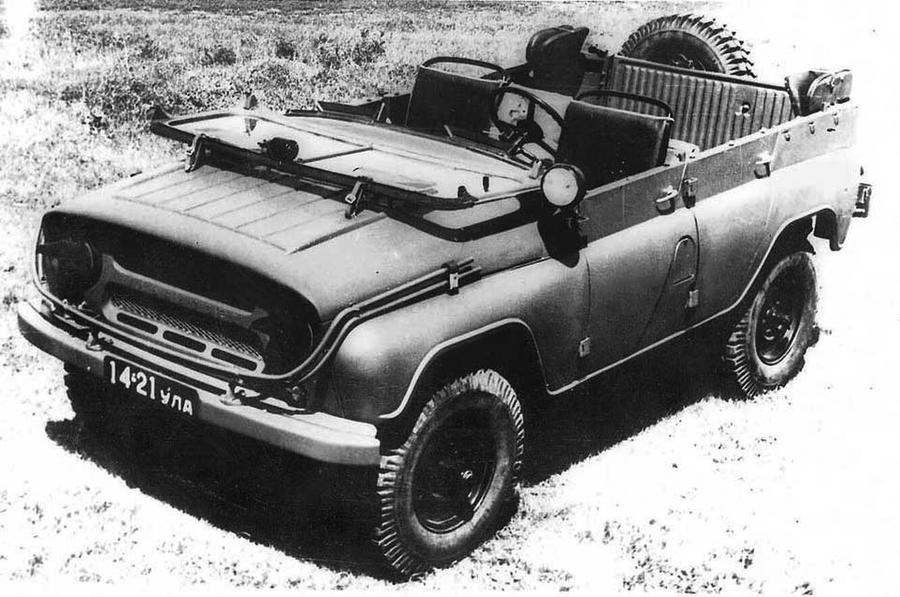
The first UAZ vehicles were designed to be as simple and indestructible as possible for the army, collective farms, and areas where asphalt was only seen in pictures. But already in the 1950s and 1960s, while the UAZ 469 was just preparing for the assembly line, military and civilian services were transforming it into a «Swiss Army knife on wheels»: they installed winches, reinforced the axles, replaced seats with something more suitable for hours of jarring, and mounted floodlights so they wouldn’t get lost in the taiga. That was the first form of tuning—not for likes, but simply to ensure the vehicle got where it needed to go and could pull out of trouble, if necessary.
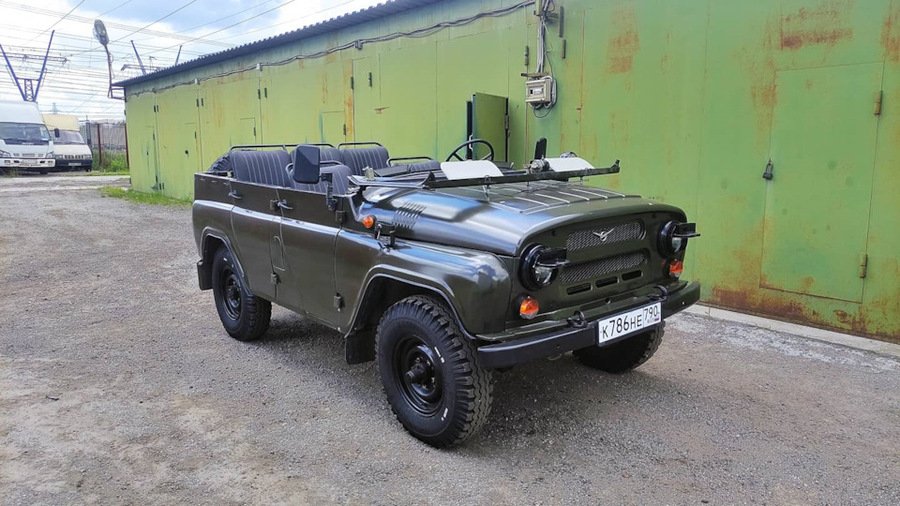
The state was the first client for these modifications—the military, geologists, forest rangers, and rural emergency services—all of whom wanted the UAZ to do a bit more than the factory could provide. In return, they gained an off-road capability that made foreign vehicles sweat nervously on the sidelines, the ability to haul cargo along routes not mapped, and a vehicle that could practically be repaired on the spot.
During the 1970s and 1980s, UAZ tuning truly became a folk phenomenon. In villages and country houses, owners customized their vehicles themselves: they fabricated homemade trunks, insulated cabins with old blankets, installed brighter headlights to spot a moose before it spotted them, and added a second fuel tank for long journeys. Back then, tuning was like a DIY challenge with no instructions—no expensive kits, but instead, maximum ingenuity and zero compromises.
It was then that the cult image of the «workhorse» emerged—a vehicle expected to do everything: haul firewood, pull a neighbor out of a jam, transport a crew to a job site, and return home even with half the parts loaded in the trunk. The audience of that era consisted of drivers, mechanics, hunters, and fishermen: people for whom the car was about function, not status. And tuning, for them, was like upgrading inventory in a survival game: you add a slot for an axe and extra fuel not for aesthetics, but to ensure you complete the route.
Tuning UAZ vehicles in Russia is a lifelong passion. First, the UAZ itself is an ideal platform for experimentation: simple construction, an abundance of available spare parts, repairability, and such structural integrity that it feels like the engineers embedded a hidden quest inside it—"improve me.» Second, off-road terrain is not an exotic sight here; it’s part of the landscape. Third, it’s part of the cultural code: the ability to perfect, improve, or adapt something to one’s own needs is almost a national superpower.
With the arrival of imports in the 1990s, imported parts flooded the market, the first tuning shops emerged, and customization began to build ambition. If before it was about «just making it through, ” it became about abundance and imagination. Owners started installing heavy-duty bumpers, bull bars, lifted suspensions, wheels the size of a small satellite, expedition roof racks, and even sound systems so loud they made trees drop their leaves. Technical specifications changed drastically: suspension travel was increased, reinforced axles and differential locks were installed, and engines were swapped for more powerful ones. During that time, a new clientele formed: alongside traditional users came off-road enthusiasts, adventure lovers, and those who simply wanted their UAZ to look like it had just returned from an epic expedition.
In the 2000s and 2010s, UAZ customization exploded with color and style. Entire subcultures emerged: «old school, ” preserving a vintage vibe with minimal modifications; „expedition vehicles, ” built for maximum self-sufficiency; „trophy machines“ designed for extreme off-roading; and even „street tuning, ” focused on urban style and chic aesthetics. Sound dampening and various other enhancements became popular, transforming the interior from a tractor cabin into a cozy tech cocoon. For some, the priority was maintaining the spirit of the original UAZ; for others, it was transforming it into a modern SUV. During this period, tuning definitively became a subculture, fostering communities where enthusiasts supported each other when plans went awry.
What emotions does the owner experience? During the tuning process, it is the thrill of finding rare parts, the satisfaction of solving complex challenges, pride in every completed stage, and the anticipation of the moment the car finally leaves the garage to show what it’s capable of. During operation, it is the confidence on difficult routes, the joy of overcoming obstacles, and the delight that your vehicle can achieve more than any standard SUV. Plus, there is the special pleasure of realizing that you made this car the way it is—you didn’t buy a finished legend; you built it bolt by bolt.