ДИЗЕЛЬНЫЙ 212-Й ДАЕТ ЖАРУ НА ПЛОХОЙ ДОРОГЕ
КИТАЙСКИЙ ВНЕДОРОЖНИК ЖАЛЕТЬ НЕ НУЖНО
Chinese manufacturers have long turned new car presentations into a circus act, complete with industrial Tetris. They stack crossovers on top of each other, building towers and competing to see who can build the highest. Then, with serious faces, they tell the audience what the buyer needs to know if they purchase a new crossover—theoretically, they could stack two more identical ones on it.
The Indians—long-time rivals of China—saw the Chinese pyramids and decided: we’ll dump a pile of rocks onto a car instead. They put a dump truck full of construction material directly on the roof of a new Tata Aeris, which costs a laughable 465,000 rubles by Russian standards. Now that is what I call a comparative durability test, where the marketing department tells the engineers, «We need a viral video, ” and the engineers reply, „Alright, how many tons?“
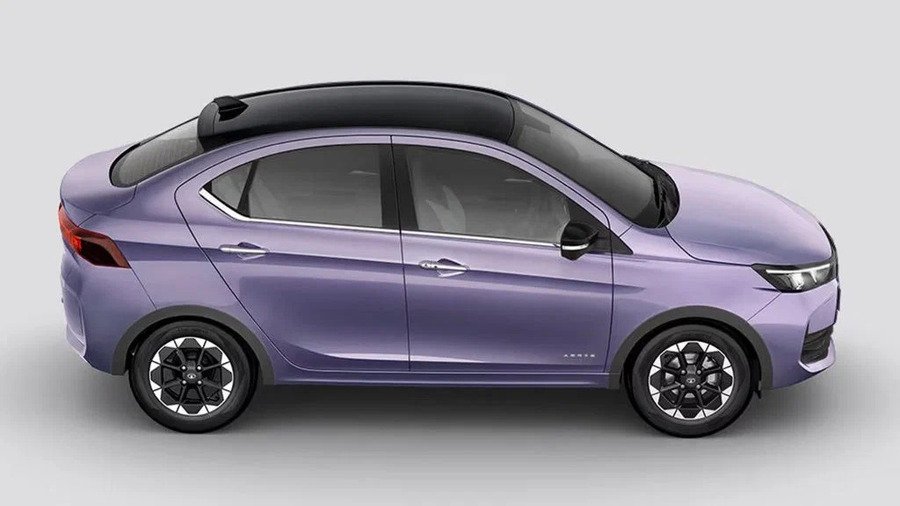
The Tata Aeris is such an economical vehicle that compared to it, the Russian Lada Granta starts to look like a premium segment car that only needs to offer the driver a glass of champagne and a personal butler. The new model is about four meters long and is primarily aimed at India, where compactness, fuel efficiency, and price are not abstract marketing terms but rather tangible parameters for the car’s survival in the market. And the price is genuinely laughable—it is half the price of the Granta.
But the main thing here, of course, isn’t the price—it’s that «Indian YouTube versus Chinese TikTok» crash test. For several years, Chinese manufacturers have been competing in a completely separate discipline of automotive sport: who can more dramatically prove that their car is robust. They stack SUVs on top of each other, transform them into three-story structures, hang the vehicles, and smash them onto the ground—in short, they imply to the buyer that if an automotive apocalypse were to occur, the car would remain untouched amidst the ruins. The Indians, however, didn’t bother with that; they simply piled on rocks.
Stones fall onto the body, the car absorbs the impact, and then Tata demonstrates that the cabin maintained its livable space, and the vehicle itself didn’t turn into an Indian roulette wheel. And this is where a fascinating question arises: what will be the next stage of the Indian-Chinese automotive race? Will the Indians drop an elephant on the hatchback, and the Chinese attempt to direct a helicopter at the minivan? The Chinese are focused on technology, while the Indians are betting on construction debris. This is no longer a battle of automotive giants—it’s a contest between two civilizations.
Despite all this drama surrounding Tata Aeris, it remains an extremely rational automobile. It is not a 500-horsepower crossover, not an electric monster with two motors, and not a luxury car that can discern the owner’s mood from their facial expression. It is a compact car whose purpose is maximally honest: to transport people for the lowest possible cost. Do we need cars like this in Russia? Theoretically, the Russian market could certainly be interested in a car priced around 465,000 rubles, because for that amount, sometimes people only manage to buy a set of winter tires. A compact, affordable sedan with simple technology, good repairability, and a minimal price looks almost like an antidote to inflation.
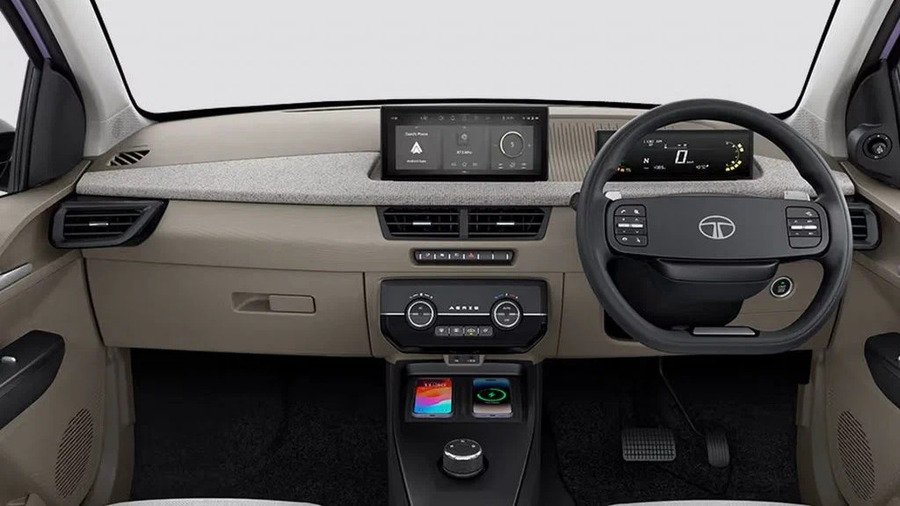
But there is a problem called the «Russian buyer.» We love to say that people want simple, reliable, and affordable cars, yet as soon as one like that appears, the questioning begins: «Where is the all-wheel drive?», «Why isn’t the interior leather?», «Where is the 15-inch screen?», «Why is the engine only 1.2L?», «And is there a 360-degree camera?» Then that same person takes out a seven-year loan and buys a massive Chinese crossover because we need a vehicle that looks like it’s about to conquer Alaska tomorrow. As for the sedan for 465 thousand rubles, we’ll call it a «bucket,» comparing it to a used BMW while simultaneously calculating: how much will the customs duty be?