Media Concept
Fashion Anatomy — a media platform on the internal structure of clothing. It demonstrates how the form, volume, and fit of garments are created—from corsets and linings to the complex constructions of dresses and jackets.
Media intertwines the history of fashion, garment creation technology, and visual research. It will draw upon archival collections, runway looks, and contemporary design solutions to dissect clothing literally layer by layer. Many constructive solutions remain hidden, yet they are what ultimately define a garment’s appearance. A sharp blazer line might conceal a complex system of padding; a skirt’s volume might rely on a frame; and the distinctive shape of a corset might involve multiple layers of material and a specialized assembly technique. Fashion Anatomy invites you to view clothing from a different perspective—not just as a finished look, but as the result of careful work with form, material, and construction.
Core Idea: To look beyond just a beautiful object and understand how it is made.
Objective: To make garments understandable and engaging through visual analyses, archival materials, photographs, and explanations of construction techniques.
Data Sources
For Fashion Anatomy materials, we utilize museum archives, professional fashion platforms, official brand websites, and visual social media. Media work requires two types of sources: those that help find visual examples, and those that allow verification of information regarding the structure, materials, and history of garments.
Museum collection of historical clothing. Used to search for archival costumes, study materials, dating, authorship, and the specific construction of the garments.
Costume and Textiles Archive. A resource for information on historical corsets, crinolines, bustles, fabric treatments, and garment construction features.
Digital platform for European cultural institutions. It is used to search for archival photographs, historical clothing items, textiles, and museum materials.
Archive of fashion shows and designer collections. It is used to study contemporary silhouettes, construction solutions, garment details, and the development of fashion trends.
Official Fashion House Websites
These are used to find information about collections, design solutions, materials, advertising campaigns, and features of individual pieces.
Social Media of Fashion Houses
These are used to find visual references, photos of garment details, interesting constructions, and current aesthetic trends. These platforms serve as a source of visual observation but are not used to confirm historical or technical facts.
Data Processing Scheme
It is important here to illustrate the distinction between automated processing and editorial work. The machine helps find and sort information; the human verifies it and decides what is truly engaging.
1. Material Sourcing
The Editor finds relevant materials in museum archives, fashion house websites, show archives, and visual platforms.
2. Automated Collection
Feedly and RSS track new publications, while Make automatically transfers links and images to a central database.
3. Preliminary Processing
ChatGPT analyzes the images, identifies visible clothing details, determines structural elements, and organizes materials into thematic categories.
4. Systematization
Airtable is used to store images, descriptions, source links, and product information.
5. Editorial Review
The editor verifies facts, clarifies structural details, selects materials, and shapes the research content.
6. Publication
The prepared information is formatted into a visual study, complete with photographs, archival materials, diagrams, and explanations.
Human & Machine
What does the machine do
-Tracks new materials on selected websites.
-Collects links and images into a central database.
-Recognizes visible clothing details: lacing, boning, pleats, fastenings, reliefs.
-Suggests thematic categories: corset, jacket, skirt, draping, framework.
-Identifies recurring visual solutions.
-Prepares draft descriptions and headline options.
What makes a person
- Selects media materials relevant to the theme. - Verifies authorship, date, brand, season, and history of the piece. - Clarifies construction details using reliable sources. - Interprets how a specific solution affects form and fit. - Develops the research topic and selects imagery. - Prepares the final text and visual presentation.
Database Structure
Every discovered clothing item or visual example is saved as a separate card.
Object Card Example
OBJECT 001 — CORSET
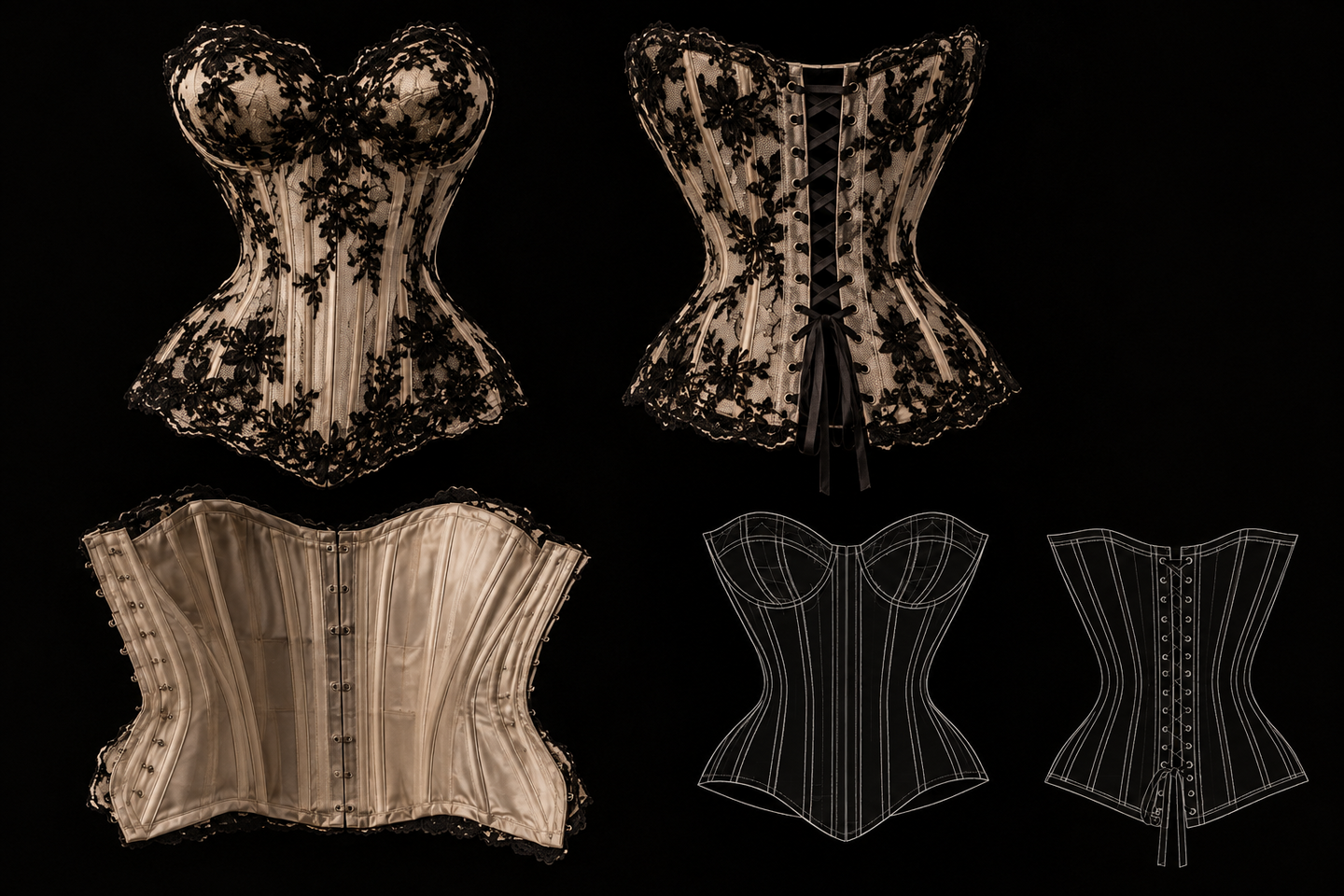
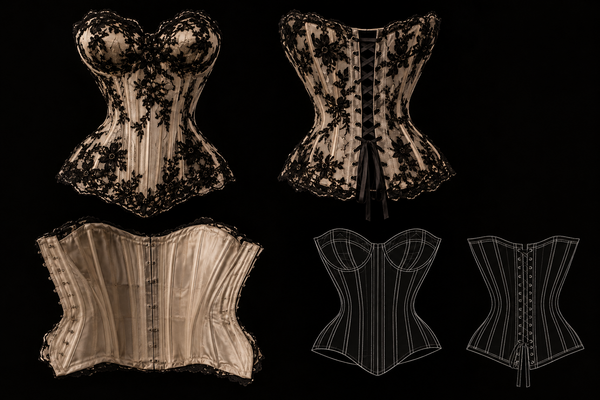
Name: Lace & Satin Corset Product Type: Corset Category: Corsetry Piece Brand / Designer: Fashion Anatomy Conceptual Model Materials: Beige satin, black lace, lining fabric, boning, grommets, ribbon, piping, cups, seam reinforcement Structural Elements: — Corset boning — Contoured seams — Lining — Lacing Structural Function: To define a pronounced waistline, support the bust, and create a «hourglass» silhouette. Decorative Elements: Black lace, floral embroidery, contrast between light satin and dark trim. Key Feature: The combination of a functional corsetry structure with decorative lingerie aesthetics. The internal structure dictates the garment’s shape, while the lace and embroidery transform it into a standalone visual statement.
The base will allow you to collect materials not just into a folder of images, but into a structured archive from which you can select objects for future publications.
Automation Guidelines
Feedly / RSS — Materials search
- Use only pre-selected sources.
— Retain a link to the original and the date of addition.
— Do not create duplicate entries for the same material.