Босиком по Москве
Как древняя привычка стала городским аттракционом
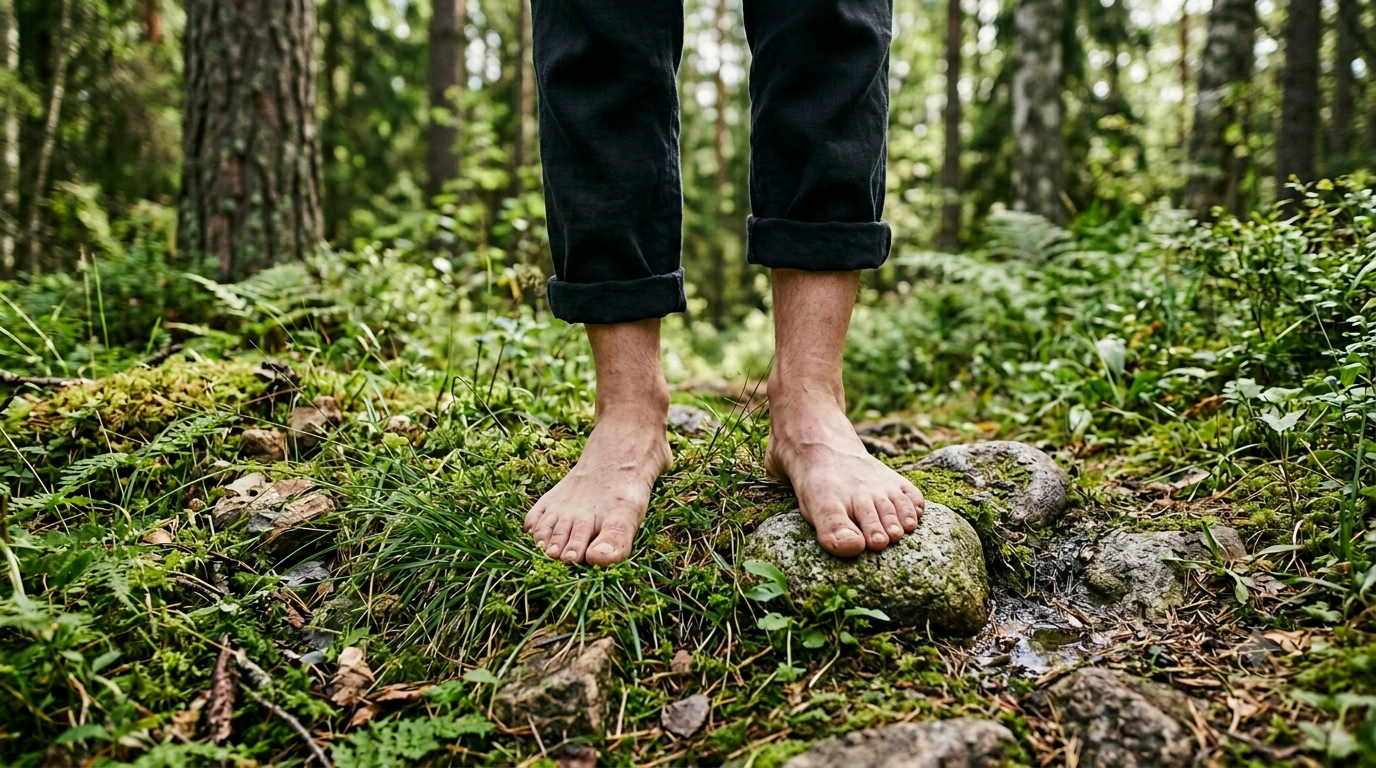
In the Dendrology of the «Losino Ostrov» reserve, five kilometers from the Moscow Ring Road, there is a barefoot walking trail.
A 3.6-kilometer path features forty-three different surfacing materials: soft wood chips, gravel, sea pebbles, sand, pinecones, boulders, expanded clay, small water basins, and, toward the end, even horse manure. As you walk, you can feel half of the natural world through your feet in just an hour and a half. It sounds like a latest invention of the wellness industry, but in reality, it’s a return to how humans lived tens of thousands of years ago—the only difference is that you have to pay to enter.
The history here is longer than it seems. People have always walked barefoot; shoes are a relatively later invention by historical standards. The human foot is structured so that different surfaces massage it in unique ways, and in the traditional medicine of various cultures, walking on stones and pebbles was considered beneficial long before any organized parks existed. In Europe, the idea was formalized into a system in the 19th century by the German priest Sebastian Kneipp: he promoted walking barefoot on dew, stones, and cold water as a means of hardening the body, and Kneipp trails can still be found in German and Austrian resort towns today. Thus, the habit of our ancestors evolved into a named therapeutic practice.
In the 20th century, this format spread across the globe under the more neutral name of a sensory or tactile path. They are built in national parks across North America and Europe, where a trail made of changing surfaces is laid through the forest to function as both an attraction and a wellness route. In the Russian variation, the word «barefoot» (босоногая) took hold, and admittedly, it sounds more soulful than any «sensory path.»
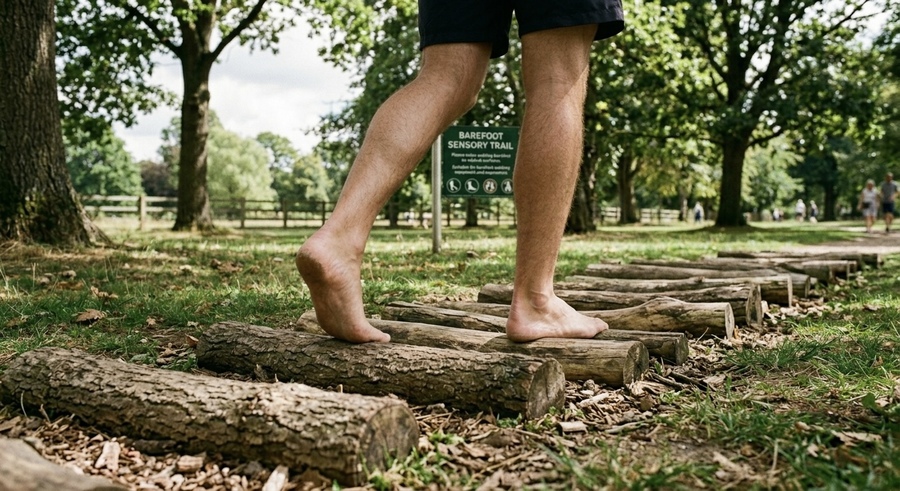
The idea came to Russia from the south. Rustam Yakubov, director of Losiny Island, told his own account that he brought the concept from the southern regions of the country: similar trails exist in the Caucasus Nature Reserve and the Kislovodsk National Park, but they are two to three times shorter than the Moscow trail. Essentially, this resulted in the longest trail of its kind in the country—2.6 kilometers in the initial plans, which grew to a final length of 3.6 kilometers.
Interestingly, the trail opened precisely when barefooting—from the English word barefooting, walking barefoot—became fashionable in the city. This hobby has dedicated adherents who walk barefoot on the streets and even take the metro that way, considering it both a massage and a way, as they put it, to «ground» themselves. In the city, people look at such individuals sideways, and not without reason. The «Barefoot Trail» resolved this contradiction: it provided city dwellers with a legal place to take off their shoes—a specially constructed area where clean stones are laid underfoot instead of the pavement near the metro.
Science views the benefits cautiously. Evidence-based medicine does not support the popular idea that points on the sole are directly connected to internal organs and can be «treated» through the foot. However, the trail is not a complete sham. Uneven surfaces force the foot and calf muscles to constantly adjust to maintain balance, which trains coordination, tones the blood vessels, and reduces swelling after a long day in shoes. The effect is more relaxing—the focus on the sensations underfoot works as a switch, a way to «unload» the day’s mental clutter. Doctors only remind people about hygiene: one can catch a fungus on a shared trail, so those with cuts or scrapes do not go there, and their feet are washed after the walk.
There are now several barefoot trails in Moscow. In addition to the main one at «Losin Island,» smaller paths have appeared in commercial parks and even on Tsvetnoy Boulevard, right in the city center. This has resulted in a striking urban narrative: the most ancient method of locomotion—one humanity spent centuries discarding by inventing increasingly complex footwear—has returned to the megacity as a paid attraction. For the privilege of walking barefoot, as all our ancestors did for free, the Muscovite now pays several hundred rubles, viewing it as a small adventure.