INDEX
— RESEARCH CONCEPT — MADNESS IN CINEMA HISTORY — SUBJECTIVE REALITY: CINEMA THROUGH A CHARACTER’S EYES — SPACE AS A REFLECTION OF THE PSYCHE — VISUAL SYMBOLS AND MOTIFS — MONTAGE AND THE RHYTHM OF OBSESSION — THE BOUNDARIES OF THE BODY AND SELF — CONCLUSION — BIBLIOGRAPHY AND FILMOGRAPHY
RESEARCH CONCEPT
In cinema, madness and obsession can be conveyed not only through a character’s actions and words. Sometimes, their state is communicated more effectively by an empty room, an anxious reflection in a mirror, or a frame that repeats endlessly. The image ceases to be neutral: the space, rhythm, and details begin to convey how the protagonist perceives the world.This is particularly striking in films that refuse the viewer a stable point of view. It is impossible to immediately grasp what is truly happening and what exists only within the character’s mind. Familiar settings appear alien, time seems caught in a loop, and faces and images become doubled. Such directorial choices do more than accompany a story of psychological crisis—they allow the audience to feel it from within.
Research Question: How do visual techniques in auteur cinema convey the madness and obsession of characters and alter the viewer’s perception of screen reality?
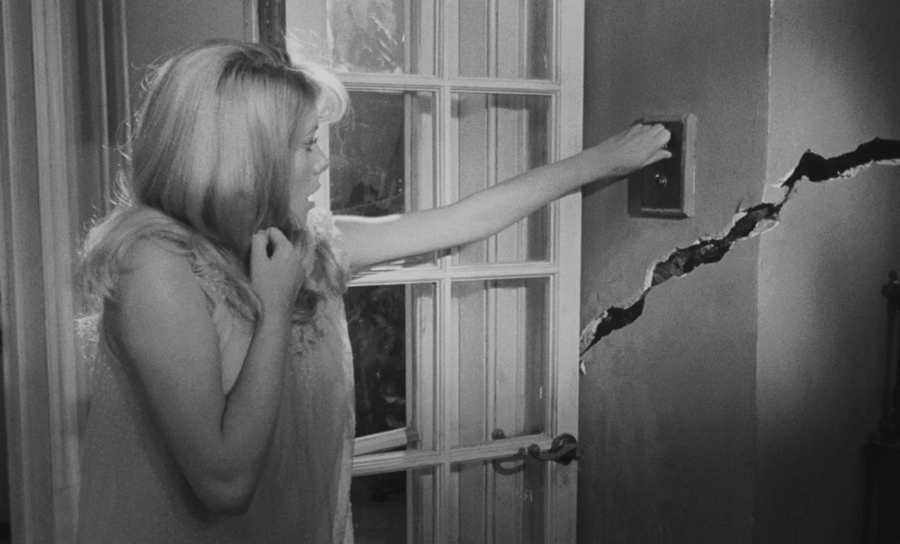
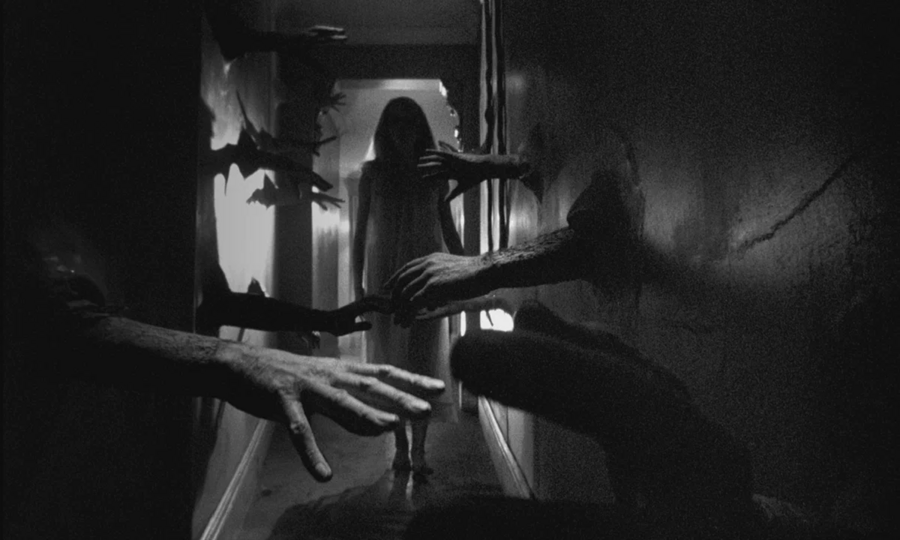
HYPOTHESIS In auteur cinema, madness and obsession are expressed not only through the plot but also through the very structure of the film. Composition, editing, spatial organization, and recurring images may conform to the protagonist’s subjective perception, which causes the viewer to experience the same uncertainty, anxiety, or obsession as the character.RESEARCH GOAL To identify the visual means through which directors portray madness and obsession, and to demonstrate how these means operate in specific scenes.RESEARCH OBJECTIVES To examine how the conventional logic of space and time is disrupted in film; to trace the role of mirrors, doubles, and recurring details; to compare the ways obsession, isolation, and loss of control are depicted; and to determine how editing, composition, lighting, and camera angles affect viewer perception.MATERIAL AND METHOD The foundation of this research is a comparative analysis of the visual solutions in films from different eras. Roman Polanski’s «Repulsion» shows how confined space becomes a reflection of fear. In Ingmar Bergman’s «Persona,» faces, close-ups, and the blurring of boundaries between individuals play a significant role. David Lynch’s «Mulholland Drive» is built on the instability of memory and reality, while Darren Aronofsky’s «Black Swan» connects the obsession with perfection to reflections and bodily transformations. In Robert Eggers' «The Lighthouse,» the feeling of isolation is intensified by the tight frame format and high-contrast black-and-white imagery.These films were chosen not because their characters necessarily have a specific diagnosis. We are interested in different ways to portray internal conflict through the form of the image. Therefore, the paper will not attempt to assign medical diagnoses to the characters.THEORETICAL BASIS The analysis employs studies of cinema as a model of consciousness, subjective perception, stream of consciousness, and mirrored imagery. The works of L. D. Bugayeva, S. A. Tugusha, and other authors help connect the visual solutions to how cinema conveys internal experience. The primary evidence in the research, however, is the footage itself and its comparison: theory explains the approach, while the visual material demonstrates how it functions.
MADNESS IN FILM HISTORY
Cinema has gradually developed various ways to depict madness—from distorted sets and unsettling shadows to subjective editing and the disruption of conventional narrative logic. Across different artistic movements, the character’s inner state influenced the visual world on screen in its own way.
EXPRESSIONISMGerman Expressionism of the 1920s utilized distorted sets, stark shadows, and fractured geometry to convey anxiety and psychological instability.
«Dr. Caligari’s Office, ” Robert Wynne, 1920
«Dr. Caligari’s Office, ” Robert Wynne, 1920
SURREALISMSurrealism engages with dreams and the unconscious. Illogical imagery, unexpected combinations of objects, and the disruption of narrative sequence create a feeling of unstable reality, where the boundary between the imagined and the real dissolves.
«Andalusian Dog, ” Luis Buñuel (1929)
MODERNISMIn modernist cinema, attention shifts from external events to the inner world of the individual. Fragmented montage, close-ups, memories, and the disruption of chronology allow for the conveyance of subjective perception, anxiety, and personal crisis.
«Person,» Bibi Andersson, Liv Ulman (1966)
CONTEMPORARY AUTHOR CINEMAModern directors combine diverse visual techniques to depict psychological instability. Distorted perspective, mirrors, color, contrasting lighting, abrupt editing, and more help convey obsessive states and blur the line between reality and imagination.
«Lighthouse, ” Robert Eggers (2019)
SUBJECTIVE REALITY: CINEMA THROUGH THE CHARACTER’S EYES
In some films, the camera shows not objective reality, but how a character perceives it. In these instances, hallucinations can appear as convincing as real events. The viewer only notices the deception when the conventional logic of the image is disrupted.
«Black Swan,» Darren Aronofsky (2010)
«Black Swan, ” Darren Aronofsky (2010)
Director Darren Aronofsky does not use a specific visual transition to separate hallucination from reality. As a result, the viewer first accepts the distorted image as authentic and only then begins to doubt what they have seen.
«Videodrome,» David Cronenberg (1982)
In David Cronenberg’s film, Max Renn, the head of a television channel, confronts a mysterious television program. After watching it, he begins to lose touch with reality. Hallucinations gradually intrude upon his daily life, and the viewer increasingly cannot discern which events are real.
SPACE AS A REFLECTION OF THE PSYCHE
The Architecture of Anxiety: Space in film can reflect a character’s inner state. Cramped rooms evoke a sense of pressure, while empty interiors emphasize loneliness and alienation.
Distortion of Space: Violations of proportion, warped walls, and unusual perspectives transform familiar architecture into a source of unease. Space ceases to be neutral and becomes a mirror of unstable perception.