
AntiqueEsthetique
Media about antiques and the development of aesthetic taste.
AntiqueEsthetique — an independent Telegram media outlet focused on antiques, life in beauty, and unique locations.We talk about objects with history and how they integrate into modern daily life. We explore why certain eras and aesthetics become mainstream while others remain timeless, which items are undervalued today, and what trends are emerging in collecting, interior design, and visiting culture.
Data Sources for Media
Archives and Museums
The State Historical Museum — historical summaries, object imagery, and attribution.The Hermitage Museum — online collections, contextual eras, and visual references.The Russian Museum — painting, decorative and applied arts, and archival materials.Museum online collections — object imagery, descriptions, and provenance.Auction Houses
Litfond — lot catalogs, pricing, provenance descriptions, and market trends. Antique Salon — catalogs, expert appraisals, and sales analytics. Christie’s — international trends, rare items, and price records. Sotheby’s — catalogs, provenance, and analytical reports.Antiques Galleries and Shops
«BersoAntik» — items for review, expert commentary.«Epoha» Gallery — partnership materials, interviews with owners.Private Dealers — expert opinions, object histories, recommendations.Flea Markets and Vintage Fairs
«The Lefty”—reports, guides, finds, atmospheric photos, and videos.Izmailovsky Market—reports, interviews with vendors, visual content.European flea markets—guides, market comparisons, finds.Social Media and Digital Platforms
Pinterest — visual references, mood boards, new aesthetics.Are.na — curated collections, visual research.Instagram — antique bloggers, vintage shops, trends.Telegram channels — discussions, market news, expert opinions.Antique Forum — discussions, item valuation, collector advice.Data schema divided into human and machine processing
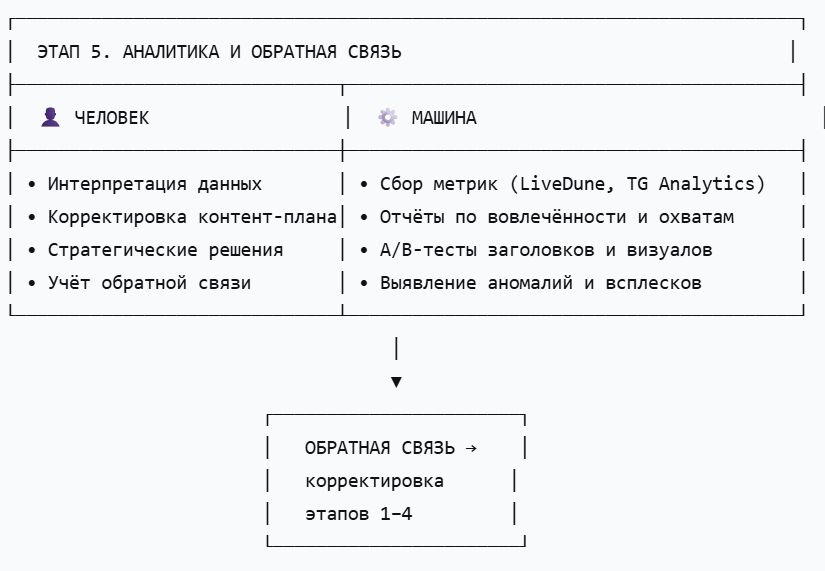
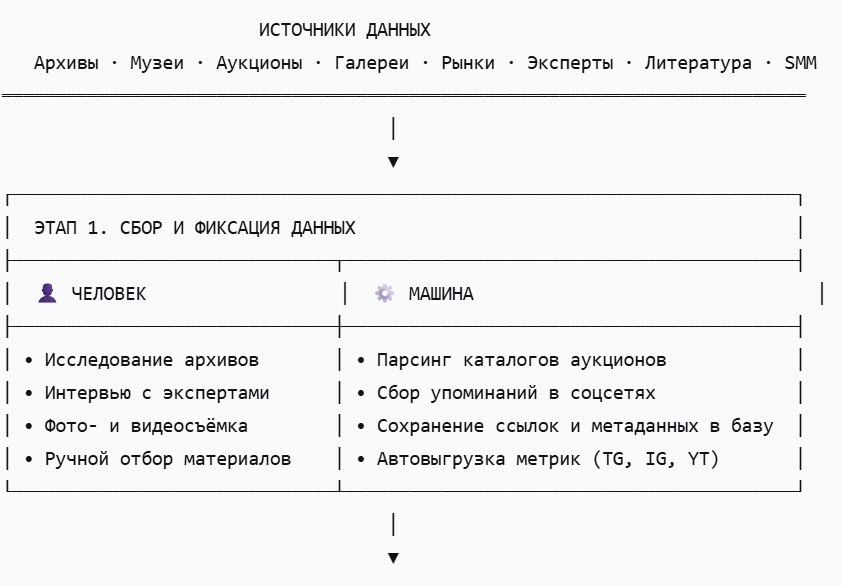
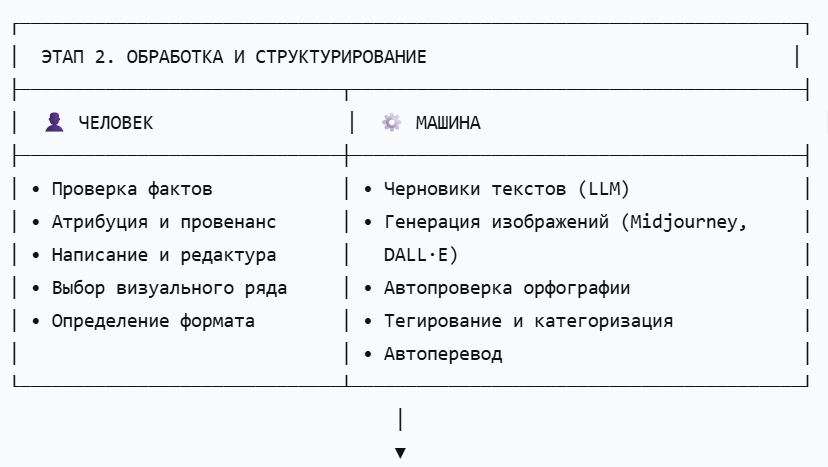
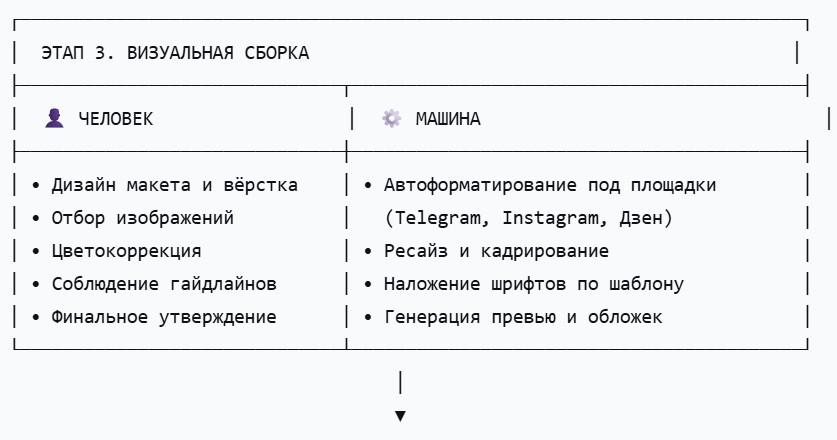
1/5
Guidelines for Automated Services in the Data Schema
General Principles
The machine proposes—the person affirms.No automated stage concludes with publication without a final editorial decision.All generated and automatically compiled materials are marked within the pipeline: «AI-assisted» or «auto-collected.»All historical data, dates, names, and attributions received from LLMs or parsers undergo manual verification against primary sources.All automated services are configured to adhere to the AntiqueEsthetique brand book: the #57DCED color palette, serif typography, and a unified Tone of Voice.Analytics results are automatically passed to stages 1–4 as reports, but the decision is made by a human.Phase 1. Data Collection and Recording
1. Auction Catalog Parsers: Collect only publicly available data. 2. Auction Catalog Parsers: Do not copy item descriptions verbatim—use them only as a reference. 3. Auction Catalog Parsers: Always specify the source. 4. Social Media Mention Collection: Do not use personal data without consent. 5. Social Media Mention Collection: Quote the content, citing the author and link. 6. Social Media Mention Collection: Do not save data from private profiles. 7. Metric Auto-Export: Collect only aggregated indicators. 8. Metric Auto-Export: Do not share data with third parties. 9. Metric Auto-Export: Store data securely. 10. Saving Links and Metadata to Database: The «source» field is mandatory for every entry. 11. Saving Links and Metadata to Database: Duplicates and junk links are removed manually during the verification stage.Stage 2. Processing and Structuring
1. LLMs for Drafts: use only for structure, ideas, and rough drafts. 2. LLMs for Drafts: it is prohibited to publish text without human editing. 3. LLMs for Drafts: all facts must be manually verified. 4. LLMs for Drafts: the style must align with the media’s Tone of Voice. 5. Image Generation: use only for conceptual illustrations and visualizations. 6. Image Generation: it is prohibited to present generated images as documentary photographs of museum artifacts. 7. Image Generation: all images must conform to the brand’s color palette. 8. Spell Check: the final check must always be done by an editor. 9. Spell Check: automatic corrections must not alter the meaning of historical terms or names. 10. Tagging and Categorization: automatic tags must be manually reviewed and supplemented. 11. Tagging and Categorization: categories must conform to approved formats. 12. Machine Translation: use only for internal working materials. 13. Machine Translation: publication of translations requires human editing and terminology verification.Stage 3. Visual Assembly
- Auto-formatting for platforms: templates must be approved in advance.
- Auto-formatting for platforms: automatic adaptation must not compromise composition or readability.
- Auto-formatting for platforms: the designer approves the final layout.
- Resizing and cropping: automatic cropping must not cut off key subject details.
- Resizing and cropping: manual adjustments are required if in doubt.
- Font application according to template: fonts must only come from the brand book, specifically serif fonts.
- Font application according to template: text and background colors must adhere to the approved palette.
- Font application according to template: automatic font application must be visually checked.
- Preview and cover generation: previews must align with the media’s style.
- Preview and cover generation: clickbait or misleading imagery is prohibited.
- Preview and cover generation: the editor makes the final selection.
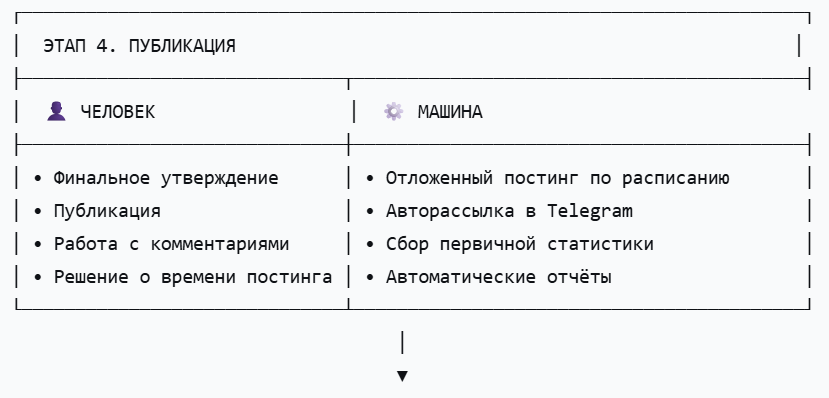
Stage 4. Publishing
1. Scheduled posting: The schedule must be approved by the editor. 2. Scheduled posting: Automatic publication is permitted only after final material confirmation. 3. Telegram broadcasts: Reserved for announcing your own content. 4. Telegram broadcasts: Frequency must adhere to the agreed-upon schedule. 5. Telegram broadcasts: Unsubscription capability is mandatory. 6. Initial statistics collection: Data is used solely for internal analytics. 7. Initial statistics collection: Metrics must not be published without prior approval. 8. Automated reports: Formulated based on approved metrics—reach, engagement, and saves. 9. Automated reports: Interpretation requires manual review.Phase 5. Analytics and Feedback
1. Metric Collection: Use only legitimate data collection methods. 2. Metric Collection: Do not violate the privacy of the audience. 3. Engagement and Reach Reports: Automated reports form the basis for manual interpretation. 4. Engagement and Reach Reports: Content plan decisions are made by a human. 5. A/B Testing of Headlines and Visuals: Tests are conducted on a limited sample. 6. A/B Testing of Headlines and Visuals: Results must not influence the expert Tone of Voice. 7. Anomaly and Spike Detection: Automated signals are manually verified. 8. Anomaly and Spike Detection: Do not make hasty conclusions without context.Original size 3467x2265