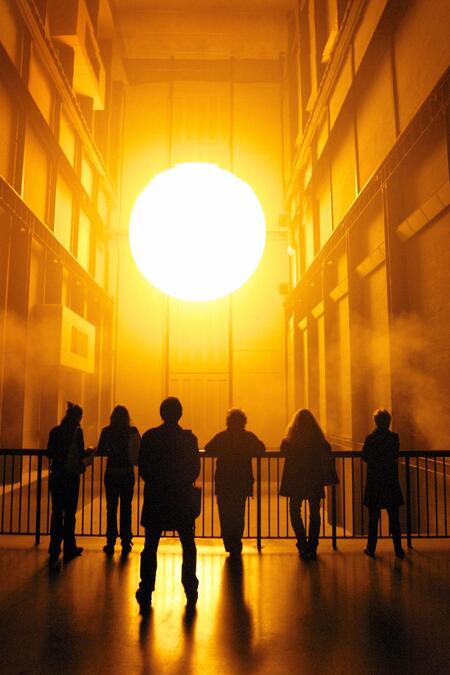
The Viewer as Co-Creator: When Observation Becomes Action
Navigation
- Research Concept2. Aesthetic Impression as a Form of Engagement with Art 2.1. John Dewey: Art as Experience 2.2. Joseph Pine and James Gilmore: The Experience Economy 2.3. Marcel Duchamp: The Viewer as Participant in the Creative Act 2.4. Jacques Rancière: The Emancipated Spectator and the Activity of Observation3. Visual Analysis: From Contemplation to Immersion 3.1. Rationale for Artwork Selection 3.2. Mark Rothko: Rothko Chapel (1971) 3.3. James Turrell: Aten Reign (2013) 3.4. Olafur Eliasson: The Weather Project (2003)4. The Viewer as Participant in the Artistic Process 4.1. Lygia Clark: Bichos (1960) and Caminhando (1963) 4.2. Helio Oiticica: Parangolés (from 1964) and Tropicália (1967) 4.3. Yoko Ono: Grapefruit (1964) and Cut Piece (1964) 4.4. Hussein Chalayan: Afterwords (2000)5. Art as Personal and Collective Experience 5.1. Felix Gonzalez-Torres: Untitled (Portrait of Ross in L.A.) (1991) 5.2. Rirkrit Tiravanija: Untitled (Free) (1992) 5.3. Tino Sehgal: This Progress (2006) 5.4. Marina Abramović: The Artist Is Present (2010) 5.5. Claire Bishop: Boundaries and Contradictions in Participatory Art6. Interactive Art: The Viewer Inside the Artistic System 6.1. Rafael Lozano-Hemmer: Pulse Room (2006) 6.2. Random International: Rain Room (2012) 6.3. teamLab: Borderless (from 2018) 6.4. Interactivity and Co-creation: Viewer Freedom or Illusion of Control?7. Principles of Forming Aesthetic Impression 7.1. Atmosphere and Sensory Immersion 7.2. Bodily Interaction and Personal Choice 7.3. Emotional Engagement and Individual Experience 7.4. From Aesthetic Impression to Brand Experience8. Conclusion9. Bibliography10. Image Sources
1. Research Concept
The visual study, «The Viewer as Co-Creator: When Observation Becomes Action, ” examines how art transforms mere observation into a deeply personal experience. At the core of the work is the transition from aesthetic contemplation to immersion, physical interaction, and the collaborative creation of an artistic event.
The interest in this topic stems from the concept of the experience economy developed by Joseph Pine and James Gilmore, which posits that experience functions as an independent form of economic offering. In their model, the aesthetic experience does not necessarily require active participation; an individual can immerse themselves in the environment while remaining an observer.
The theoretical framework will draw upon the ideas of John Dewey regarding art as experience, Marcel Duchamp on the viewer’s role in the creative act, Jacques Rancière on the activity of looking, and Claire Bishop on the tensions within participatory art. The methodology employed is a comparative visual analysis of artworks and artists' texts.
The study first examines the works of Mark Rothko, James Turrell, Yayoi Kusama, and Olafur Eliasson, where the experience is shaped through color, light, scale, and space. Subsequently, practices by Lejili Clark, Elio Ottisiki, and Yoko Ono are investigated—where the viewer modifies the object. The works of Félix González-Torres, Rirkrit Tiravanija, and Marina Abramović allow for an examination of emotional connection, exchange, and shared presence. The interactive installations of Rafael Lozano-Hemmer and Random International raise questions about the participant’s freedom within a given system.
The central hypothesis is that the depth of the experience is determined not by the quantity of available actions, but by the interplay between sensory impact, personal meaning, and the possibility of becoming a part of what is happening. Furthermore, participation does not always equate to freedom; the rules of interaction can be entirely dictated by the artist.
Analyzing artistic techniques will help us understand how atmosphere, material, ritual, and choice shape the viewer’s experience. The research seeks principles that can be critically reinterpreted within design.
2. The Aesthetic Impression as a Form of Interaction with Art
2.1 John Dewey: Art as Experience
Как искусство становится не просто объектом созерцания, а личным эмоциональным впечатлением.
John Dewey (1859–1952) was an American philosopher and one of the key proponents of pragmatism. In his 1934 book, Art as Experience, he explores the aesthetic experience as an integrated part of human life, rather than something confined solely to museums.
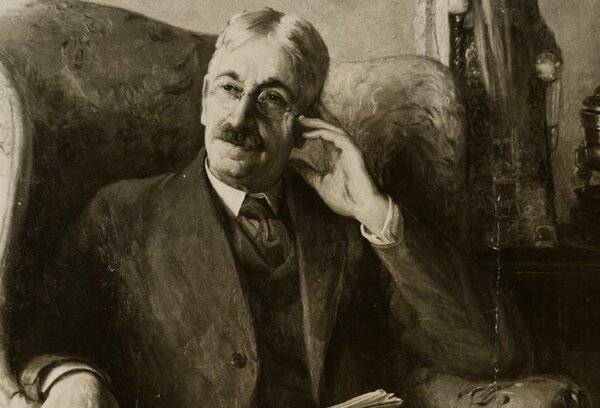
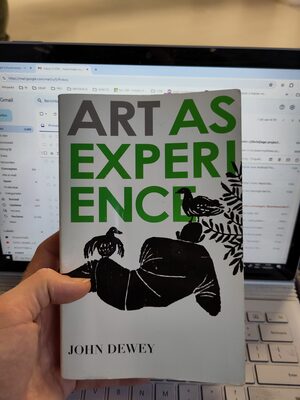
In his book Art as Experience (1934), John Dewey suggests that art should be viewed not merely as a material object, but as an experience arising from human interaction with the surrounding world. An artwork gains its significance during the perception process, as the viewer pays attention to its form, color, rhythm, and emotional content. Thus, aesthetic experience is not limited to viewing a beautiful object; it is intertwined with feelings, memories, and the individual’s perception.
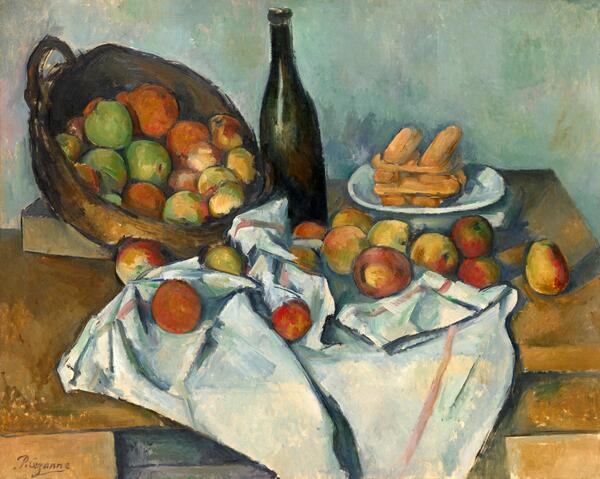
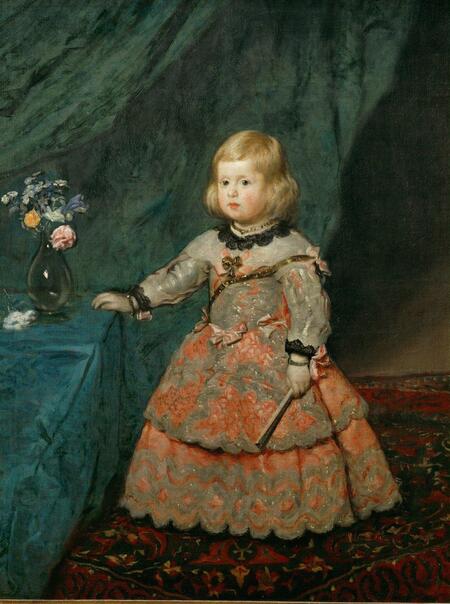
In Van Gogh’s «The Treinchet Bridge,» expressiveness is achieved through saturated colors, contrasts, and the distinctive brushwork, which transforms an everyday landscape into an emotionally charged image. In Velázquez’s portrait of Infanta, the impression is formed differently: through subtle color relationships, light, and the texture of the fabrics, conveying the model’s refinement and dignity.
From the perspective of Dewey’s philosophy, the comparison of the works demonstrates that the aesthetic experience arises from the direct perception of form.
2.2. Joseph Pine and James Gilmore: The Experience Economy
In the concept of the experience economy, Joseph Pine and James Gilmore view the experience as an independent form of economic value, distinct from goods and services. If a good has material characteristics and a service satisfies a specific need, then an experience is connected to a person’s personal feeling. Its significance is determined not only by the event itself but also by the emotions, sensations, and memories it leaves behind or initiates. Applied to art, this theory allows us to see a work not just as an object, but as a source of individual experience that arises from interaction with the viewer.
Author’s adaptation of the Pyle and Gilmour scheme, 1998. The top row represents impression absorption, and the bottom row represents immersion in the environment; activity participation increases from left to right.
Pine and Gilmore outline four realms of experience. The entertainment experience primarily involves observation; the educational experience involves actively mastering new experiences; the aesthetic experience is immersion in an environment without the need to alter it; and the escapist experience involves active participation within the unfolding event. Several of these categories can combine in a single artistic event.
In art, this type of experience occurs when the viewer is placed inside a specially curated visual environment. Color, lighting, scale, and space all influence perception, even if the person takes no action.
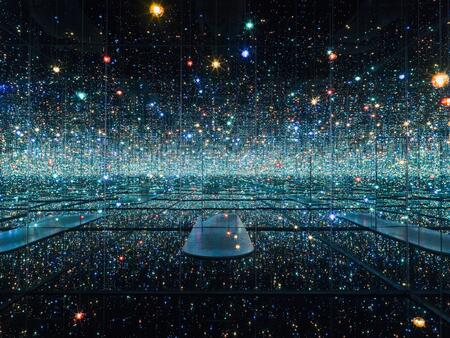
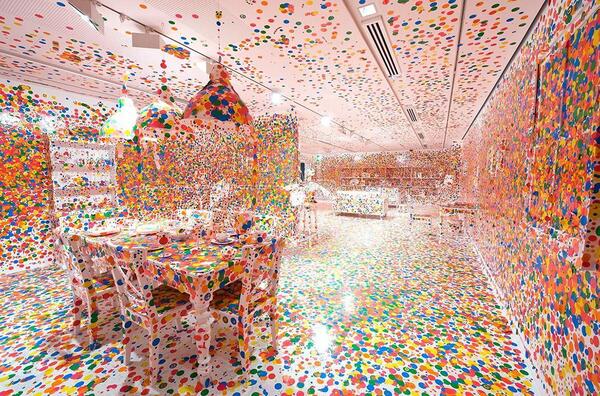
The aesthetic impression of Yayoi Kusama—Infinity Mirrored Room—The Souls of Millions of Light Years Away, 2013; the escapist impression of Yayoi Kusama—The Obliteration Room, from 2002
In Yayoi Kusama’s Infinity Mirrored Room, the viewer finds themselves inside an illusion of infinity. The experience is crafted by the artist, and the human’s primary role is to experience what they see. The visitor enters the mirrored room, observes reflections, and feels a sense of wonder. They can move around and change their perspective, but the artistic environment itself remains constant. The person alters their perception.
In The Obliteration Room, the viewer actively creates the visual space: each colored dot gradually transforms the initially white room. The viewer decides where to place the colored dots. Each participant physically alters the space, meaning the next visitor sees a different room. The person changes the artwork itself.
2.3. Marcel Duchamp: The Viewer as Participant in the Creative Act
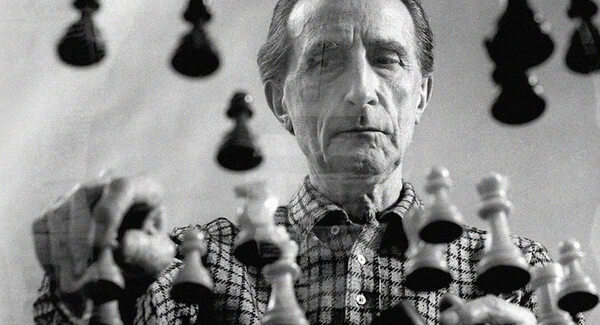
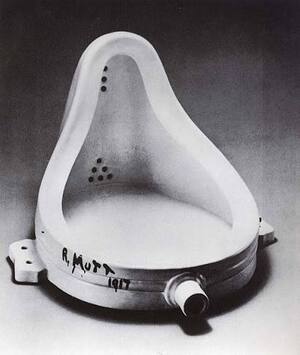
Marcel Duchamp, in his essay «The Creative Act» (1957), frames the viewer as an essential participant in the creative process. The artist creates the work, but its meaning is also shaped by the audience’s interpretation.
This idea is exemplified by «Fountain» (1917)—a standard urinal presented as art. Instead of experiencing aesthetic admiration, the viewer is confronted with the question: why is this object considered a work of art?
Duchamp shifts the artistic experience from the realm of visual beauty to the realm of thought. The viewer becomes a co-author of meaning, even without altering the object itself.
2.4. Jacques Rancière: The Activity of Observation
In the book «The Liberated Gaze» (2008), Jacques Rancière asserts that observation is inherently an intellectual act: the viewer independently interprets what they see and forms their own meanings.
This idea can be explored through René Magritte’s painting, «The Treachery of Images» (1929). Above a realistic depiction of a pipe, the artist places the inscription, «Ceci n’est pas une pipe, ” compelling the viewer to doubt the obvious and contemplate the difference between an object and its representation.
For design, this principle illustrates the power of visual contradiction: an unexpected image, a paradox, or an omission can engage a person in the search for meaning and make the interaction with an object more memorable.
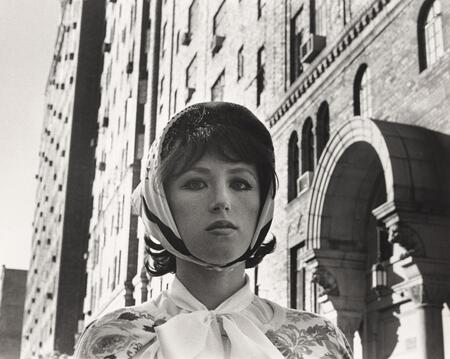
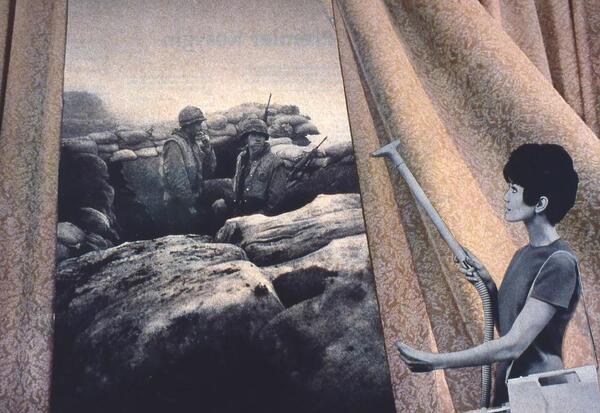
Cindy Sherman’s «Untitled Film Stills» photograph series (1977–1980). The artist creates scenes from non-existent films, leaving the narrative open-ended. The viewer completes the story independently, based on visual details and personal associations.
3. Visual Analysis: From Contemplation to Immersion
3.1. Rationale for Artwork Selection
For visual analysis, we have selected works by Mark Rothko, James Turrell, and Olafur Eliasson, where the aesthetic impression is formed not only by the imagery but also by the surrounding environment.
All three artists utilize color, light, and scale to create an immersive effect, yet they organize the interaction with the viewer differently.
Comparing these works allows us to investigate how an aesthetic experience arises without physically altering the artwork and at what point the viewer’s mere presence begins to influence the artistic situation.
3.2. Mark Rothko: Rothko Chapel (1971)