Navigation
- Concept
- Posthumous Trial
- Scales and Participants
- Composition
- Comparison
- Conclusion
Concept
The belief that after death a person must appear before a supreme court has existed in various cultures.
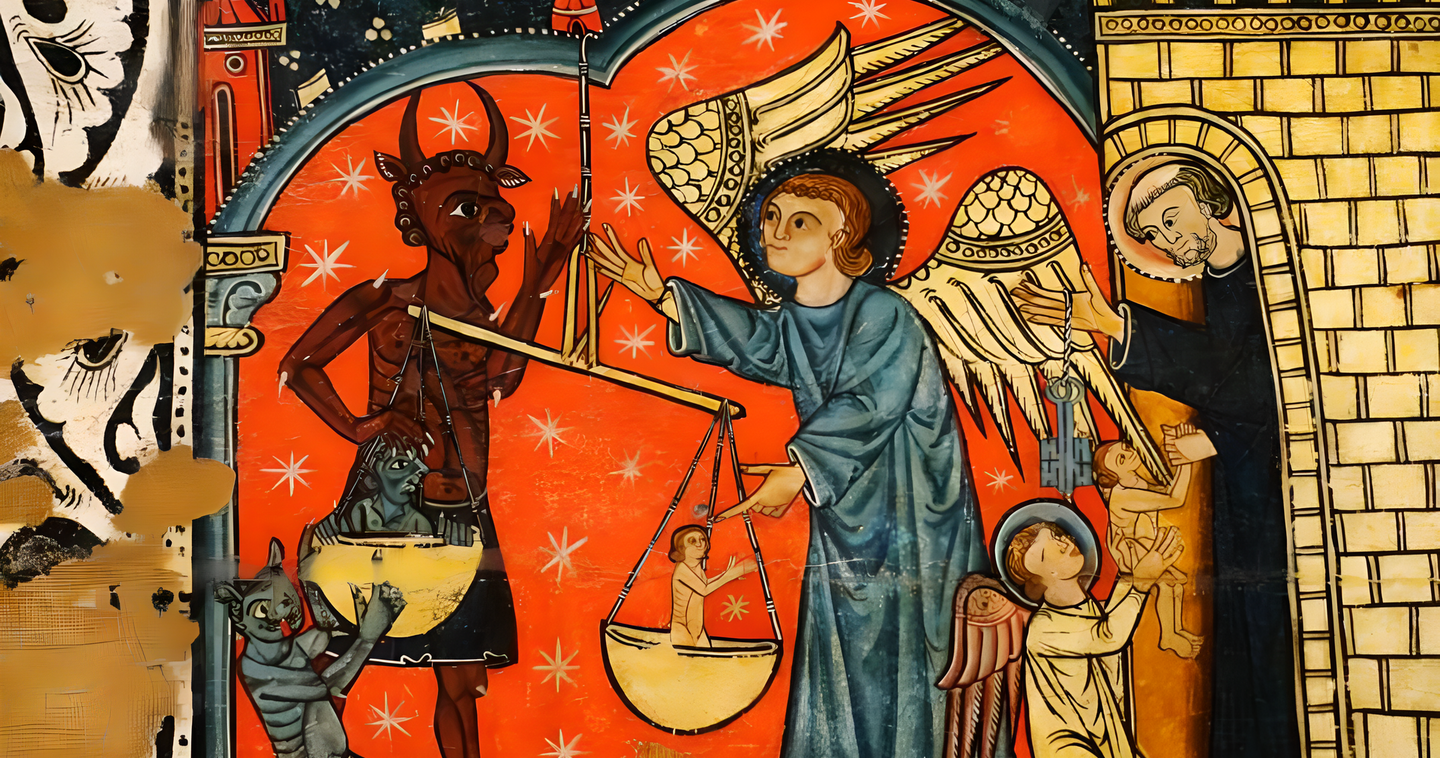
One way to depict this was through weighing, so the moral worth of a person acquired a very concrete visual image. In the art of Ancient Egypt, the heart of the deceased was placed on one pan of the scales, and on the other, the feather of the goddess Ma’at. In the Christian tradition, a similar motif gained a new meaning. The soul was placed on the scales of Archangel Michael, and angels and demons might appear nearby, attempting to influence the outcome of the judgment.
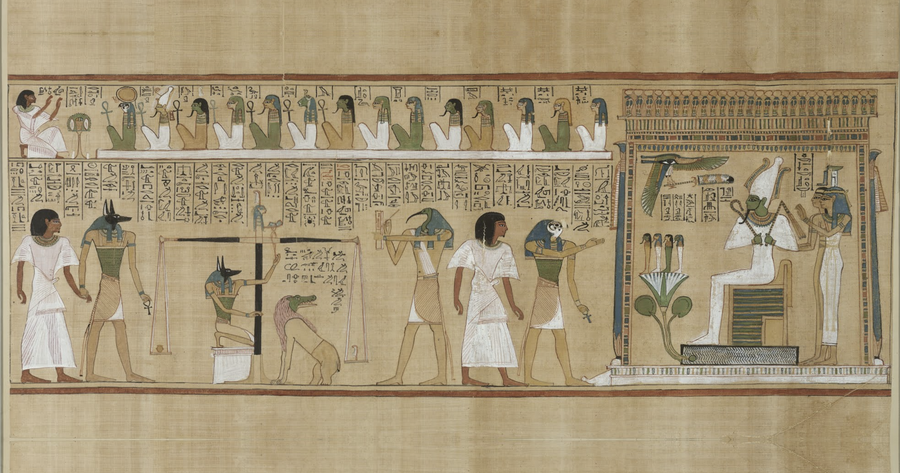
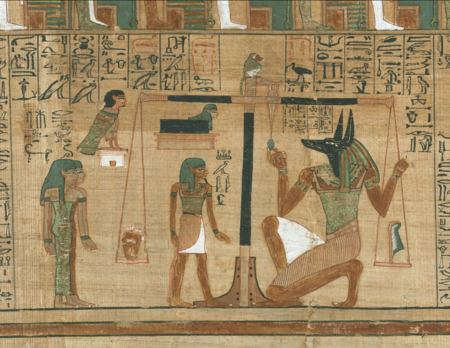
Heart Weighing Scene from the Papyrus of Hunefer, circa 1275 BCE, 19th Dynasty, British Museum.
The goal of this visual study is to trace how the image of the soul’s weighing evolved from ancient Egyptian art to the Christian medieval tradition. The focus is on the scales, the figures of the trial participants, the positioning of the human subject within the composition, and the connection between the weighing scene and the broader depiction of the afterlife.
In this study, I examine works where the motif of weighing takes center stage: The Papyrus of Hunefru, Ancient Egypt, circa 1275 BCE. The Ani Papyrus, Ancient Egypt, circa 13th century BCE. The Last Judgment mosaic of Santa Maria Assunta Cathedral on the island of Tortello. The tympanum of Saint-Lazare Cathedral in Autun. Sculptures from the South Portal of Chartres Cathedral.
The works will be analyzed not only through their religious content but also through their visual language. I pay particular attention to how the scales are depicted, what is placed in their pans, who is observing the weighing, and what role this scene occupies among the other figures.
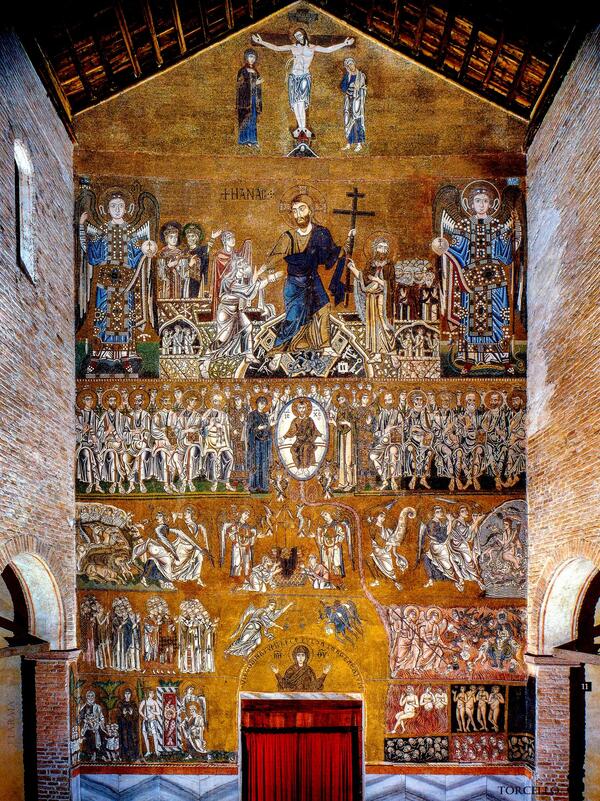
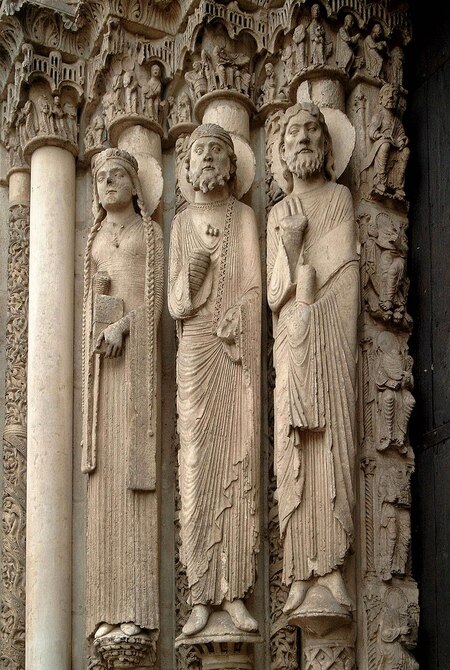
Mosaic of the Last Judgment from the Basilica of Santa Maria Assunta, sculptures of the south portal of Chartres Cathedral
The main research question: How has the visual representation of weighing the soul changed when moving from Ancient Egyptian art to Christian art, and which elements have been preserved across both traditions?
The hypothesis is that, despite differences in religious beliefs, the image of weighing the soul retained a common visual idea—the measurement of a person’s moral worth after death. While the participants, symbols, and artistic interpretation of the judgment changed when transitioning from ancient Egyptian art to Christian art, the scales remained a symbol of divine justice.
Posthumous Trial
In various religious traditions, death was not always perceived as the end of human existence. The afterlife could be imagined as a space where the deceased’s ultimate fate was decided.
One way to depict this transition was through the scene of judgment.
Papyrus Ani, Ancient Egypt
In the beliefs of the ancient Egyptians, afterlife existence depended on whether the deceased could pass the trials and receive justification from the gods. The judgment of the deceased was connected to maintaining the proper order of the universe—Ma’at.
The scene of the heart weighing is connected to the judgment of Osiris. In the «Hall of Two Truths, ” the deceased was supposed to appear before the divine court and confirm that they had not violated the established order. It was here that the heart weighing took place.
Osiris held the position of supreme judge of the afterlife. He was depicted at the end of the composition, seated on a throne amidst divine figures.His placement underscored that the fate of the deceased was determined not by humans, but by a higher divine authority.
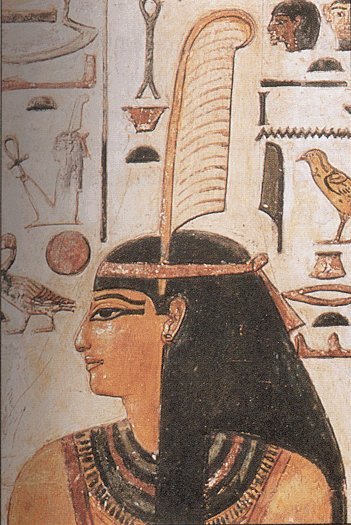
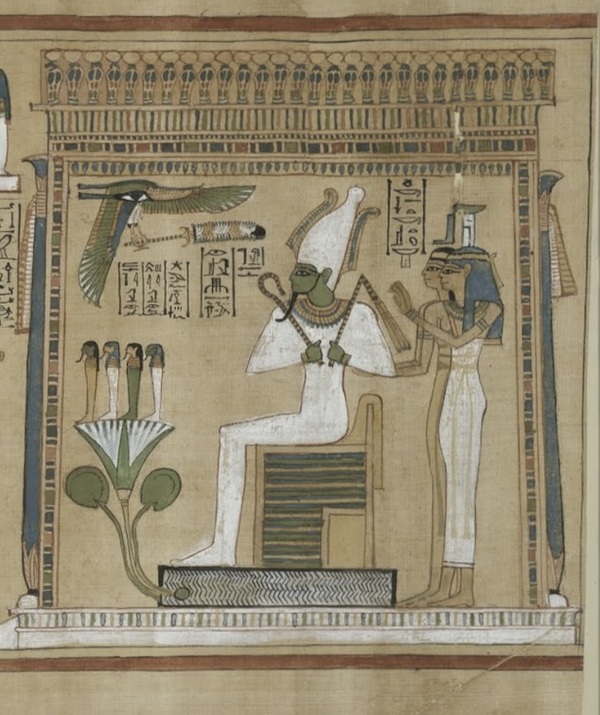
Image of Ma’at with a feather on her head, the scene of the weighing of the heart from the Papyrus of Hunefer.
Christian Last Judgment
In Christian art, the judgment after death was depicted on a grander scale. The Last Judgment portrayed not just the fate of an individual deceased, but the destiny of all humanity.The composition typically included Christ the Judge, angels, apostles, the resurrected, the righteous, and the sinners.
In Christian iconography, the outcome of judgment was often expressed through the juxtaposition of two groups: the righteous and the condemned.
Their placement on opposite sides of the composition made the verdict clear to the viewer even before examining the individual details.
Scales and Participants
The scales are the primary visual element, connecting Egyptian and Christian depictions of the afterlife judgment. However, the significance of this object is revealed through what is placed in its pans and the figures surrounding the scene.
In ancient Egypt, the deceased’s heart was placed on the scales. It was considered the repository of a person’s thoughts, memories, and deeds. Therefore, the heart’s inspection became a judgment of the entire life lived.
Into the opposing bowl was placed the feather of the goddess Maat—a symbol of truth, justice, and proper order. The heart was required to align with this ideal.
Scene of the Weighing of the Heart from the Papyrus of Ani, c. 1275 BCE, 19th Dynasty, British Museum.
Anubis oversaw the weighing of the scales—a god associated with funeral rites and guiding the deceased to the afterlife. In the scene of the weighing, he is usually positioned next to the scales, overseeing the process.Thoth recorded the result of the weighing. He was depicted with an ibis head and writing implements. His presence underscored that the judgment was not a random event. The result is recorded and holds significance for the deceased’s future fate.
Beside the scales stood Ammat—a creature with features of a crocodile, a lion, and a hippopotamus. She awaited the judgment. If the heart failed the test, the deceased was denied the chance to continue existence in the afterlife.
The human figure does not vanish among the gods; their presence remains an essential part of the composition. They stand before the judgment as a singular figure, whose destiny hinges on the result of the weighing.