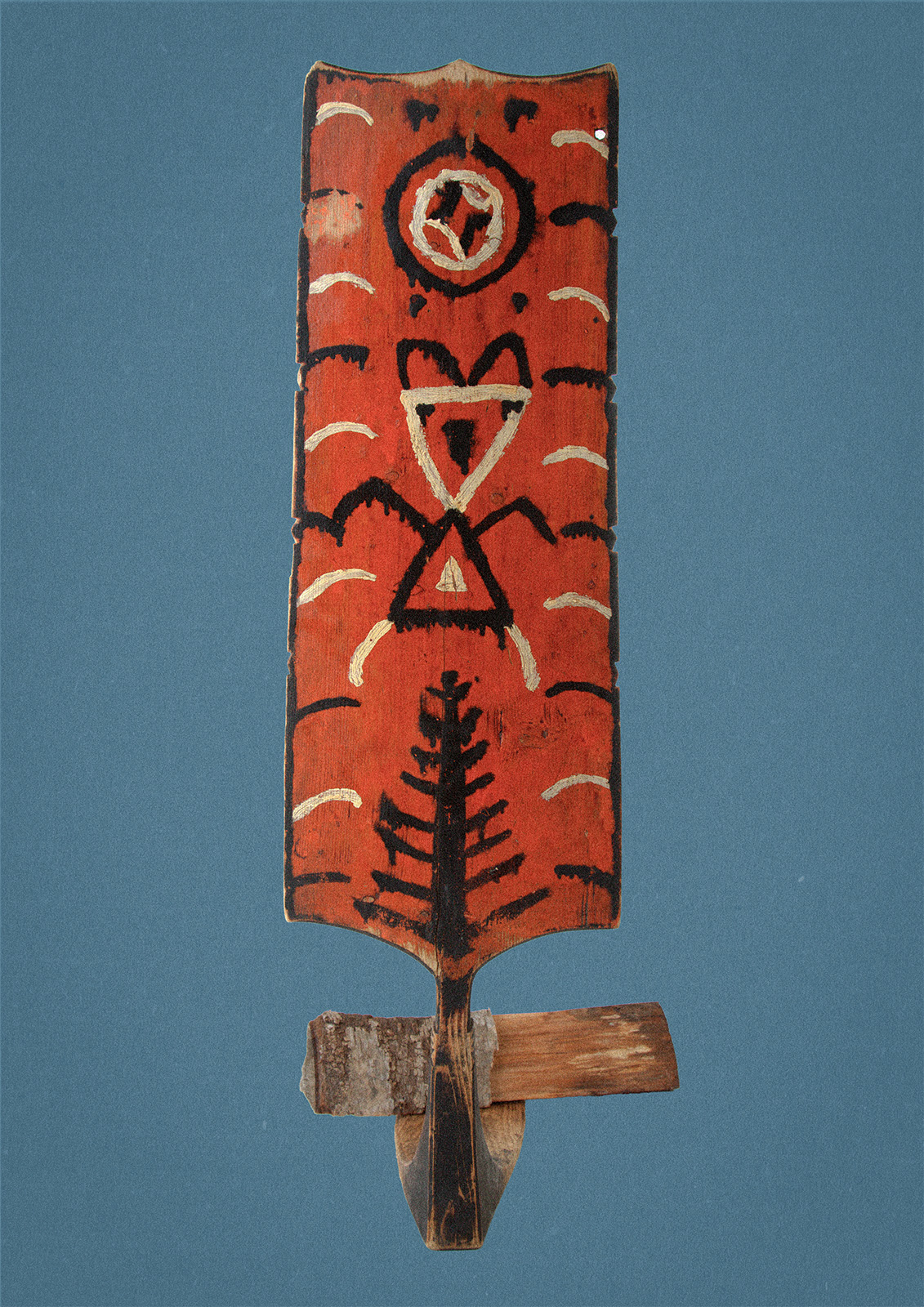

The exhibition «CARTOONS OF THE RUSSIAN NORTH» at GMZ Tsaristino is an interdisciplinary project by the Open Collection Foundation and Soyuzmultfilm Studio. It explores the deep connection between the archaic graphics of the Russian North and Soviet auteur animation from the 1970s. The centerpiece of the exhibition features signs and imagery from Northern spinning wheels: animals, birds, scenes with people, and images of horses.
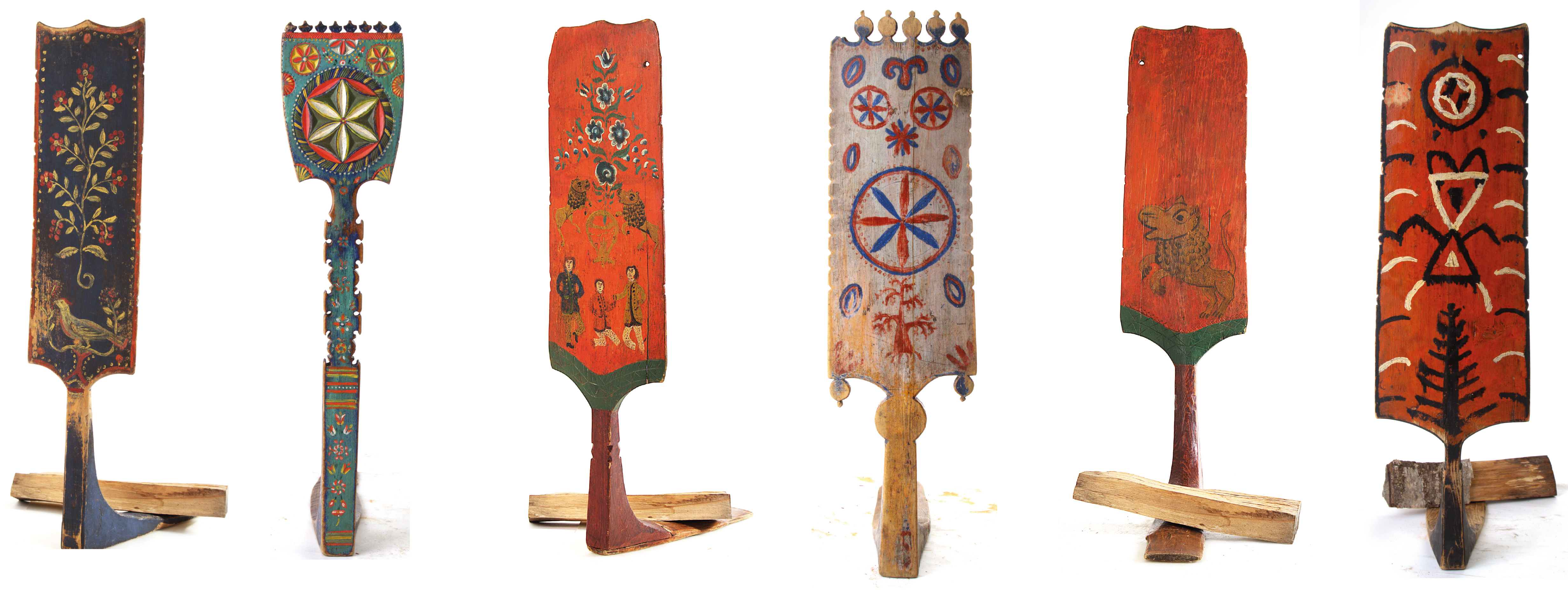
Spindles from the «Open Collection» Fund
The curatorial focus of the exhibition demonstrates that the leaders of 1970s animation—Yuri Norstein, Francesca Yarbusova, Andrei Khrzhanovsky, Leonid Nosyrev, Vera Kudryavtseva-Engalycheva, and Ivan Ivanov-Vano—shared the common interest of the 'sixties generation of artists' in primitivism and folk roots. The texture of old wood, naive silhouettes, and the symbolism of peasant cosmology came to life in the film’s iconic characters. Seren’kyy Volchok from «Fairy Tale of Fairy Tales» assumed the role of a guardian spirit, and the Horse in the Fog became the heir to solar Menzel horses.
The North—a repository of Russian culture. My expeditions, my encounters with people, and with peasant art have naturally reflected in my work.
In the exhibition, the foundation’s spinning wheels enter into a visual dialogue with archival sketches and storyboards. The project is augmented by an interactive program featuring workshops in cut-out animation. It recontextualizes authentic ancient heritage within a contemporary cultural setting.


Creation of an interdisciplinary exhibition space at the intersection of traditional peasant paintings and Soviet author animation from the 1970s, intended to visually demonstrate the evolution of planar folk aesthetics into cinematic form. Reference to the symbols of North Russian spindles served as an important space for creative exploration for the animation creators of the 1970s, allowing them to establish a recognizable visual identity.

Propose a fresh perspective on the history of domestic animation, demonstrating that the visual distinctiveness of Soviet directors from the 1970s is deeply rooted in traditional peasant aesthetics. The exhibition aims to show how animators drew their key artistic techniques from folk art—specifically the rhythm of ornamentation, the graphic conventions of the symbol, and the value of handcrafted texture.
In contemporary culture, there is a persistent trend toward a simplified, souvenir-like perception of folk traditions. Under these conditions, there is a growing need to reveal to the viewer the authentic ethnographic heritage as deep, structural, and substantive art. The North Russian spinning wheels from the «Open Collection» are a unique resource for studying symbolic systems. The exhibition allows us to trace the deep continuity between the semiotics of peasant life and the artistic language of 1970s Soviet author animation. Although film historians have mentioned the influence of folklore on animation, a complete exhibition space that connects authentic peasant artifacts with the archive materials of Soyuzmultfilm has not yet been created.
The project is based on the current public demand for the search for national identity. The recent folk boom among youth demonstrates that a stable interest in ethnographic primary sources has formed among the contemporary viewer. A prime example is the phenomenal success of new authentic folklore ensembles (such as «Toloka»), whose performances at leading cultural venues (GES-2 Culture House, Zaryadye Concert Hall, Venice Biennale) sell out. This project translates this spontaneous interest into a scientific and structured museum format.

Professional Community and Intellectuals (Ages 18–35)
Composition: Students from creative, art history, and humanities universities; artists, designers, animators, and researchers of visual culture.
Inquiry: The search for national identity, the study of rare archive materials from Soyuzmultfilm, and authentic ethnographic artifacts, with an interest in interdisciplinary projects at the intersection of traditional and contemporary art.

Interested Youth and Urban Subculture (Ages 15–30)
Profile: Participants and attendees of folklore lectures and concerts, fans of new ethno-music.Need: A demand for authentic folklore, a desire for deep historical roots, purged of mainstream stylization and souvenir gloss.
Family Audience and Kids Groups
Participants: Parents with children aged 6 to 14, organized school groups.
Goal: Providing high-quality educational leisure time and an interactive introduction to masterpieces of Russian animation and basic archetypes of Russian culture through accessible visual imagery.
The exhibition is planned for October 15–November 30, 2026, at GMZ «Tsaritsyno,» on the second floor of the «Bread House,» where exhibition projects focusing on decorative and applied arts have traditionally been created.
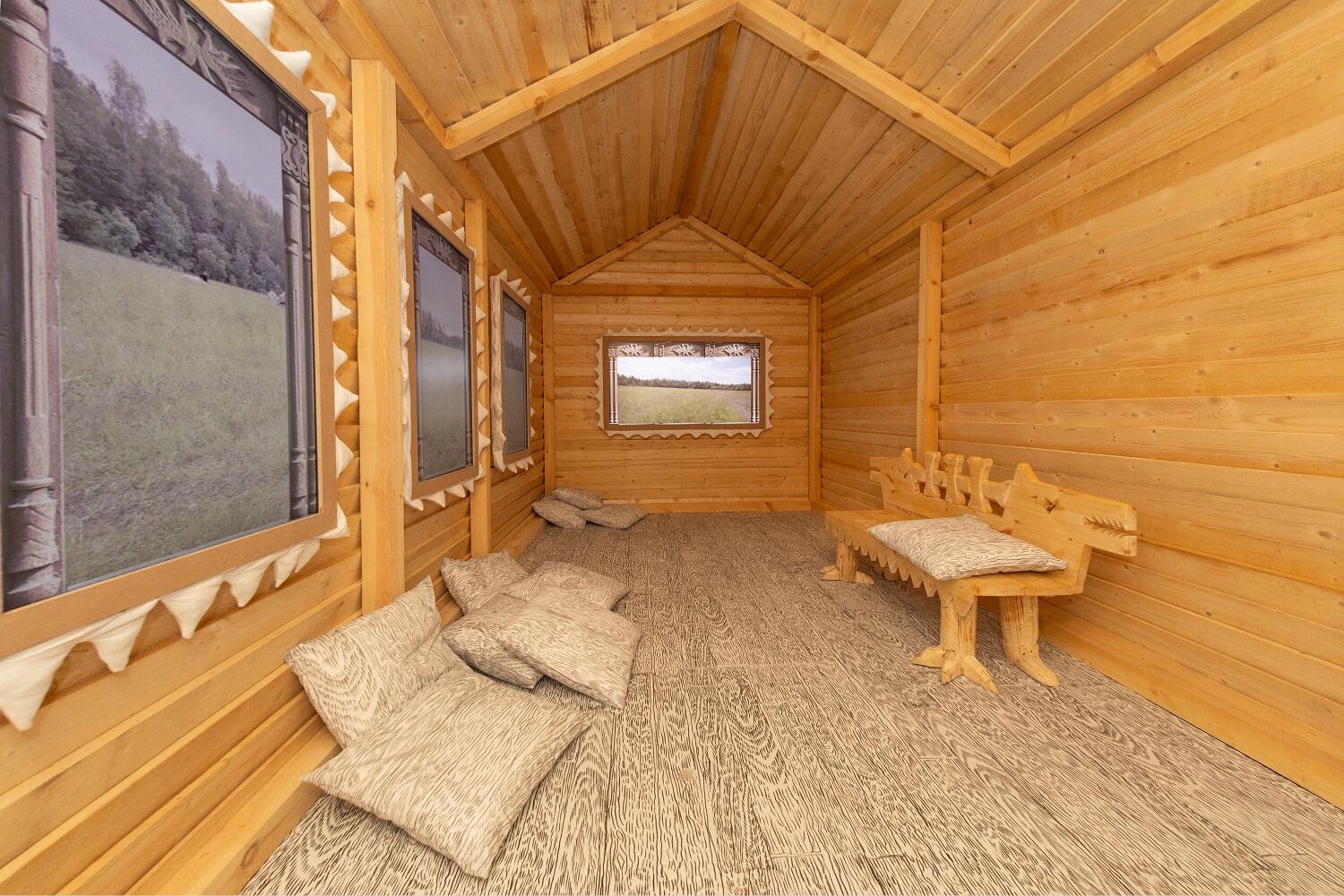
The space in the Khlebny Dom at GMZ Tsaritsyno during the exhibition «I Am Going to Look For!»
Render of a sample exhibition concept in the Reve neural network
1. Pre-opening кампания
(за 2 недели до открытия):
— Creating teaser videos: animation transitioning from spindle ornaments to moving cartoon characters.
— Launching targeted advertising on social media (VK, Telegram) to an audience aged 18–35 with interests in film, art, animation, and museums.