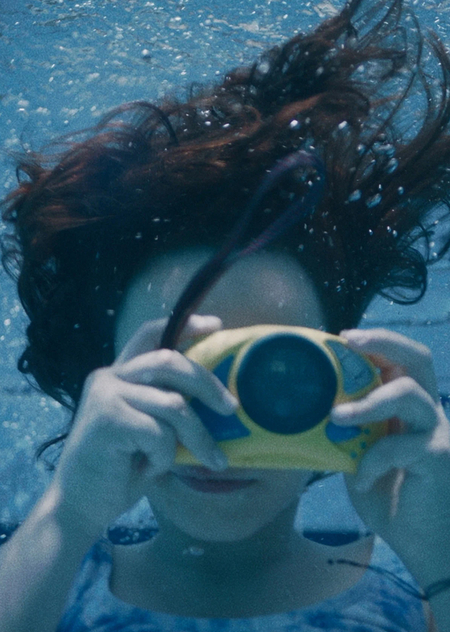
Home video is usually created to capture events: a family celebration, a trip, or a casual conversation. Unlike professional cinema, this type of shooting doesn’t always involve a pre-planned composition or deliberate editing. The camera might move erratically, people might leave the frame, and important moments could remain outside the recording.However, these features are not necessarily flaws. They are inherent to the nature of amateur filmmaking, which primarily documents fleeting moments of life.
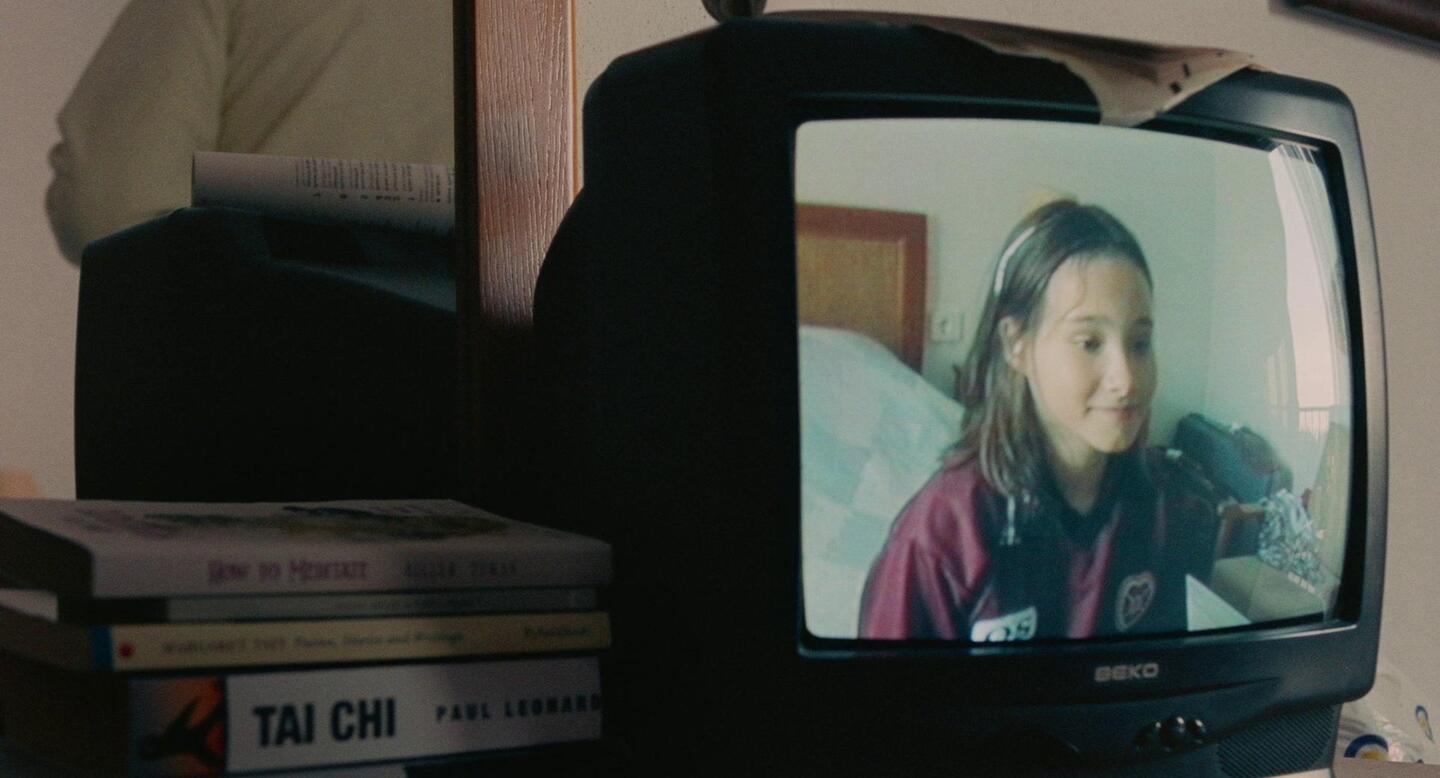
Charlotte Wells. «My Sun,» 2022.
In contemporary video game cinema, an interesting contradiction arises: professional directors intentionally reproduce elements of amateur filmmaking. Artistic films feature home video tapes, family photographs, and archival footage, which can be both authentic and deliberately fabricated for the fictional narrative.
Film can create memories of events that never actually happened. Home footage transforms from a means of documenting the past into material for constructing artistic narratives.
To conduct this research, it is important to examine the history of amateur filmmaking. In Reel Families by Patricia Zimmerman, home movies are presented as an independent practice, influenced by technology, social conditions, and the ways the camera was used.Roger Eden investigates family films as documents, while Jamie Baron examines how the meaning of archival materials changes when incorporated into new works. These perspectives allow us to view home footage not merely as an image of the past, but as a distinct mode of working with cinematic material.
The research question is how contemporary game film reinterprets the visual principles of amateur footage and personal archives, transforming them into tools for constructing artistic narrative.
Research Hypothesis posits that the aesthetics of amateur filmmaking are utilized in contemporary video games not merely for historical stylization, but also as an independent artistic device.Camera positioning, framing nuances, recording texture, and the editing of disparate images allow for the convergence of documentary methods of event capture with staged and experimental techniques. Importantly, it is crucial to distinguish between the use of genuine archival footage, its artistic reconstruction, and its stylization to resemble home video.
Joana Hadjitomas, Khalil Jouraj. «Memory Box, ” 2021. Photographic album within a game narrative.
To test the hypothesis, six fictional films from 2016–2022 were selected, each employing the interplay between amateur, documentary, and scripted imagery in a distinct way. In My Sun (2022), parallel MiniDV home recordings exist alongside the primary footage, allowing for a comparison of two different ways of capturing the same events. Fabelmen (2022) showcases the process of creating and editing amateur films itself, reconstructed through professional cinematic means. A different approach is presented in Memory Box (2021), where authentic diaries, photographs, and personal records form the foundation of a fictional family history. In Souvenir (2019), personal photographs and historical materials are combined with staged scenes, and various image formats help construct a fragmented narrative. For instance, the film begins with a sequence of authentic black-and-white photographs of Sunderland taken by Joanne Hogg. In Cathedral (2021), the family history is woven from fictional episodes, photographs, and newsreels, connecting the personal past with historical events. Finally, in Women of the 20th Century (2016), archival images are used in a collage montage that complements the scripted scenes. The characters' biographies are revealed through a combination of voiceover narration, photographs, and documentary footage.
Authentic archiving, reconstruction, and stylization— three different ways to create a cinematic past.
The selected films allow for a comparison of these approaches, helping to determine which characteristics of amateur filmmaking remain and which transform when moving into feature film.
Steven Spielberg. «Fablemakers, ” 2022.
The research structure is organized not chronologically by film release, but by the successive transformation of amateur footage into artistic material.
01. The Camera in Others' Hands First, we examine how a person’s relationship with the camera influences the composition and character of the image.02. Script Errors Next, we analyze how the technical limitations and accidents of amateur filmmaking are transformed into conscious artistic decisions.03. The Authentic and the Fictional Archive The third chapter compares genuine documents, their staged reconstructions, and their stylization as family chronicles.04. Multiple Images of One Past The fourth chapter is dedicated to the montage of photographs, video footage, and staged scenes that connect disparate temporal layers.05. What Remains Off-Screen The final chapter explores how the fragmentary nature of home archives and the gaps between recordings become integral to the narrative.Thus, this structure allows for a gradual progression from examining a single amateur frame to analyzing how documentary imagery defines the structure of an entire film.
Steven Spielberg. «Fabelmen, ” 2022.
The primary method will be a comparative visual-stylistic analysis of shots and editing sequences. Special attention will be given to composition, camera positioning and movement, image texture, differences in shooting formats, and methods of material juxtaposition.The theoretical framework will be supplemented by studies of Laura Roscaroli’s personal and essayistic film work, allowing for an examination of the interaction between subjective recording and the forms of experimental cinema.
The goal of this research is to demonstrate how an image, initially associated with the documentary recording of reality, becomes a tool for creating a fictional past within contemporary video games.
Comparing the selected films will allow us to determine which qualities of amateur filmmaking persist, which are reinterpreted, and how new modes of cinematic storytelling emerge at the intersection of documentary, game, and experimental traditions.