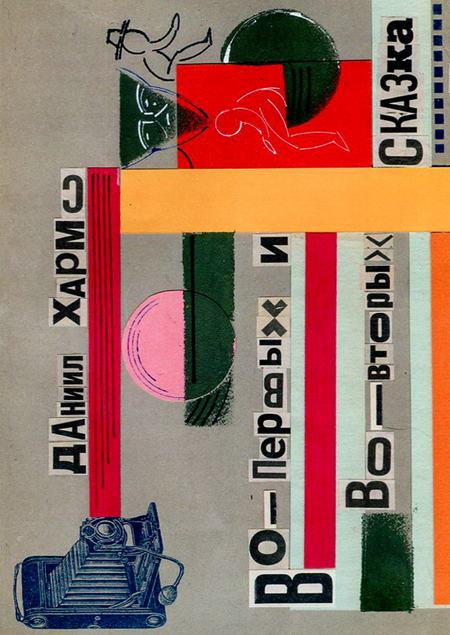
Concept
D. Хармс’s story, «Firstly and Secondly, ” first published in the magazine Ёж in 1928, is a journey narrative with no defined starting point or set destination. The narrator and his friend Petya set off, gradually gathering an increasingly peculiar company around them. They are joined by the smallest man in the world, an exceptionally tall man, and later—animals. The characters encounter various obstacles, but continue moving forward without questioning the strangeness of the events.
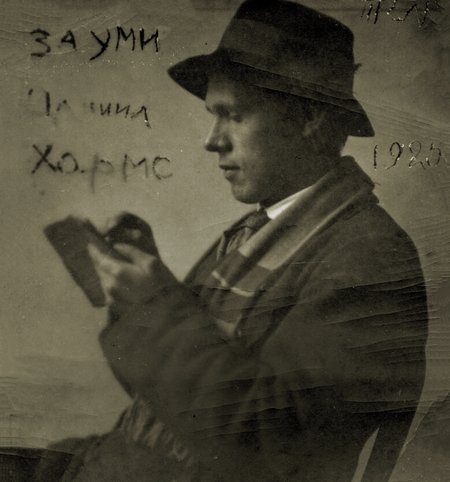
Author unknown | Daniil Kharms | 1925
The simplicity of the plot is deceiving. The narrative is divided into ten numbered parts. Each part introduces a new character or circumstance that changes the situation of the established group. Furthermore, the story lacks a conventional sense of closure: in the finale, the characters set out on a journey once again, and subsequent events remain unknown. This structure suggests the possibility of an infinite continuation of the story.



Kharmz barely describes the appearance of characters or the surrounding setting. With the exception of Petka, the characters are unnamed, and their primary traits are reduced to unusual physical properties. It is this ambiguity that opens up broad possibilities for the artist, who can independently devise the characters' look, the character of the space, and their ways of interacting.
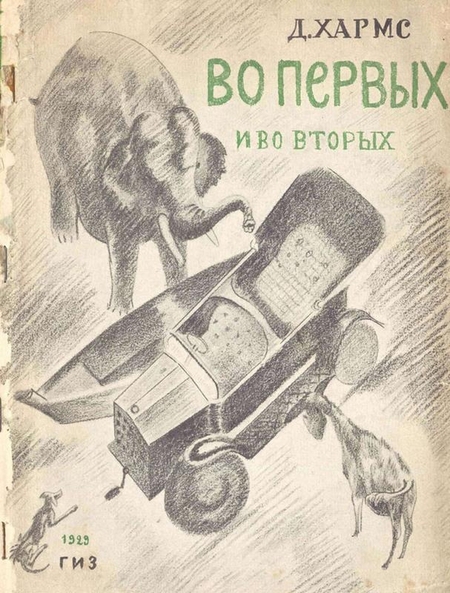
Vladimir Tatlin | Cover for D. Kharm’s «First and Second» | 1929
In 1929, the story was published as a standalone book featuring nine illustrations by Vladimir Tatlin. Unlike his earlier experiments with the Futurist book, here Tatlin approaches the depiction of events with a relative consistency. He supplements the literary text with specific details—faces, clothing, roads, trees, telephone poles. As a result, the characters, who were abstract in the description, gain individual features.
Two figures are of interest: a tall man and the smallest person in the world. Their images invite comparison with two of the most prominent figures of the Russian avant-garde—Vladimir Tatlin and Kazimir Malevich. The basis for this reading is the external resemblance, the possible wordplay, and the nature of the relationship between the characters in the drawings.
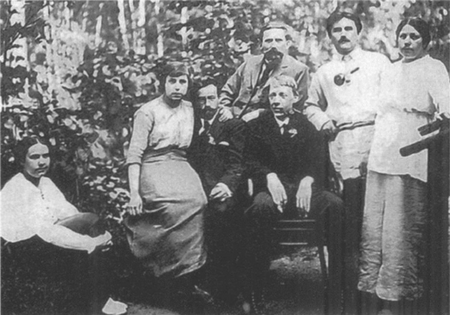
Author unknown | Natalya Katsman, Maria Rafalovich, Evgeny Rafalovich, Ivan Klyun, Vladimir Tatlin, Kazimir Malevich, Sofia Rafalovich at a dacha in Nemchinovka, near Moscow | Between 1914 and 1915
The central research question is: can these characters be considered unique interpretations of Tatlin and Malevich, and how do the relationships between the two artists unfold through their appearance and interaction?
Navigation
1. Concept 2. External Resemblances 2a. Tall Figure or Vladimir Tatlin 2b. Small Figure or Kazimir Malevich 3. Conceptual Resemblances 4. Conclusion
External Similarities
Tall Man or Vladimir Tatlin
Tatlin depicts the tall person not merely as caricature-giant, as his predecessor Viktor Zamirailo did when illustrating the very first edition of the story, but as unusually, strikingly tall.
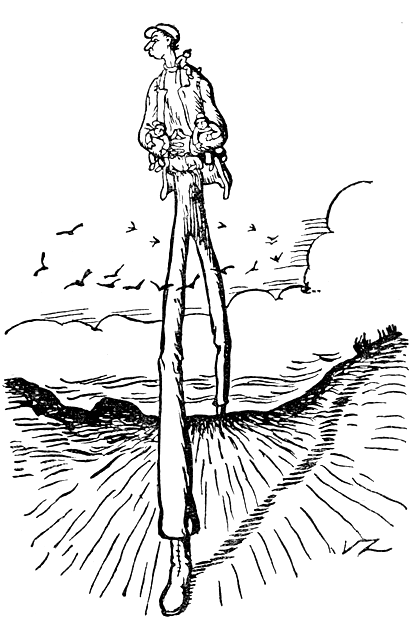
stagnant
Considering that he is being compared to children/teens, he is not the tallest. However, it is worth noting that the perspective and the diagonal positioning of the body further enhance the feeling of extraordinary stature.
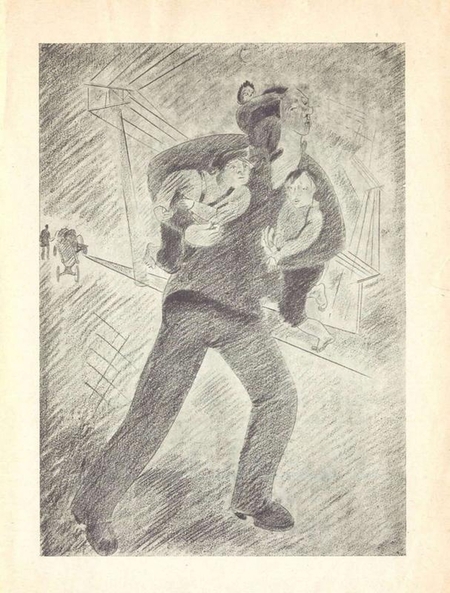
Vladimir Tatlin | «Firstly and Secondly» Plate 4 | 1929
In the text, «tall» is primarily a spatial descriptor. In the image, it transforms into a specific man with a recognizable hairstyle, profile, clothing, and physique.These details allow us to see him not only as a fantastical traveler but also as a possible doppelgänger of the illustrator himself.
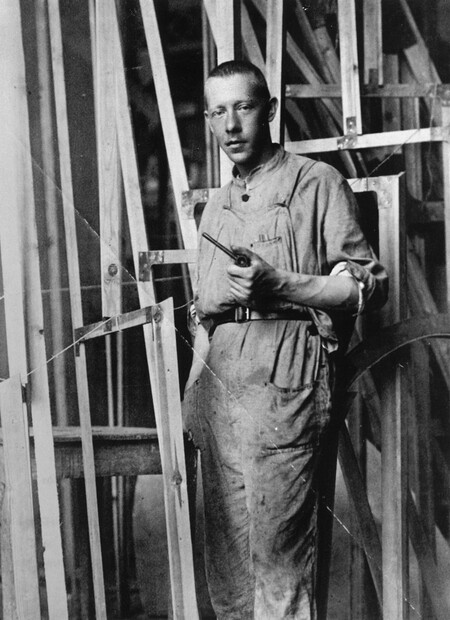
Unknown Artist | Vladimir Tatlin in the Studio | 1920
In Vasiliy Komardenkov’s recollections, Tatlin is portrayed as a tall, broad-shouldered, robust man with a characteristic posture and a determined expression.Art historian Nikolay Punin, who was close to him, wrote: «Tatlin was charming—always a wonder-child, deeply thoughtful—a very tall man.»
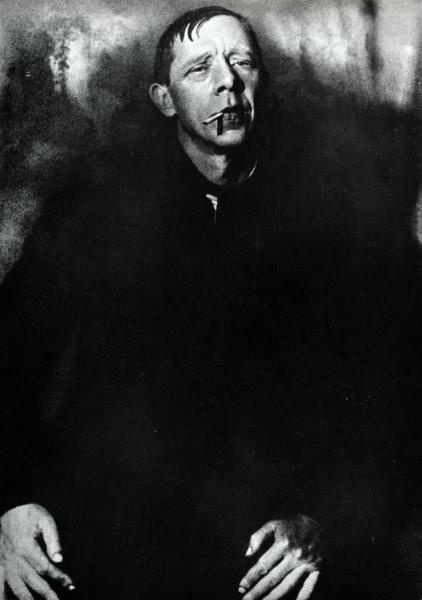
Moisey Nappelbaum | Portrait of Vladimir Tatlin | 1928
The photograph of Moses Nappelman allows us to refine several characteristics: a prominent nose, slicked-back hair, and loose, dark clothing that he frequently wore.
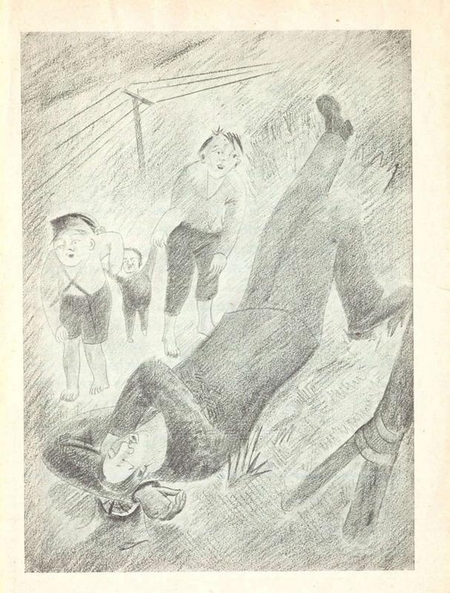
Vladimir Tatlin | «Firstly and Secondly» Fig. 3 | 1929
The Little Man or Kazimir Malevich
If a tall person correlates with Tatlin’s figure, the next question becomes who could have served as the archetype for the smallest person in the world.
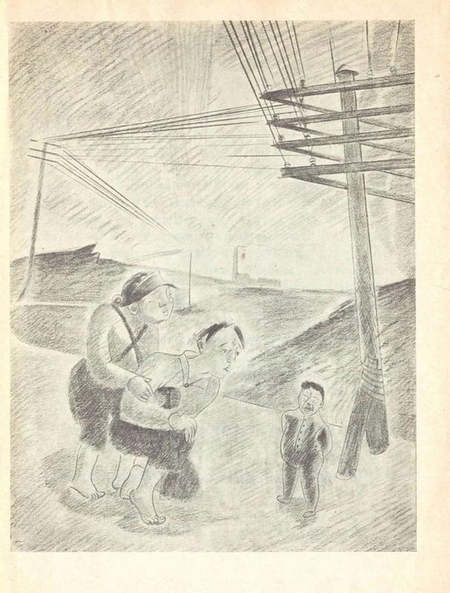
Vladimir Tatlin | «Firstly and Secondly» Fig. 2 | 1929
As you can see from the text above, in this role, we can explore Malevich.
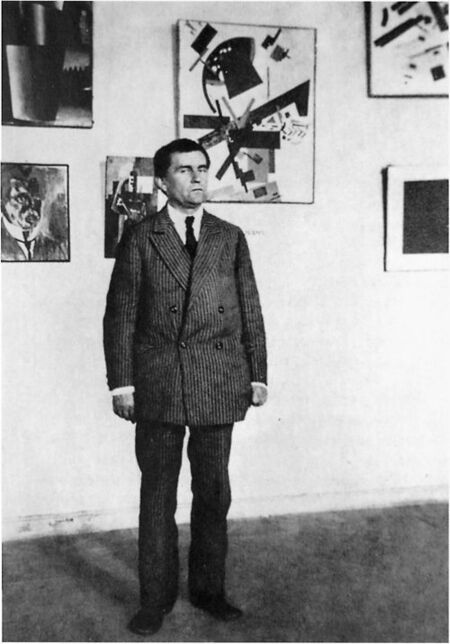
Unknown Author | Kazimir Malevich at the Museum of Fine Arts | 1924