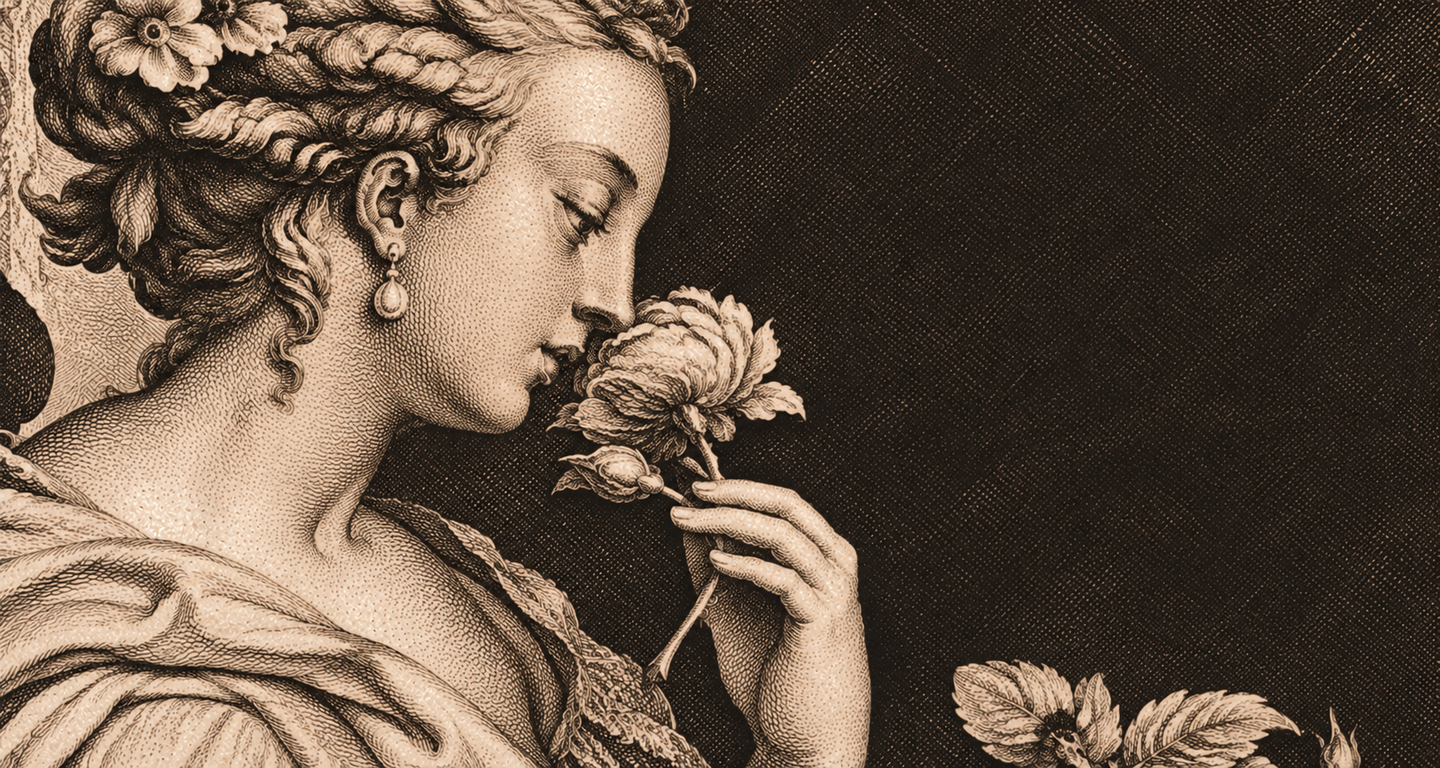
Увидеть запах
Визуальные способы передачи обоняния в европейском искусстве XVI–XVII веков
Navigation Menu
1. Concept 2. Smell as Symbols and Gestures 3. Unpleasant Odors 4. The Scent of the Sacred: Smoke and Incense 5. Conclusion 6. Bibliography 7. Image Sources
Concept
Visual arts primarily engage sight, yet they are capable of evoking sensations related to other senses. While viewing a painting, a person might mentally feel the warmth of sunlight or the coolness of water. However, smell—unlike objects with defined shape and color—is impossible to depict directly. Consequently, artists have had to seek visual cues that would allow the viewer to imagine a fragrance, an unpleasant odor, or the presence of incense.
In European art of the 16th century, olfaction begins to become an independent subject within allegorical cycles of the five senses. Artists employ colors, animals, and gestures. In a print by Cornelis Cort titled «Olfaction, ” a woman arranges a bouquet, next to which a dog stands. The scene does not depict the direct inhalation of an aroma, but familiar objects allow the feeling to be understood. In a drawing by Hendric Goltzius, a woman offers a rose to a man: the posture of his head and the direction of his hand transform the scent from an implied quality of the flower into an object of action.
However, olfaction is not solely associated with pleasant scents. In Sebastiano del Piobo’s painting „The Raising of Lazarus, ” women cover their noses near an open tomb. The invisible sensation becomes comprehensible through the reaction of the people. In everyday depictions of pigsties, markets, or workshops, possible odors may arise in the viewer’s imagination, but they do not necessarily form the subject of the work. This distinction is important: the presence of an object capable of having a scent does not yet prove the artist’s intent to convey that smell.
Comparing these instances helps reveal the varying degrees of olfactory presence. A flower might symbolize a scent, a facial gesture could denote perception or disgust, and an incense burner might indicate a process through which aromatic smoke emerges. However, an individual attribute does not always carry a singular meaning. To grasp its function, one must consider the character’s movement, the environment, and the narrative.
In my research, I compare 16th-century works not only by the objects they contain but also by the information the viewer receives. This approach allows one to trace the line between a scent the artist explicitly references and an olfactory association that arises from personal experience or knowledge of cultural tradition.
What visual means did 16th-century artists use to make scent recognizable, and how did the way it was conveyed in allegories of olfaction, scenes of unpleasant odors, and religious narratives change?
Hypothesis
It is posited that in 16th-century art, scent was denoted in three primary ways. First, through the sources of aroma and gestures of olfaction. Second, through a reaction to an unpleasant sensation. Third, through religious objects or actions associated with incense.
The degree to which scent was conveyed depended on various factors. For example, whether its perception or the process of the smell’s emergence was shown. Furthermore, whether the viewer was required to deduce its meaning from the narrative.
Scent as Symbols and Gestures
In the allegories of the five senses, sixteenth-century artists frequently employed flowers, animals, and character actions to represent olfaction. These symbols could be used individually or in combination, allowing the viewer to perceive the sense in various ways.
Cornelius Corte after Hans Floris. «Olfaction.» 1561. Engraving
In the engraving by Kort, a woman sits among plants, arranging a bouquet of flowers. A dog is by her side. Although the heroine is not bringing the flowers to her nose, their presence allows the viewer to imagine the fragrance.
In this composition, the flower becomes the primary symbol of olfaction. Its significance is determined by the properties of the plant and its central role in the character’s actions.
Raphael Sadeler I after Martin de Vos. «Olfaction.» 1581. Engraving
In Sadeler’s work, the female figure is among the flowers, with dogs depicted beside her. The paintings share a similar set of symbols but differ slightly in composition. Thus, the artists employ a recurring visual language where flowers signify the source of aroma, and dogs evoke the ability to sense scents.
Why does the dog symbolize olfaction?
The dog is not a source of pleasant aroma. Its role is connected to its developed sense of smell, which allows the animal to detect scents better than humans.
In Cort and Saderer’s allegories, the plant and the dog perform different functions. The flower is a reminder of what can be smelled, while the animal represents the ability to sense altogether.
This combination allows the artist to signify olfaction, even if the character is not performing an explicit sniffing action.
Cornelis Cort after a drawing by Frans Floris. «Taste.» 1561. Engraving
In «Smell» and «Taste, ” Kort employs a similar compositional scheme: a female figure, characteristic objects, and an animal.
However, in the allegory of taste, fruits and a monkey appear, and the woman is tasting a fruit. In „Smell, ” instead, flowers and a dog are depicted. The distinction between the sensations is determined not by the overall staging but by the chosen attributes and actions.
This comparison shows that similar compositions can represent different feelings through the substitution of a few key elements.
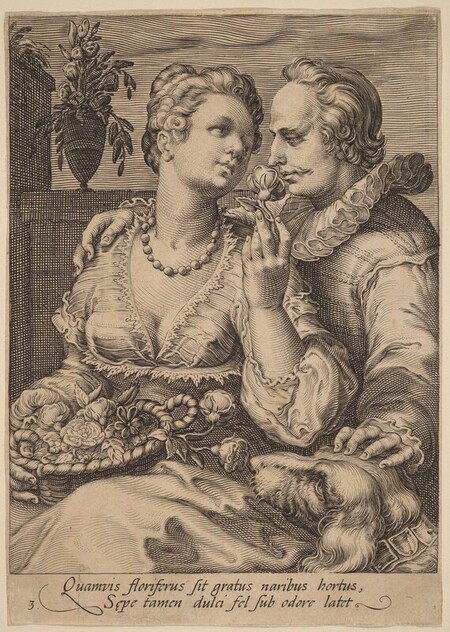
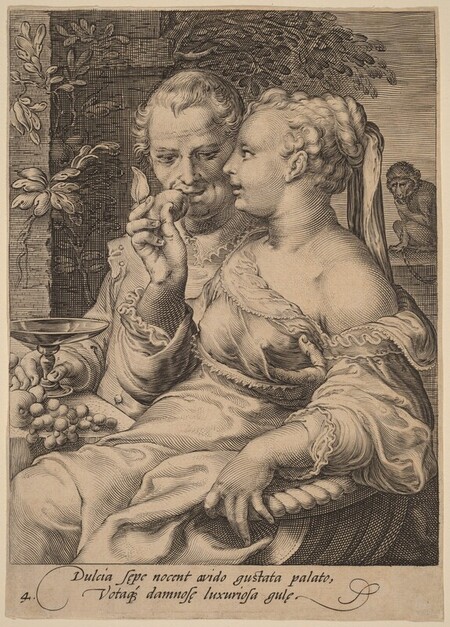
1. Hendrick Goltzius. «Smell.» Circa 1595–1596. Drawing 2. Jan Saenredam after a drawing by Hendrick Goltzius. «Taste.» Circa 1595–1596. Engraving
How Does the Flower’s Meaning Change?
In the allegories examined, the flower serves several functions. For Cort, it acts as a characteristic symbol of olfaction; for Delon, it becomes an object of immediate perception; and in Goltzius’s composition, it functions as a mediator between two characters.
Thus, the plant’s meaning is not limited to its supposed fragrance. It depends on the role the flower plays within the composition and how the characters interact with it.
Thus, 16th-century artists depicted the sense of smell using flowers, dogs, and gestures. Flowers signified the source of an aroma, animals indicated the ability to distinguish scents, and the characters' actions made the invisible sensation more apparent. Meanwhile, the same object could function as both a conventional symbol of a feeling and a component of an action.
Unpleasant Odors
Unlike the pleasing aroma of flowers, an unpleasant odor can be conveyed through the characters' reactions. A closed nose or a head movement helps the viewer imagine a sensation that has no visible form.
However, in domestic scenarios, scent is sometimes only implied through familiar objects and the surrounding environment.
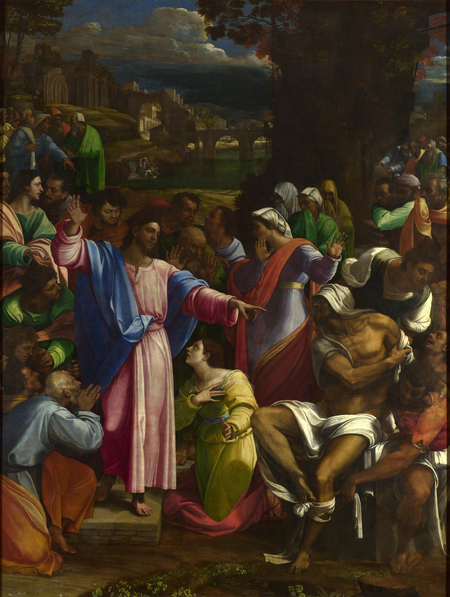
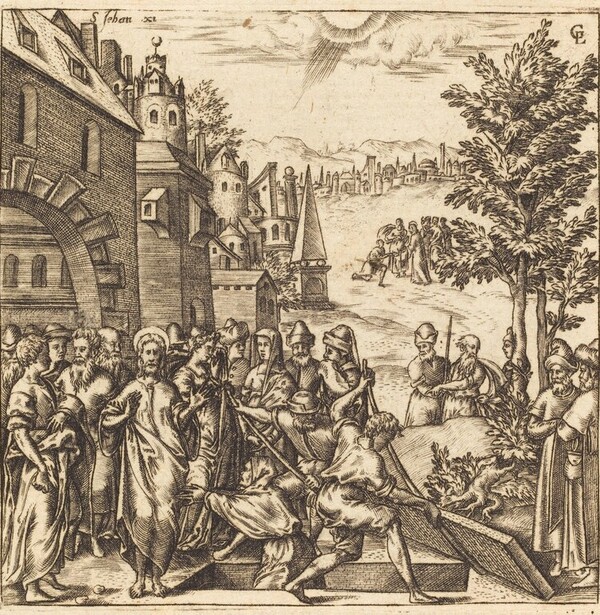
In Del Pompeo’s painting, there are three women amidst the witnesses of Lazarus' resurrection, who are covering their noses. The National Gallery associates their gestures with the foul odor emanating from the tomb.
Gautier’s engraving depicts the same biblical episode, but organizes it differently. Comparing the two highlights how even when the subject matter is identical, olfactory details can hold distinct positions within the composition.
Why is gesture more important than the depicted source? In «The Resurrection of Lazarus, ” the tomb itself does not yet allow the scent to be seen. The presence of the odor is conveyed through the behavior of the women, who attempt to shield themselves from the unpleasant sensation. This connection between the gesture and a specific event is what helps determine its meaning. A similar hand movement near the face in another scene might signify surprise, grief, or fear. Thus, to portray an unpleasant smell, not only the gesture but also its placement within the narrative is crucial.
Johan Virius after Pieter Bruegel the Elder’s composition, «The Drunkard is Pushed into the Pigsty.» 1568. Engraving
In the engraving, several figures push a man into a pigsty. A pig is in the foreground, and the image depicts a cramped domestic space. There is no obvious gesture indicating a foul odor. However, the familiar domestic setting can evoke the scent of an animal enclosure in the viewer’s imagination. Thus, the association of smell arises not from a specific symbol, but from the recognizable setting.
Pieter Bruegel the Elder. «The Battle of Maslenitsa and Lent.» 1559. Wood, oil
The painting by Bruegel depicts a city square filled with merchants, participants in festive processions, and a variety of goods. Among the items, one can notice meat, fish, and kitchenware. These details may remind the viewer of the smells of the market and street trade. However, the main theme of the painting relates to the contrast between Maslenitsa and Lent, not to the sense of smell.