Categories
- Concept
- The Beach as a Space for Presenting the Female Image
- Swimwear: Altering Silhouette and Construction
- Expanding the Composition of Women’s Beachwear
- Forming the Beach Look: Combining Clothing and Accessories
- Conclusion
- Bibliography
- Image Sources
Concept
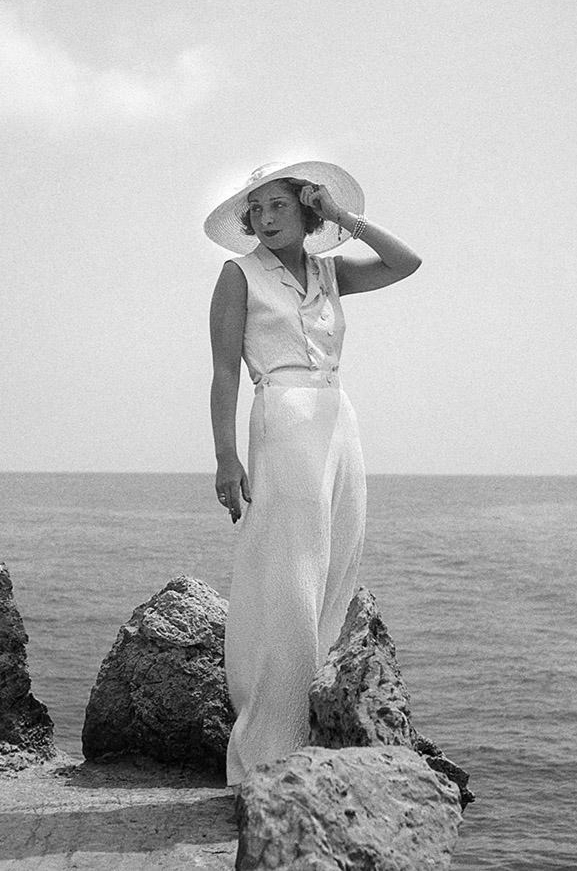
The women’s beach wardrobe of the 1920s and 1930s gradually expanded beyond the swimsuit, incorporating new garments intended for relaxation and coastal walks. One of the most striking manifestations of this process was the emergence of beach pajamas, wide-legged trousers, jumpsuits, playsuits, jackets, and wraps that complemented swimwear or were worn independently. These items reflected a changing perception of how a woman should look on the beach, gradually forming a more diverse beach aesthetic. A crucial aspect of this transformation was not only the appearance of new clothing types but also the ways they were combined: individual pieces were assembled into ensembles, accessorized, and created a cohesive look for various resort life scenarios.The research is based on an analysis of women’s beach attire from the 1920s and 1930s, presented in museum collections, photographs, fashion illustrations, and periodicals. Geographically, the primary focus is on France and the United States as vital centers for the development and representation of beach fashion; materials from Germany, the United Kingdom, and Australia are used to broaden the comparative context. Source selection is based not only on historical significance but also on the ability to trace specific changes in the construction, composition, and pairing of garments. The study analyzes not the history of resort leisure in general, but the visual and structural characteristics of women’s beach wardrobes and the methods through which they were presented in fashion culture and daily practice.The main research question is: How did the composition of women’s beach wardrobes change in the 1920s and 1930s, and how were individual garments integrated into a complete beach look? The hypothesis posits that during this period, beachwear gradually moved beyond being restricted to swimwear and acquired a more varied composition. Alongside garments strictly for swimming, items for time spent on the shore, relaxation, and walking became common. Furthermore, these new types of clothing did not simply replace the swimsuit; instead, they supplemented it or were used on their own, and their combination fostered the formation of more diverse beach styles. Thus, the changes are evident not only in the transformation of the swimsuit itself but also in the expansion of the wardrobe and the methods of assembling its elements.
The research is based on thematic analysis. The first section examines the beach as a space for showcasing the feminine image and beach fashion, where clothing becomes part of a public presentation of appearance. The second section analyzes changes in women’s swimwear: its silhouette, construction, materials, and degree of body exposure. The third section is dedicated to expanding the composition of beachwear beyond swimsuits—including beach pajamas, trousers, jumpsuits, and other garments. The fourth section explores how individual wardrobe elements are combined, and the role of jackets, cover-ups, and accessories in forming a cohesive beach look.The theoretical foundation of the research draws upon works concerning costume history, the history of beach fashion, the development of leisure culture, and women’s sportswear. Academic studies addressing the transformation of swimwear, the proliferation of beach pajamas, and the evolving perceptions of women’s attire in the first half of the 20th century are utilized. This theoretical material is applied to analyze museum pieces and visual sources, comparing fashionable representation with specific evidence of everyday wear and identifying the main trends in the evolution of women’s beach wardrobe in the 1920s–1930s.
The Beach as a Space for Presenting the Female Image
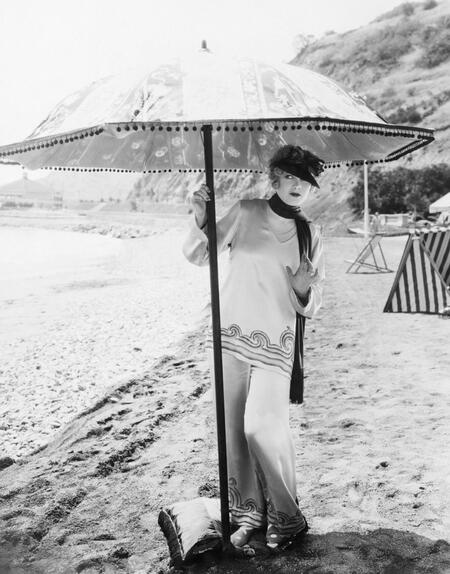
Photo: Beach Pyjamas, Stanley Beach, Hong Kong. Leslie Warren, 1934.
Balboa Beach Bathing Beauty Parade. Photographer unknown, 1925.
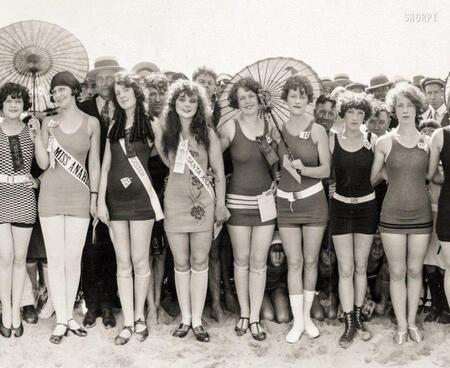
photo: Huntington Beach, California. «Bathing Beauty Pageant, 1925.»
Bathing Beauty Pageant, Huntington Beach. Photographer unknown, 1925.
Balboa Beach, California Bathing Beauties, Panoramic Photo, 1925
Shrine Bathing Beauty Parade, Venice, California. Photographer unknown, 1925.
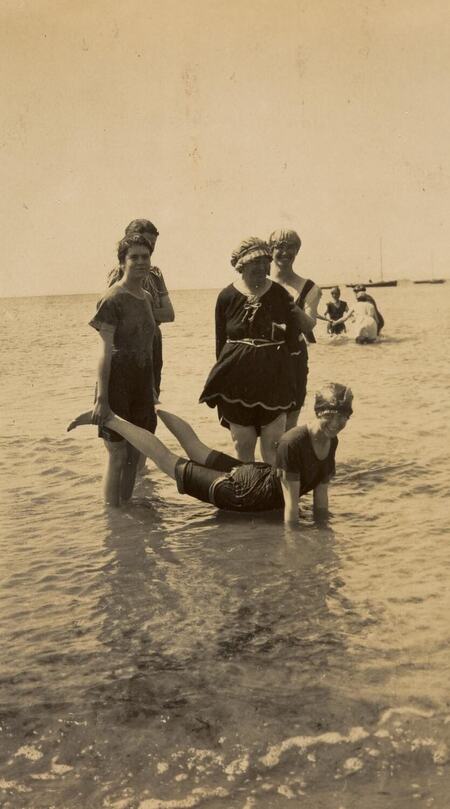
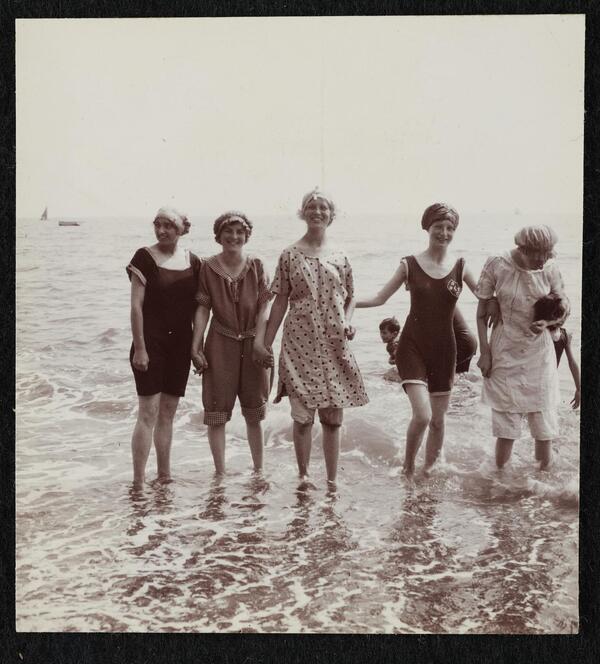
Five Women with Bathing Caps Playing in Water, Queenscliff. Unknown artist, 1923.
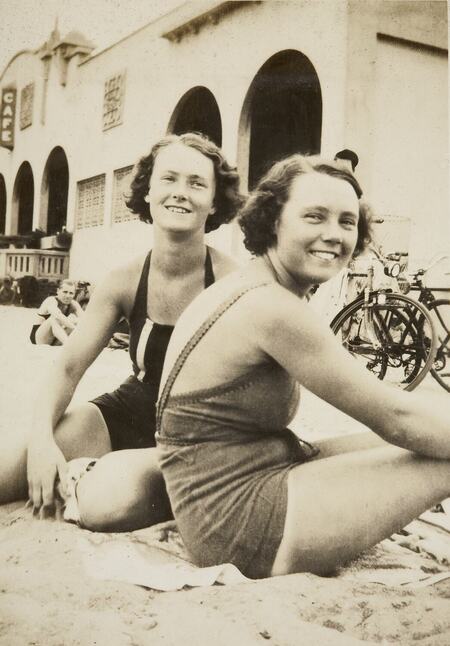
Photo: Two Girls on Beach by St Kilda Baths. Margaret Newing (presumed), c. 1930.
Five girls in swimsuits in front of changing booths, circa 1930
Swimsuit: Silhouette and Construction Changes
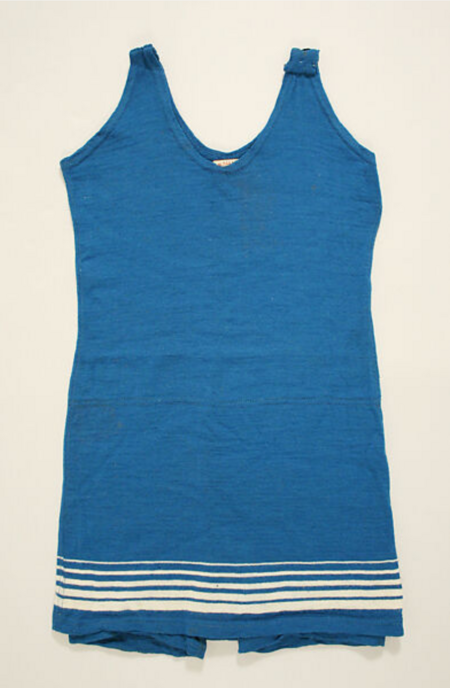
Photo: Bathing Suit. Artist unknown. Early 1920s. The Metropolitan Museum of Art, Inv. No. 1979.579.2.
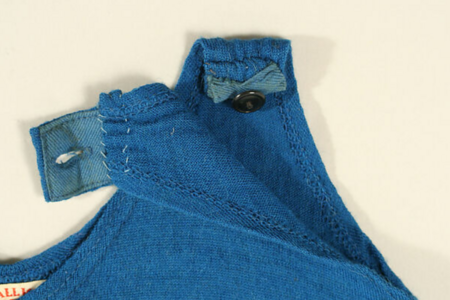
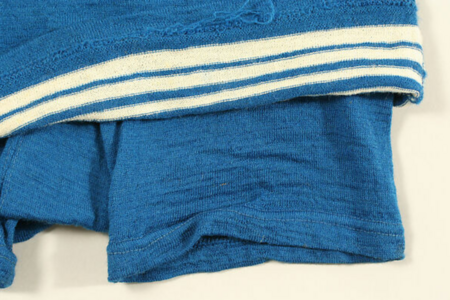
Bathing Suit. Unknown Artist. Early 1920s. The Metropolitan Museum of Art, Accession No. 1979.579.2.
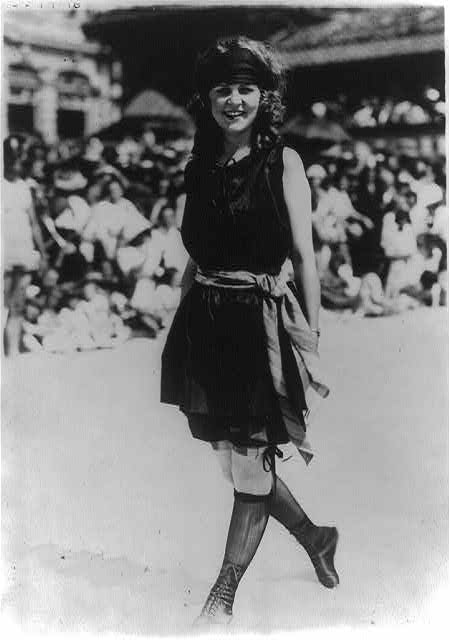
Photo: Margaret Gorman in a swimsuit. Bain News Service. September 13, 1921.
Bathing Suit. Artist unknown. 1920–1930. The Metropolitan Museum of Art, Inv. No. 1977.248.2.
Checking the length of a women’s swimsuit on the beach. National Photo Company. 1922.
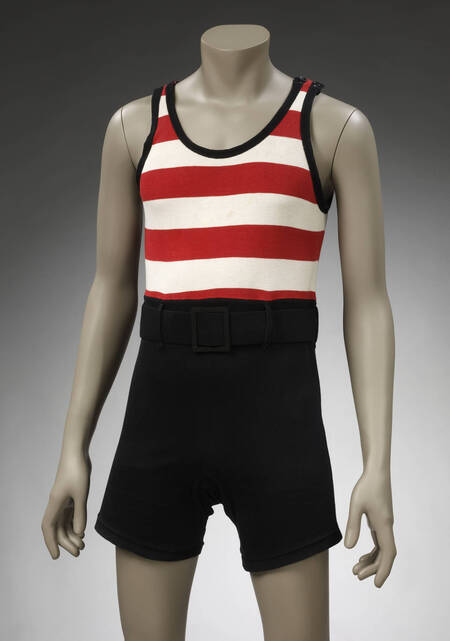
Photo: Swimsuit, Meridian, circa 1925
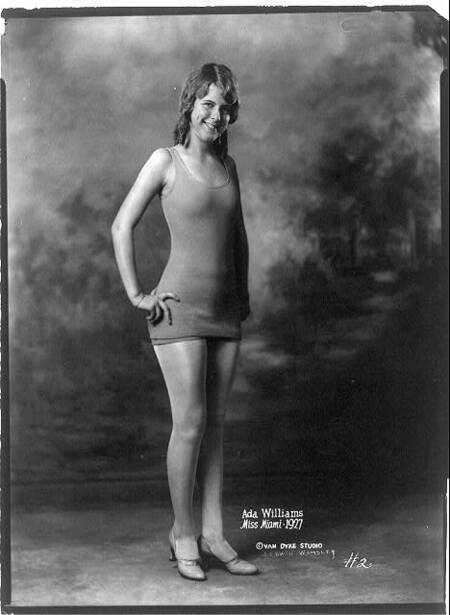
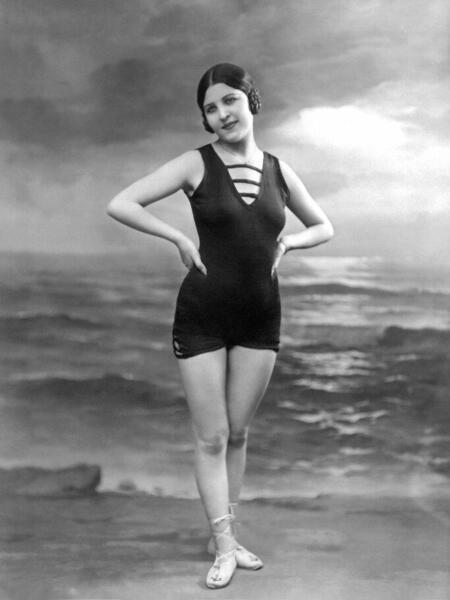
Ada Williams, «Miss Miami.» Photograph by J. Edwin Wamsley. c. 1927
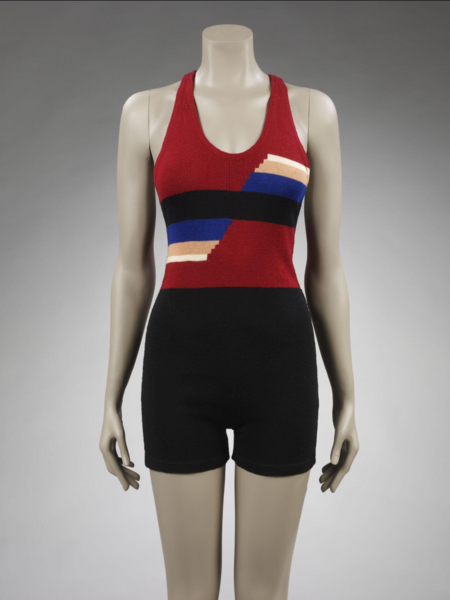
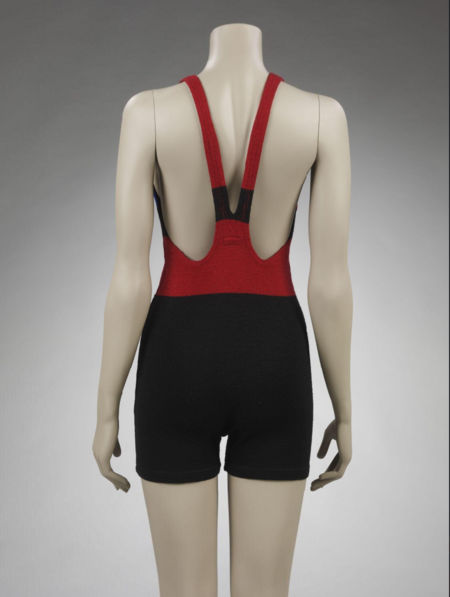
Swimsuit, knitwear, wool, «Viking, ” United Kingdom, 1925–1929.
Women’s Swimsuit (British Bathing Suit). Unknown artist or manufacturer. Late 1920s. The Metropolitan Museum of Art, Accession No. 2006.153a–c.
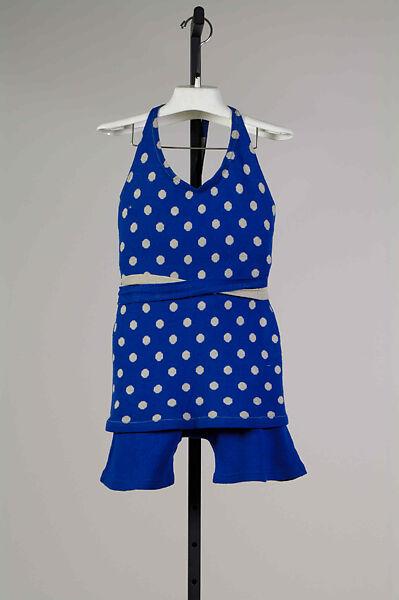
Photo: American swimsuit, 1935
Agneta Fischer Model in Elsa Schiaparelli swimsuit — Vogue, 1931
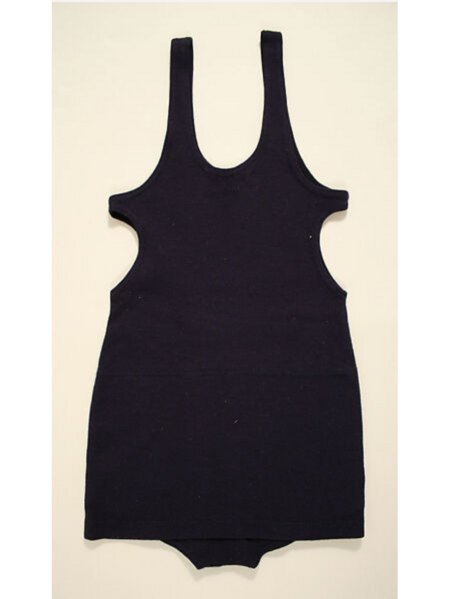
Photo: Bathing Suit. Author and manufacturer unknown. 1930s.
Bathing Suit. Artist and manufacturer unknown. 1936–1938
Expanding the Women’s Beachwear Collection