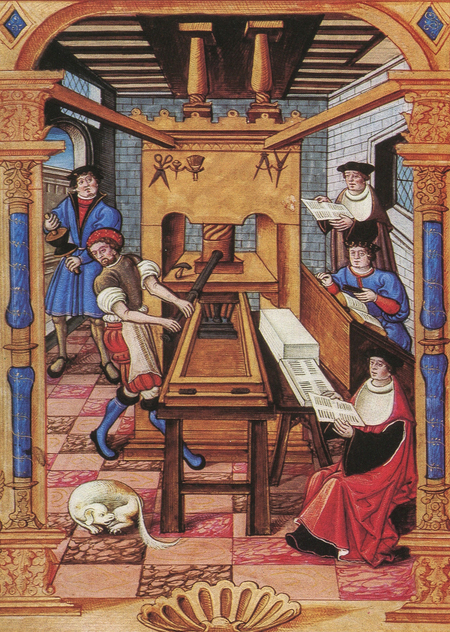
The history of technology is the history of a continuous, vital dialogue between humanity and the material world surrounding it. Every new success in this dialogue—every technological breakthrough, from harnessing fire to creating artificial intelligence—has transformed an era, radically altering the way of life for all peoples involved in that advancement. Our timeline traces the key milestones in the history of technological origins and development, focusing on the social, economic, and cultural contexts of their emergence. We will show how ancient inventions laid the foundation for civilizations and how modern innovations are shaping the contours of the future.
~ 1 000 000 год до н. э.
Fire
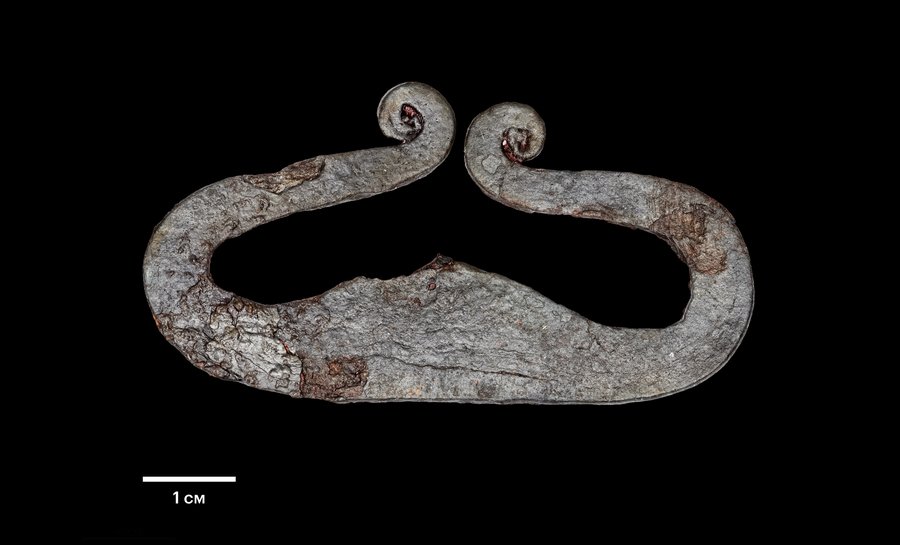
Ember. From the Swedish Historical Museum collection
Tamed fire became the first technology that allowed humans to transcend biological limitations. Initially, humans likely utilized natural fire from lightning strikes, but they gradually mastered methods of artificially producing it—through friction and flint knapping. Fire provided warmth, light, and protection from predators, and the thermal processing of food represented a pivotal step in human evolution.
Mastery of fire was not a singular event—it was a protracted process spanning hundreds of thousands of years. The widespread adoption of hearths during the Late Acheulean period likely coincided with the onset of the severe Wurm glaciation, suggesting fire played an adaptive role in our ancestors' survival in cold climates. Socially, fire became a focal point for the community: stable forms of communication and collaborative activity formed around the hearth. Furthermore, the ability to temper wooden and stone tools, and subsequently to use fire for producing ceramics and working with metals, laid the foundation for all subsequent technological evolution.
~ 10 000 год до н. э.
Agriculture
East wall of the Chapel of Offerings to Nakhta. Period of the late reign of Amenhotep II — mid-reign of Amenhotep III. New Kingdom era
The transition from hunting and gathering to agriculture and herding—a turning point in human history—began around 10,000 years ago in the Middle East. People started cultivating grains and raising domesticated animals, which required permanent settlements and allowed for food storage. This process, known as the Neolithic Revolution, occurred independently and at different paces across various regions, but its consequences were universal: populations grew, social organization became more complex, and the first cities emerged.
Agriculture radically transformed the relationship between humans, nature, and society. The emergence of food surpluses created the groundwork for social stratification, labor specialization, and the development of crafts, which later led to the formation of the state. Simultaneously, the sedentary lifestyle, population density, and concentration of livestock contributed to the spread of epidemics, while reliance on harvests made societies vulnerable to climatic fluctuations. Nevertheless, it was the Neolithic Revolution—a technological breakthrough as significant as the mastery of fire—that established the material basis for all subsequent cultural achievements.
5000–4000 годы до н. э.
Wheel
Wheel. Solid, crafted on a potter’s wheel. Tubular hubs are present on both sides for axle insertion. Cyprus. Circa 750–600 BCE.
According to recent research, the wheel may have been invented in the Carpathian Basin (on the territory of modern-day Hungary and Romania) around 4000 BCE. Computer modeling conducted by researchers from the Georgia Institute of Technology has shown that the first wheel mechanisms were likely created by Neolithic miners extracting copper ore. In the narrow and dark underground tunnels, where using conventional wooden sledges was highly inconvenient, there arose a need for a more efficient solution. Over 150 miniature clay models of four-wheeled carts found in the Carpathian region and dated to this period serve as archaeological confirmation of this hypothesis.
According to the new theory, the evolution of the wheel was not a sudden flash of insight, but rather a series of gradual improvements. Initially, rollers likely became secured in specialized grooves on the bottom of the cargo platform to prevent slipping and ensure they moved with the load. Subsequently, the roller design incorporated lubrication channels, which reduced friction. The final step was the creation of a monolithic wheel assembly, where the axle and wheels rotated as a single unit. Although this design was less maneuverable during turns, it allowed miners to transport significantly more ore with less effort. This hypothesis does not rule out the possibility of independent invention of the wheel in other regions, but it proposes the earliest and most technologically grounded model for its emergence.
~ 4000 до н. э.
Pottery Wheel
Ceramic vessel with a white linear ornament depicting a scene on the Nile River. Egypt. Predynastic period, Naqada II. Circa 3650–3500 BCE.
The potter’s wheel, which emerged in the 4th millennium BCE in Mesopotamia—and almost simultaneously in Egypt and India—became one of the earliest mechanical devices in human history. It consisted of a vertical axis with a reinforced horizontal disc mounted on it, which the artisan would rotate by hand to give the clay mass a symmetrical shape. Before this, vessels were molded by hand, a slow and labor-intensive process; the potter’s wheel allowed for a significant acceleration and standardization of ceramic production.
The introduction of the potter’s wheel had profound consequences for the economy and social structure of ancient societies. The mass production of ceramic vessels, essential for food storage and preparation, contributed to population growth and the increasing complexity of daily life. Furthermore, in many cultures, the potter’s wheel served as a technological precursor to the wheel: the principle of rotation around an axis, first mastered in ceramic production, was later transferred to transportation. Finally, potters began to emerge as a distinct professional group, marking one of the earliest manifestations of labor specialization in history.
~ 3000 до н. э.
Metallurgy
A hafted axe adorned with zoomorphic figures. Bronze. Lorestan, Iran. c. 1350–1200 BCE.
Metallurgy, which dates back to the Eneolithic and early Bronze Age, became the technological foundation for a new stage in human history. The first evidence of copper smelting was discovered in Southeast Europe and is dated to approximately 5000 BCE. Initially, the metal was used to make jewelry, but people gradually learned to cast large tools and weapons. Around 3000 BCE, the deliberate alloying of copper with tin began, marking the start of the Bronze Age.
Working with metal required fundamentally new technological processes from our ancestors. This stimulated the development of mining, blacksmithing, and trade, as copper and tin deposits were often located far from one another. Bronze tools and weaponry were stronger and more effective than stone implements, giving an advantage in economic and military spheres to societies that adopted metallurgy. Metallurgy also contributed to further social differentiation: control over mines and metal production became a new source of wealth and power.
105 год
Paper
Wang Cze. Frontispiece of the «Diamond Sutra.» Five-meter illuminated Buddhist sacred text scroll. Tang Dynasty. 868
The invention of paper in China is traditionally credited to Cai Lun, who presented Emperor Han He Di with a method for its production in 105 AD. Cai Lun proposed using tree bark, hemp, rags, and fishing nets to manufacture the paper, which made the material accessible and inexpensive. However, archaeological findings suggest that paper existed in China at least two centuries earlier, and Cai Lun likely only refined the technology and achieved its official recognition.
Paper revolutionized the way information was stored and transmitted. Before its invention in China, bamboo slats, which were too heavy for mass use, and silk, which was excessively expensive, were used for writing. Paper replaced these materials, making writing and record-keeping significantly more accessible. The secret of its production gradually spread beyond China—first to Korea and Japan, and then, through the Arab world, into Europe. Paper became a necessary condition for the development of bureaucracy, the spread of education, and the emergence of printing.
~ 1440 год
Book Printing
The Invention of Printing. Engraving from the series «New Inventions of Modernity, ” comprising 19 engravings, executed by Jan Collaert I. In the background, a man prepares paper for printing on the printing press shown on the right. In the center, a boy spreads out the paper that has just been printed for proofreading. To the left, workers set type for printing. Around 1600
Johann Gutenberg created a technology by combining movable metal type, printing ink, and a screw press, which allowed for the rapid and inexpensive production of books. The first major work printed using this method was the 42-line Bible, released around 1454 and entering history as the first printed book in Europe.
The printing press radically transformed the Christian world, making knowledge accessible to the general populace. Where books were once painstakingly hand-copied and prohibitively expensive, they now became relatively inexpensive and available, which fostered the mass dissemination of information. It was precisely the printing press that served as the catalyst for the dynamic development of the Reformation, the Enlightenment, and the French Revolution. Furthermore, it promoted language standardization and the formation of national cultures. Gutenberg’s invention is widely regarded as the technological foundation of the modern information age, because it was at that time that humanity first encountered the phenomenon of mass communication.
1769 год
Steam Engine