
«Successful Success»: How the Feed Turns Others' Achievements into Personal Inadequacy
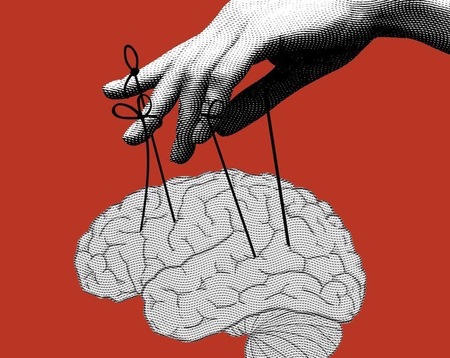
In the morning, we pick up our phones, scroll through social media, and almost immediately see: a peer buying an apartment, another launching a second business, a third just returning from a trip. Smiles, car keys, screenshots of banking notifications—"finally, freedom.» Within minutes, our own life—the one that seemed perfectly normal just moments before—begins to look faded and behind the curve. It is in this contrast that the phenomenon of «successful success» thrives.«Successful success» was an expression that initially sounded ironic, but it eventually came to describe a very specific cultural practice. It is a collection of visually recognizable symbols: expensive items, regular travel, the perfect productive morning, owning a business or holding a high position, visible engagement, and continuous self-improvement.Success is no longer confined to an internal state or personal history; it transforms into a set of markers that one can—and should—display. Personal brand, financial independence, external attractiveness, and constant growth merge into a singular image that is easily read and easily marketable. Social media actively generates this type of content—people publish their highlight reels, carefully curating both the visuals and the phrasing. Algorithms amplify what elicits a reaction: envy, admiration, the desire to be «just like that.» Bloggers and productivity experts monetize this image through courses, consultations, and advertising the «life I lead.»

Psychologically, this operates through social comparison—a mechanism Leon Festinger described back in 1954. We gauge ourselves by looking at others, especially when objective criteria are scarce. In a news feed, comparison is almost always upward: we see people who appear more successful, happier, freer, or more beautiful. Research indicates that this comparison truly has an impact. A 2023 meta-analysis, which synthesized 48 experimental studies, found a small but consistent negative effect of upward social comparison on well-being in social media.
However, the phenomenon is nuanced. Success-oriented content can provide useful knowledge and inspire action. Sometimes, another person’s example genuinely helps propel us forward. The problem arises when someone else’s public portrayal of success becomes the internal metric for judging one’s own life. When simply living starts to feel insufficient. When there is a feeling that one must constantly prove their worth through visible achievements.
And comparison is not always a conscious choice. It is a reaction to the constant stream of signals telling us, «This is how it should look.»
The gap between a person and their digital representation always exists, but noticing it becomes increasingly difficult when the image of «successful success» takes up more and more space in daily perception.