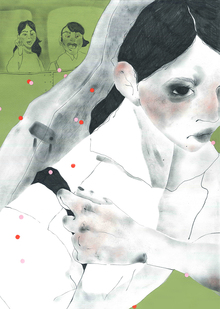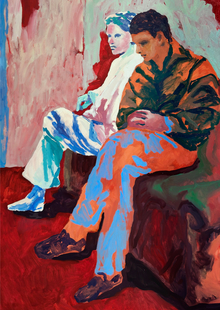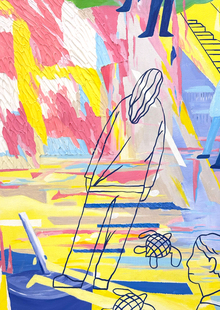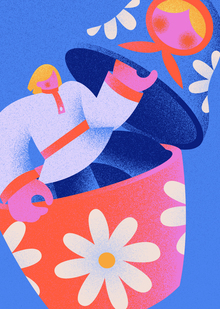
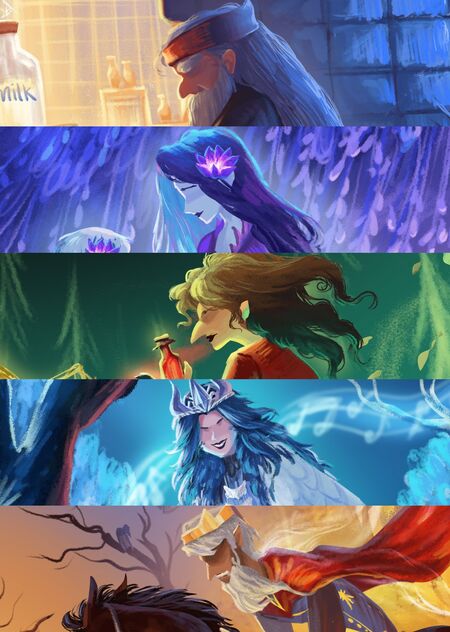
The illustration style I use throughout these six works avoids depicting eyes on any of the characters as a deliberate conceptual choice, as eyes are commonly understood as a representation of identity, emotion, and how a character is «read» by others. In depicting Slavic mythological figures such as Sirin, Baba Yaga, Domovoy, Rusalka, and Koschei, I aim to emphasize that their identities are not fixed or singular, but instead shift depending on how they are perceived by the viewer, with the absence of eyes opening space for interpretation where each figure may appear threatening, protective, or ambiguous, moving away from an absolute truth toward a subjective experience of perception.
Leshy, however, is the only character shown with eyes in a simplified curved line resembling a smile, serving as a visual indicator of a more stable and easily interpretable nature, while also creating a deliberate visual and conceptual contrast within the overall system of ambiguity across the series.
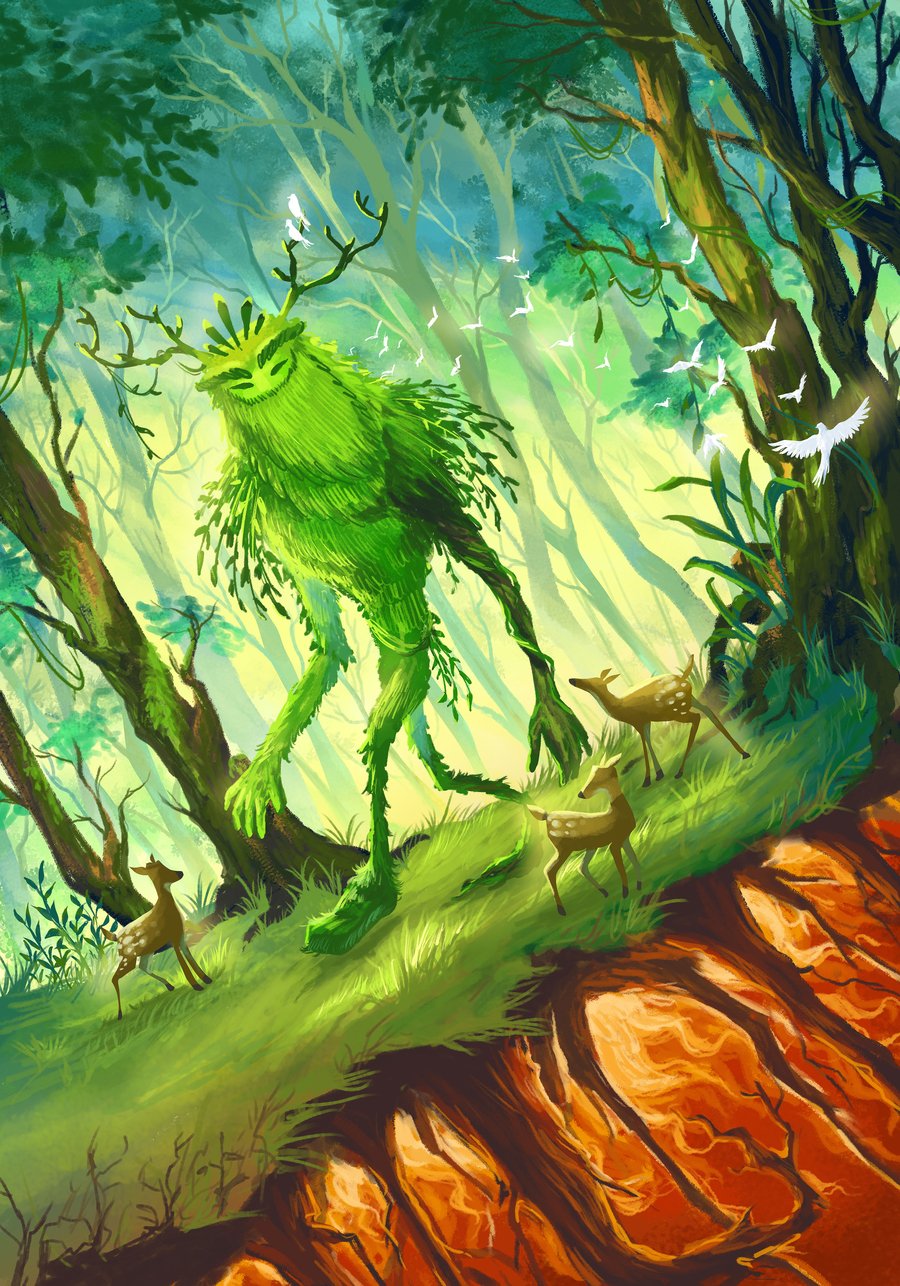
Leshy
Description
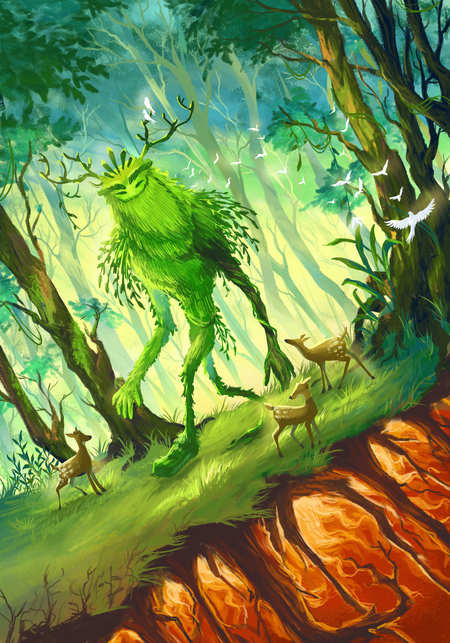
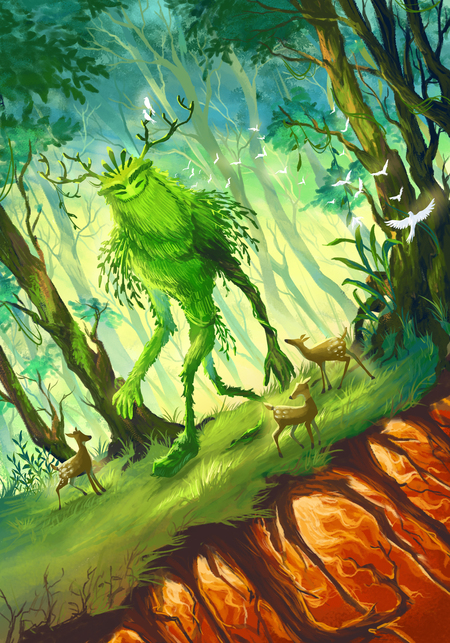
In this poster, I portray Leshy as a kind and benevolent guardian of nature and the forest, loved by all forest inhabitants (animals). The concept presents two sides of reality: the forest protected by Leshy is depicted as lush and beautiful, while the forest without a guardian becomes damaged due to the actions of humans who do not respect nature. Therefore, the part of the forest where Leshy is present appears green, thriving, and full of life, while the dry and burning forest is shown without Leshy’s presence. This poster also uses semiotic elements, where Leshy symbolizes the guardian of nature, and the contrast between the lush forest and the burning forest represents the consequences of human actions toward the environment.
Baba Yaga
Description
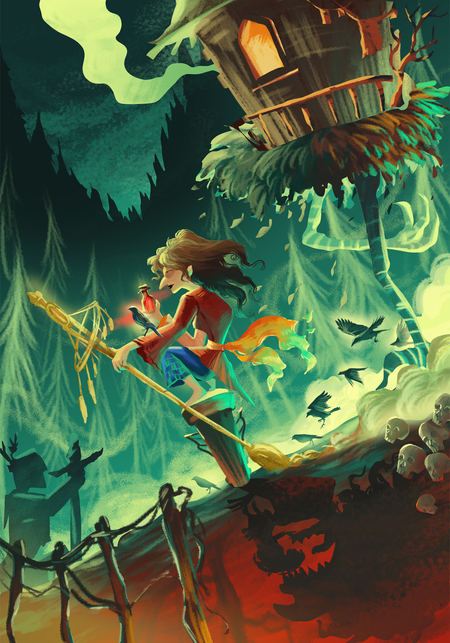
The concept I present highlights two opposing sides. Baba Yaga is widely known as a character with both good and evil traits. In this illustration, Baba Yaga is portrayed in her benevolent form, helping a hero.
However, her shadow reveals her other side as a cannibalistic old woman who devours children, especially girls. Another visual clue appears in the composition: the hero is positioned in line with the skulls of the cannibalism victims, symbolizing the balance between Baba Yaga’s dual nature as a figure who exists between kindness and cruelty.
Sirrin
Description
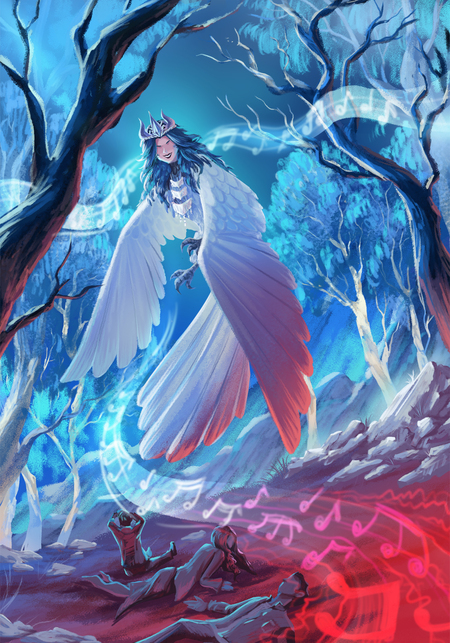
The concept I present explores two opposing sides, where Sirin is depicted as a beautifully radiant figure pure, white, and almost angelic in appearance, with a voice that is enchanting and melodic. However, beneath this beauty lies a dangerous threat, as her singing can cause humans to experience headaches, memory loss, and eventually become her victims. In my illustration, I also included a visual clue in the form of musical notation from Sirin’s song, which initially appears in blue to represent a sense of calm, beauty, and tranquility, but gradually shifts into red and becomes chaotic in form, symbolizing that behind Sirin’s captivating appearance and voice, there exists a dark and dangerous nature.
Koschei
Description
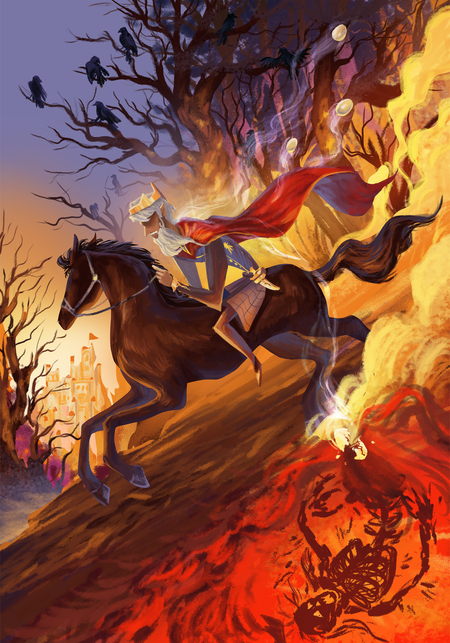
The concept I present explores two opposing sides. Koschei is depicted as a skeletal figure who lives in constant fear of death, leading him to separate the point of his mortality from his body and hide it within a series of external objects to prevent himself from being killed. In this work, I visualize this process as the transfer of Koschei’s «soul» into an egg, while his body continues to move on a rapidly running horse. The horse’s motion symbolizes escape, representing his attempt to constantly distance himself from the death he fears. However, when one of the eggs eventually breaks, it reinforces the idea that no matter how far or how fast someone tries to run from death, it remains inevitable, real, and will always find its way.
Rusalka
Description
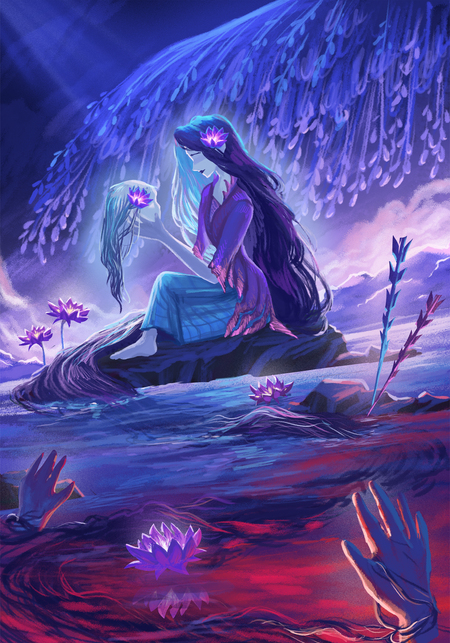
The concept I present explores two opposing sides, like a calm water surface that conceals a dark current beneath it. Rusalka is depicted as a beautiful, mysterious woman with a calming aura, as if she is a gentle whisper from a silent lake; however, beneath this beauty lies a deep and lingering sense of vengeance. This work emphasizes the contrast between deceptive softness and hidden cruelty, inviting viewers not to stop at what appears on the surface, but to understand the story as a whole. As a visual clue, there is a skull adorned with the same lotus flower worn by Rusalka, symbolizing her past self who died by drowning, with an expression that seems to reflect pity toward herself.
Domovoy
Description
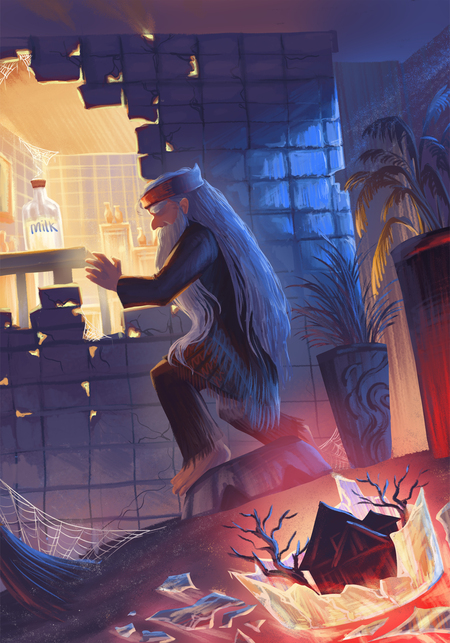
This concept explores a cause and effect relationship between humans and the household spirit in Slavic folklore, Domovoy, who is depicted as an old man with a body covered in hair, acting as a guardian of the home and receiving simple offerings such as milk as a form of respect and harmony. In this visual interpretation, the house is seen as something protected by an invisible barrier like being inside an intact glass that keeps it safe from external harm when it is cared for, kept clean, and continuously honored through offerings. However, when the house is neglected becoming dirty, damaged, and deprived of these rituals the protection breaks, like shattered glass, leaving the home exposed, unguarded, and vulnerable, transforming it into a dark and unsettling space as the balance between humans and Domovoy is lost.