Concept
«Phase» is a media outlet that analyzes dreams through a scientific lens. Here, we discuss brain function, memory, and nocturnal visions for people who are tired of mysticism and want to understand what is happening to them at night. We draw data from neuroscience and psychology, translate it into everyday language, and enrich it with cultural context. Readers come here to make sense of their recurring nightmares or to learn why we constantly fall from heights in our dreams.
Data Sources
1. Primary Sources — Dreams submitted by subscribers to the bot or sent privately (we always anonymize them).— Interviews with practicing somnologists and neurobiologists.— Personal observations on which dream artifacts are currently being discussed online.2. Official Sources — Recent publications from databases such as PubMed, Nature, and Science.— Press releases from university laboratories studying sleep and the brain (e.g., the Harvard or Stanford Sleep Center).— Clinical trial registries (ClinicalTrials.gov) to see which sleep experiments are currently being conducted.— Official reports from specialized associations like the World Sleep Society.3. Open Information Sources — Science-pop media, such as Quanta Magazine, which explains complex theories in plain language.— Reddit threads (this is where we pulled the trend of dreams about endless shopping malls).— Visual references from Pinterest and Letterboxd for post aesthetics.4. Internal Media Data — Content plan detailing topics for the upcoming month.— Telegram reach statistics (this shows which nightmares and dreams are being read the most).— Comments on posts where subscribers debate the nature of dreams.
Data Schema: Machine and Human Processing
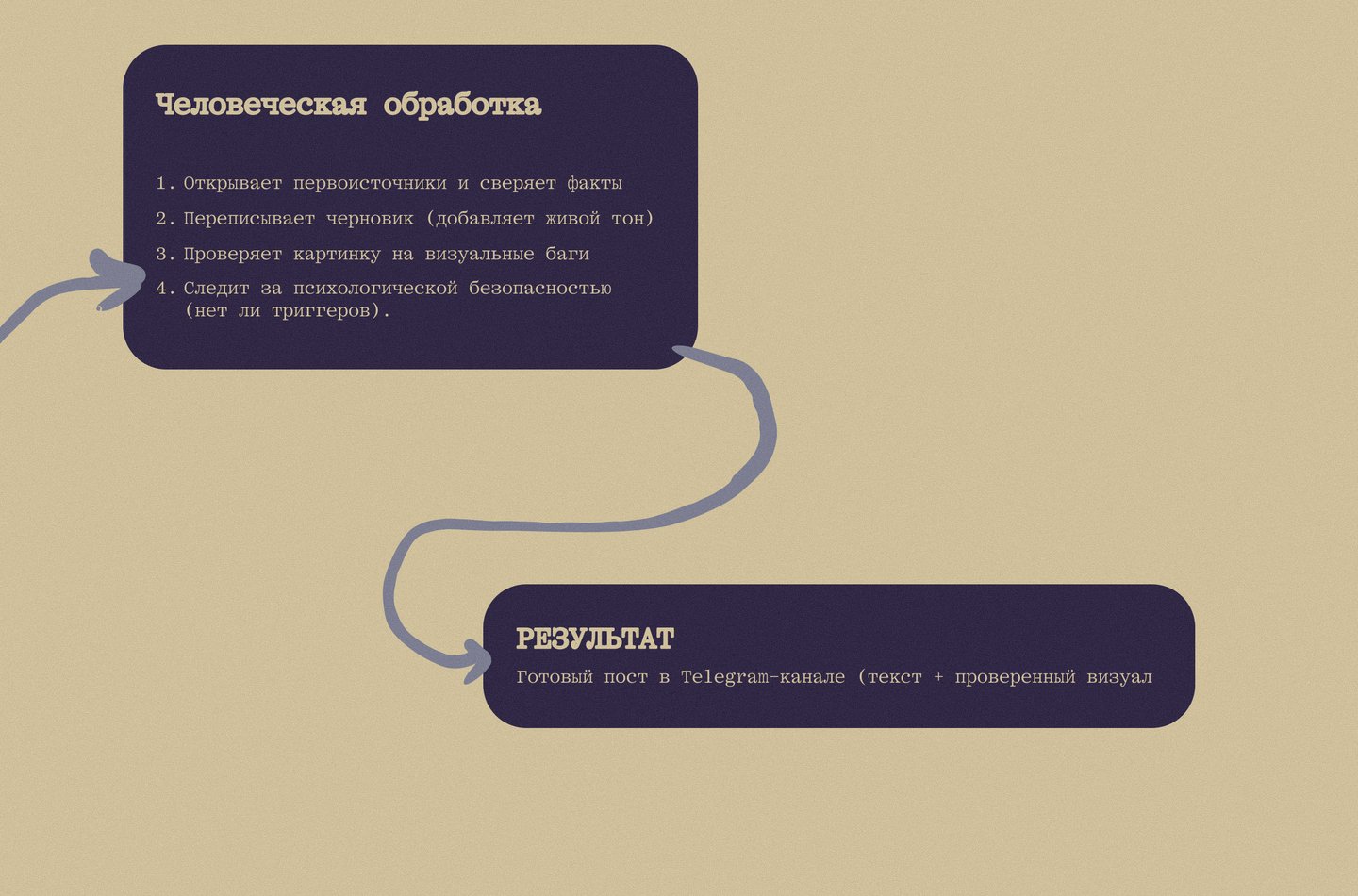
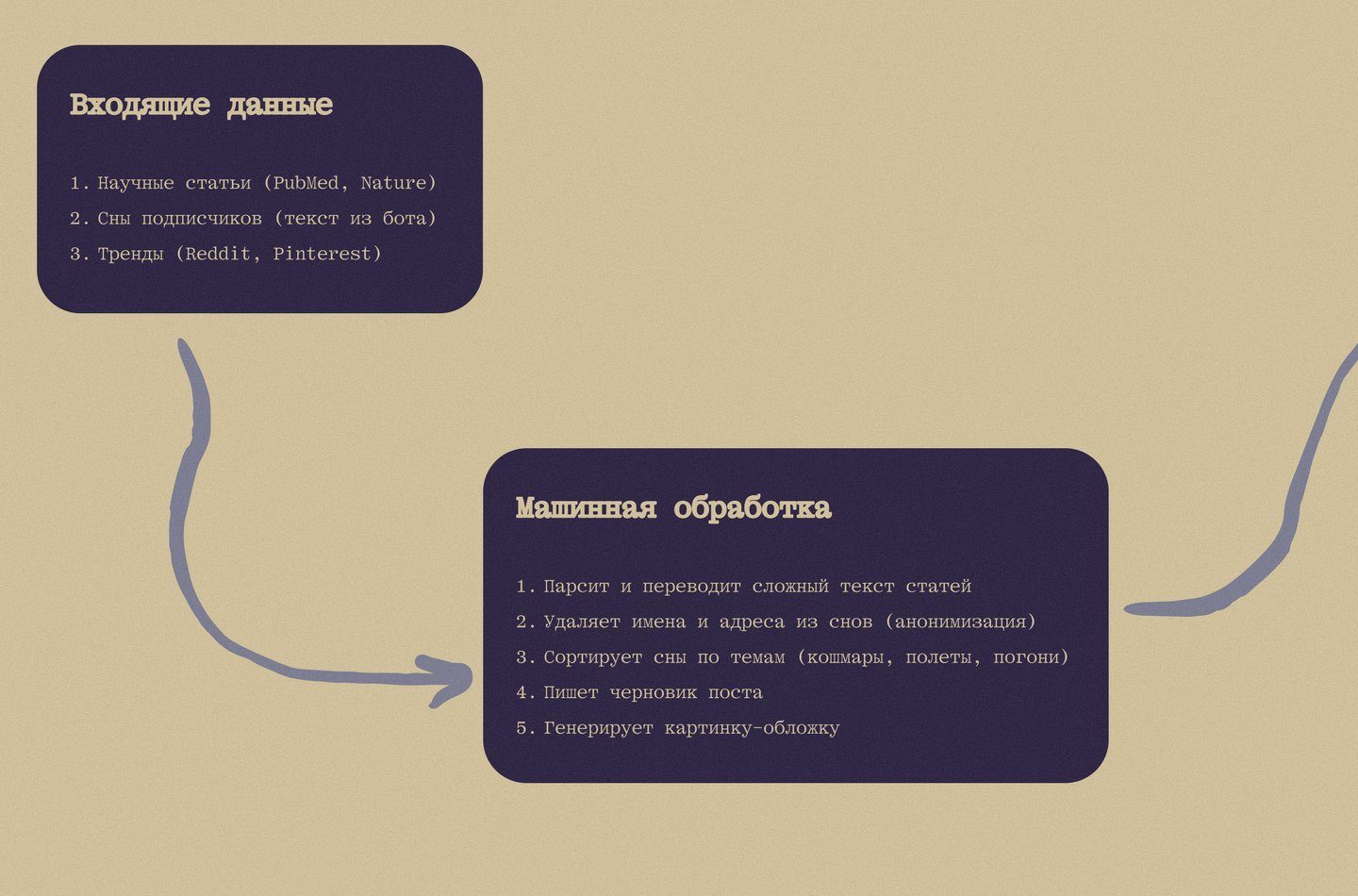
AI and editors collaborate on every post. Artificial intelligence monitors scientific databases and delivers a digest of recent articles. It also reads the dreams submitted by subscribers, redacts names and addresses, and then organizes the stories by category (flights, chases, falls). Next, the AI drafts the text and generates an abstract cover image to speed up the process. A human steps in for the review phase. The editor cross-references the original sources and fact-checks, because the neural network tends to fabricate research findings. Afterward, the editor rewrites the draft, infusing it with the appropriate tone, checks the image for visual errors, and only then clicks «Publish.»
For example, if a subscriber sends a dream about running down an endless corridor while being chased by a shadow. The neural network recognizes the anxiety pattern, removes the sender’s contact information, and compiles a draft post about how the brain simulates fear. The editor then only needs to open a couple of scientific articles on stress, ensure the neural network hasn’t mishandled any terminology, and polish the text.
AI Guidelines for «Phase»