What happens when culture becomes interactive?
OTHERWISE—media at the intersection of games, digital art, design, technology, and cultural spaces. It explores how interactivity changes the way humans engage with culture—from video games and internet communities to immersive exhibitions and generative art.
The focus is not just on the objects and technologies themselves, but on the experience that arises from interacting with them. What changes when the viewer becomes a participant? How do interfaces influence our behavior? Can a game be a mode of knowing, and a museum a space for action?
Editorial Approach
Phenomenon → Observation → Context → Multiple Perspectives → Personal Inquiry.
Key Focus Areas
- Games and game mechanics.
- Interactive and digital art.
- Digital culture and internet communities.
- Technologies and new interfaces.
- Interactive spaces and architecture.
Audience
People interested in contemporary culture, games, art, and technology, including students and professionals from the creative industries.
Distinction
OTHERWISE unifies diverse cultural phenomena through interactivity as a mode of human interaction with the environment. The media explores not only what has been created, but also what experience it generates and what new forms of participation it enables.
Six-Month Thematic Plan
Six-Month Editorial Strategy
The content strategy is built around six thematic months. Each month explores a distinct aspect of the human interaction with the digital and physical environment—from game mechanics to audience participation in cultural creation. The themes progressively expand the research scope of OTHERWISE and converge on a common question: how does interactivity change our experience?
MONTH 01
Game—Beyond Play
We explore game mechanics as a mode of interacting with the world, not merely as entertainment.
Materials: unusual game rules; games without conventional objectives; an analysis of how controls affect the player’s perception.
MONTH 02
The Spectator Becomes a Participant
How does art change when a piece responds to human presence, movement, or action?
Materials: interactive installations; critique of formal interactivity; the visitor experience at an exhibition.
MONTH 03
The Internet as a Space for Participation
Memes, digital communities, and collective creation: how users not only consume content but actively shape it.
Materials: remix culture; collective internet projects; audience involvement in forming digital identity.
MONTH 04
Who controls the interaction?
Interfaces, algorithms, generative art, and the boundaries of user control.
Topics: How interfaces guide actions; generative art; algorithmic personalization and the freedom of choice.
MONTH 05
The spaces where things happen
Museums, exhibitions, and urban environments as systems that guide movement and create specific experiences.
Topics: Immersive exhibitions; architecture and visitor behavior; a guide to interactive cultural spaces.
MONTH 06
The culture that can be changed
What happens when an audience is given the opportunity to influence a piece, the rules of a game, or the media environment itself.
Topics: Participatory art; the user as co-creator; experiments with interactive formats and the final editorial question.
Content Samples
1. Can a game be art if there is nothing to do in it?
Article · 200–300 words
We are accustomed to thinking about gaming through action: moving, making decisions, completing tasks, achieving results. But what if the player is not required to do any of that?
In some games, one can simply observe the environment, listen to the sounds, study the details, or move aimlessly through a virtual world. Interaction here becomes a way to explore the work, rather than to progress through it.
For instance, in *Proteus* (2013), the player finds themselves on a procedurally generated island without typical quests or achievement systems. Instead of battles and missions—there are walks through the landscape, the sounds of the surrounding world, and the changing seasons.
In reviews, some players describe *Proteus* as an opportunity to rest from the necessity of constantly striving for something. The sounds of the animals and the environment compose a kind of music, and the simple graphics leave room for imagination. For some, this is enough to experience an almost meditative sense of oneness with nature.
Other players find such an experience too limited: events repeat after the first playthrough, and the lack of deeper interaction gradually becomes a drawback.
It turns out that *Proteus* offers an unconventional view of gameplay: the impression might be more important than the outcome. But is the player ready to value observation itself if there are almost no familiar stimuli?
Perhaps it is about what we expect from a game. For one person, it is a chance to slow down and feel the surrounding world; for another, it is a passive experience where all the interesting parts quickly run out.
2. Is interactivity for the sake of interactivity truly art?
Cards + Audience Survey
3. Genius or Annoying? Unusual Games That Spark Player Debate
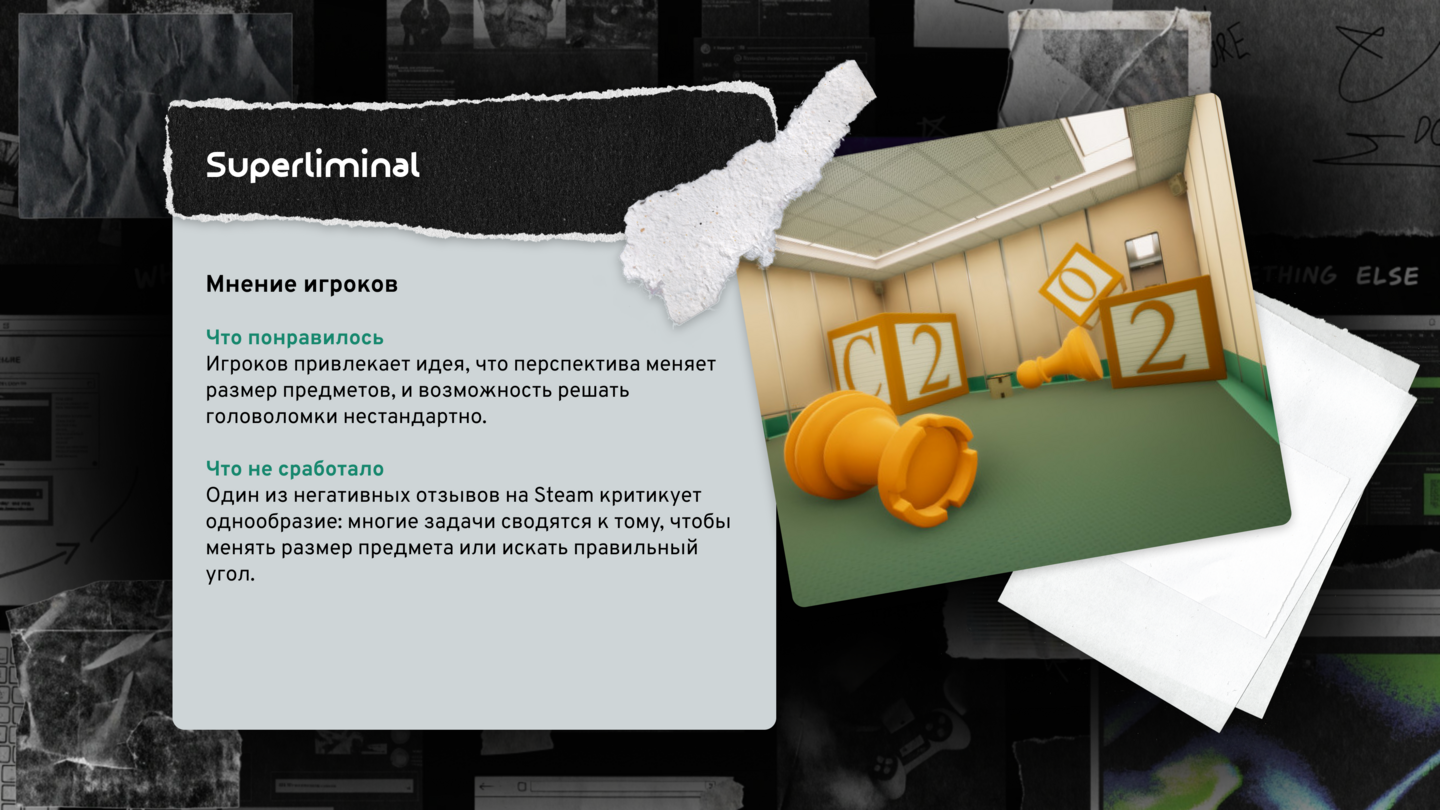
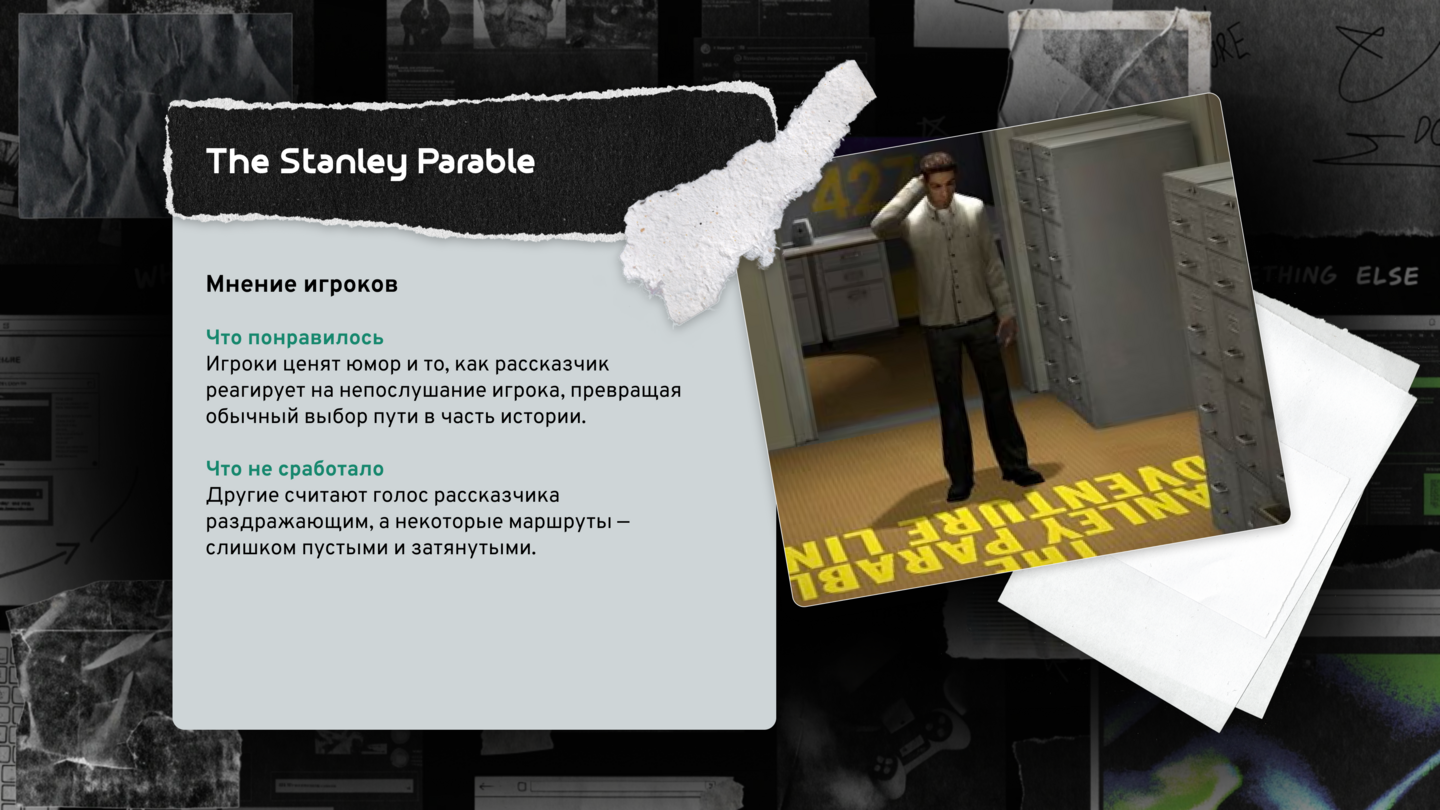
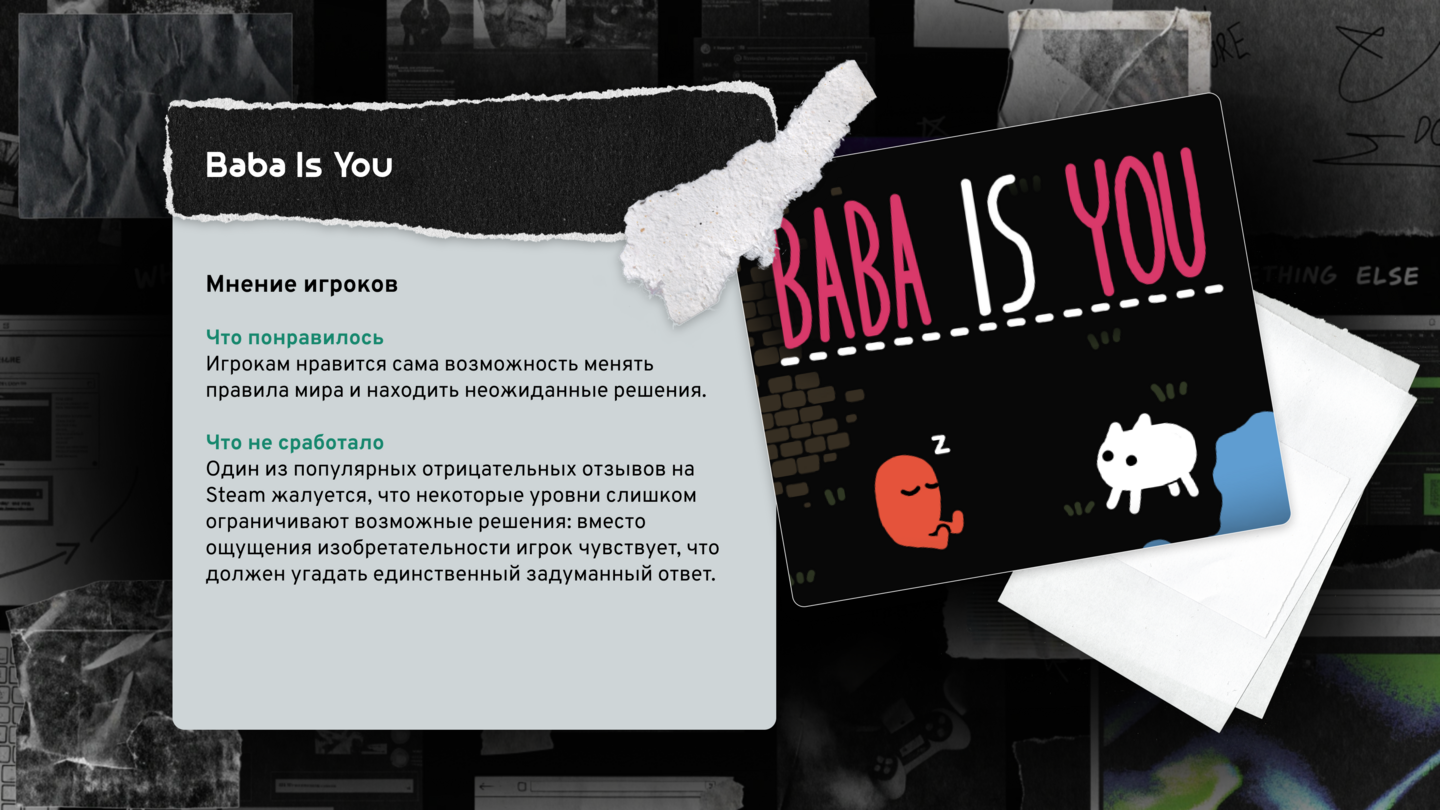
Overview text on media elements
4. Doge: How a Dog Became an Internet Icon
Media Type: Card Carousel
It all started with a picture of a Shiba Inu named Kabosu, which her owner, Atsuko Sato, posted on her blog in 2010. Later, the photo spread across the internet and transformed into the Doge meme—complete with characteristic phrases like «much wow» and «such cute.»
Users created new versions, changed the captions, and placed the dog in all sorts of contexts. Thus, Kabosu became not just the subject of a photograph, but a recognizable symbol of internet culture.
The Doge story illustrates how the internet is reshaping our conventional understanding of authorship: a single image can become the starting point for thousands of interpretations created by different people.
5. Exhibition where the viewer becomes part of the artwork
Interactive Art Object Analysis
6. When the Interface Becomes a Game
Article · 200–300 words
We are accustomed to viewing the interface as a tool that facilitates interaction with a game. But what if it becomes part of the gameplay experience itself—influencing our actions, creating constraints, or even extending beyond the game space?
In OneShot, the player interacts not just with the game world: the game window and desktop elements become part of the puzzles. The interface ceases to be a neutral frame and transforms into a space where the action takes place.
In Papers, Please, the interface is designed as a border inspector’s workstation. The player checks documents, compares data, applies stamps, and makes decisions. The papers, buttons, and time limit don’t just organize the gameplay—they help convey the routine, the pressure, and the responsibility behind every decision.
The experimental game CONTROL goes even further: the player controls a drawn hand that must press buttons within the game’s interface. The controls are intentionally complex, so the interface doesn’t disappear into the background but constantly reminds the player of its presence.
These games demonstrate that the interface is not merely a shell through which we interact with the digital world. It can become a play space, a narrative device, or even a source of tension. Its structure influences how we act, how we feel, and how we perceive what is happening.
7. What is generative art—and who is the artist?
Overview Cards
8. What makes cultural experience truly interactive?
Audience Survey
9. Why does the control scheme change the impression of a game?
Media Type: Short Essay / Analysis of Physical Interfaces
Line Wobbler — A Spring Instead of a Joystick
The player controls a character on a long strip of LEDs using a spring that can be deflected and swung. To move, you must feel the resistance and the oscillation of the physical object. The control becomes almost tangible: you aren’t just pressing a button; you are literally swinging the motion.
Donkey Kong Jungle Beat — Drums Instead of Buttons
Here, the player controls a character using bongos: they hit the left or right drum to move, hit both to jump, and clap their hands for specific actions. The control transforms into a rhythmic performance—you are playing not just a game, but an instrument.
Nintendo Labo — Cardboard Controller
Physical devices, such as a steering wheel or a motorcycle throttle grip, are assembled from cardboard and work in conjunction with the Joy-Con. The player turns, presses, and feels the resistance of a real object. Because of this, the in-game action begins to resemble a real-world action, and the controller’s form suggests how to use it.
The same principle—moving a character or performing an action—can be experienced in vastly different ways. The spring encourages a feeling of motion, the drums connect the game to rhythm, and the cardboard controller simulates a familiar physical object.
10. If culture becomes interactive, does the viewer remain just a spectator?
Short Essay / Analysis of an Interactive Art Project
In the project *PLEASE BE. ME* by Michaela Hannemann, the visitor can explore the exhibition in another space by controlling a human avatar. They choose where to move and what to look at, yet physically, someone else occupies the space.
This situation complicates the usual division between spectator and artwork. Who is gaining the cultural experience here—the person controlling the avatar, or the person whose body becomes the instrument of interaction? And what does it even mean to be present in a space when one can act within it remotely?
Video games, digital interfaces, and interactive installations change the relationship between human and artwork in different ways. But participation doesn’t necessarily mean control, and the ability to act is not always equivalent to freedom.