От Страха к Иронии: визуальная эволюция греха в Западной Европе I–XVIII вв.
«…Sin was not sent to Earth; rather, people conceived of it in their own minds…» [1]
Contents
1. Concept
2. Research
2.1 Early Middle Ages (1st–11th centuries): Anatomy of Horror
2.2 Late Middle Ages and Renaissance (14th–16th centuries): Grotesque and Temptation
2.3 Baroque (17th century): Aesthetics of Passion
2.4 Enlightenment (18th century): Satire and Irony
3. Conclusion
4. Bibliography and Sources
Concept
The theme of sin in art might seem straightforward at first glance; however, as soon as a researcher begins to examine precisely how masters of different eras depicted vice, they inevitably encounter a phenomenon where the study of evil compels one to admire it. This is a unique paradox: society imposes the strictest prohibitions against vice, yet simultaneously commissions artists to render it with meticulous, often grand, detail. I am interested in tracing the point at which art stopped merely frightening and began to aestheticize vice, transforming it into an object of philosophical or psychological contemplation.
Hypothesis:
For my project, I chose to investigate the hypothesis of how the visual language of vice has evolved—from crude religious terror to secular irony and aestheticization. However, the essence of this process lies not only in the Church gradually losing its sway over minds and art, but also in whom the viewer fears and how their perception of sin itself has changed.
Key Question:
How and why did the visual language of sin and its punishment change in Western European art from the 1st to the 18th century, and what do these shifts tell us about the process of cultural secularization?
Material selection is dictated by several factors:
For this analysis, I selected works in painting, mosaic, and graphic arts that are representative of their respective eras. Researchers have repeatedly noted that the visual language of satire and grotesque formed as a form of social control and philosophical statement [2]. The main selection criterion was the presence of visual conflict or the evident evolution of techniques. I chose pieces where the artist did not merely illustrate a biblical text but also offered the viewer a specific emotional experience. I am interested in paintings where the language of light, composition, and anatomy changes. I decided to use a chronological structure, dividing the work into four phases: Early Middle Ages, Renaissance (including the Late Middle Ages), Baroque, and the Enlightenment. This categorization allows us to trace the shift in visual paradigms.
Early Middle Ages (5th–11th Centuries): The Anatomy of Horror
Early medieval art lacked nuance and psychological ambiguity. Sin was portrayed not as an internal temptation but as a physical deformation and ugliness. To the viewer, it manifested as a violation of divine order, frequently expressed through distorted proportions, bestial features, and enormous mouths consuming flesh. The purpose of such imagery was to frighten, ensuring that the viewer would neither sympathize with nor aid the sinner. While the Church addressed the congregation, since not everyone could read the Scriptures, vice began to be visualized and depicted on the walls. In turn, the wall spoke the language of pain and physical dismemberment. Here, the sinner is not a member of society—they are merely an object of punishment and condemnation.
«The Judgment» Mosaic in the Basilica of Santa Maria Assunta, Torcello (c. 1100–1120)
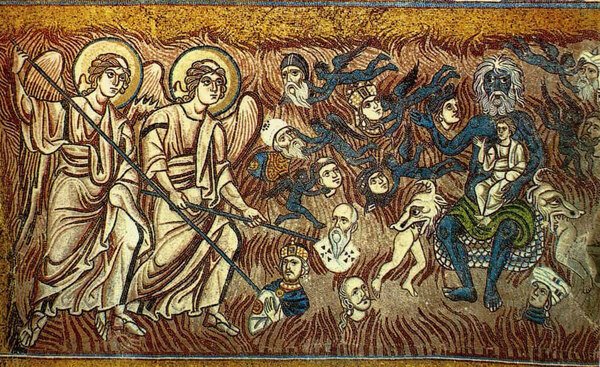
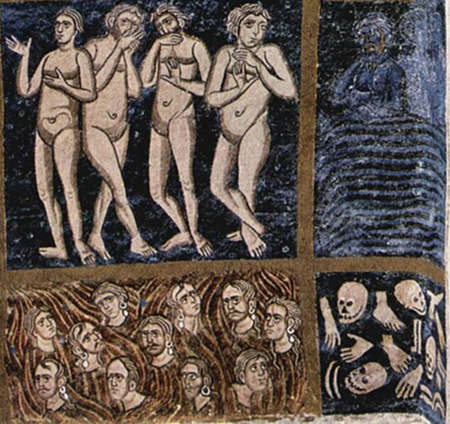
Note the contrast between the geometrically ordered paradise and the chaos of hell. The space of paradise here is static and symmetrical—it is governed by a divine logic. Hell, however, is chaotic; in it, bodies lose their human form, becoming tangled into a knot. Also noteworthy is the color palette: the gold and light tones of the righteous are juxtaposed against the dark crimson and black tones of the underworld. The demons here become hybrids, devoid of formal harmony. Not every modern person will perceive the morality in the mosaic, which clearly demonstrates how much our threshold for sensitivity to horror has shifted. Sin here literally lacks a human form; it should not evoke sympathy, but merely register the fact of a catastrophe.
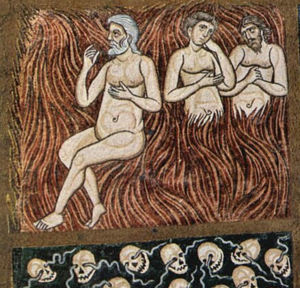
Miniature of the «Last Judgment» from the Psalter (10th–11th centuries, Montecassino)
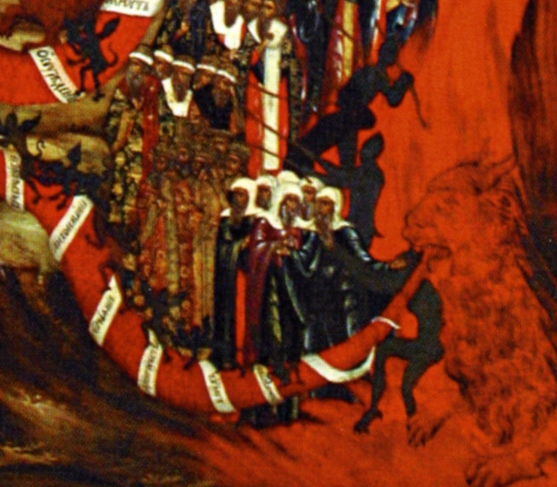
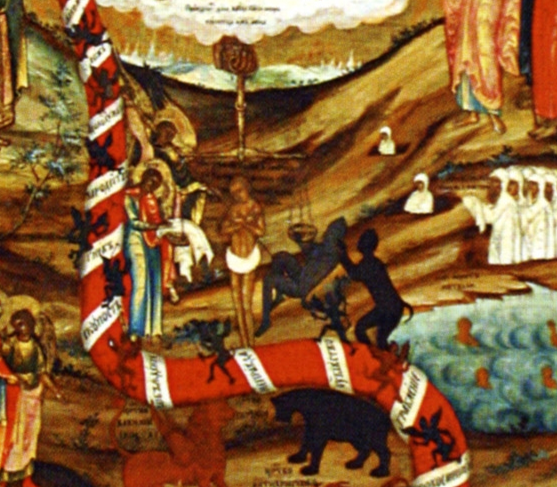
The master undertook immense work on the detailing, allowing this manuscript miniature to demand intimate close examination. As the viewer observed the work, they experienced the horror of infernal torment penetrating their consciousness through repeated viewing. This was less about psychology than a visual pattern that activated at a reflexive level. The sinners are depicted with their heads thrown back and arms raised; their poses are deliberately theatrical yet devoid of individual characteristics. It is from this very quality that the interest in the feelings and sensations of the fallen person will subsequently emerge.
Fresco of the «Seven Deadly Sins» in St. Martin’s Church, Railslip (14th–15th centuries)
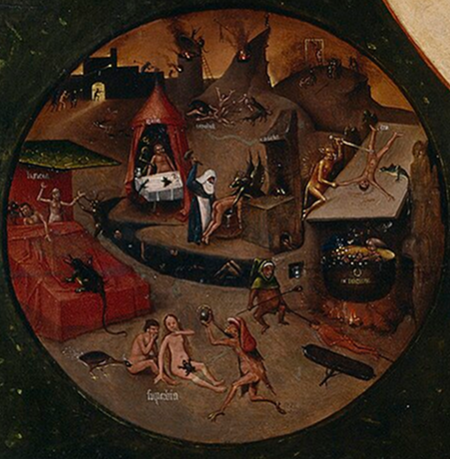
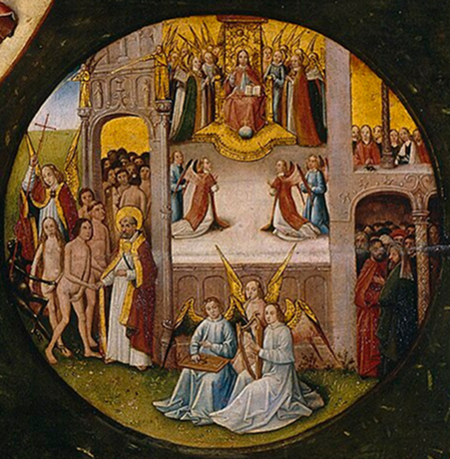
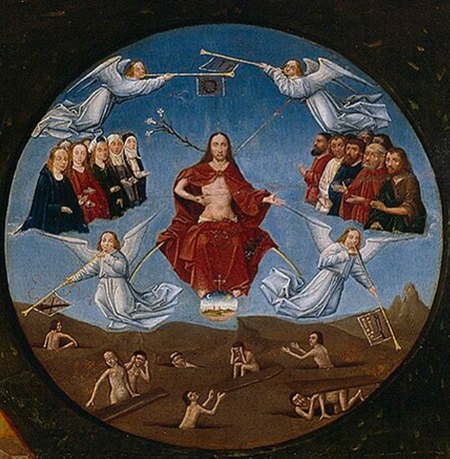
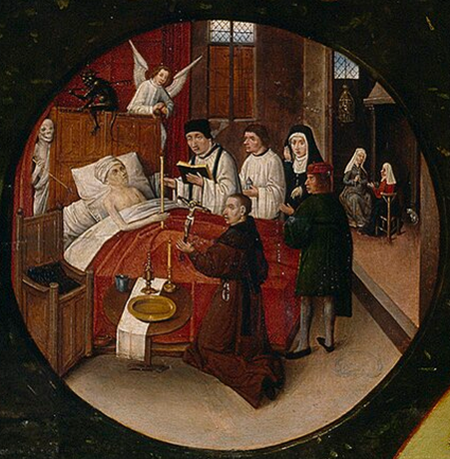
In this work, sin is visualized through the metaphor of consumption. The sinner’s punishment occurs before the viewer’s eyes, presented in a frightening, corporeal form. It is noteworthy that during this period, sin was almost always depicted through female or animal figures. The female body at that time was traditionally associated with Eve, the source of original sin, while the animal form symbolized the loss of a divine image. The figures of the sinners are rendered schematically—their bodies unnaturally contorted—which emphasizes their agony. The visual language portrays sin as something that should never be seen within oneself.
Late Middle Ages and the Renaissance (14th–16th Centuries): Grotesque and Temptation
In the 14th century, the first significant shift occurs in the depiction of sin. Artists stop merely frightening and begin to examine sin with the curious eye of an inquisitor. Sin ceases to be an abstract threat—it becomes an encyclopedia of human folly, greed, and lust. Compositions become incredibly dense and detailed. The more precisely a vice is rendered, the stronger the paradoxical effect: the viewer is mesmerized by a spectacle of their own transgression. Direct intimidation gives way to grotesquery, and sometimes even dark humor, as artists begin to conceal moral lessons within complex visual enigmas.