Concept.
A mother is one of the most significant figures in any person’s life; it is she who brings a child into this world, nourishes them, becomes their first authoritative adult, and builds the connection that will become foundational for their subsequent personal development. Yet, to some—to a certain degree, even sacrosanct—she is important not only to children but also to adults, because regardless of the relationship established between a mother and an adult child, one cannot deny the influence the parent exerted through their very existence, upbringing, and level of involvement in their life. Depending on the era, the family’s socioeconomic status, regional and cultural specifics, perspectives on motherhood, and the responsibilities it entails, this view has changed. However, throughout all time, the understanding that much in a child’s and family’s life depends on her has remained constant. This is why the image of the mother has always been one of the most prevalent subjects in world art, including
This is the subject of my work. The theme of motherhood and how it is expressed in art has always struck me as profoundly interesting and multifaceted. Therefore, after studying this topic in depth, I decided to trace when the maternal archetype began to transform and move away from the conventional, religious canon. The objective of my research is to track exactly how the image of motherhood evolved and how that evolution related to the cultural, religious, and social contexts of the 18th century.
I chose the 18th century as the temporal framework for this study because it was during this period that the image of motherhood began to change, both in art and in public consciousness. This era saw a shift in attitudes toward motherhood and how it was portrayed in visual arts.
Articles from reputable websites with a strong professional standing were selected as test sources. After thoroughly reading and analyzing all the materials, I drew specific conclusions that formed the basis of this work.
Navigation.
1. Concept.
2. Beginning of the Century.
3. Mid-Century.
4. End of the Century.
5. Conclusion.
6. Image Sources.
7. Bibliography.
I chose this type of categorization because a chronological analysis allows for the clearest tracing of how the image of motherhood in public consciousness and in art itself evolved gradually alongside society.
The beginning of the century.
At the beginning of the century, the maternal archetype had not yet fully separated from the religious conception in which the Virgin Mary exclusively portrayed the role of the mother in the vast majority of cases.
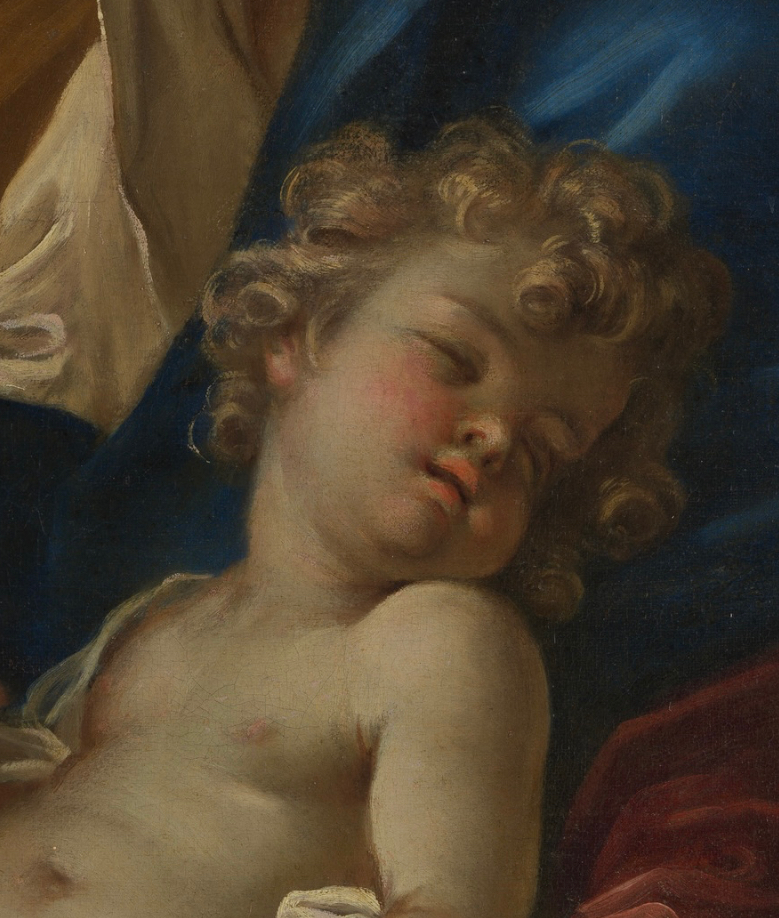
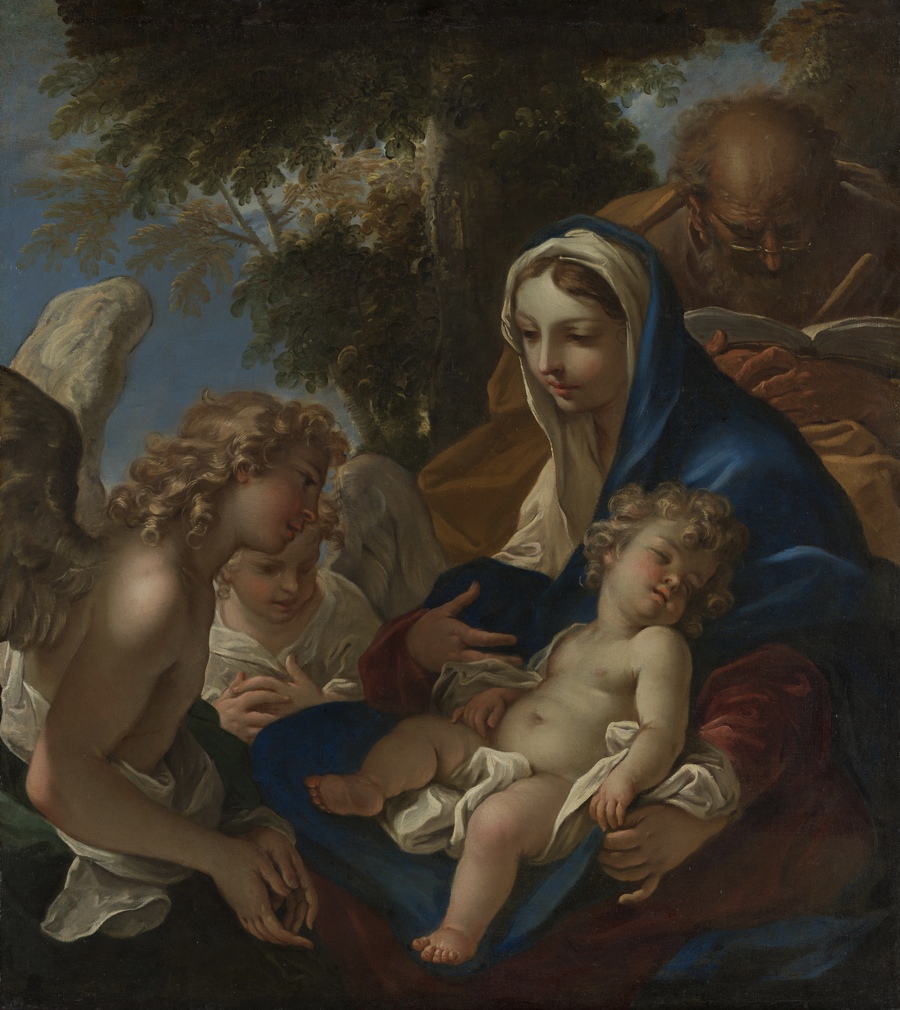
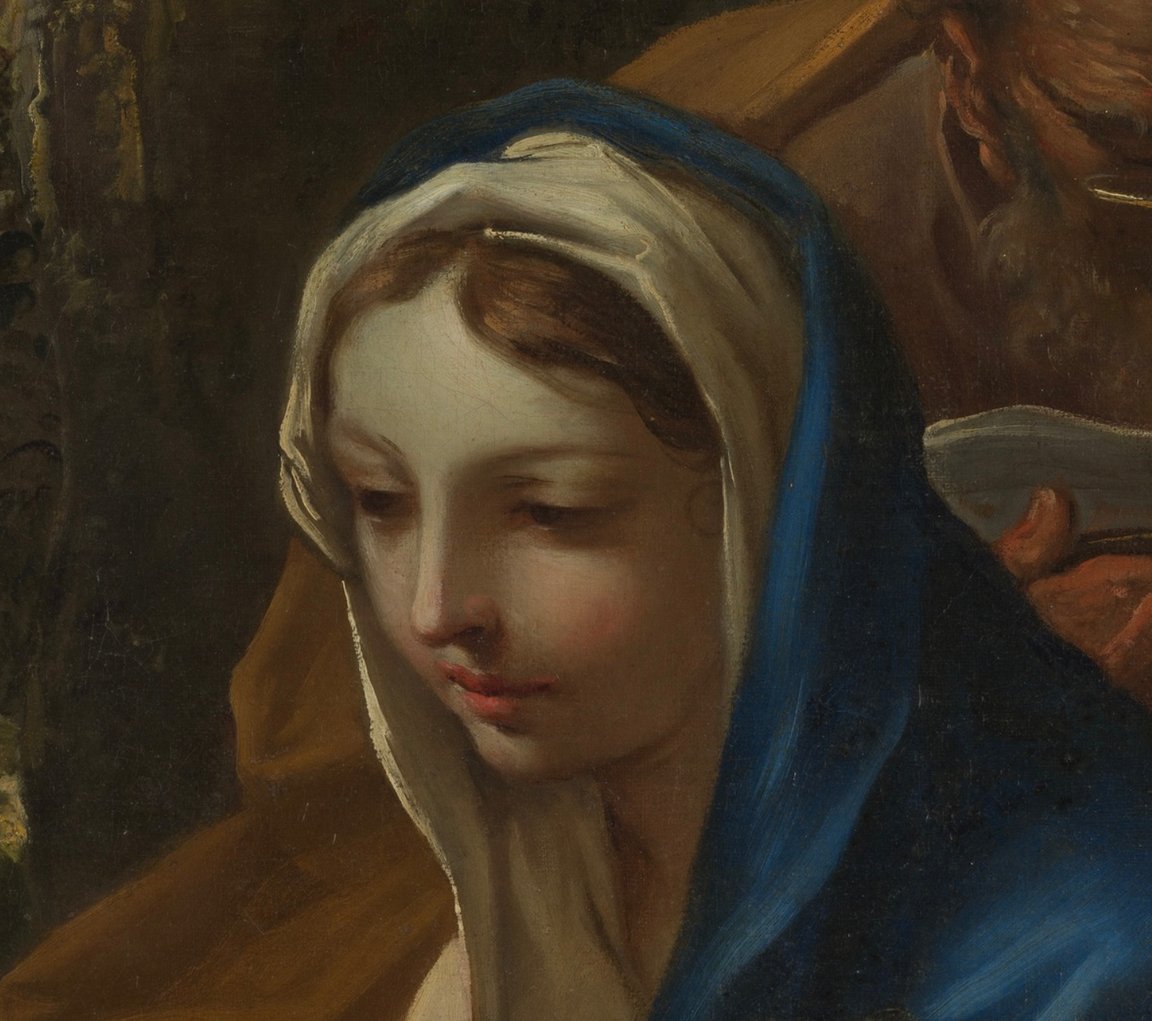
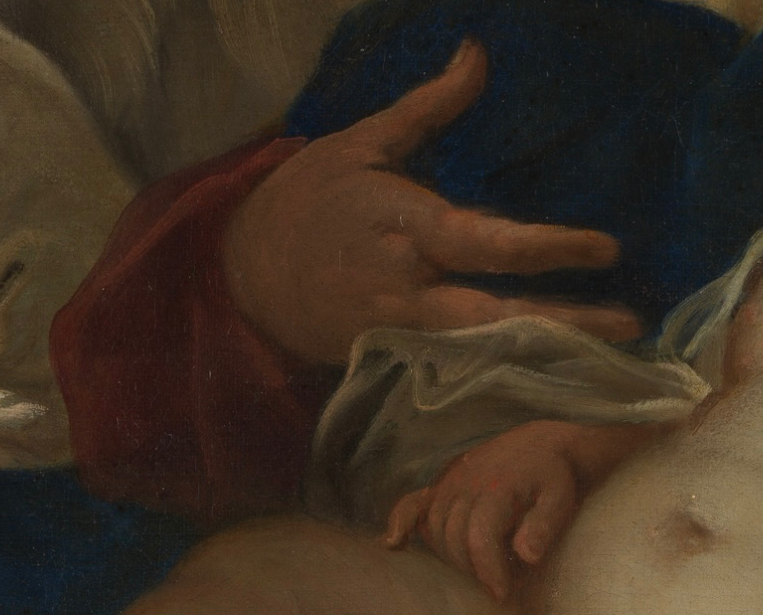
Sebastiano Ricci. «The Holy Family with Angels.» c. 1700.
Although Mary holding the infant Jesus is the central element of the painting’s composition, the conceptual core of the canvas is not maternal love or the emotion of childbirth, but the sublime nature and sanctity of the depicted narrative. Mary is presented first and foremost as the Mother of God, rather than an earthly mother, devoid of any vibrant emotion, yet illuminated by a falling light that underscores her transcendence and purity. Primarily, her image serves to affirm the divine origin of her son.
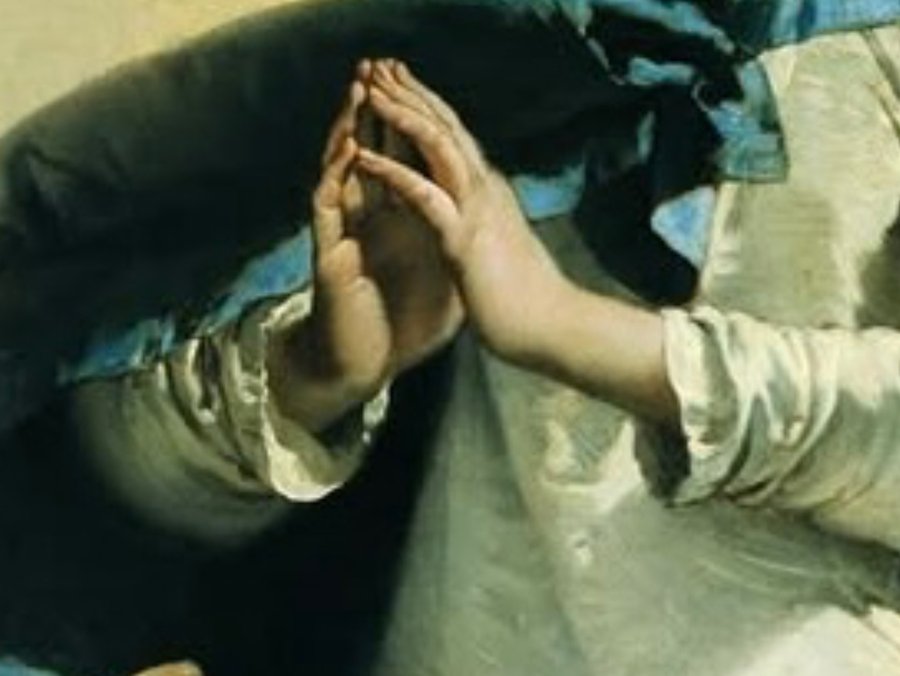
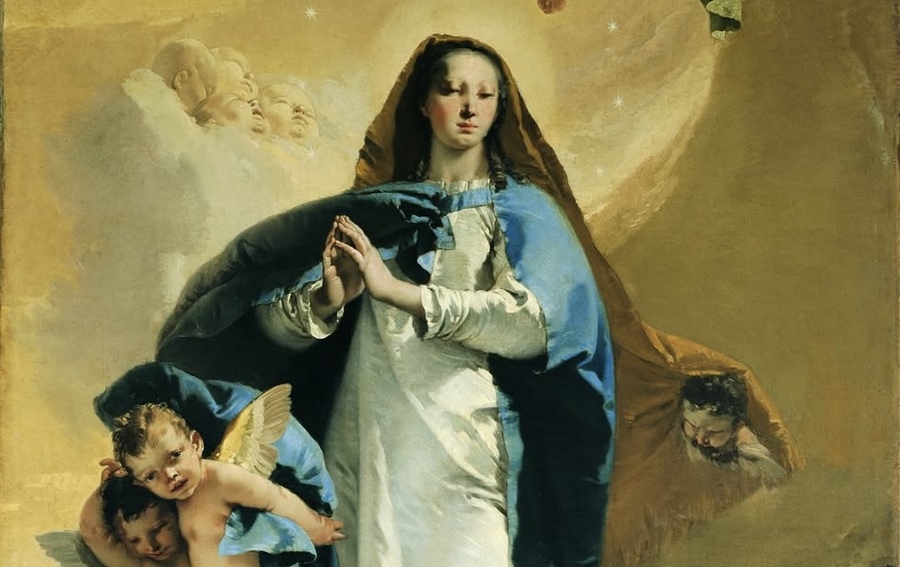
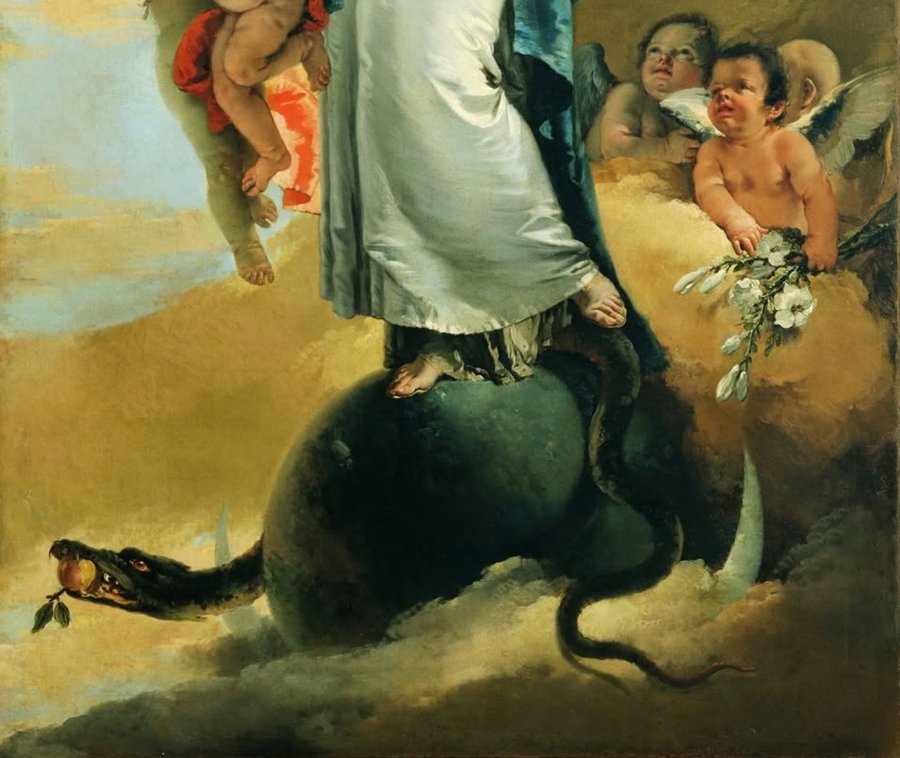
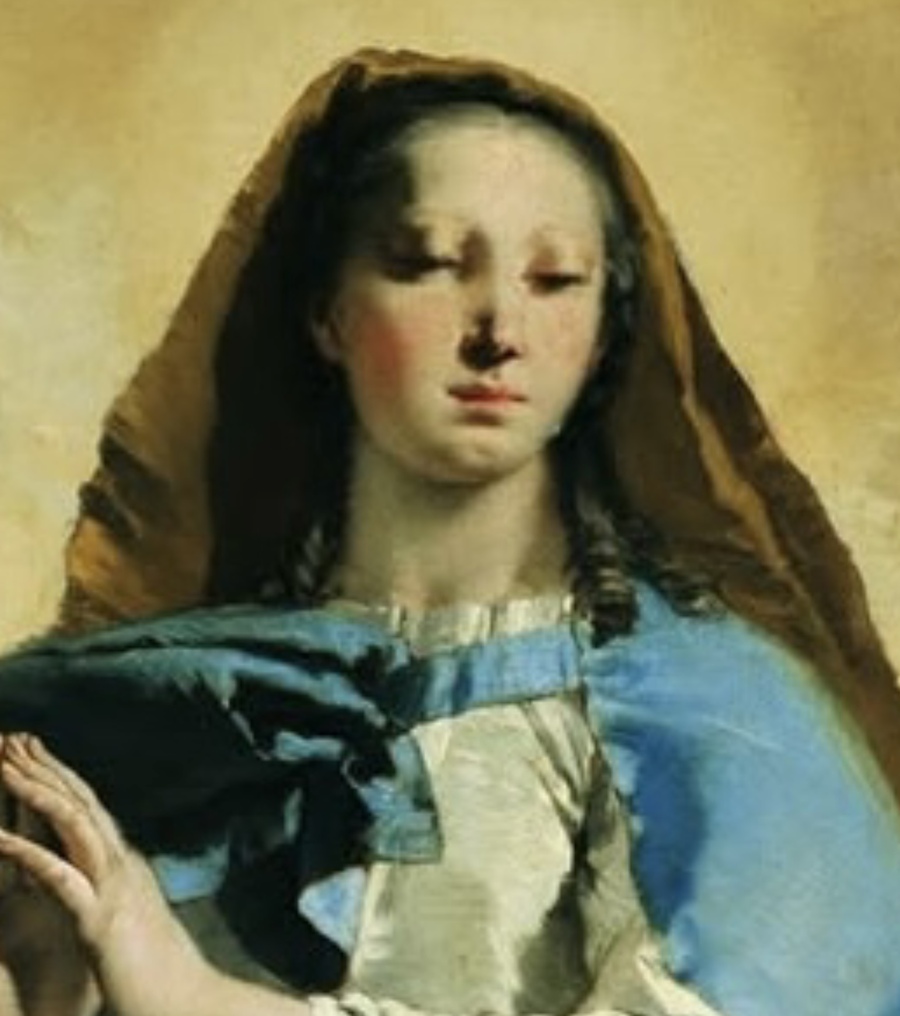
Giovanni Battista Tiepolo. «The Immaculate Conception.» Circa 1733–1734.
The Mother of God is depicted as absolutely weightless, beyond earthly rules, seemingly standing above the original sin that forced humanity to live on this fleeting earth. Like the previous image, her face conveys no emotion—only absolute serenity. The central theme of this painting is Mary’s purity and sanctity, rather than an illustration of maternal intimacy or the burden of responsibility placed upon a woman’s shoulders.
Even as more imagery emerges around the same time, where the Virgin Mary is depicted in the role of a mother, motherhood is still perceived through the lens of religious tradition. Even in more secular scenes, the mother is quite frequently imbued with virtuous, elevated personal qualities, a general detachment, and a rather limited emotional range, which echoes the classical image of the Theotokos. However, a new and very important trend is appearing—the characters depicted in paintings are beginning to be placed into more mundane and down-to-earth narratives.
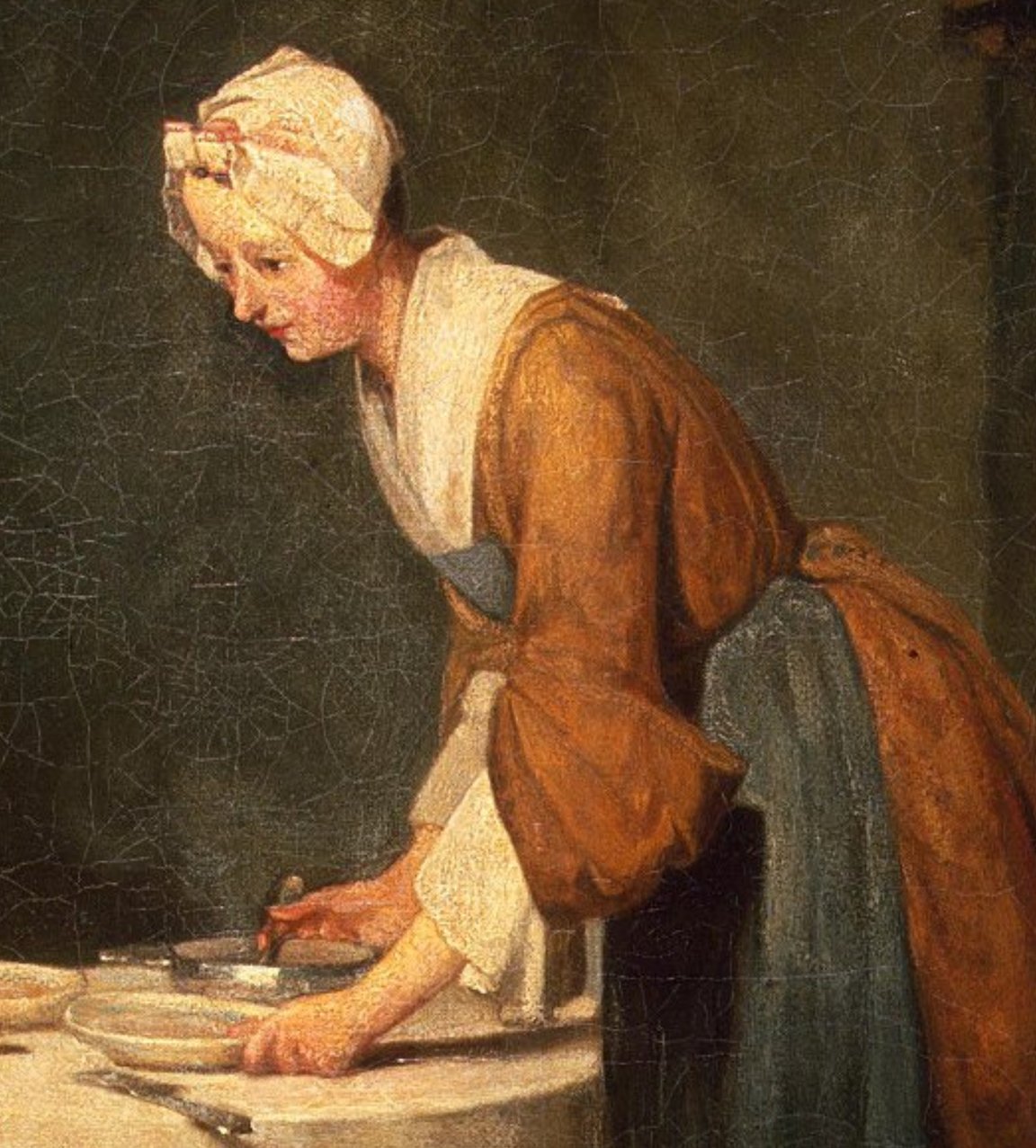
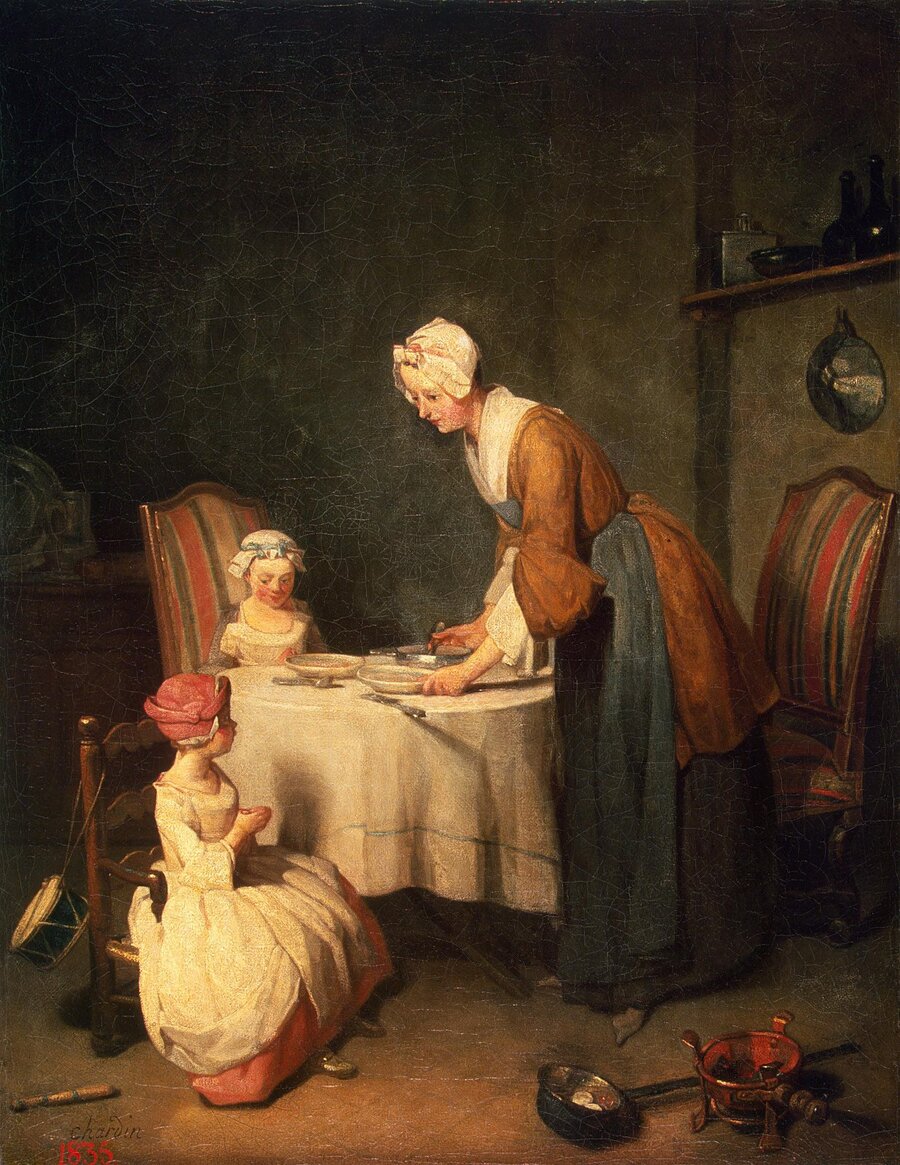
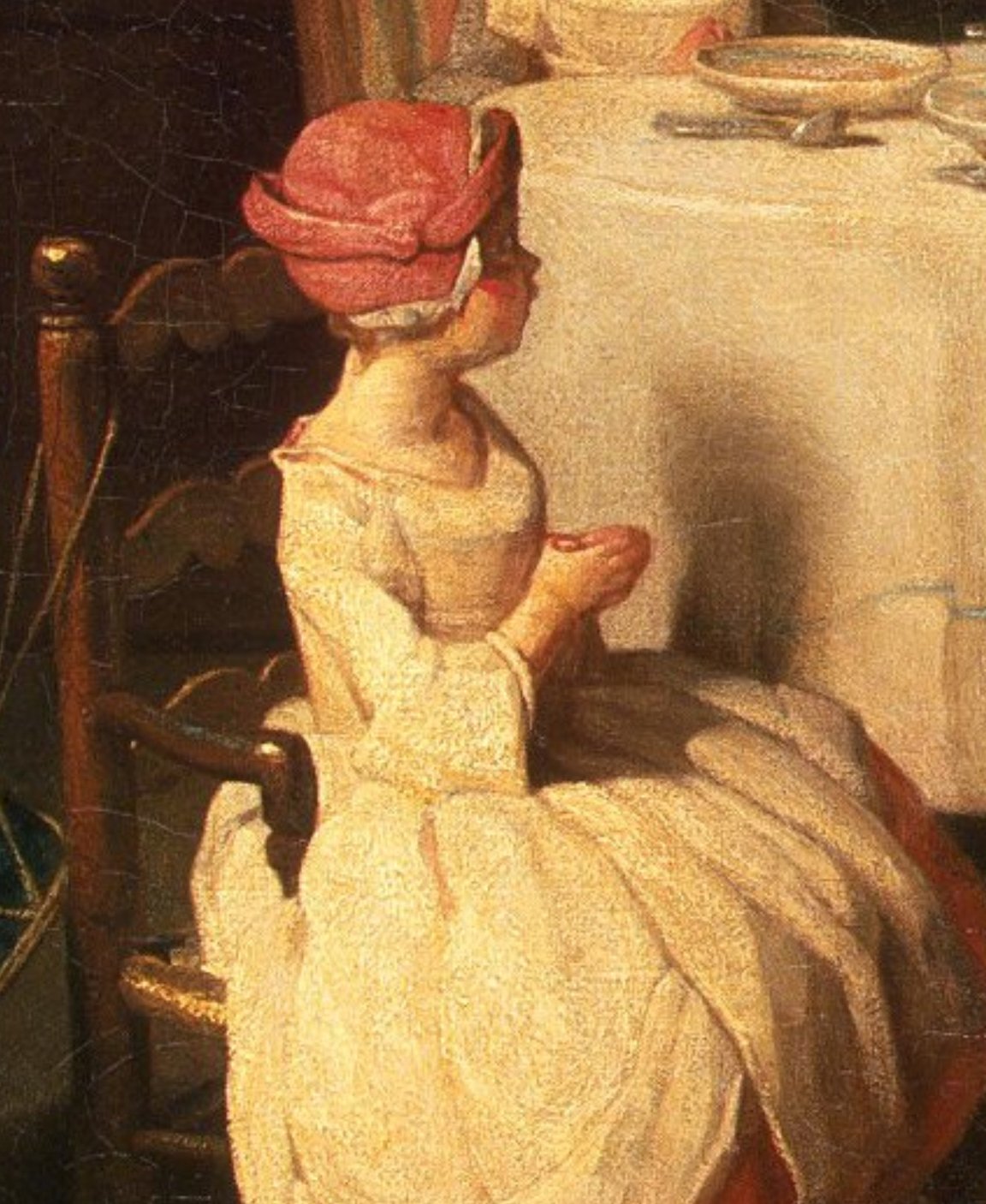
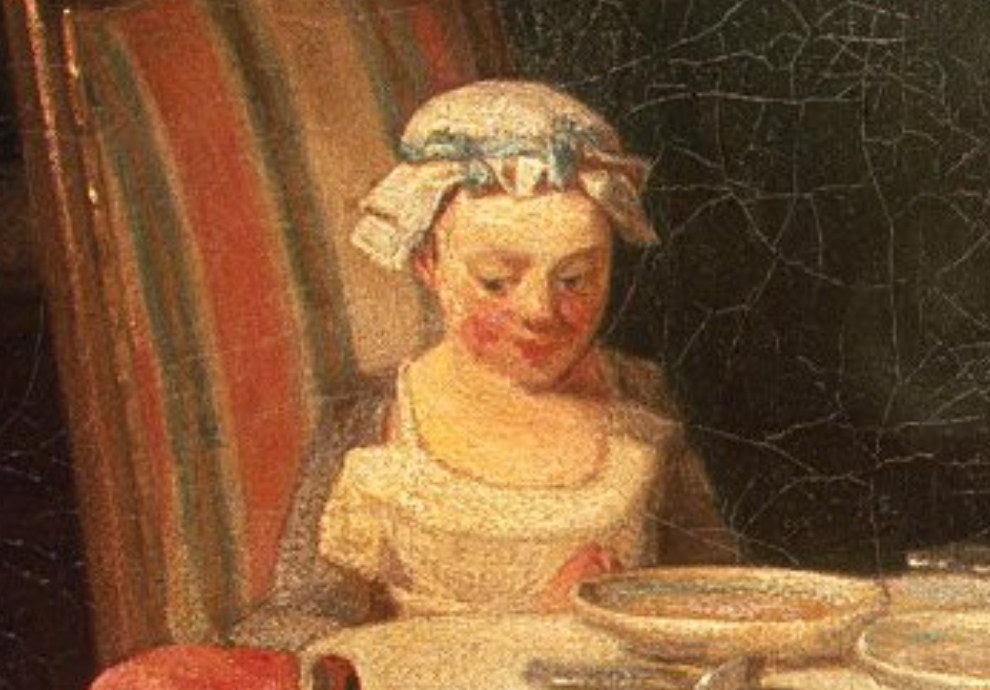
Jean-Baptiste Simon Chardin. «Prayer Before Lunch.» 1744.
The painting depicts a mother with two children reading a prayer before the meal. Given that the woman herself is occupied with setting the table rather than demonstrating the correct manner of prayer, one can surmise that she has already taught her children this practice and is now simply observing the fruits of her labor. She is portrayed as a patient and serene spiritual mentor who has already done her work and is sensitively watching how the children recite the text, ready at any moment to correct or guide them in the right direction. However, despite the painting, like previous works, retaining a religious undertone, it introduces a new, very important—a domestic—aspect. The mother is shifted from an ethereal, sacred space to a material, earthly world, representing herself as the preserver of religious tradition.
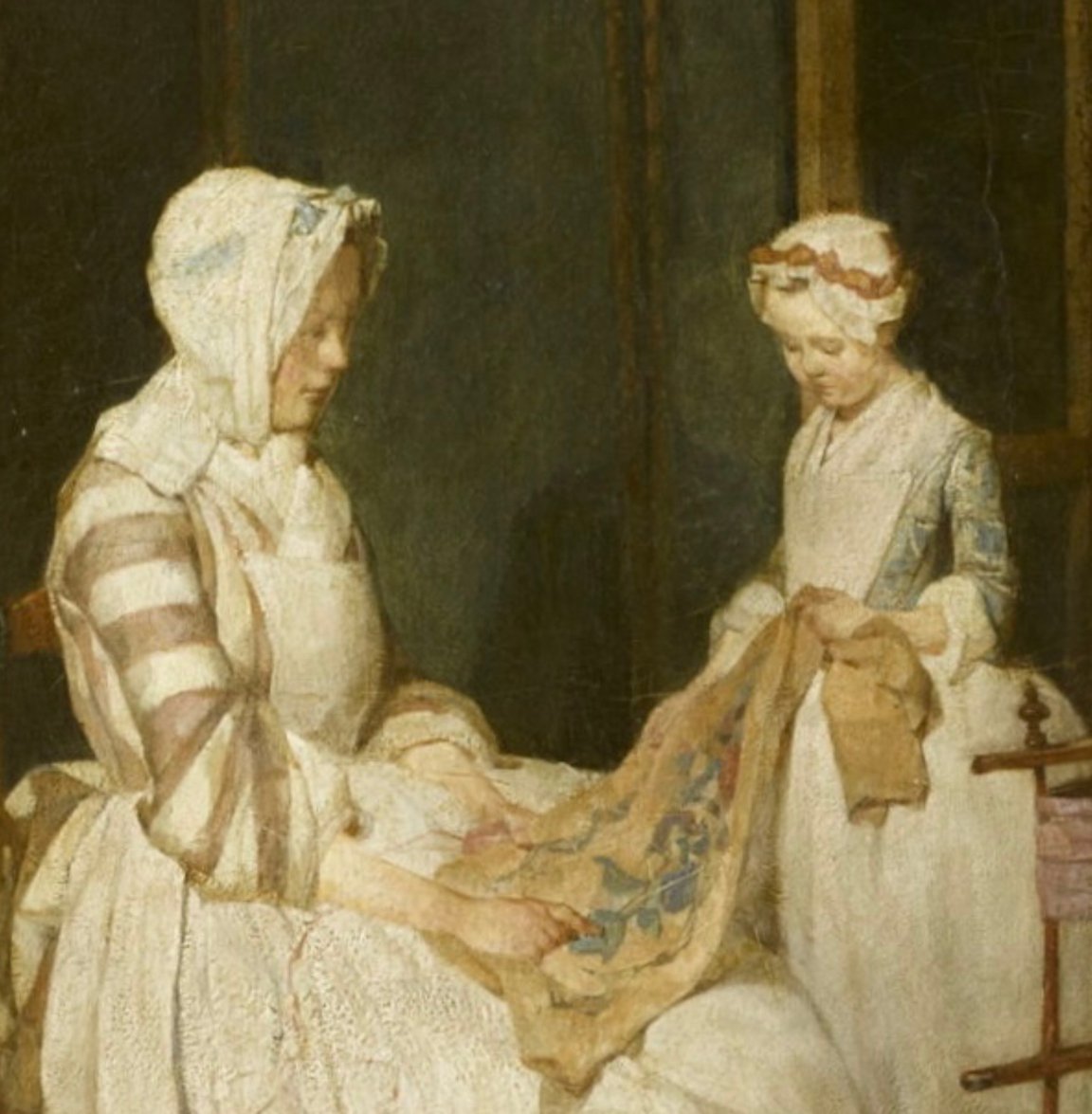
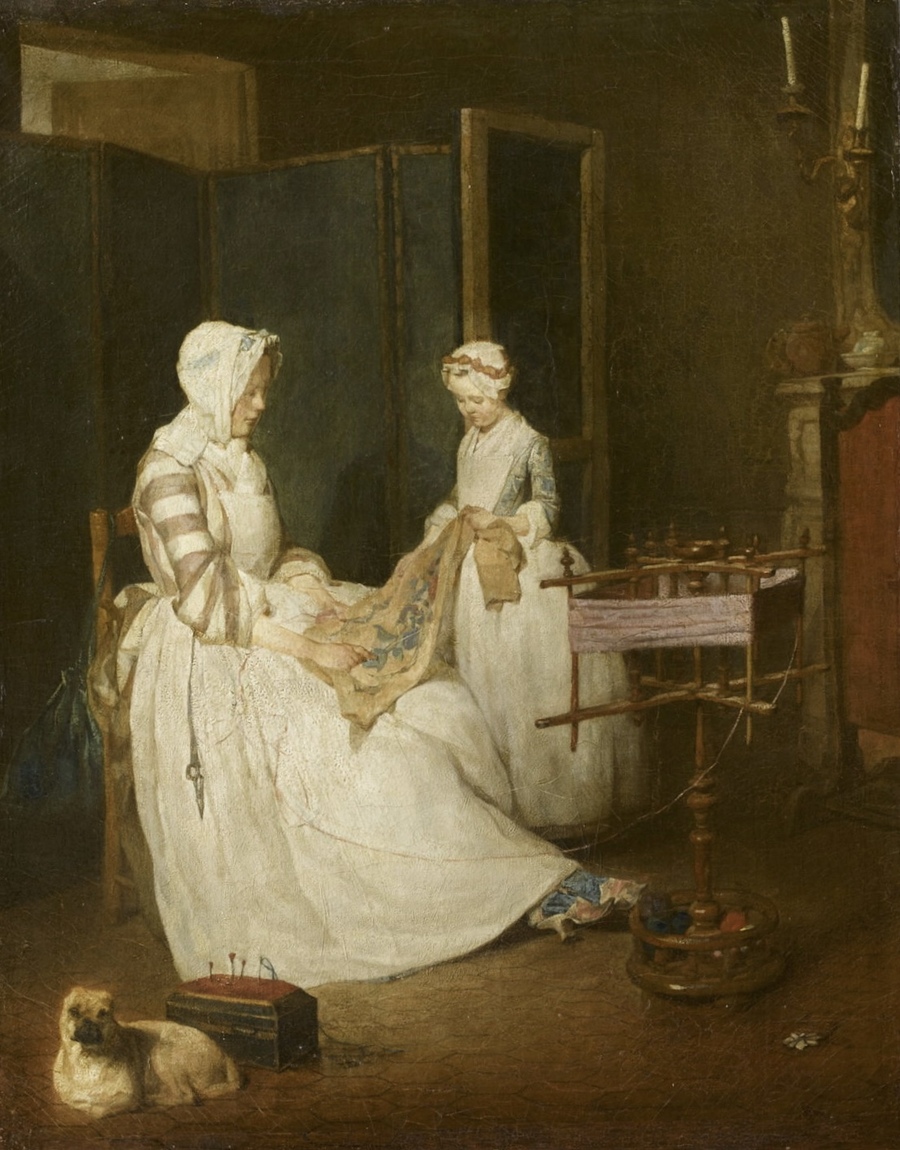
Jean-Baptiste Siméon Chardin. «Industrious Mother.» 1740.
The action of the painting unfolds in a domestic setting—the canvas depicts a mother engaged in needlework, observed with interest by her daughter, who is nearby. Within the context of this painting, motherhood is associated not only with the manual labor the woman is performing at the moment captured, but also with how her example instills diligence and responsibility in her daughter, establishing her as a moral guide, a theme that also aligns with moral and religious ideals. However, despite the mother and daughter sharing leisure time together, no particular tenderness or attachment is discernible in the woman toward her child; she seems merely to allow the girl to be present as part of fulfilling her duty and educating her.
Mid-century.
In the mid-century, influenced by Enlightenment ideals and the trends of sentimentalism, the maternal figure gained greater emotional depth and vitality, and maternal love began to be perceived as something of greater societal significance. The woman was no longer depicted as an angelically straightforward mother. Motherhood gradually began to be shown as something slightly more complex and nuanced.
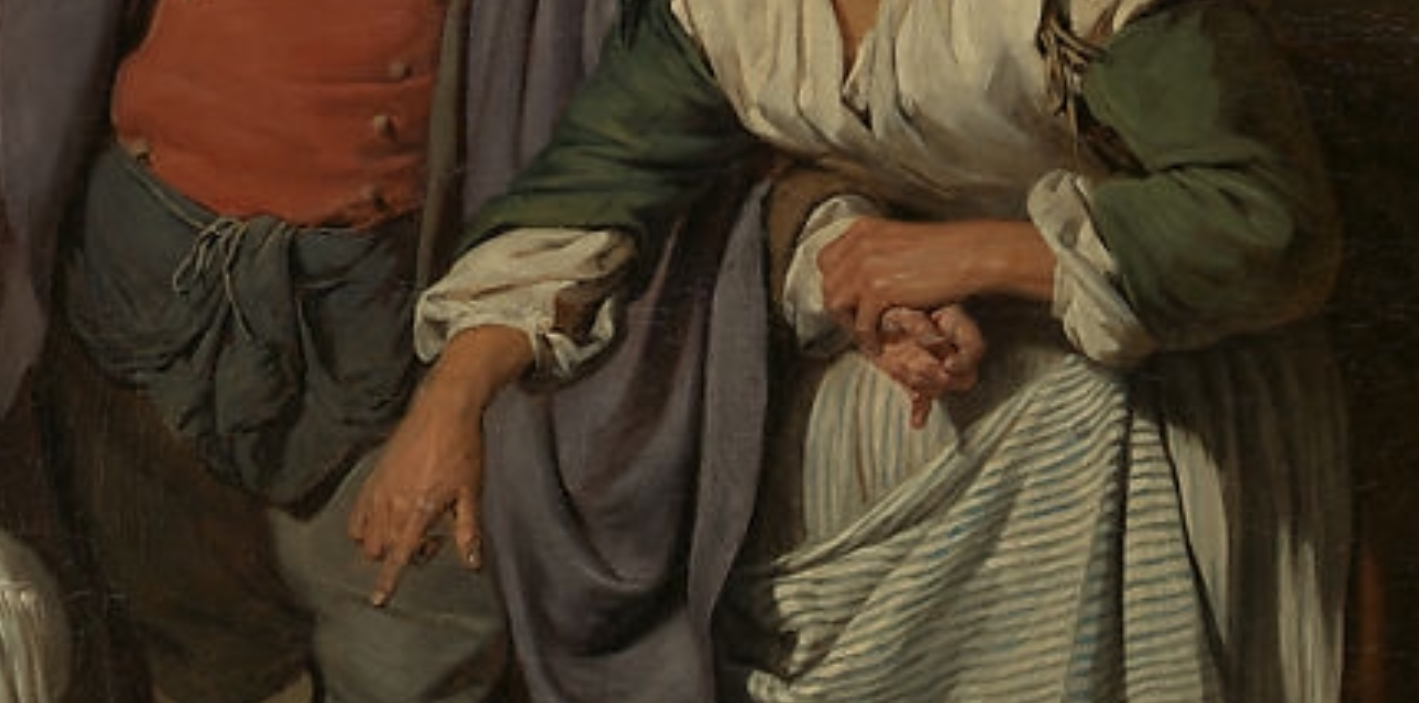
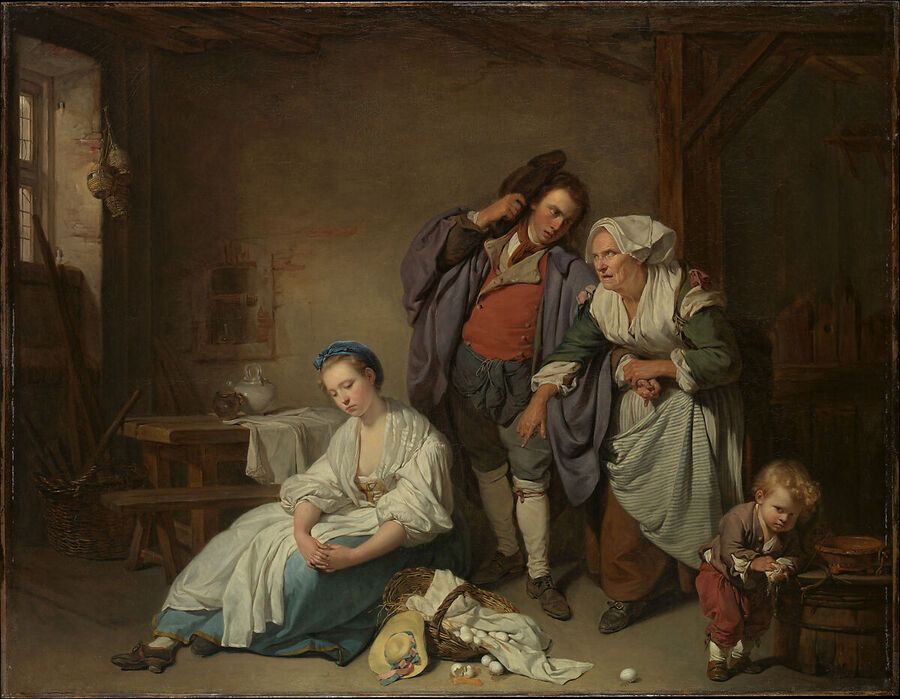
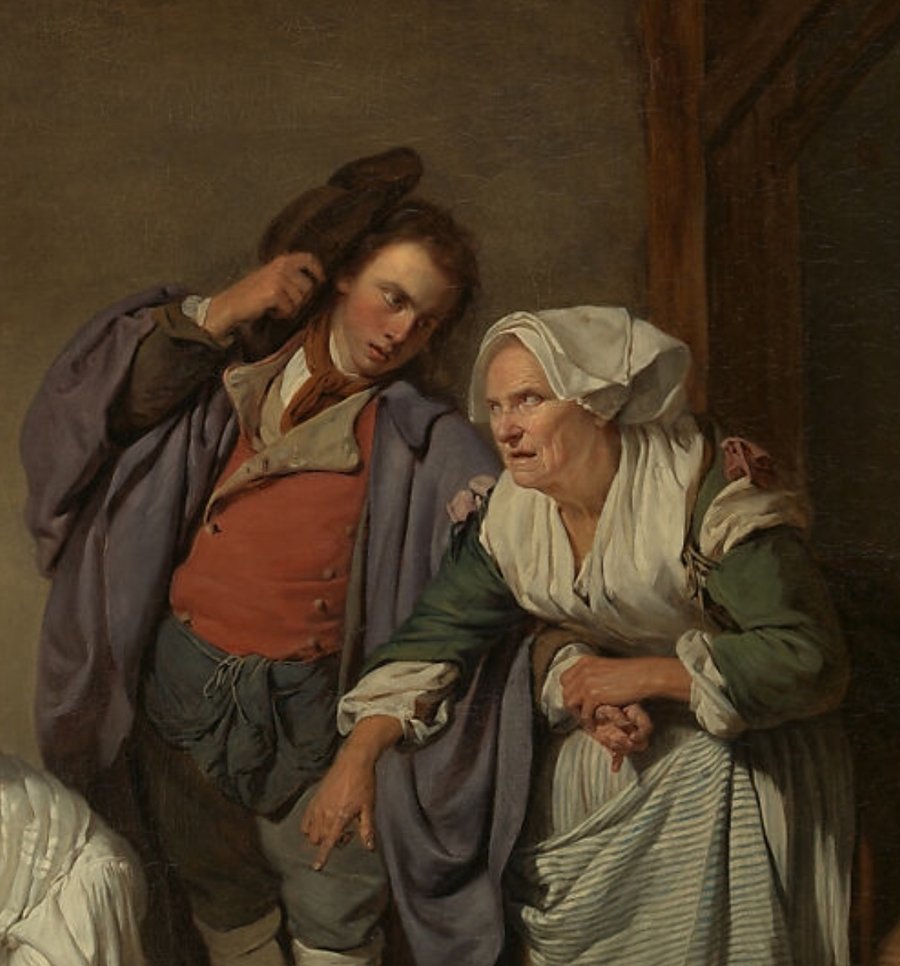
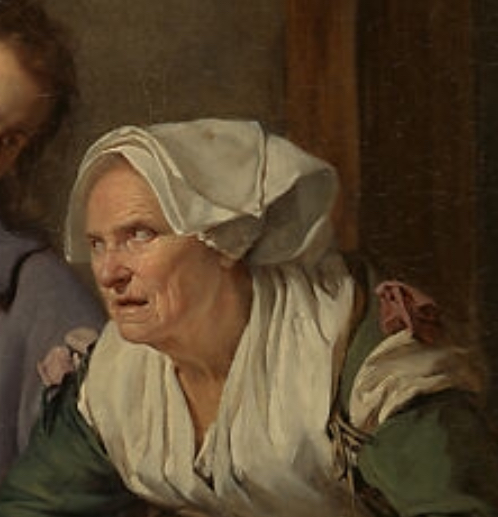
Jean-Baptiste Greuze. «Broken Eggs.» 1756.
The painting centers on a mundane scene in which a woman reprimands her son for breaking eggs. What is interesting about this piece is that the mother is not depicted as a young woman in her prime, but rather as an older, stooped woman—a significant departure from the already familiar image of the ideal, almost doll-like beautiful young parent. Her purpose is not to embody a moral ideal for her older son, as the situation does not lend itself to such a portrayal, and her face lacks the meekness and serenity characteristic of her predecessors. Quite the opposite, she is shown as emotional and actively engaged, expressing irritation and displeasure due to the blunder of her already adult child.
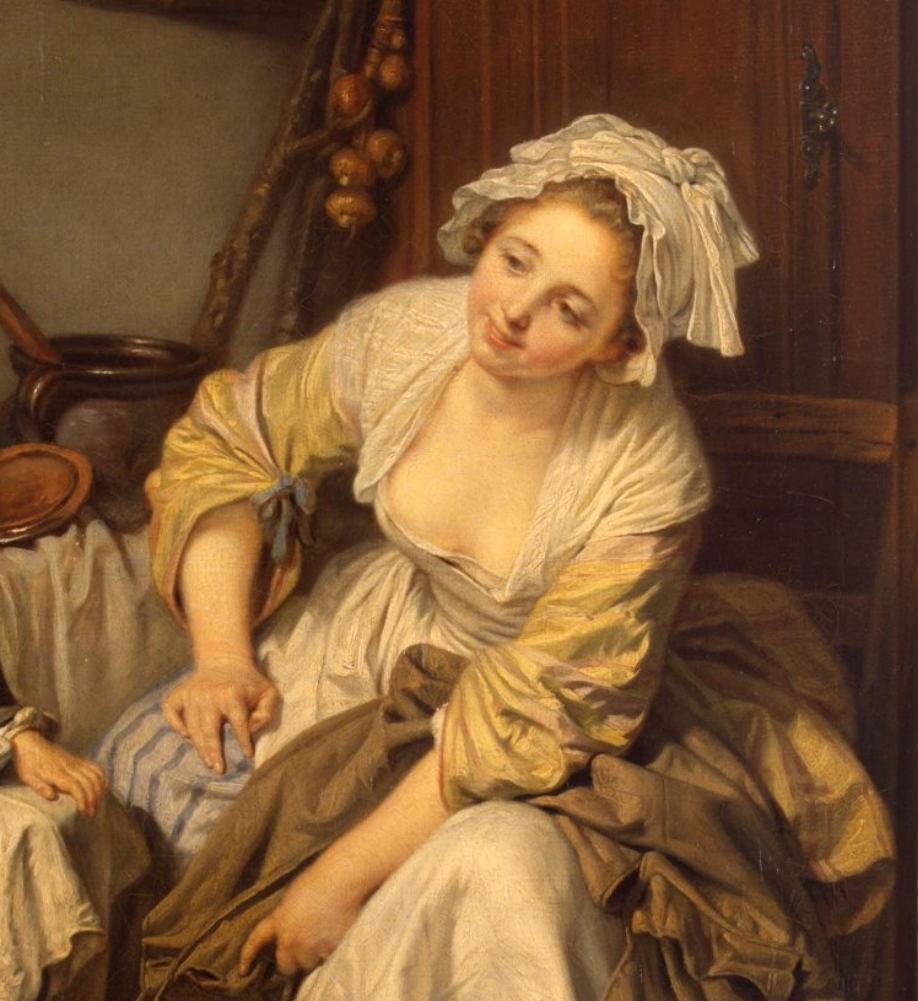
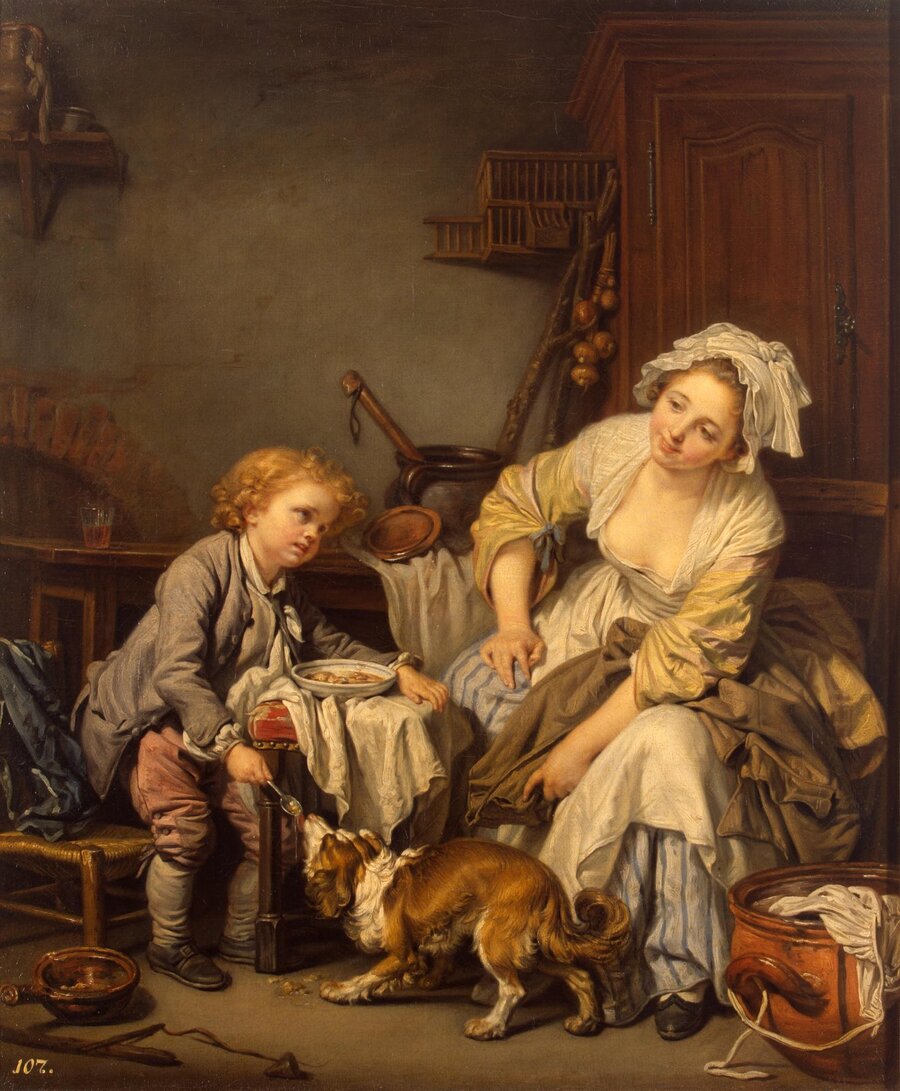
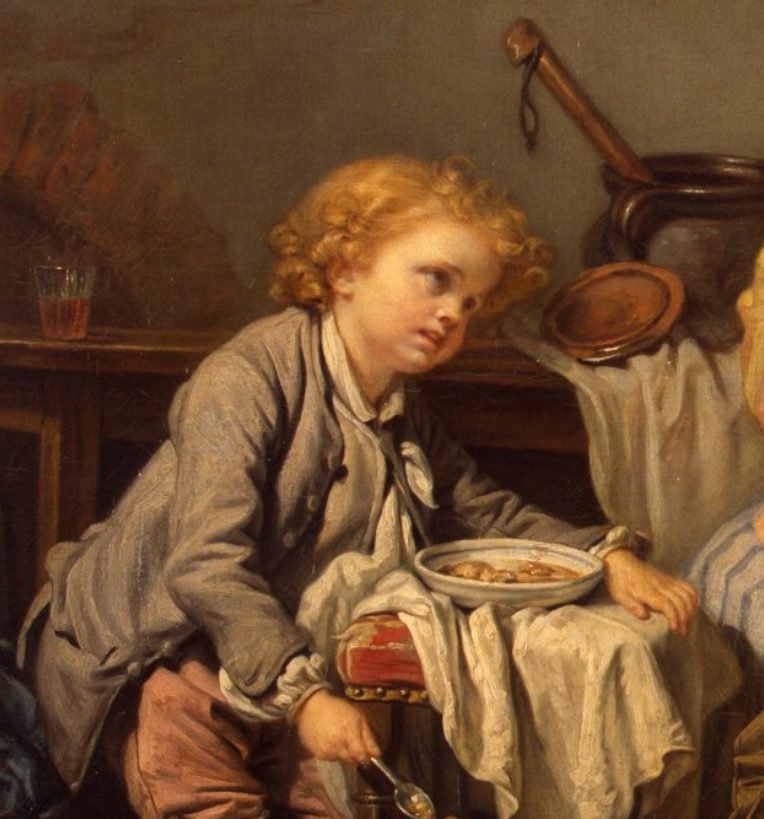
Jean-Baptiste Greuze. «The Pampered Child.» Circa early 1760s.
The canvas unfolds a domestic scene where a spoiled boy, unwilling to eat the food prepared for him, attempts to feed it to his dog. However, contrary to expectations, the mother does not react to her son’s antics with righteous severity; instead, she merely smiles indulgently, which may suggest that she takes the child’s behavior too lightly, thereby enabling it. Unlike paintings from the early century, the mother is not depicted as a strict yet fair mentor worth emulating. Due to her sentimental attachment to the boy, she is simply unable to impose strict disciplinary measures on him, which allows him to grow up spoiled. This painting powerfully illustrates how significant a mother’s influence is on a child and what they might become if a parent fails to approach the role with due responsibility.
The end of the century.
At the end of the century, the image of the mother becomes more complex—more emotional, human, and, from a sentimental perspective, deeply connected to the child. The mother transitions from an idealized, detached, and emotionally muted symbol into a living personality capable of demonstrating attachment and a wider emotional spectrum.
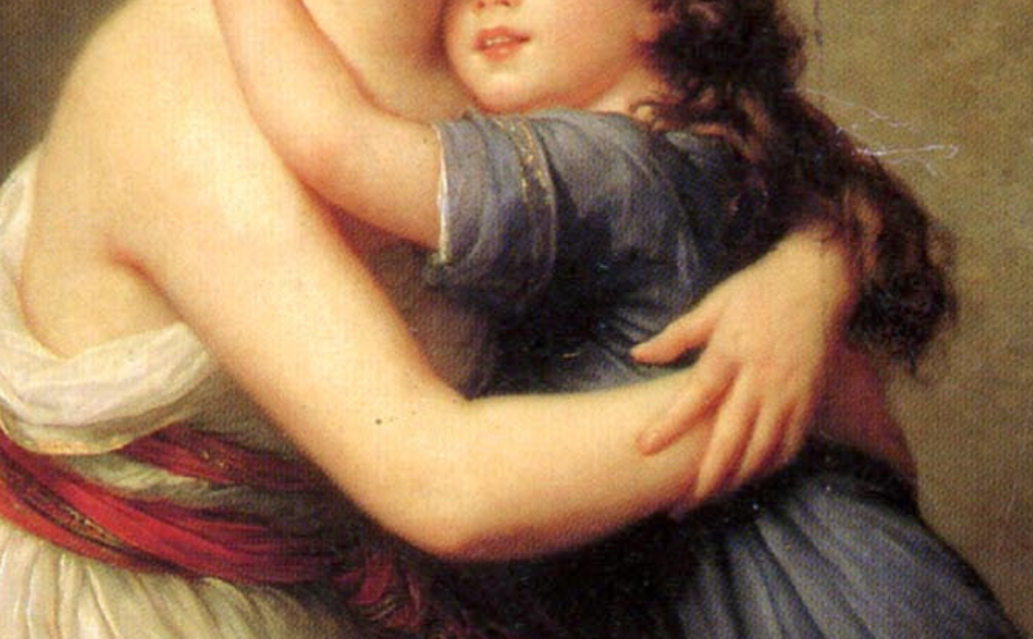
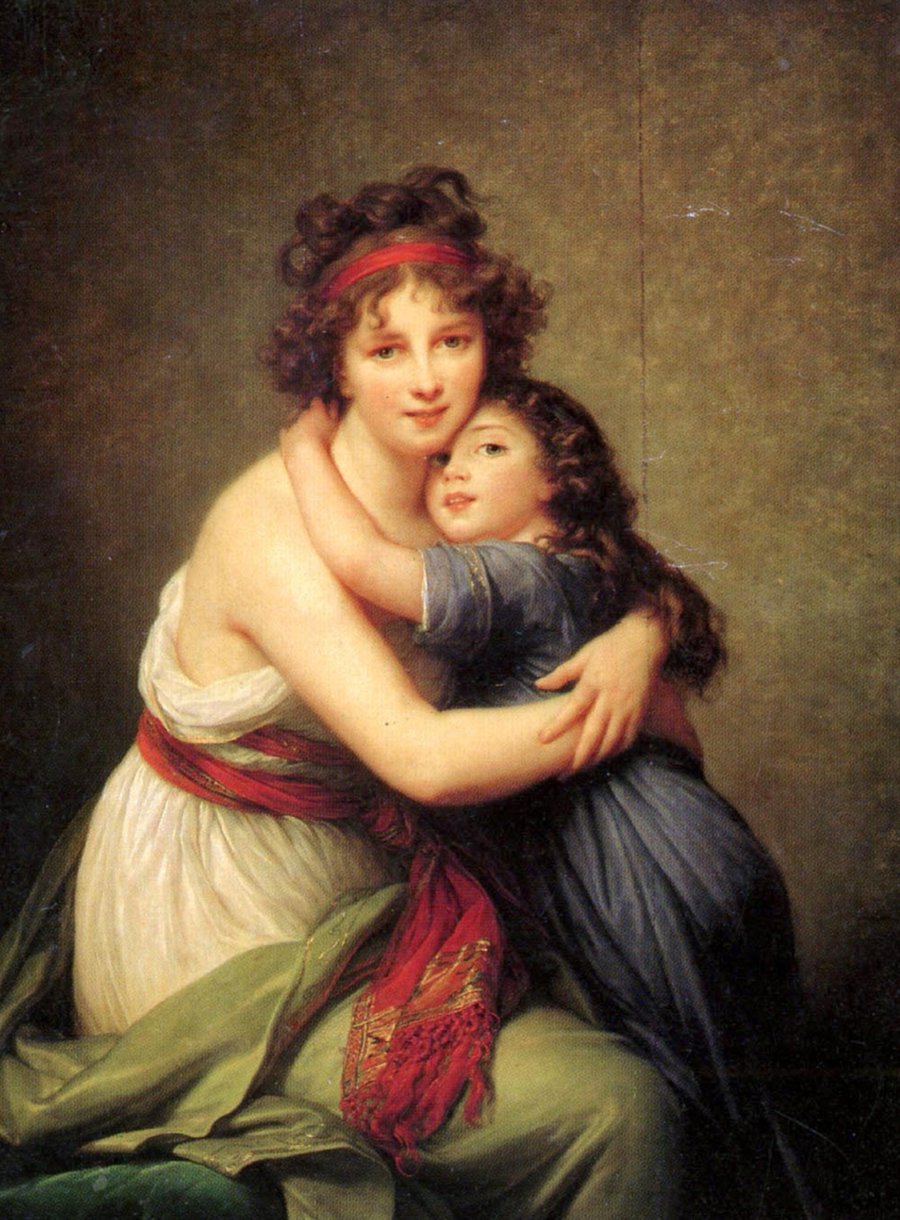
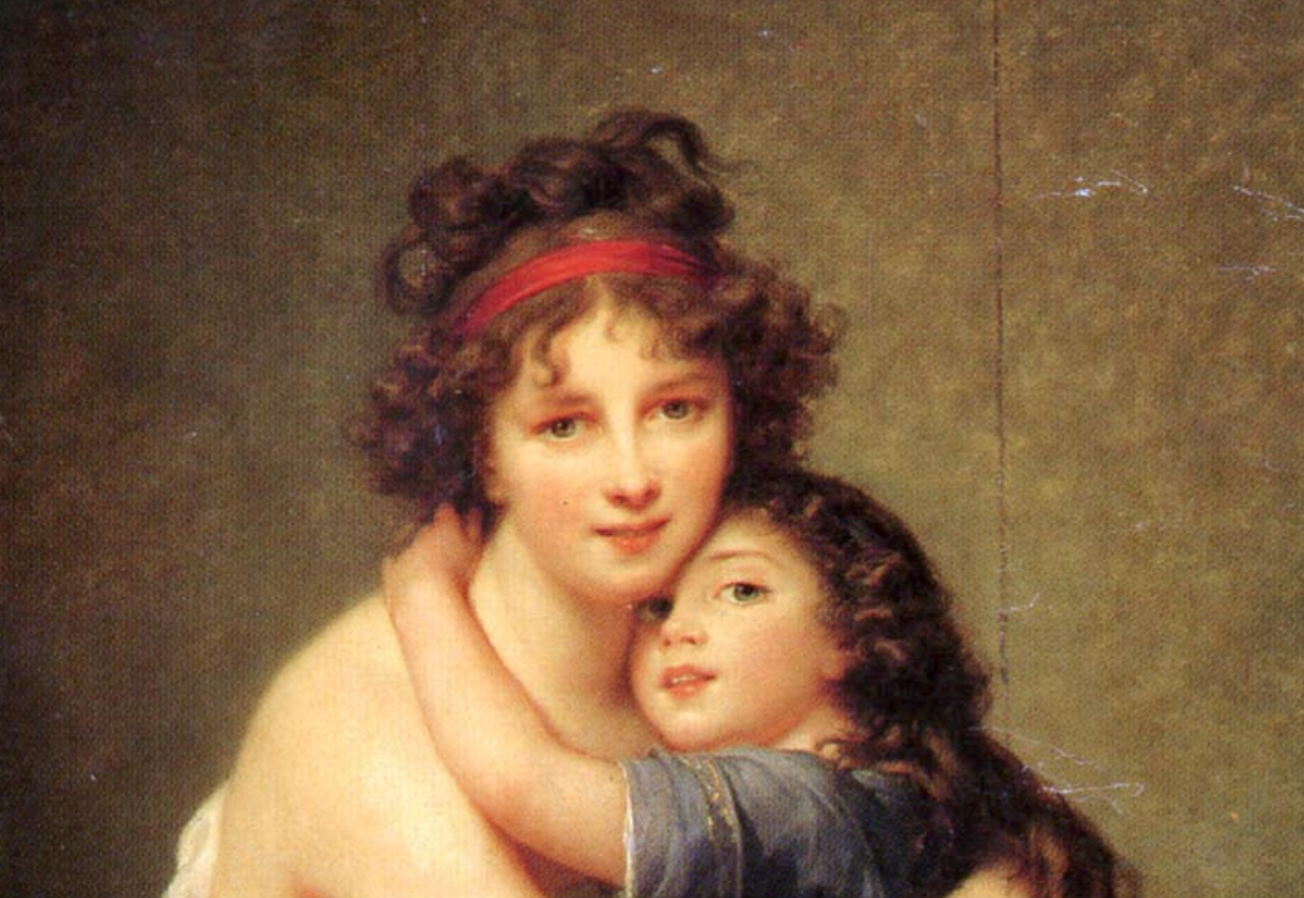
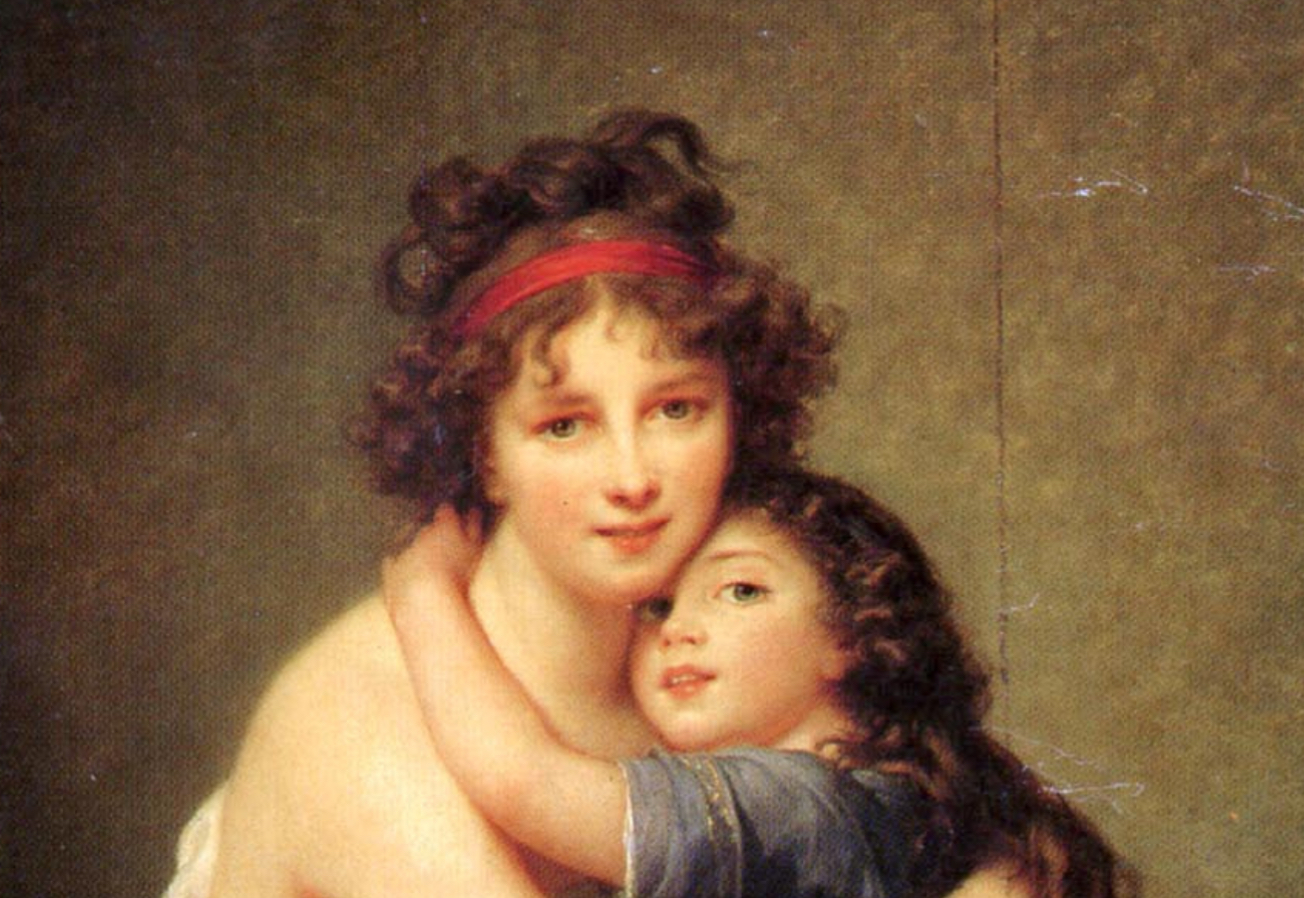
Elizabeth Vigée Le Brun. «Self-Portrait with Daughter.» 1789.
The artist depicts herself with her daughter in a moment of tender embrace. The portrait disregards formalities; there is no distance, domestic setting, or didactic communication between the mother and child. The focus is purely on the sincere, gentle gesture of affection, which emanates not only from the child reaching toward the mother but also from the parent. Particularly noteworthy is that the author of this painting is Vijez-Lebren herself; consequently, she chooses how to portray herself and her relationship with her daughter, simultaneously functioning as a mother, an artist, and a woman capable of controlling her public image—a feature that sets this painting apart from those in which motherhood was viewed through a masculine lens.