Navigation
- Concept
- Main Body: — Context of the era: woman and motherhood — The search for one’s own «voice» in painting — The representation of motherhood
- Conclusion
- Bibliography
- Image Sources
Concept
The drive for female self-realization in the arts has been evident throughout history. The European experience is particularly illustrative, as outstanding female artists were working as early as the 16th and 17th centuries—their legacies are now receiving well-deserved recognition in the world’s major museums. Among them are Sofonisba Anguissola, Artemisia Gentileschi, Judith Leyster, and other master artists whose work remained in the shadows for a long time but now garners keen interest from researchers and the public.
Systematic inclusion of women in professional art education began in the 19th century. Initially, access was restricted: women could only submit their work for the review of academics, and they were required to provide documentary proof of authorship. Women did not receive official permission to study at the Imperial Academy of Arts until 1891. For a long time, women were barred from painting; their training in artistic mastery was only possible if they were the daughter or wife of an established artist. However, by the late 19th century, numerous studios and private academies opened in Paris, which made education more accessible. Women gained the opportunity to study in private workshops and even exhibit their work at the Salon—one of the most prestigious art exhibitions—but the study and depiction of human anatomy remained prohibited.
One of the remarkable female artists of that era was Mary Cassatt, who was born in 1844 into a relatively affluent American family.
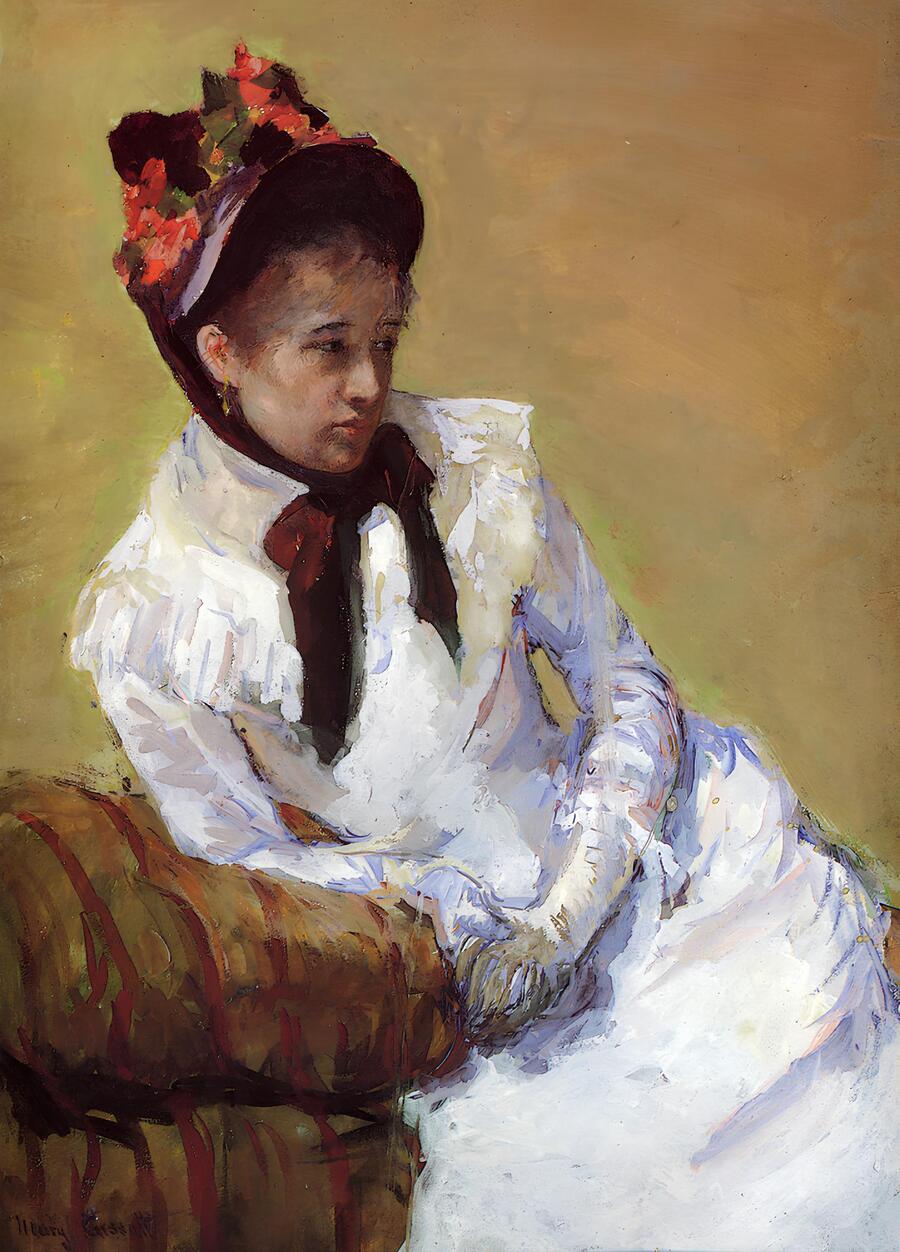
Mary Cassatt, «Self-Portrait, ” Metropolitan Museum of Art, New York
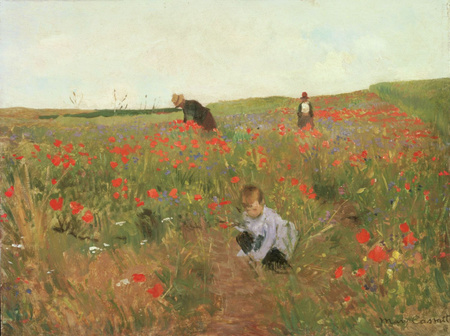
When Cassatt enrolled at the Pennsylvania Academy of the Fine Arts in Philadelphia in 1861, her parents did not anticipate that she would pursue painting professionally, so they objected when Mary decided to dedicate herself to art and travel to Europe. However, her persistence allowed her to continue her studies with various masters in Europe. Following the 1874 exhibition, Mary Cassatt painted the small landscape, «Girls Picking Flowers» (image on the left), and began working outdoors, emulating the Impressionists. During the same period, Edgar Degas, after seeing a female portrait by Mary Cassatt at a Salon exhibition, wrote to his friend:
«This is a brilliant piece. It has truly touched my heart.»
Mary Cassatt «Ida»
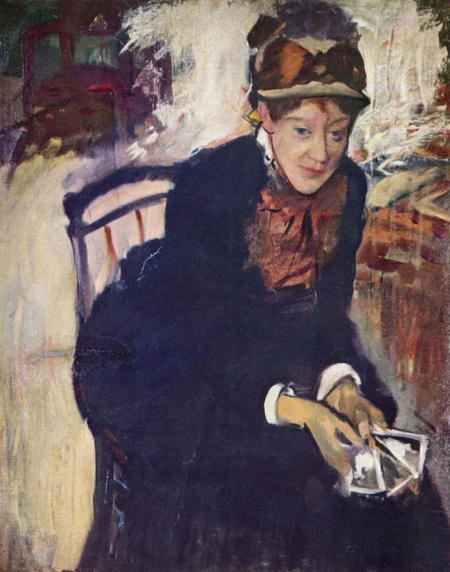
After some time, Cassatt and Degas met in person, where he suggested that the young woman exhibit alongside the Impressionists. Cassatt’s works were popular with the public; they were delicately «feminine,» and some compared Cassatt to Berthe Morisot or Degas himself.
Every artist has their own path, and even painters who lived at the same time and were compared to each other will be perceived differently by the public and other artists. At that time, a real artistic revolution was taking place—a new kind of art. A woman whom many masters admired and who fought her entire life for artistic independence. This stirred public excitement.
Image on the left: Edgar Degas, «Portrait of Mary Cassatt, ” 1884.
My hypothesis is that Mary Cassatt is an example of an artist who boldly sought out her own artistic language. Impressionism marked the beginning of an era of liberation from established painting conventions. This new style initiated a global process that allowed not only masters of the new movement but also female artists to emerge. Unlike many of her contemporary Impressionists, who focused on landscapes and urban scenes, Mary Cassatt concentrated on portraiture. She was particularly interested in depictions of women in domestic settings, especially mothers with their children.
What could this portrayal of motherhood in painting offer the public?
In contrast to the idealized Renaissance imagery of Madonnas and cherubs, Cassatt’s work possessed a directness and integrity of artistic statement. As Gemma Newman noted in American Artist Magazine, the artist’s primary goal was «to achieve strength, not sweetness; truth, not sentimentality or romance.» In her creative work, Mary Cassatt uses the theme of motherhood as a means of asserting female subjectivity. Her canvases do not simply capture domestic scenes; through the depiction of the emotional bond between mother and child, the artist demonstrates a woman’s right to autonomy, labor, and self-expression, challenging patriarchal notions of a woman’s «natural destiny.» Thus, her paintings become a visual manifesto of female emancipation in art.
When choosing a topic, I questioned the role of women in art during the second half of the 19th century. We do not often discuss female artists and their contributions to world art in history classes. My attention was drawn to Mary Cassatt, particularly because of her numerous portraits of women—especially mothers with children. The entire study is structured around a movement from the general to the specific (from the socio-historical context and artistic biography to individual works and techniques). This division will allow me to gradually and convincingly prove my hypothesis by immersing myself in the art context of that era.
Materials and textual sources for visual research analysis were selected based on the chosen theme, credibility, and authority.
Context of the Era: Woman and Motherhood
Mary Cassatt’s creative development occurred amidst the profound social transformations of the second half of the 19th century, when traditional gender norms encountered the nascent feminist movement. As mentioned above, women in the art world faced institutional limitations. Access to academic education was significantly restricted: women were forbidden from studying anatomy or working with the nude figure—a constraint, as art historian Linda Nochlin noted in her essay *Why Have There Been No Great Women Artists? * (1971), deprived them of the opportunity to create works in the genres of historical and mythological painting, which were considered the highest in the academic hierarchy. There was an unspoken gender division of genres: women were «allowed» to pursue still life and landscape painting, but not subjects that demanded a deep knowledge of anatomy and composition.
Social expectations for women were shaped by the concept of the «angel in the house, ” which gained literary grounding in Coventry Patmore’s poem of the same name (1854). According to this model, a woman’s role was confined to maintaining the hearth, serving as a devoted mother, and a wife. Motherhood was presented as a „natural calling, ” precluding any other forms of self-actualization. Deviation from these norms invited social condemnation.
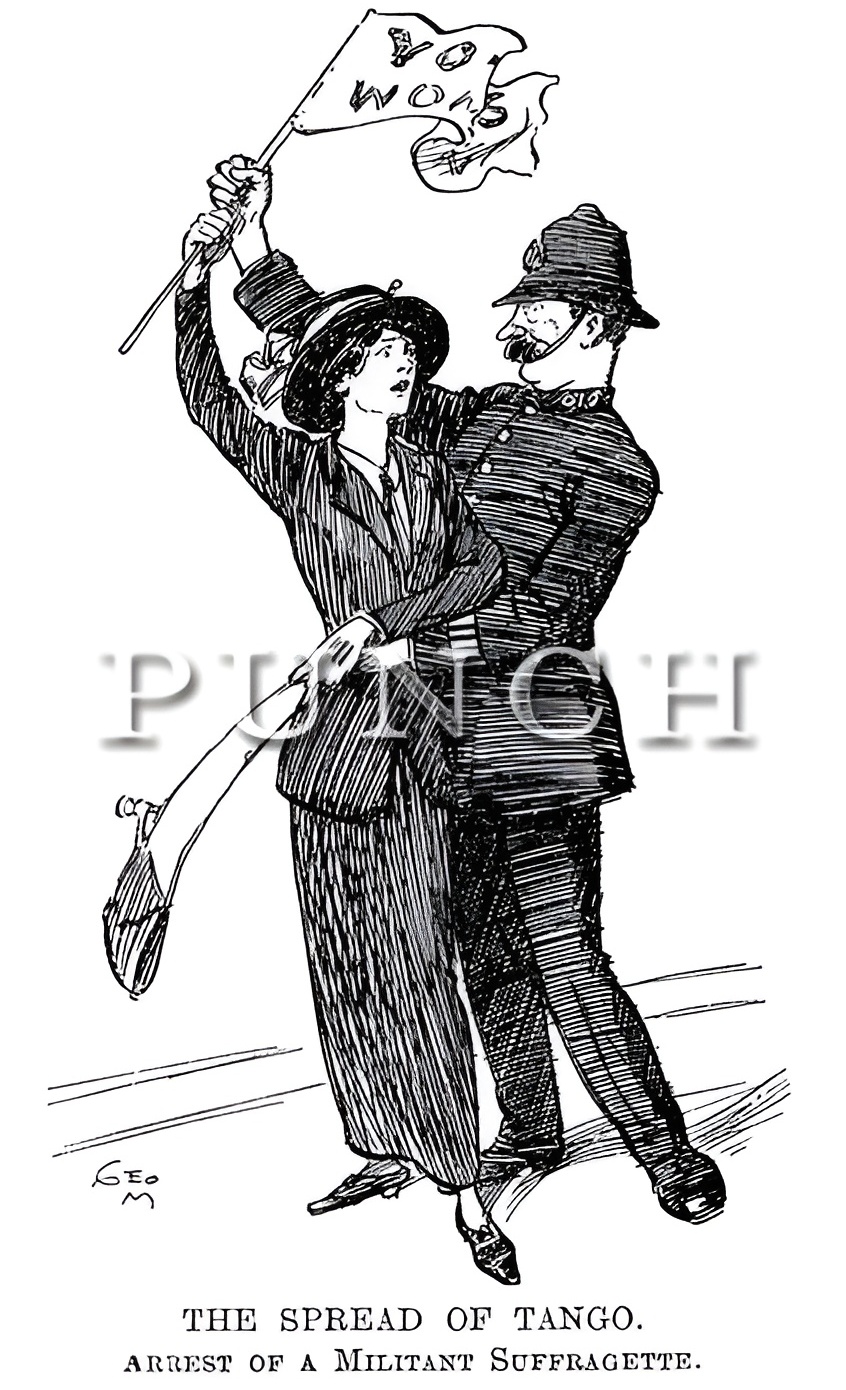
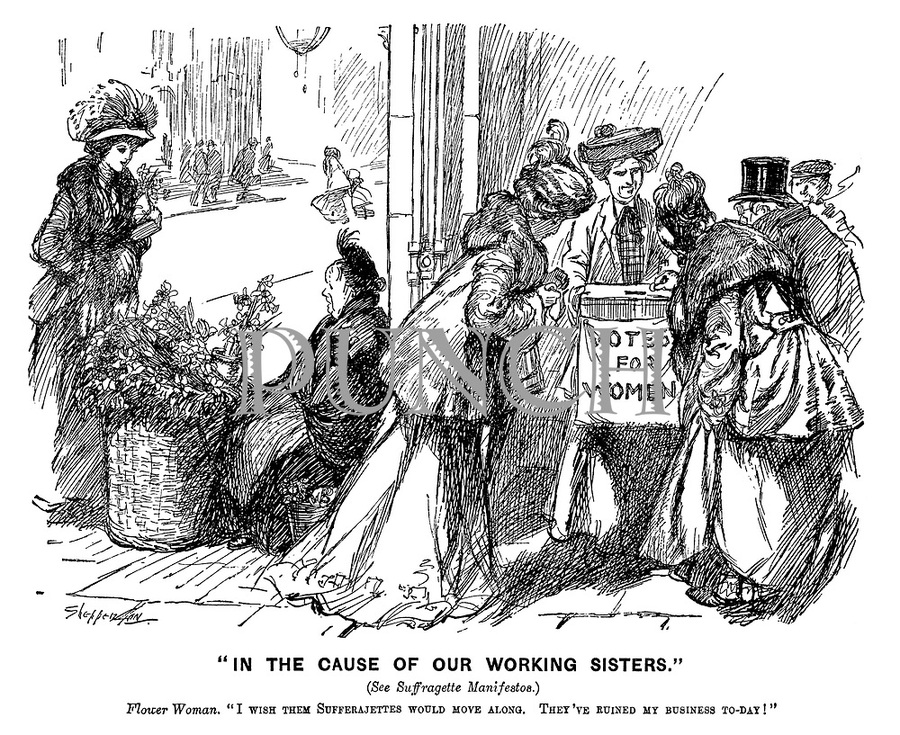
Caricatures from Punch magazine (a visualization of public opinion regarding «emancipated» women and deviations from the role of the «angel in the home»)
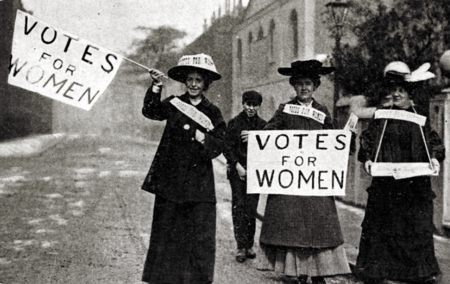
In the latter half of the nineteenth century, the organized movement for women’s rights began. Key areas of focus included: the fight for suffrage led by activists such as Emmeline Pankhurst (United Kingdom) and Susan B. Anthony (USA); expanding access to higher education (for example, the founding of Bryn Mawr College in 1885); and the formation of professional associations that championed women’s right to work and creative fulfillment. Discussions about the «women’s question» were actively held in journalism and literature, including the works of George Eliot and Harriet Beecher Stowe.
The image of motherhood in 19th-century culture served an ideological function. In mass propaganda (through postcards, posters, and illustrations), it functioned as a tool of social engineering, asserting motherhood as the sole respectable sphere of female fulfillment. A trend toward idealization persisted in art—from the Renaissance sacralization of the Madonna to Victorian sentimentality. Mary Cassatt reinterpreted this image: in her works, motherhood appears not as a static symbol of virtue, but as a living, dynamic realm of human experience, where the woman acts as an agent, preserving her autonomy, individuality, and comfort.
Left—Raphael, «Madonna in a Chair, ” c. 1513–1514, Palazzo Pitti, Florence Right—Kate Greenaway, illustration from A Day in a Child’s Life, 1881
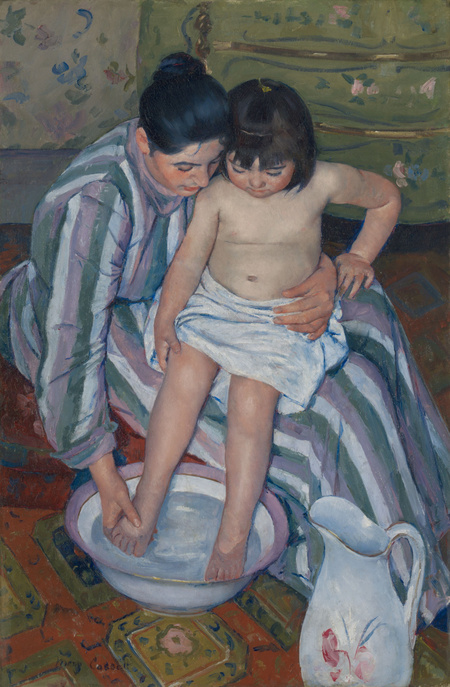
Left — Mary Cassatt, «The Young Mother Sewing, ” 1900, The Metropolitan Museum of Art, New York Right — Mary Cassatt, „Bathing a Child, ” 1893, Art Institute of Chicago
Searching for one’s own «voice» in painting
Mary Cassatt’s artistic trajectory is inextricably linked to the processes of cultural transformation in the latter half of the 19th century. Born into a privileged American family, she consciously chose a professional career as a painter, a path that required her to overcome numerous social and institutional barriers. After receiving her preliminary education at the Pennsylvania Academy of the Fine Arts, Cassatt moved to Paris in 1866—the epicenter of innovative artistic exploration at the time.
In Paris, Cassatt encountered a dual situation: while the French academies remained closed to women, an alternative artistic environment was developing, one open to experimentation. Mary Cassatt, without rushing to align with any specific artistic movement, took lessons from various academic painters and gradually acclimated to Manet’s new, revolutionary style. In 1868, her realistic piece, «Mandolin Player, ” was selected by the Salon. However, due to the Franco-Prussian War, which began in 1871, Mary Cassatt was forced to return to the United States, yet in the same year, she began traveling across Europe. Cassatt visited Italy, Spain, the Netherlands, and Belgium largely to study the paintings of the Old Masters. It wasn’t until 1873 that she settled back in Paris, now clearly understanding the path she wanted to take.
Mary Cassatt, «The Mandolinist, ” 1868.
A key event in her creative biography was the previously mentioned encounter with Edgar Degas, who not only recognized her talent but also introduced her to a circle of Impressionists and became her friend and mentor. As art historian Whitney Chadwick notes in Women, Art, and Society (2012), Degas’s influence manifested in Cassatt’s interest in unexpected perspectives, compositional framing, and her use of pastel.
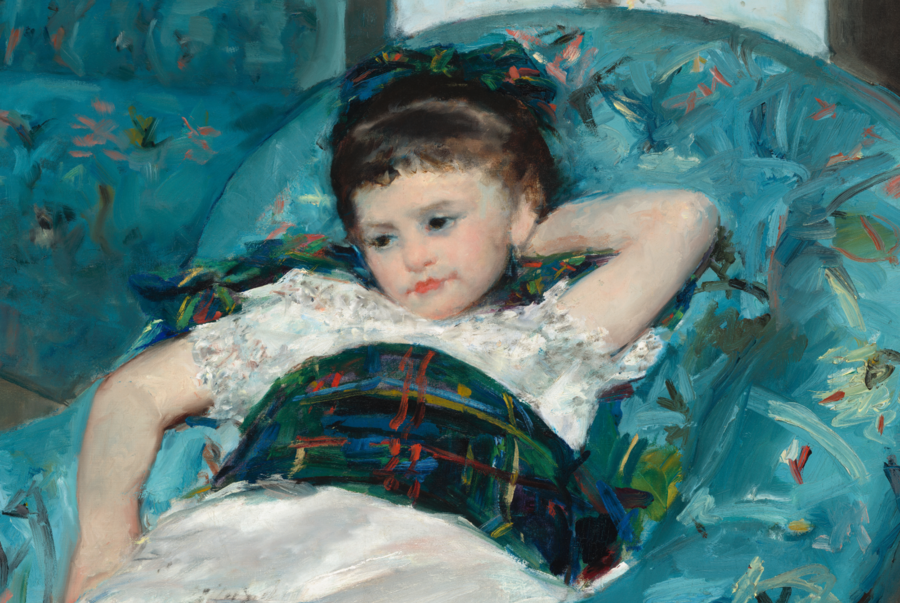
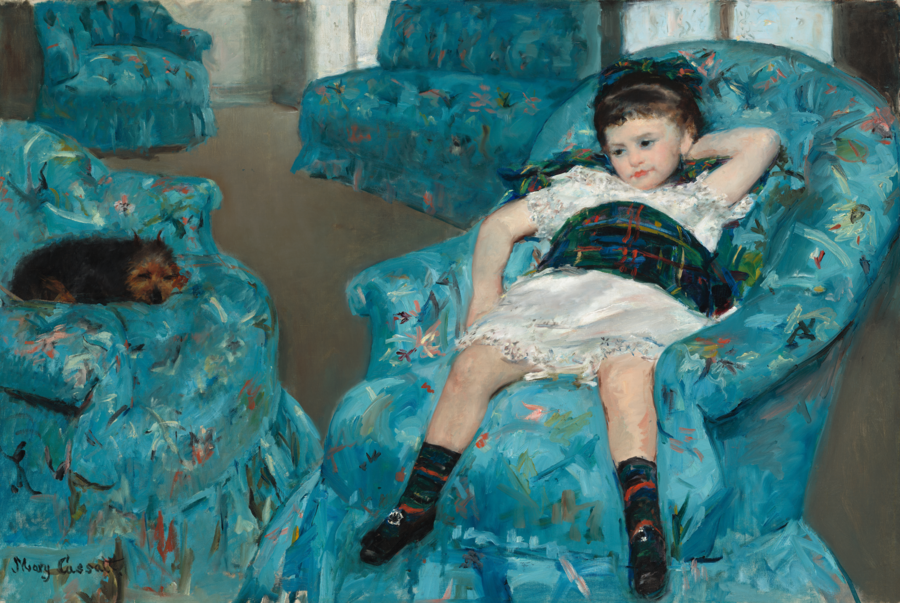
Mary Cassatt, «Little Girl in a Blue Chair,» 1878, National Gallery of Art, Washington